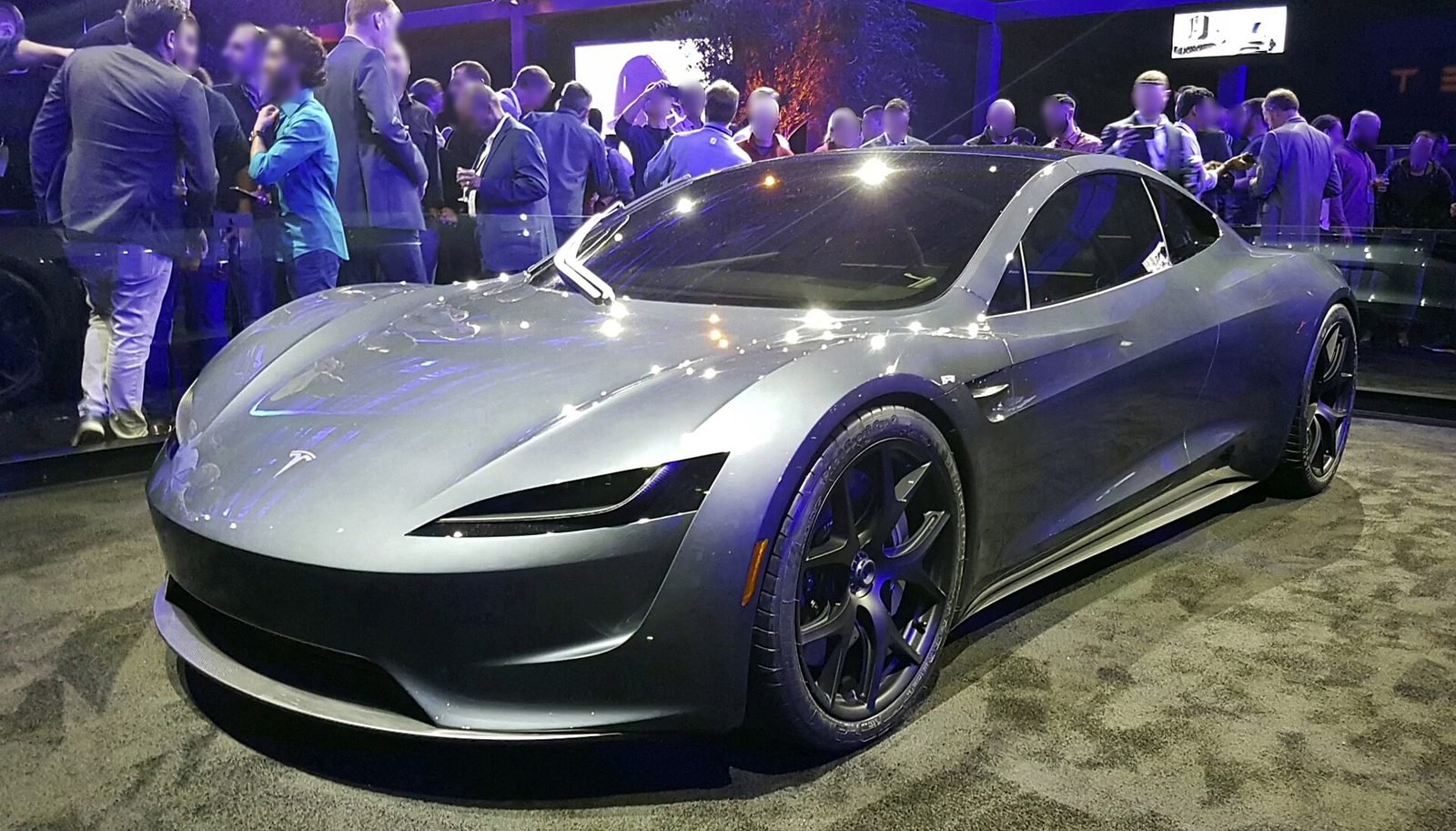
The New York Times ran the numbers this morning, and they’re the kind that make you blink. When Tesla pulls the cover off the new Roadster tonight, the sticker is expected to start at $200,000 — and possibly climb well past it. That’s Ferrari money. Lamborghini money. And Tesla wants it anyway, because the company has figured out something the rest of the industry is only now waking up to: the people with $200,000 to spend on a car were never buying it to save on gas.
The Times’ piece, published just hours before tonight’s 7:55 PM Central reveal, frames the Roadster as the leading edge of a rush — automakers lining up to sell electric cars costing more than $100,000 to wealthy buyers who, until recently, wouldn’t have looked twice at an EV. Musk’s headline claim sets the tone: 0 to 60 mph in one second. That’s not sports-car territory. That’s drag-strip territory, with license plates and a warranty.
Jaguar got there first
Here’s the part that makes this a trend and not a stunt: Tesla isn’t walking into it alone. Eight days before the Roadster’s big night, Jaguar unveiled the Type 01 in New York — a 1,000-plus-horsepower electric grand tourer starting at $130,000 in the United States. This is the first production car of Jaguar’s all-electric era and the payoff of the “Copy Nothing” rebrand that had the entire internet arguing back in 2024.
The specs are serious. A tri-motor setup making 1,016 horsepower and 1,007 lb-ft of torque, a 118 kWh battery riding on an 850-volt architecture, 0–100 km/h in about 3.2 seconds, and an estimated 400 miles of EPA range. Jaguar says 13 minutes on a 350 kW fast charger adds 200 miles of range. Orders open in early 2027, with the first customer cars arriving in the second half of the year from JLR’s Solihull plant.
And the design commits to the bit — long hood, low roofline, no rear window at all, available 23-inch wheels, and a cabin that trades Jaguar’s old wood-and-chrome clubhouse for brass tones and a full-width digital cluster. The company that built its legend on growling twelve-cylinder engines is now openly aiming at Bentley buyers with a silent grand tourer. If that doesn’t tell you which way the wind is blowing, nothing will.
The pitch isn’t virtue anymore
For fifteen years, the EV sales pitch had exactly two slides: save the planet, save on fuel. It worked on commuters and early adopters. It never worked on the person cross-shopping a 911 Turbo against a V12 grand tourer — because that person was never doing fuel math in the first place.
The new pitch, and the Times nails this, is much simpler: speed. Electric motors make peak torque at zero rpm. There’s no power band to climb, no gears to hunt, no turbo lag — just an immediate, silent shove that no combustion engine can replicate. Wealthy enthusiasts don’t buy $200,000 cars to be sensible. They buy the feeling. And right now, the most violent feeling you can buy has a battery bolted to the floor.
The physics were always on electricity’s side. Strap a thousand pounds of battery to the floorpan and you get a center of gravity no mid-engine exotic can touch. Fewer moving parts means less maintenance and less vibration. The Times also notes a more practical tailwind — EV sales are booming globally as buyers hedge against volatile fuel prices. Even the rich like a hedge.
Why this is happening now
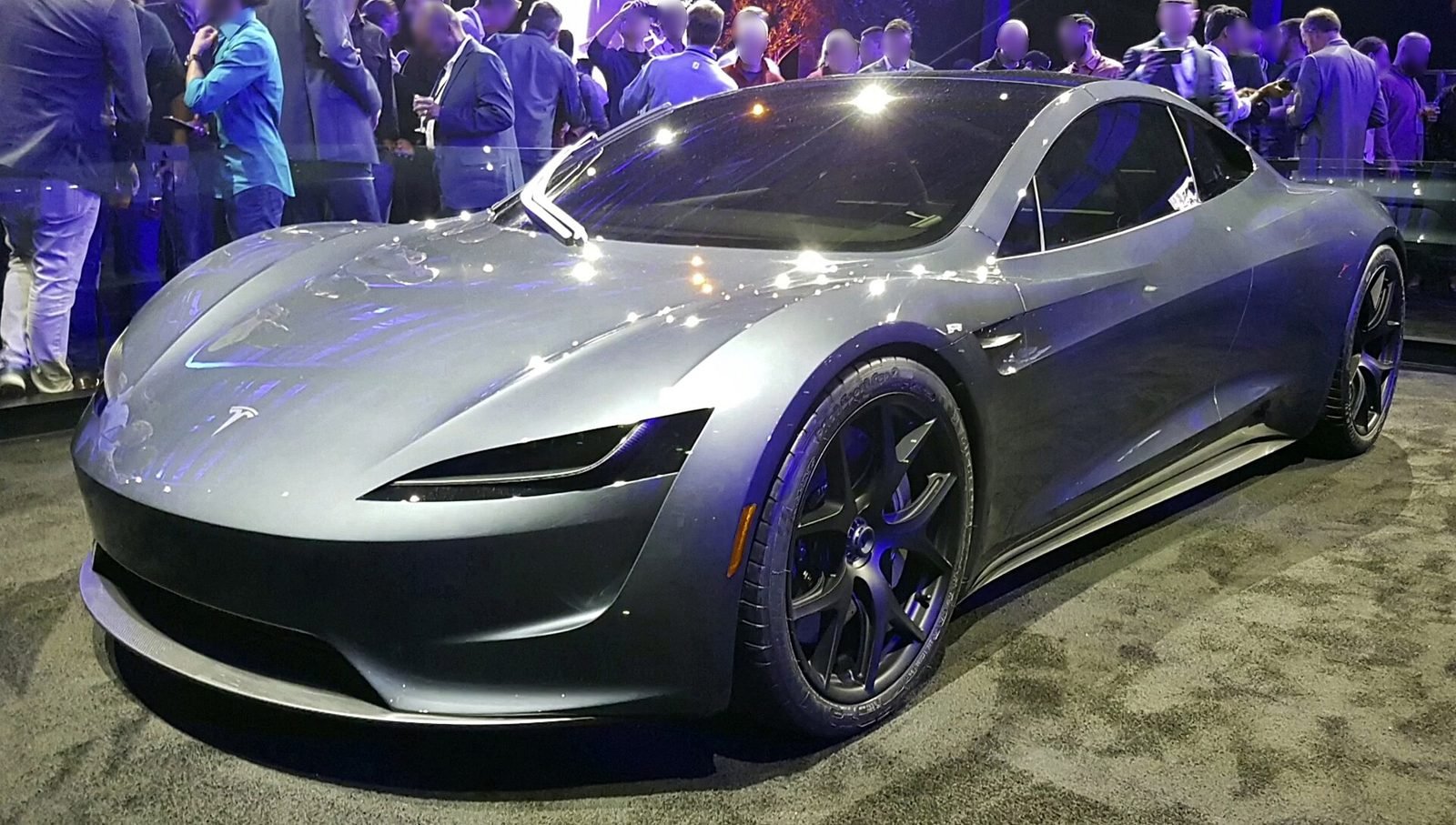
So why 2026 and not 2016? Batteries, mostly. Energy density and 800-volt-plus architectures finally let engineers build a 1,000-horsepower grand tourer that also travels 400 miles — the combination that turns a six-figure EV from a garage toy into something you can actually live with. Jaguar’s Type 01 is the proof the math works: enormous power, enormous range, and charging stops measured in minutes.
There’s a cultural shift underneath it too. A decade ago, “electric performance car” sounded like an oxymoron to the supercar crowd — fast but soulless, an appliance with launch control. Nine years of Teslas embarrassing supercars at stoplights changed the conversation. The soul question isn’t settled, but it’s settled enough to charge $200,000 over.
The skeptic’s corner
All of which is worth exactly nothing if tonight’s car isn’t real. Tesla’s Roadster has been “coming soon” since 2017 — nine years of deposits, promises, and missed dates. A $200,000 sticker and a one-second claim deserve independent verification, not just a stage and a light show. Tonight needs three things, in order: a price, a production date, and a demonstration. For our full breakdown of what to watch for, see our reveal preview.
Jaguar’s gamble cuts the other way. The company is openly willing to lose its old customers to win new ones — going EV-only and moving upmarket guarantees it. The Type 01 has to convince people who loved Jaguars for their engines to love one with no engine at all. A thousand horsepower helps. Four hundred miles of range helps. But heritage buyers are stubborn creatures.
And the deepest question hangs over all of it: can an EV win the emotional argument? A V12 isn’t transportation; it’s theater — noise, smell, ritual. Electricity can win every spec sheet on earth and still lose to a screaming exhaust at full throttle. Every brand in this new $100,000-plus club is betting that instant, silent violence is simply a better feeling. That’s a bet on human nature, not engineering.
Tonight sets the terms
Which brings us back to 7:55 PM Central. The Roadster reveal was already the biggest EV story of the year; the Times’ framing makes it something larger — the opening bid in the six-figure EV era. If Tesla names a real price, shows a real car, and stands behind that one-second number, every luxury marque on the planet has to answer. Jaguar already parked its answer in New York last week. Bentley’s is coming.
The $200,000 electric car isn’t a curiosity anymore. As of tonight, it’s a category — and the gasoline supercar has officially been put on notice.

