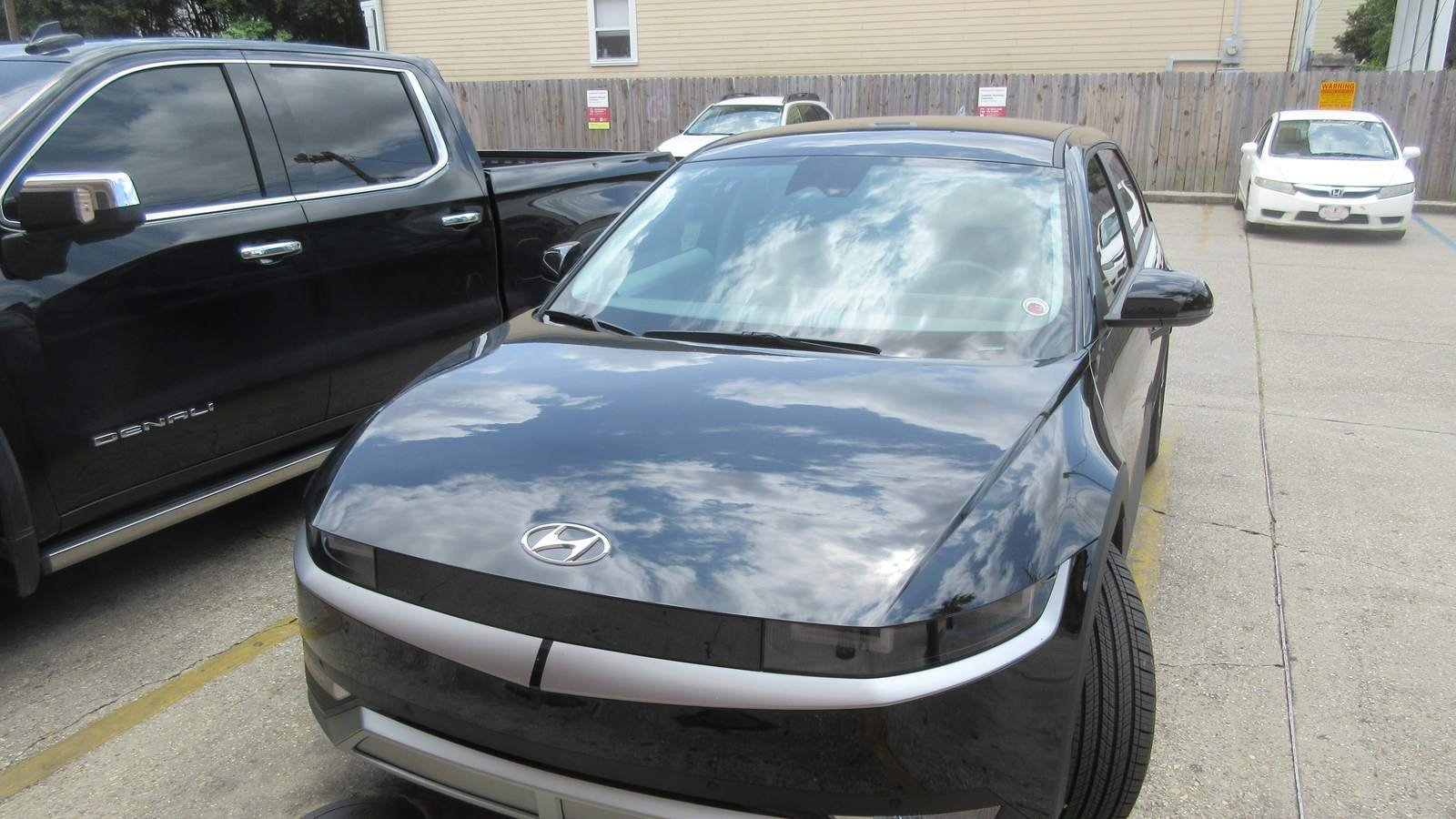
The $7,500 federal tax credit is gone, September sales fell off a cliff, and every rival seems to be in free fall. Yet the Hyundai Ioniq 5 just did something almost no other EV managed in 2026: it held its ground. Hyundai sold 31,112 Ioniq 5s through September — down 24% from a year ago, but still good enough to make it America's third-best-selling EV and, as Electrek put it, “America's most popular EV not named Tesla.”
That resilience didn't happen by accident. Hyundai cut prices on leftover 2026 models by up to nearly $10,000, priced the 2027 car from $35,250, and put a $369-a-month lease on the table for October. Here's the full picture: the 2027 price list, the lease math, the sales numbers, and the November 2 deadline you need to know about.
| 2027 Hyundai Ioniq 5 | Key figures |
|---|---|
| US price | From $35,250 ($36,900 with the $1,650 destination charge) |
| October lease | $369/month for 24 months on the SE rear-wheel drive, $4,999 due at signing; offer ends November 2, 2026 |
| Range | Up to 318 miles EPA (extended-range rear-wheel drive) |
| Charging | Native NACS port; 10–80% in about 20 minutes on a high-voltage DC charger |
| 2026 sales (through September) | 31,112 — America's No. 3 EV |
| Federal tax credit | Expired at the end of September 2025 |
| Performance pick | 2026 Ioniq 5 N: $59,900, 641 hp |
2027 prices: up a little, still the value pick
The 2027 Ioniq 5 is mostly a carryover — small equipment and trim tweaks, no big mechanical overhaul. Prices moved up a little across the board: the SE Standard Range starts at $35,250, up $250 from 2026; the extended-range SE rear-wheel drive is $37,750, also up $250; the SEL is $40,200, up $400; the rugged XRT is $46,525, up $250; and the Limited runs from $45,225 with rear-wheel drive to $49,125 with all-wheel drive. Add the $1,650 destination charge and the real entry price is $36,900.
If that still sounds steep, look at what happened to leftover 2026 cars. Hyundai cut prices on some 2026 trims by up to nearly $10,000 after the credit expired, and dealers have been clearing them out all fall. A discounted 2026 car is still the cheapest way into an Ioniq 5, if you can find one in the color and trim you want.
The value case writes itself against the best-seller. Tesla's Model Y rear-wheel drive starts at $39,990 with up to 321 miles of range, which makes the extended-range Ioniq 5 SE — $37,750 and up to 318 miles — about $2,000 cheaper for nearly the same range. At the bottom of the range, the $35,250 base Ioniq 5 undercuts the cheapest Model Y by $4,740. And the car itself is built in America now: Hyundai moved Ioniq 5 production to its Metaplant in Georgia with the 2025 refresh, so the 2027 car you buy is a US-built car.
The October lease: $369 a month, but read the fine print
The headline deal is on the 2027 SE rear-wheel drive: $369 a month for 24 months, with $4,999 due at signing, on a car with a $39,400 sticker including destination. Total payments come to $8,856. The cheaper entry point is the SE Standard Range at $359 a month on the same 24-month, $4,999-due terms. Electrek's math puts the effective monthly cost — the payment plus the upfront cash spread across the term — at $567 for the Standard Range and $577 for the extended-range SE.
These are Hyundai Motor Finance offers for well-qualified lessees, running October 1 through November 2, 2026. Taxes and fees are extra, the allowance is 12,000 miles a year, and the deal varies by dealer and region — InsideEVs' September roundup had the 2027 car from $349 a month with different terms, which tells you how fast these numbers move month to month. If you're flexible on model year, that same InsideEVs roundup listed leftover 2026 Ioniq 5s from $329 a month.
Here's a twist worth knowing: Hyundai's three-row Ioniq 9 leases from $419 a month for 36 months with the same $4,999 due — an effective $557 a month, which undercuts the Ioniq 5's effective cost. If you need the third row, the bigger Hyundai is currently the better lease.
Sales: a bad September, a resilient year
September was ugly. Hyundai sold 2,928 Ioniq 5s in the month, down 65% from 8,408 a year earlier. The third quarter came in at 10,382, down 53%. But zoom out and the story flips: 31,112 sold through September is down only 24% from 41,091 in the same stretch of 2025.
That “only” matters because of what happened to everyone else. Kelley Blue Book data compiled by Electrek puts the Ioniq 5 third among all EVs sold in America through the third quarter, behind only the Tesla Model Y (262,491) and Model 3 (106,962) — and ahead of the Toyota bZ at 24,944. The Ioniq 5's 4.3% share of the EV market is the best of any non-Tesla.
The contrast with Chevrolet is stark. The Equinox EV saw sales fall 92.4% in the third quarter, to a level that barely registers, and year to date it's down 65.6% to 18,154 — well behind the Hyundai. The post-credit shakeout hit nearly every affordable EV, and the Ioniq 5 is one of the few that came out the other side with its volume mostly intact.
The Ioniq 5's resilience also stands out inside Hyundai's own lineup. The brand's total September sales rose 9% to 77,439, with hybrids up 39% and making up 28% of volume. The Ioniq 6, meanwhile, nearly vanished — three cars in September, 1,348 for the year, down 85% — while the bigger Ioniq 9 grew 56% year to date to 6,521. The numbers point to three things keeping the Ioniq 5 afloat: the price cuts and lease deals kept monthly payments within reach after the credit disappeared, the 800-volt charging and roomy hatchback body still stand up against newer rivals, and Hyundai had inventory and deals ready when buyers came back after the post-credit shock.
Charging and range: the part that hasn't changed
Every 2027 Ioniq 5 comes with a native NACS port — the Tesla-style plug — so it can use Tesla Superchargers without an adapter. On a high-voltage DC fast charger, the 800-volt battery goes from 10% to 80% in about 20 minutes; on a lower-voltage 150 kW charger, plan on around 30 minutes. A dual-voltage Level 1/Level 2 charging cable comes standard, and the 10.9 kW onboard charger fills the battery from 10% to 100% in about 7 hours 20 minutes on a home Level 2 setup — closer to 5 hours 40 minutes for the Standard Range car.
EPA range tops out at 318 miles for the extended-range rear-wheel-drive SE, SEL and Limited. All-wheel-drive versions drop to 290 miles on SE and SEL, 269 on the Limited, and 259 on the off-road-flavored XRT. The Standard Range car is rated at 245 miles. The extended-range cars use an 84 kWh battery.
The Ioniq 5 N: 641 hp for $59,900
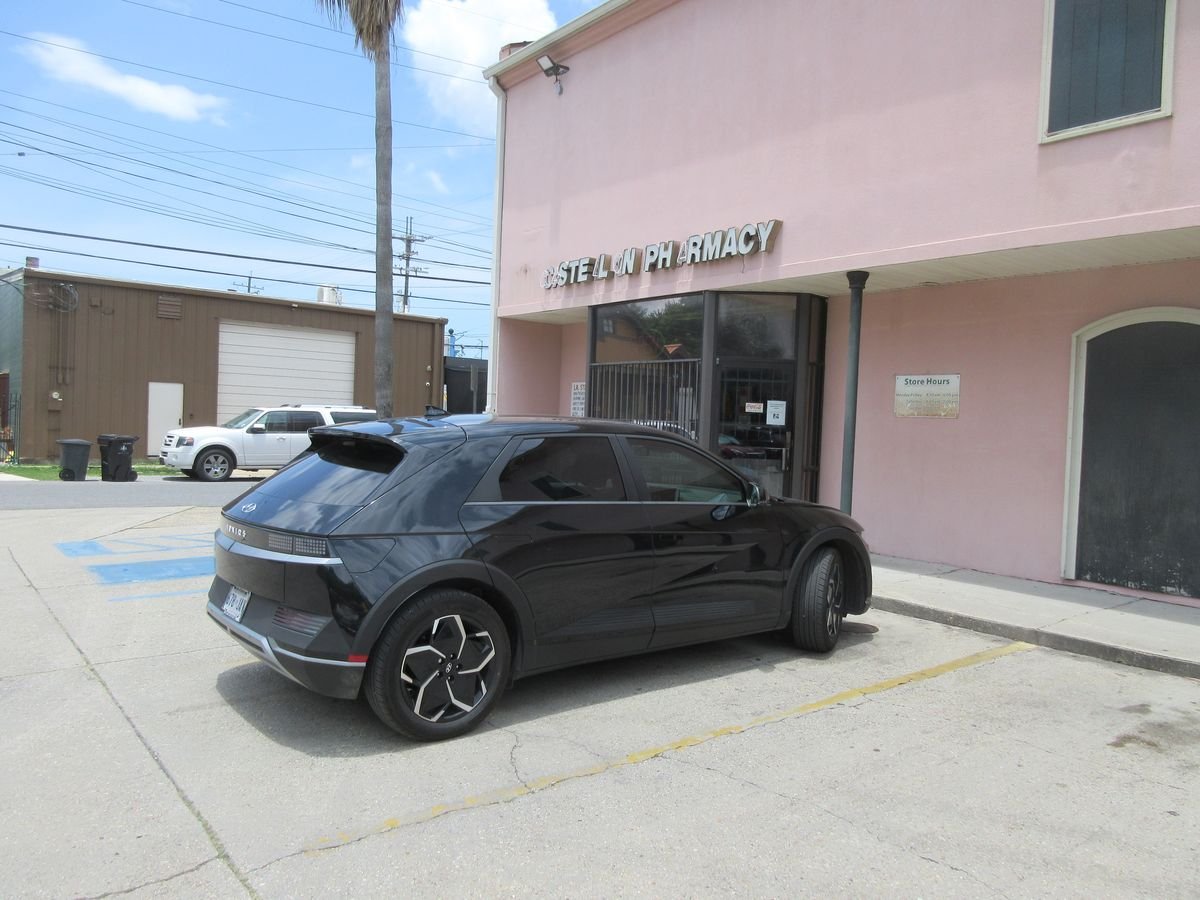
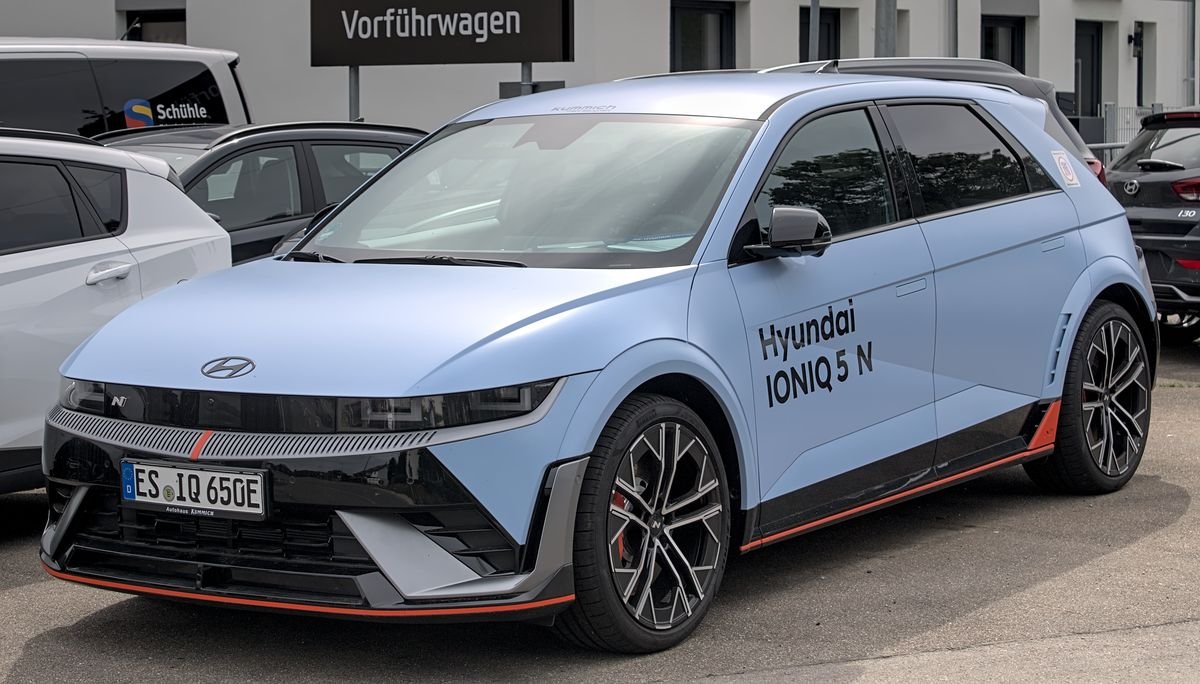
If the regular Ioniq 5 is the sensible pick, the N is the loud one. The 2026 Ioniq 5 N starts at $59,900 before the $1,600 destination charge — a $6,300 cut from last year — and for that you get up to 478 kW, or 641 horsepower, when N Grin Boost is switched on. The 2026 N also drops the old CCS port for a native NACS plug, and Hyundai throws in CCS-to-NACS adapters for AC and DC charging plus a dual-voltage portable cable. The drift mode is now a 10-stage system, up from a single setting, and the car adds an in-cabin attention warning, automatic rear windows, and Performance Blue Pearl paint.
Hyundai hasn't announced 2027 Ioniq 5 N pricing yet, so the 2026 car is the one to shop if you want the performance version — and at $59,900 it's a lot of performance per dollar by any measure.
Buy, lease, or wait?
Lease if you want the lowest monthly cost and you can sign before November 2 — that's when the October offers end, and November terms could be worse. The 24-month term also keeps you out of a long commitment while EV prices and charging networks keep changing fast.
Buy if you keep cars for years and you can find a discounted 2026 model or a 2027 car at sticker. The Ioniq 5's resale story is still being written, and the post-credit market is the great unknown — but a car that held the No. 3 sales spot through a year like this one is a safer bet than most.
If new prices still sting, the used market is worth a look. InsideEVs recently looked at what a used Ioniq 6 — the Ioniq 5's sedan sibling — is worth now, and the same post-credit pressure that's pushing new-car deals is showing up in used prices too. Cross-shop a one- or two-year-old Hyundai EV before you sign anything new.
Whatever you do, check your region: lease cash, dealer contributions and availability vary, and the best advertised deals tend to cluster in California and other EV-heavy states. Some states still offer their own rebates on top of whatever Hyundai does, and those stack with the lease — so it's worth checking your state's current offer before you talk numbers with a dealer.
Quick answers
How much does the 2027 Hyundai Ioniq 5 cost? From $35,250 ($36,900 with destination). The extended-range SE rear-wheel drive is $37,750, the SEL is $40,200, the XRT is $46,525, and the Limited runs from $45,225 to $49,125.
What's the October lease deal? $369 a month for 24 months with $4,999 due at signing on the SE rear-wheel drive; $359 a month on the SE Standard Range. The offers run through November 2, 2026, for well-qualified lessees.
Is the $7,500 federal EV tax credit still available? No — it expired at the end of September 2025. Hyundai's price cuts and lease deals are doing the work the credit used to do.
How far does it go, and how fast does it charge? Up to 318 miles of EPA range on extended-range rear-wheel-drive cars. Every 2027 model has a native NACS port, and the 800-volt battery charges from 10% to 80% in about 20 minutes on a high-voltage DC charger.
How well is it selling? 31,112 through September 2026, down 24% year over year — still America's No. 3 EV and the best-selling EV that isn't a Tesla.
The bottom line
The Ioniq 5's 2026 story is simple: the credit went away, Hyundai answered with price cuts and a $369 lease, and buyers kept showing up while rivals fell apart. The 2027 car costs a little more than the 2026 car did, but at $35,250 with 318 miles of range and a native Tesla plug, it's still the most convincing affordable EV you can buy new in America right now. If the lease is what caught your eye, don't sleep on it — the offer ends November 2.