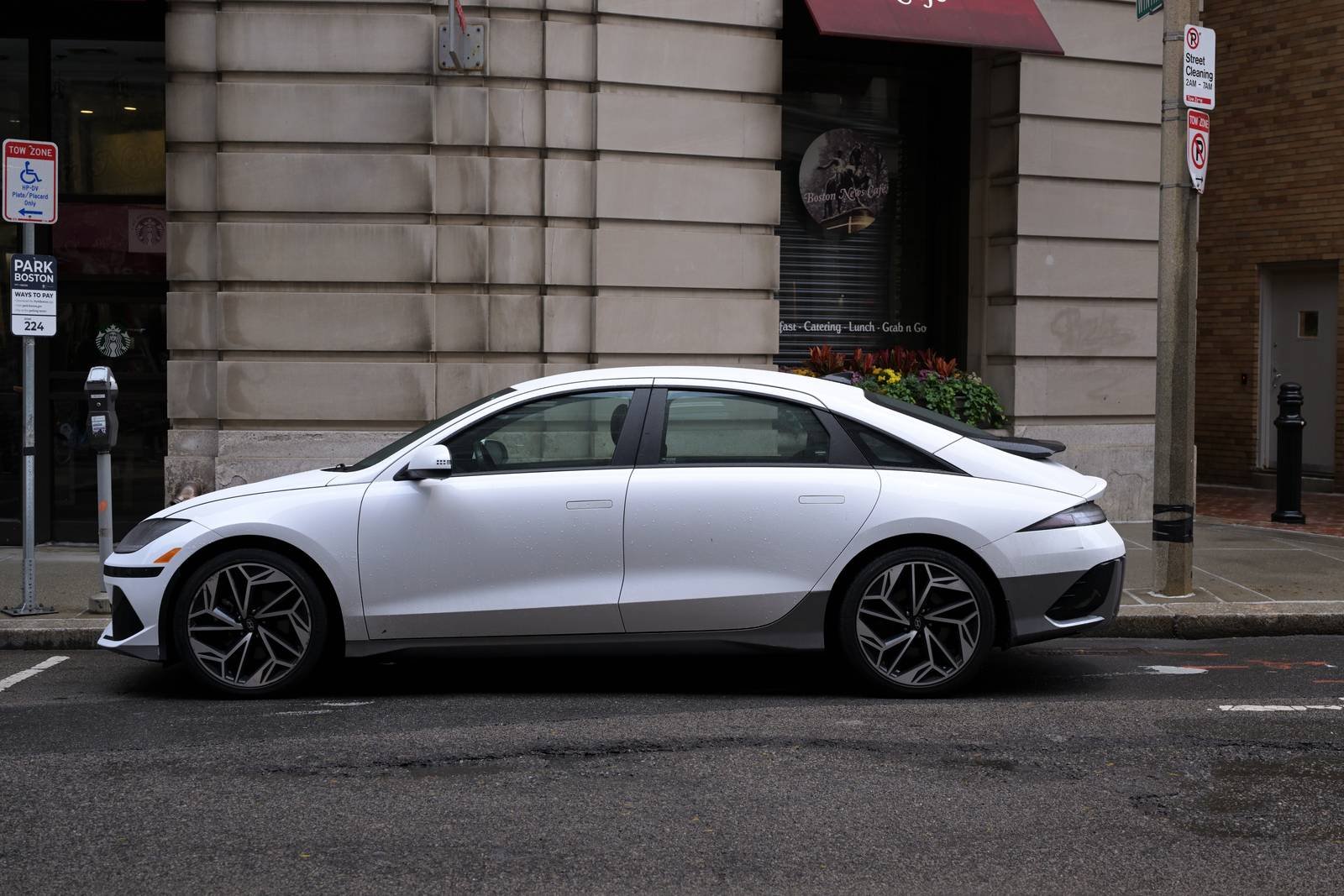
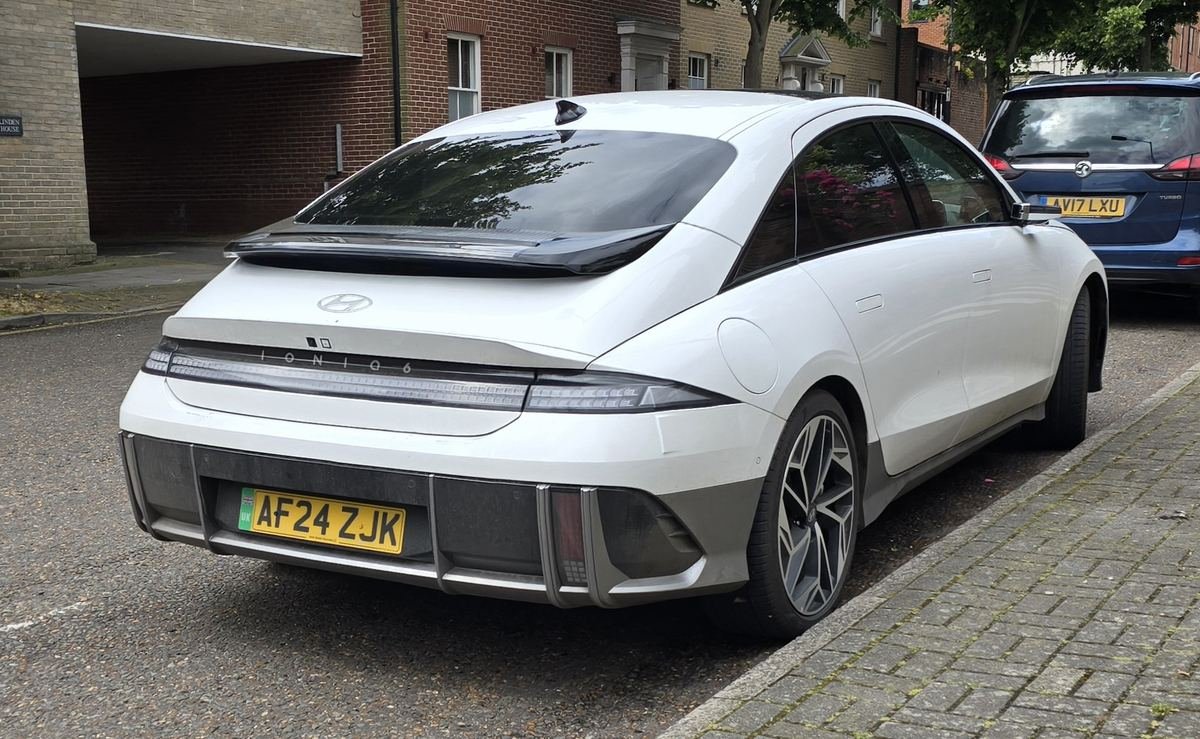
Here’s the deal: Hyundai’s sleekest EV flopped in showrooms, got axed from the US lineup, and is now one of the best used-car deals in America. You can buy a low-mileage Hyundai Ioniq 6 — a car rated by the EPA at up to 361 miles of range — for the price of a used Camry. This is how a slow seller became a bargain, and exactly what to look for before you hand over your money.
InsideEVs spotted the trend back in March: used Ioniq 6 sedans were already trading in the high teens to low $20,000s, with roughly 500 cars listed on Cars.com at the time. That was before Hyundai confirmed the standard car’s fate. Since then, the used market has firmed up a bit — but the core point still holds. For range-per-dollar, almost nothing in the used EV market touches this car.
The catch? There’s no federal tax credit left to sweeten the deal, and you have to know which trim actually delivers the headline range number. Get those two things right, and the Ioniq 6 is a genuine steal.
| Quick answer | The short version |
|---|---|
| The deal | Low-mileage 2023–2024 Ioniq 6 sedans; September 2026 asking-price averages ran $25,807 (2023) to $30,272 (2025) |
| Max EPA range | 361 miles — SE RWD with the 77.4 kWh battery |
| Battery warranty | 10 years / 100,000 miles, and it transfers in full to second owners |
| Fast charging | 800-volt system; 10–80% in about 18 minutes on a 350 kW charger |
| Federal used EV credit in 2026 | $0 — the credit ended September 30, 2025 |
| The catch | Standard model discontinued in the US for 2026; check recalls and battery health first |
Why a flop became the bargain of the year
Hyundai sold just 10,478 Ioniq 6 sedans in the US in 2025, down 15% from 12,264 in 2024, according to USA Today. Demand kept falling: only 229 cars moved in February, and 2026 year-to-date sales stood at just 573 when TFLcar reported on the car’s fate in March. That same month, Hyundai confirmed the standard Ioniq 6 would not return for the 2026 model year in the US. The only version left is the high-performance Ioniq 6 N, a 641-horsepower car expected to cost around $70,000 in extremely limited numbers, as Carscoops reported.
Why did it flop? A sleek sedan was always a hard sell in a market that buys crossovers, and the car is built in South Korea, so it faced high import tariffs as trade tensions rose. The result was a car that reviewers liked and buyers ignored — and that’s exactly the recipe for a used-car bargain.
For new-car buyers, the discontinuation was bad news. For used buyers, it’s the whole opportunity. Depreciation hit hard, dealers still held unsold new 2023 and 2024 cars earlier this year, and the car itself never got worse. It’s the same streamlined sedan riding on Hyundai’s E-GMP platform, shared with the Ioniq 5, Kia EV6, Genesis GV60, Kia EV9 and Ioniq 9.
The 361-mile car: which Ioniq 6 actually goes that far
Here’s the number that matters, stated precisely: the 361-mile figure is an EPA estimate for the SE rear-wheel-drive long-range Ioniq 6, with the 77.4 kWh battery and 225 horsepower. InsideEVs and CarGurus both list the same figure, and it’s the number in this article’s title — but it only applies to that one configuration.
Every other version goes less far. The SE all-wheel-drive car is rated at 316 miles, the SEL rear-wheel-drive at 305, and the SEL and Limited all-wheel-drive cars at 270. The cheapest version, the SE Standard Range with a 53 kWh battery and 149 horsepower, is rated at just 240 miles. If a listing brags about “361-mile range” on an all-wheel-drive car or a standard-range car, it’s wrong — walk away, or negotiate accordingly.
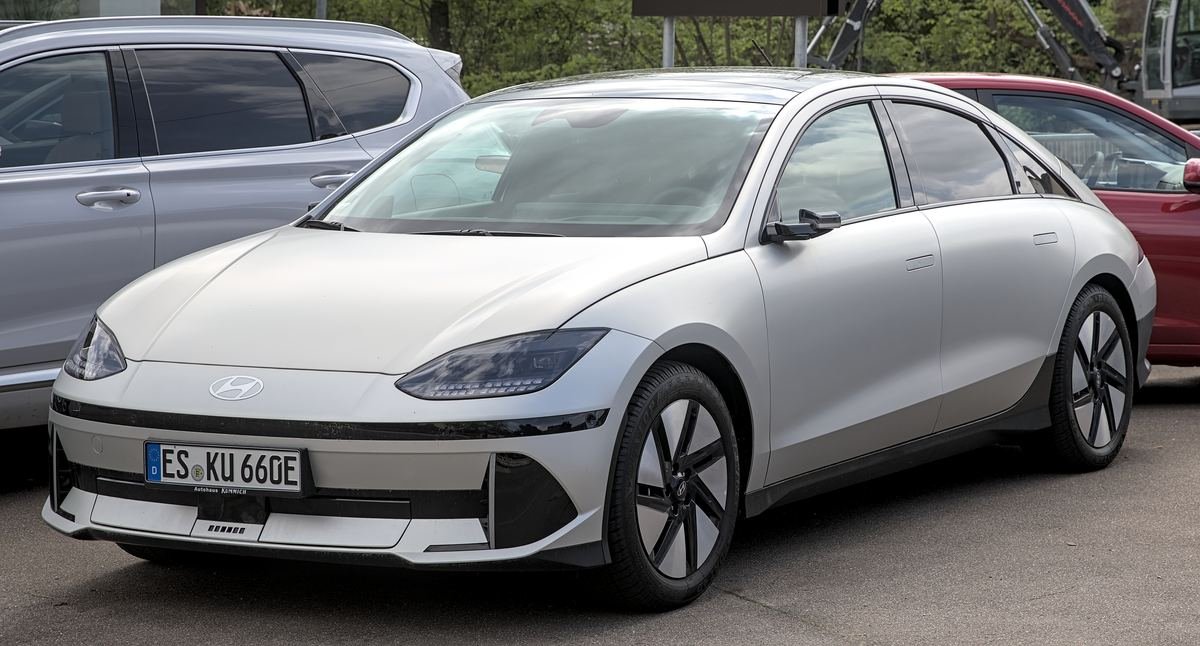
The range isn’t magic. The Ioniq 6 is a teardrop-shaped sedan built for slipping through the air, and InsideEVs calls it one of the most efficient EVs on sale in the US, beaten only by the Lucid Air. That efficiency is why a midsize battery can stretch past 360 miles — and why the car still makes sense as a used buy even after a few years of battery aging.
One honest caveat: EPA figures come from lab tests. Your real range will vary with speed, weather and wheel size — the 20-inch wheels on higher trims are part of why those versions rate lower. Budget for roughly 10–15% less in cold weather or at highway speeds, and the car still covers most daily driving several times over.
What you’ll actually pay in October 2026
InsideEVs found cars in the high teens to low $20,000s in March 2026. CarGurus data from September 4, 2026 shows the market has firmed up since: the 2023 average sits at $25,807 across 565 listings, down 5.25% year over year, with a year-round low of $22,941. The 2024 average is $26,074 — it has the most listings of any year, is down 10.38% year over year, and 34.4% of its listings rate as good or great deals. The 2025 average is $30,272 across 245 listings, with 30.6% rated good or great and 94.7% accident-free.
What does that mean in practice? The cheapest cars are older, higher-mileage, or standard-range models. The sweet spot — a clean long-range rear-wheel-drive car — typically lands in the mid-$20,000s, with the best deals dipping lower. And 2024 cars are worth a close look: they have the most listings and the biggest year-over-year price drop.
Also worth checking: some dealers still hold brand-new unsold 2023 and 2024 cars. If a dealer is discounting a new one hard enough, it can land close to used money — with a full new-car warranty clock. Always compare both before you buy.
The tax-credit trap: don’t count on $4,000
If you’ve been shopping used EVs, you’ve probably heard about the $4,000 federal credit for used EVs. Forget it — at least for any car you buy in 2026. The previously-owned clean vehicle credit (up to $4,000), the new-vehicle credit (up to $7,500) and the commercial credit were all terminated for vehicles acquired after September 30, 2025, under Public Law 119-21, the One Big Beautiful Bill Act signed July 4, 2025. Coltura’s credit tracker confirms the credits are gone for 2026 buyers.
There’s one narrow exception, and it won’t help you: buyers who signed a binding written contract and paid on or before September 30, 2025 may still claim. If you’re buying now, that window is closed.
The practical upshot: price the car with zero federal help. If a listing or a dealer ad still shows “price after tax credit,” that math is stale — and the real price is $4,000 higher than advertised. Some states and utilities still run their own rebates, so check your state’s program before you buy, but don’t let a phantom federal credit drive your budget.
Charging: 800 volts, 18 minutes, and the Tesla question
The Ioniq 6 charges like cars costing twice as much. Its 800-volt system can take a battery from 10% to 80% in about 18 minutes on a 350 kW DC fast charger — that’s a coffee stop, not a lunch stop. At home, a 240-volt charger fills it overnight.
The Tesla question matters more for used buyers. Early Ioniq 6 cars charge through a CCS port, and Hyundai runs a complimentary adapter program: from March 2025, eligible CCS owners can get a CCS-to-NACS adapter and access to more than 20,000 Tesla Superchargers, where Hyundai says its EVs charge at 95–125 kW at V3 sites. Hyundai has been moving its newer EVs to native NACS ports, so pop the charge door on any car you’re considering and confirm what’s actually fitted — and whether the adapter comes with the car. An adapter left behind by the previous owner is a small thing that saves you a real headache.
Battery, warranty, and the checks that matter
This is where the Ioniq 6 deal gets its safety net. Hyundai’s high-voltage battery warranty — 10 years or 100,000 miles, covering capacity down to 70% — transfers in full to second and later owners. That’s the warranty that matters most on a used EV, and it doesn’t shrink when the car changes hands.
The powertrain warranty is a different story. The 10-year/100,000-mile powertrain coverage is for the original owner only; second owners get 5 years or 60,000 miles from the car’s original in-service date, with exceptions for transfers to a spouse or a lessee buying out a lease. The 5-year/60,000-mile new-vehicle limited warranty and the 7-year/unlimited-mile anti-perforation warranty transfer for their remaining terms. The clock runs from the original in-service date, not from the day you buy — so ask a Hyundai dealer to run the VIN and print the remaining coverage before you sign, as Taylor Hyundai’s warranty breakdown lays out.
Then run the checks that every used EV buyer should run, in this order:
- Battery health: ask for a state-of-health report and the car’s charging history. A car charged mostly at home will usually look better than one fast-charged daily, and CarGurus’ used-buying guide stresses confirming the remaining battery warranty before you commit.
- Recalls: CarGurus flags recalls affecting all model years, including ICCU failures, seat-belt anchors that may detach in a crash, and charging-port doors that may come off while driving. Check the VIN against NHTSA’s database before you buy.
- Charge port and adapter: confirm the port type and whether the NACS adapter is included.
- Trim and battery: confirm the car is a long-range 77.4 kWh car, not a 53 kWh standard-range car, if range is why you’re buying.
- Wheels: 20-inch wheels look great and cost range — the SEL and Limited all-wheel-drive cars rate at 270 miles partly for this reason.
- Accident history: most used Ioniq 6s are clean — CarGurus lists 93.9% of 2024 cars and 94.7% of 2025 cars as accident-free — but verify anyway.
Safety is a bright spot: the Ioniq 6 earned an IIHS Top Safety Pick+ award in every model year and a 5-star overall rating from NHTSA, according to CarGurus. That’s rare company for a car this cheap.
Ioniq 6 vs the alternatives
The obvious alternative is a used Tesla Model 3. InsideEVs puts it plainly: the Ioniq 6’s used rivals are basically older Model 3s and Fisker Oceans with their own mountain of issues. The Model 3 gives you Tesla’s charging network and a bigger used selection, but you’ll usually be looking at older cars, and nothing in this price range matches the Ioniq 6’s combination of range, warranty and charging speed.
Inside the Hyundai family, the Ioniq 5 is the practical pick — its hatchback crossover shape carries more stuff — but it’s also the car that held its value better, so you’ll pay more for less range. The Ioniq 6 is the efficiency play: a sleeker shape, a lower price, and the same platform underneath.
And the Fisker Ocean? Cheap for a reason. A defunct maker means parts and service are a gamble most buyers shouldn’t take when a Hyundai with a transferable 10-year battery warranty costs similar money.
Quick answers
How much does a used Hyundai Ioniq 6 cost? September 2026 averages run $25,807 for a 2023, $26,074 for a 2024, and $30,272 for a 2025, per CarGurus. InsideEVs found cars in the high teens to low $20,000s back in March. Budget mid-$20,000s for a clean long-range car.
Which used Ioniq 6 has 361 miles of range? Only the SE rear-wheel-drive long-range with the 77.4 kWh battery, EPA-rated at 361 miles. All-wheel-drive and bigger-wheel versions rate from 270 to 316 miles, and the standard-range car rates at 240.
Does the battery warranty transfer to a second owner? Yes, in full: 10 years / 100,000 miles, down to 70% capacity. The powertrain warranty drops to 5 years / 60,000 miles for second owners.
Can a used Ioniq 6 use Tesla Superchargers? Yes, with Hyundai’s complimentary CCS-to-NACS adapter on early cars — confirm the adapter comes with the car, and check the port on newer cars.
Is there still a federal tax credit for a used EV? No. The used EV credit ended for vehicles acquired after September 30, 2025. Price the car with $0 federal help.
The bottom line
Buy the 2024 SE RWD long-range if you can find one — the most listings, the biggest price drop, and the full 361-mile EPA rating. Verify the battery health, run the VIN for recalls, confirm the adapter, and budget mid-$20,000s with zero federal credit in the math. Do that, and you’re getting one of the most efficient, fastest-charging, longest-range EVs ever sold in the US for used-Camry money. The Ioniq 6 flopped in showrooms. Your gain.