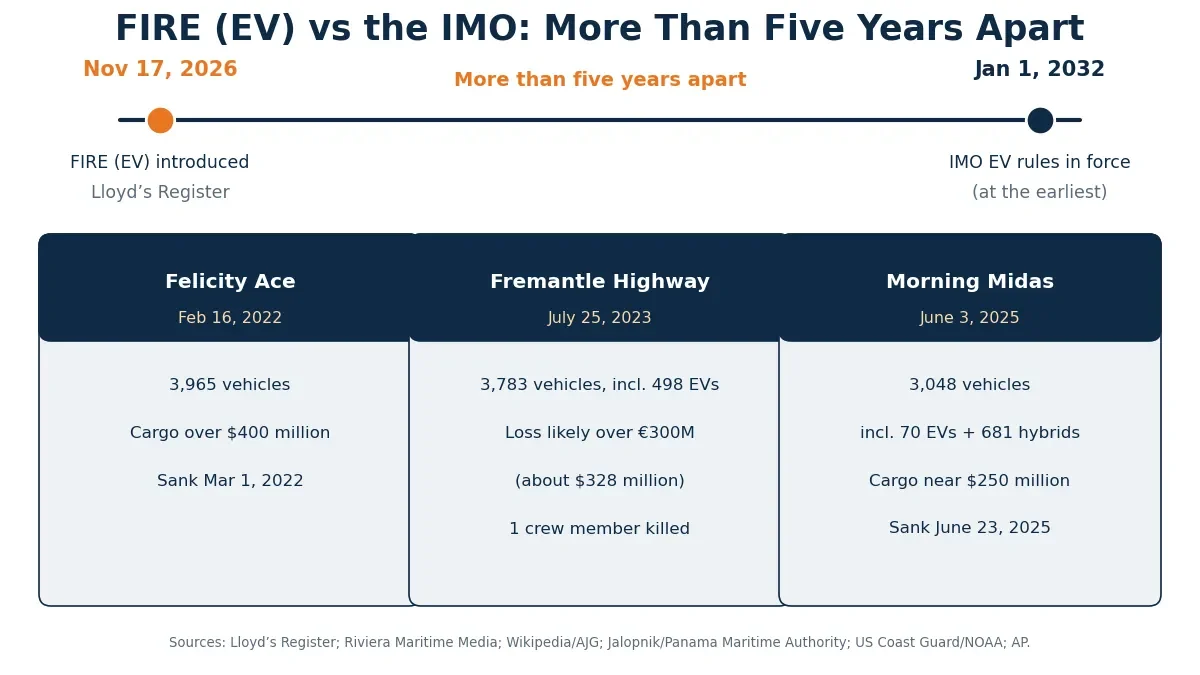
Lloyd's Register introduced FIRE (EV) on Nov 17, 2026, a new ship-design notation that sets rules for fire detection, structural protection, ventilation, suppression, and firefighting on car carriers and RoRo ships that carry electric vehicles. Three car carriers have burned in three years, and the cargo on those three ships was worth nearly $1 billion combined, by our arithmetic from the reported cargo values. The notation is a design standard, not a law, and it does not cover crew training. But it is the first EV-specific ship-design rulebook, and it arrives more than five years before the IMO's own EV rules, which are not expected until Jan 1, 2032 at the earliest.
The three fires that forced the new rules
| Ship | What happened | What was lost |
|---|---|---|
| Felicity Ace | Caught fire Feb 16, 2022, near the Azores; sank Mar 1, 2022 | 3,965 vehicles; cargo worth over $400 million |
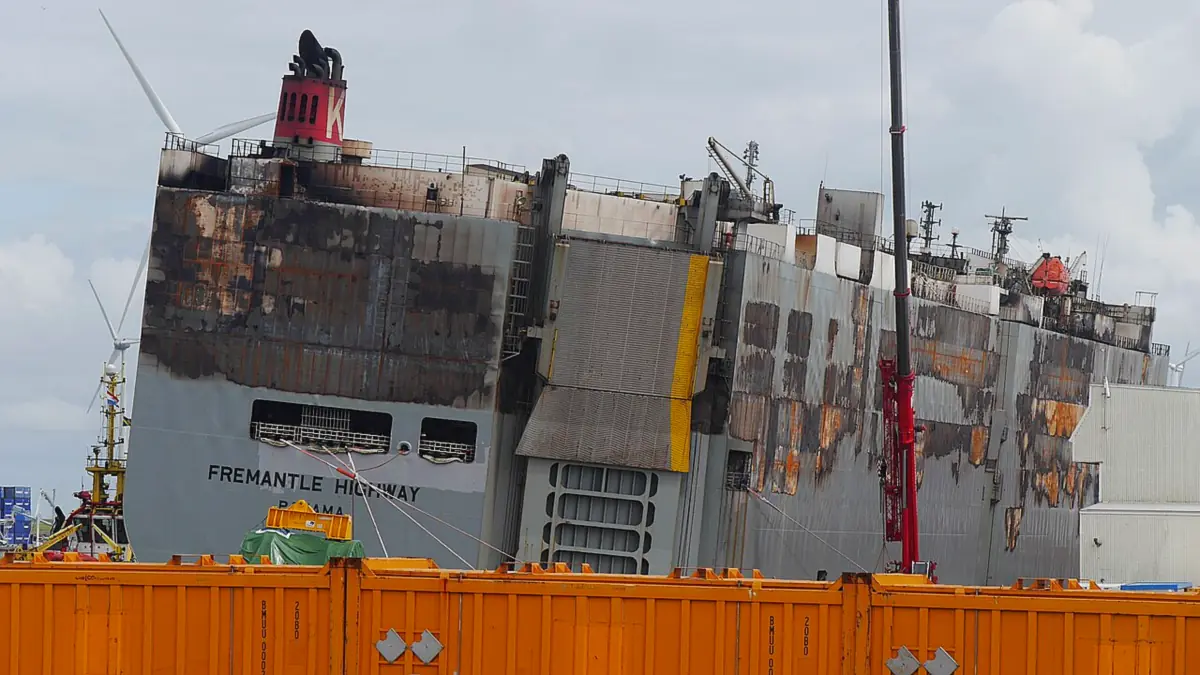
| Fremantle Highway | Caught fire July 25, 2023, in the North Sea; 1 crew member killed | 3,783 vehicles, including 498 EVs; total loss likely over €300 million (about $328 million) |
| Morning Midas | Caught fire June 3, 2025, in the North Pacific; sank June 23, 2025 | 3,048 vehicles, including 70 EVs and 681 hybrids; cargo valued near $250 million |
Sources: Wikipedia and AJG Marine Cargo; Jalopnik and the Panama Maritime Authority; the US Coast Guard and NOAA. Full sources at the end of this article.
Lloyd's Register introduced FIRE (EV) on Nov 17, 2026, a new set of ship-design rules to stop an EV battery fire spreading through a car carrier. The timing matters: the IMO, the body that writes the world's shipping rules, will not have its own EV-specific rules until Jan 1, 2032 at the earliest, as per Riviera Maritime Media.
What Is FIRE (EV)?
FIRE (EV) is a new classification notation from Lloyd's Register, introduced on Nov 17, 2026, as per Lloyd's Register. A classification notation is a set of design rules a ship must meet to earn that label. Lloyd's Register is the classification society that certifies ship designs, and FIRE (EV) is its first notation written for EV fires at sea.
The notation sets requirements in five areas: fire detection, structural fire protection, ventilation, suppression, and firefighting equipment and systems, as per Lloyd's Register. It applies to four vessel types: RoRo ships, RoPax ships, Pure Car Carriers, and Pure Car and Truck Carriers, as per Lloyd's Register.
The reason is the battery. A lithium-ion battery malfunction can cause thermal runaway, a chain reaction that produces severe fires that are hard to control, as per Lloyd's Register. Those fires can also release toxic and corrosive gases, which put the crew and the marine environment at risk, as per Lloyd's Register.
The notation sits in Chapter 6 of Part 6 of Lloyd's Register's July 2026 Rules and Regulations for the Classification of Ships, as per Lloyd's Register. Gabriele Sancin, Fire and Safety Team Lead for Specialist Vessels at Lloyd's Register, said lithium-ion batteries present "specific fire risks that need to be considered from the design stage," as per Lloyd's Register.
Three Ships Burned in Three Years
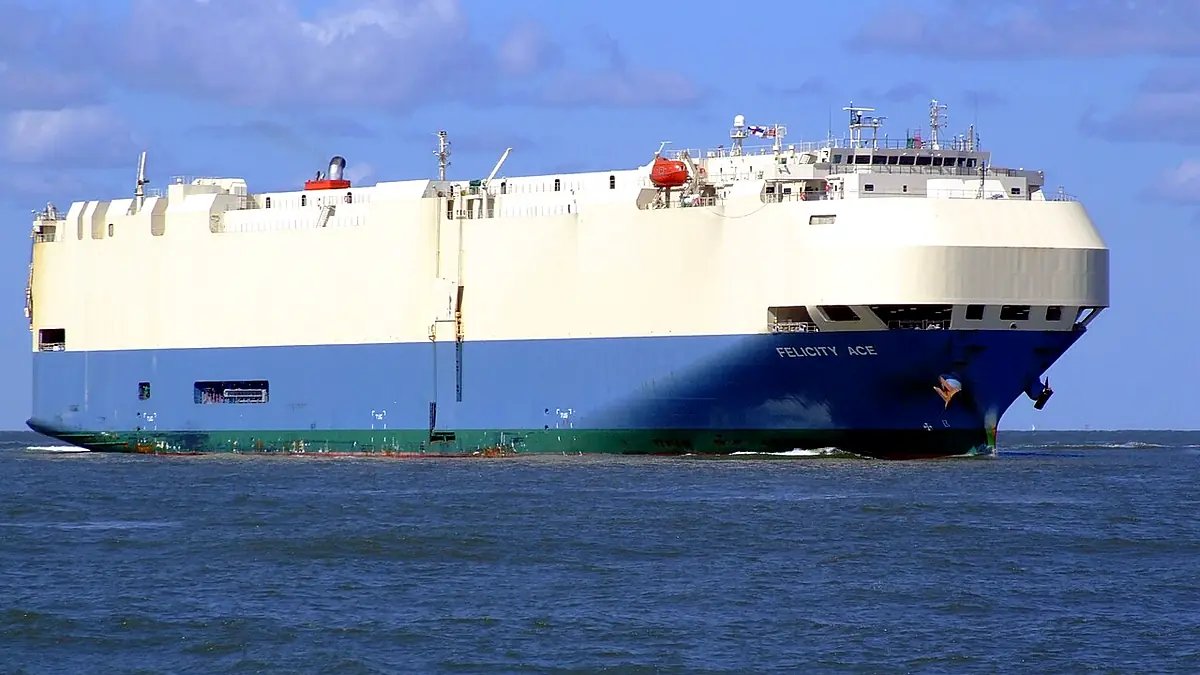
Three car carriers have burned in three years, and the three fires show why Lloyd's Register acted. Car carriers move the EVs Americans buy across the ocean, and BYD ships its EVs to markets around the world, as we covered in BYD's Racco global rollout. When one of those ships burns, the loss is measured in thousands of cars and hundreds of millions of dollars.
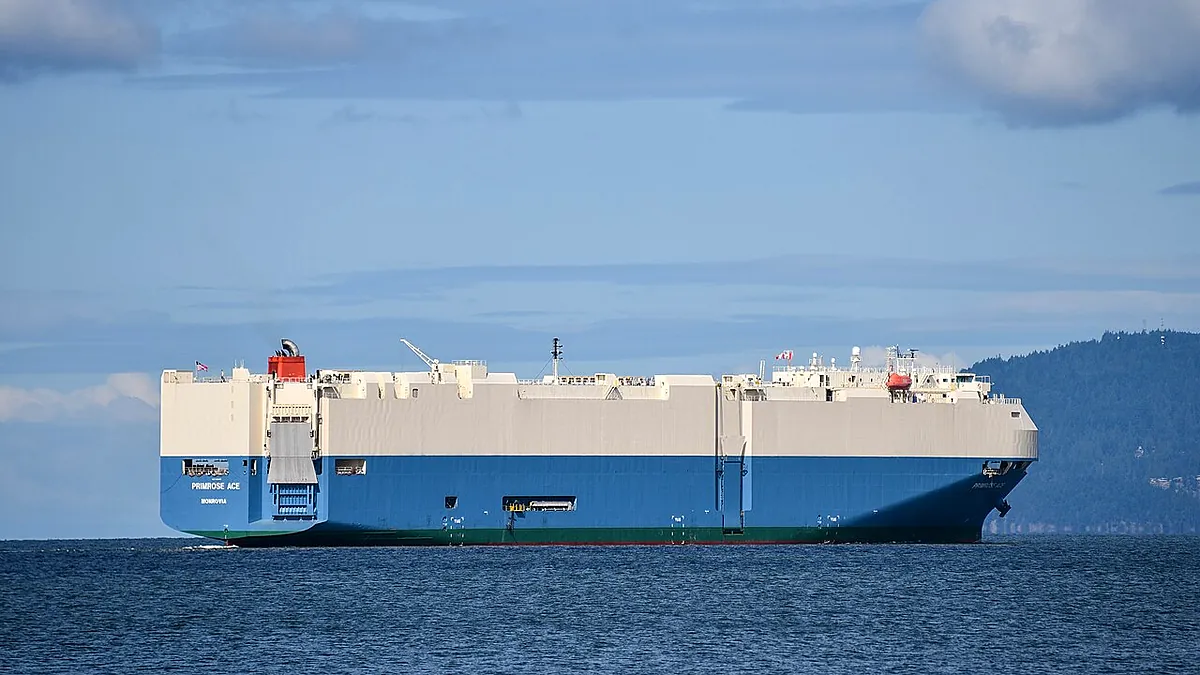
The Felicity Ace caught fire on Feb 16, 2022, in the Atlantic near the Azores, while carrying 3,965 Volkswagen Group vehicles, as per Wikipedia and AJG Marine Cargo. The ship capsized and sank on Mar 1, 2022. The cargo was worth over $400 million, as per Wikipedia.
No one has established what started the Felicity Ace fire. The cause was never definitively determined, as per Wikipedia. EV batteries on board ignited and hampered firefighting, but that does not mean an EV started the fire. The distinction matters, and this article does not claim otherwise.
The Fremantle Highway caught fire on July 25, 2023, in the North Sea, while carrying 3,783 vehicles, including 498 EVs, as per Jalopnik and the Panama Maritime Authority. One crew member was killed. The total loss was likely over €300 million, about $328 million, as per AFP.
The Panama Maritime Authority's final investigation, reported in Nov 2025, identified parked electric BMWs on Deck 8, Hold 4 as the most probable point of ignition, as per the Panama Maritime Authority. That is the most probable cause, not a confirmed one. The report based it on the alarm sequence and crew testimony, because extreme thermal damage ruled out definitive forensic confirmation. The same report cited loading ramps unsuited to EVs as a contributing factor, as per the Panama Maritime Authority.
The Morning Midas caught fire on June 3, 2025, in the North Pacific, while carrying 3,048 vehicles, including 70 fully electric cars and 681 hybrids, as per the US Coast Guard and NOAA. All 22 crew were rescued unharmed. The ship sank on June 23, 2025. The cargo was valued near $250 million, as per AP.
The cause of the Morning Midas fire was not established, as per the US Coast Guard and NOAA. Smoke was first seen on a deck carrying EVs, but that does not establish that an EV battery started the fire. This article does not claim otherwise.
What FIRE (EV) Actually Requires
FIRE (EV) sets design requirements in five areas, and each one targets a specific weakness the three fires exposed. The five areas are fire detection, structural fire protection, ventilation, suppression, and firefighting equipment and systems, as per Lloyd's Register.
The goal is containment. The requirements focus on reducing the risk of an EV fire spreading beyond the space where it starts, as per Lloyd's Register. A fire that stays in one vehicle space is a problem a crew can fight. A fire that spreads through a ship is not.
Suppression is the hardest part. A burning EV requires more than 10,000 liters of water, as per the Panama Maritime Authority. The Fremantle Highway did not have that on board. The standard CO2 systems used on the RoRo decks of vehicle carriers may not be sufficient to deal with EV fires, as per MarineLink and Interferry. RoRo cargo and RoPax ferries use drencher systems, which deliver large amounts of water, and those systems can deal with an EV fire on the RoRo deck, as per MarineLink and Interferry.
The notation applies to the ship's design, including the vehicle-space arrangements and the systems and equipment serving those spaces, as per Lloyd's Register. That is the boundary. What the ship is built with falls inside it. What the crew does with the ship falls outside it.
What the Notation Leaves Out
FIRE (EV) is a design standard, not a law. It is also not an IMO mandate. It applies to ships seeking the notation from Lloyd's Register. A shipowner chooses to build to it. No government forces it.
That distinction matters for readers. A notation changes how new ships are designed. It does not change how existing ships are run, and it does not force any shipowner to adopt it.
Crew training is outside the scope of the notation, as per Lloyd's Register. Operational measures, including crew training requirements, fall outside it. The notation covers the ship's design, not the crew's readiness. A ship can meet every design rule in FIRE (EV) and still depend on its crew to fight a fire well.
That gap is real. The notation makes the ship harder to burn through. It does not make the crew better at fighting a fire. Both matter, and only one is covered here.
Why the IMO Won't Have EV Rules Until 2032
This is the part no top-10 page explains for a car reader. The IMO is the body that writes the world's shipping rules. Its own EV-specific rules are years away. Lloyd's Register moved first.
The SOLAS amendments that entered into force on Jan 1, 2026 cover fire detection, video monitoring, and water-based suppression on vehicle decks, as per Lloyd's Register and Riviera Maritime Media. They say nothing about electric vehicles. The amendments are identified as MSC.550(108), which amends SOLAS II-2/20, and MSC.555(108), which amends FSS Code chapters 7 and 9, as per Lloyd's Register and Riviera Maritime Media.
The IMO's Sub-Committee on Ship Systems and Equipment held its 12th session, SSE 12, from Mar 9 to 13, 2026, as per Riviera Maritime Media. The session agreed to evaluate fire protection, detection, and extinction for vehicle and RoRo spaces carrying new-energy vehicles. Its priority is interim guidelines for fire safety on Pure Car and Truck Carriers and for video monitoring and detection, before any draft SOLAS amendments, as per Riviera Maritime Media. Work continues in a correspondence group until SSE 13, as per Riviera Maritime Media.
Any agreed draft SOLAS amendments are expected to enter into force on Jan 1, 2032 at the earliest, as per Riviera Maritime Media. That is more than five years after Lloyd's Register introduced FIRE (EV).
So the sequence is clear. Lloyd's Register wrote EV-specific ship-design rules in Nov 2026. The IMO will not have its own EV-specific rules until 2032 at the earliest. A classification society moved years ahead of the body that writes the global rules. That gap is the reason FIRE (EV) matters now, and it is the original point of this article.
What This Means for a Car Buyer
The cars Americans buy cross the ocean on these ships. That is the link between a shipping rule and a car buyer. FIRE (EV) does not change the car. It changes the ship that carries the car.
It does not make an EV more or less likely to catch fire on the road. The notation is about the crossing, not the car. A battery fire in a garage or on a highway is a different problem from a battery fire in a ship's vehicle deck, and this notation addresses only the ship.
The cost of a battery is part of why the fires matter to buyers. We break down what a replacement battery costs for the F-150 Lightning. When a ship carrying thousands of EVs burns, the loss is measured in vehicles and in batteries that cannot be recovered.
EVs are increasingly built in the US, and BMW's Woodruff battery plant will supply the first US-made EV from that site. But even US-built EVs cross water on their way to buyers, and imported EVs cross an ocean. The ship is part of the supply chain for almost every EV sold in America.
The Morning Midas fire had a direct effect on buyers in one state. Alaska Marine Lines banned EVs and plug-in hybrids after the fire, as per the Juneau Independent. Owners and businesses in Alaska have lived with that ban for more than a year, and the ban shows how a ship fire can cut off EV supply to a whole region.
The US EV market is still adjusting, and we track how the US EV market has changed one year after the tax credit ended. Shipping safety is one more piece of that market. A safer crossing does not lower the price of an EV, but it lowers the risk that the car a buyer ordered never arrives.
What Happens Next
The next milestone is SSE 13, when the IMO's correspondence group reports back, as per Riviera Maritime Media. That session will shape the interim guidelines for Pure Car and Truck Carriers. The draft SOLAS amendments that follow are not expected to enter into force until Jan 1, 2032 at the earliest, as per Riviera Maritime Media.
Watch whether shipowners adopt the FIRE (EV) notation on new builds. The notation is in Chapter 6 of Part 6 of Lloyd's Register's July 2026 Rules, as per Lloyd's Register. It is available now. The question is how fast it becomes the standard for new car carriers.
Watch the mainstream auto press. The notation was announced on Nov 17, 2026, and the auto blogs had not covered it two days later. That window will close. When a major auto outlet picks it up, the story will shift from a shipping rule to a car-buyer story, and this article will already be there.
Frequently asked questions
Is FIRE (EV) a law?
No. FIRE (EV) is a classification notation from Lloyd's Register, a design standard for ships that seek it. It is not a law and not an IMO mandate. A shipowner chooses to build to it.
Did an EV start the Felicity Ace fire?
No one has established that. The cause of the Felicity Ace fire was never definitively determined, as per Wikipedia. EV batteries on board ignited and hampered firefighting, but that does not mean an EV started the fire.
Will FIRE (EV) make my EV safer?
No, it does not change the car. FIRE (EV) is about the ship that carries the car, not the car itself. It does not make an EV more or less likely to catch fire on the road.
When will the IMO have its own EV rules for ships?
Not before Jan 1, 2032 at the earliest, as per Riviera Maritime Media. The SOLAS amendments that entered into force on Jan 1, 2026 say nothing about electric vehicles.
How We Verified This Data
We checked the notation against Lloyd's Register's Nov 17, 2026 press release, the three fires against the Panama Maritime Authority's final report, the US Coast Guard and NOAA, and the IMO timeline against Riviera Maritime Media's reporting on IMO SSE 12. Every number in this article comes from those sources, and each one is named next to the number it backs.
Sources
- Lloyd's Register, Nov 17, 2026 — Lloyd's Register introduces new notation to tackle EV fire risks on car carriers — the FIRE (EV) notation, the five requirement areas, the four vessel types, the design-only scope, and the Sancin quote.
- Riviera Maritime Media, Apr 8, 2026 — EV fire risks draw IMO's attention — IMO SSE 12, the interim guidelines, and the Jan 1, 2032 earliest date for draft SOLAS amendments.
- NOAA Office of Response and Restoration — Morning Midas incident, June 2025 — the Morning Midas fire, the 3,048 vehicles, the 70 EVs and 681 hybrids, and the 22 crew rescued.
- Panama Maritime Authority final investigation (reported Nov 2025) — Fremantle Highway — the most probable ignition point (parked electric BMWs, Deck 8, Hold 4) and the loading ramps as a contributing factor.
- Wikipedia — Felicity Ace — the Feb 16, 2022 fire, the 3,965 vehicles, the Mar 1, 2022 sinking, the cargo worth over $400 million, and the undetermined cause.
- Jalopnik — EV suspected as cause of deadly cargo ship fire — the Fremantle Highway fire, the 3,783 vehicles, the 498 EVs, and the one crew member killed.
- MarineLink / Interferry, Mar 17, 2026 — Interferry says vessel differences need attention — CO2 systems may not be sufficient for EV fires on vehicle-carrier RoRo decks, while drencher systems can deal with an EV fire.
- Juneau Independent, Aug 7, 2026 — One year into a shipping ban on EVs — Alaska Marine Lines banned EVs and plug-in hybrids after the Morning Midas fire.