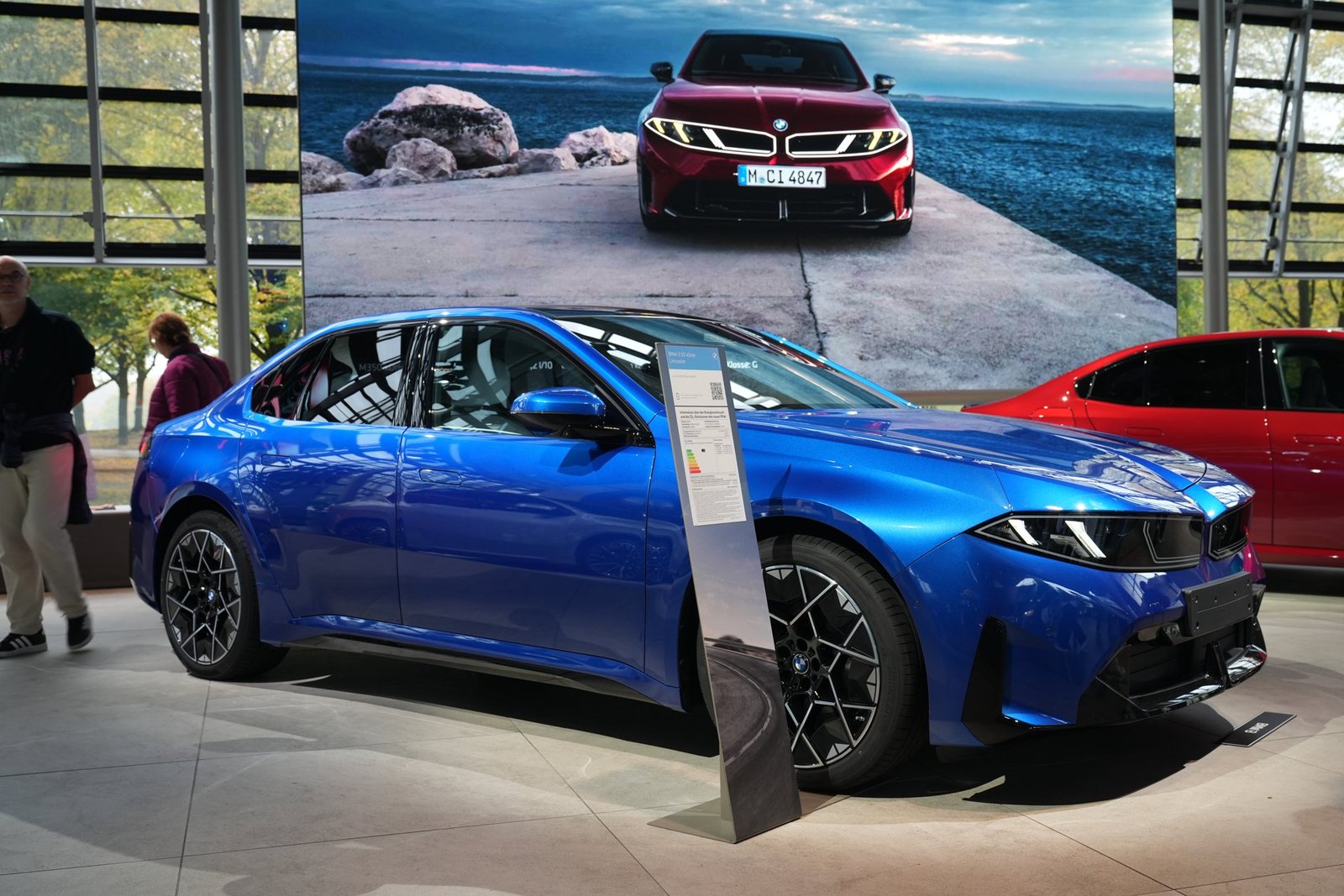
BMW opened its first American battery plant on Friday, November 13, and with it, the company’s electric future in the United States got a lot more real. The new Plant Woodruff in South Carolina started series production of sixth-generation high-voltage batteries the same day it opened its doors. Those batteries will go into the BMW iX5, the first fully electric BMW ever assembled in the United States.
The headline number for buyers is $79,800. That is the starting price of the iX5 60 xDrive, before a $1,450 destination charge. BMW says the SUV will travel up to an estimated 435 miles on a charge, and it will open orders this month. The car itself goes on sale in the first quarter of 2027, with production starting at Plant Spartanburg before the end of this year.
This is not a concept car or a pilot line. It is a $700 million factory, more than a million square feet, staffed by over 300 people working next to about 250 robots. And it sits 15 miles from the plant that will bolt its batteries into cars. Here is what opened, what the car offers, and what is still not settled.
The news, in 30 seconds
BMW Group officially opened Plant Woodruff on November 13, 2026, marking the start of series production of its sixth-generation, or Gen6, high-voltage batteries. The plant will supply packs for the new BMW iX5 and for future electric vehicles built at BMW Group Plant Spartanburg, the company said in its announcement.
The iX5 is the first fully electric BMW to be assembled in the United States. BMW promised it would start building fully electric vehicles in the US by the end of 2026, and the Woodruff opening is the piece that makes that promise work: no battery plant, no American-made iX5.
South Carolina Governor Henry McMaster joined BMW executives at the opening, on the same ground where he stood with BMW leadership to break ground on the facility a few years ago. “BMW continues to deliver on its commitments to South Carolina,” McMaster said. “Today, we are seeing that investment come to life and marking another milestone in BMW’s commitment to South Carolina.”
| The Woodruff opening at a glance | |
|---|---|
| Plant | BMW Plant Woodruff, South Carolina |
| Opened | November 13, 2026 |
| Investment | $700 million, part of a $1.7 billion South Carolina package |
| Size | More than one million square feet |
| People and machines | More than 300 employees, about 250 robots |
| What it builds | Gen6 high-voltage battery packs, 144 kWh for the iX5 |
| First customer | BMW iX5 60 xDrive, from $79,800 |
| Range | Up to an estimated 435 miles (BMW estimate, not EPA-rated yet) |
| On sale | First quarter of 2027; orders open November 2026 |
Figures from BMW Group, BMWBlog, and the Greenville News, November 13, 2026.
What opened today in Woodruff
Plant Woodruff is not a small add-on. BMW announced the $700 million facility in October 2022, broke ground in June 2023, and started construction that September. Equipment installation began in September 2024 while the building was still going up, and the first pre-series battery packs came off the line in summer 2025. Friday’s opening turns a three-year build into a working factory.
The site itself has a past. It sits along SC-101 on the former home of the S.J. Workman Peach Farm, and BMW marked that history at the opening by handing out pins shaped like peaches. Woodruff mayor Kenneth Gist, who spoke at the ceremony, put it this way: “From the very first conversation, I knew this partnership was different. BMW and the city of Woodruff want the same thing – success in business, success in our community and success in building the next generation of BMW electric vehicles to be the best in the world. Today that dream is right in front of us.”
Inside, the plant runs on the kind of tech BMW has been pushing across its factory network. Production lines were planned with digital twins, staff trained in a virtual-reality replica of the plant, and in-house AI agents watch the production data. Every battery that leaves the line has more than 90 characteristics checked before end-of-line testing, part of what BMW calls its zero-defect approach.
Robert Engelhorn, president and CEO of BMW Manufacturing in Spartanburg, framed the opening as a promise kept. “We said we would begin assembling fully electric BMW vehicles in the US by the end of 2026 – and we are delivering on that commitment,” he said. “With today’s opening of Plant Woodruff, we are further expanding our footprint in South Carolina and strengthening the close integration of battery and vehicle production.”
That closeness is the point. Finished battery packs travel by truck about 15 miles from Woodruff to Plant Spartanburg, where the iX5 will be built. BMW calls the setup “local for local”: build the battery near the car, cut the shipping, and keep the supply chain short. Woodruff is the fourth site in BMW’s Gen6 network to start series production, after Debrecen in Hungary, Irlbach-Straßkirchen in Germany, and Shenyang in China. A fifth, in San Luis Potosí, Mexico, follows in 2027.
BMW also says Woodruff uses no fossil fuels in normal operation, and its industrial trucks run on hydrogen. It is a claim about the plant’s day-to-day running, not about the whole supply chain, and it is worth reading that way.
The car it powers: the 2027 BMW iX5 60 xDrive
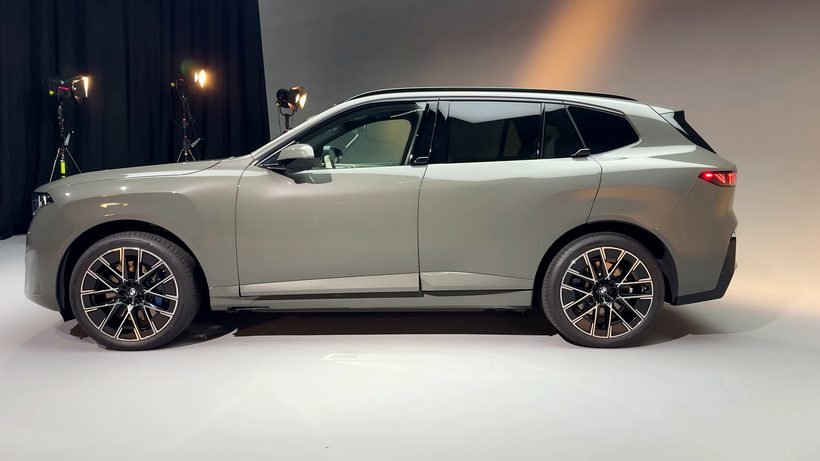
The first car to get a Woodruff battery is the one BMW needs most in America: an electric version of its best-selling SUV. The 2027 BMW iX5 60 xDrive is the launch model, a dual-motor all-wheel-drive SUV with 578 horsepower and 593 lb-ft of torque. BMW says it will hit 60 mph in 4.4 seconds and tow up to 6,000 pounds.
Start with the price, because that is where the iX5 makes its case. The iX5 60 xDrive starts at $79,800, and the $1,450 destination charge takes it to $81,250 before options. The gas-powered 2027 X5 40 xDrive, already on sale, starts at $72,100. That leaves a $7,700 gap between the electric version and the gas one – a strikingly narrow difference for a luxury SUV, and one rival brands will have to answer.
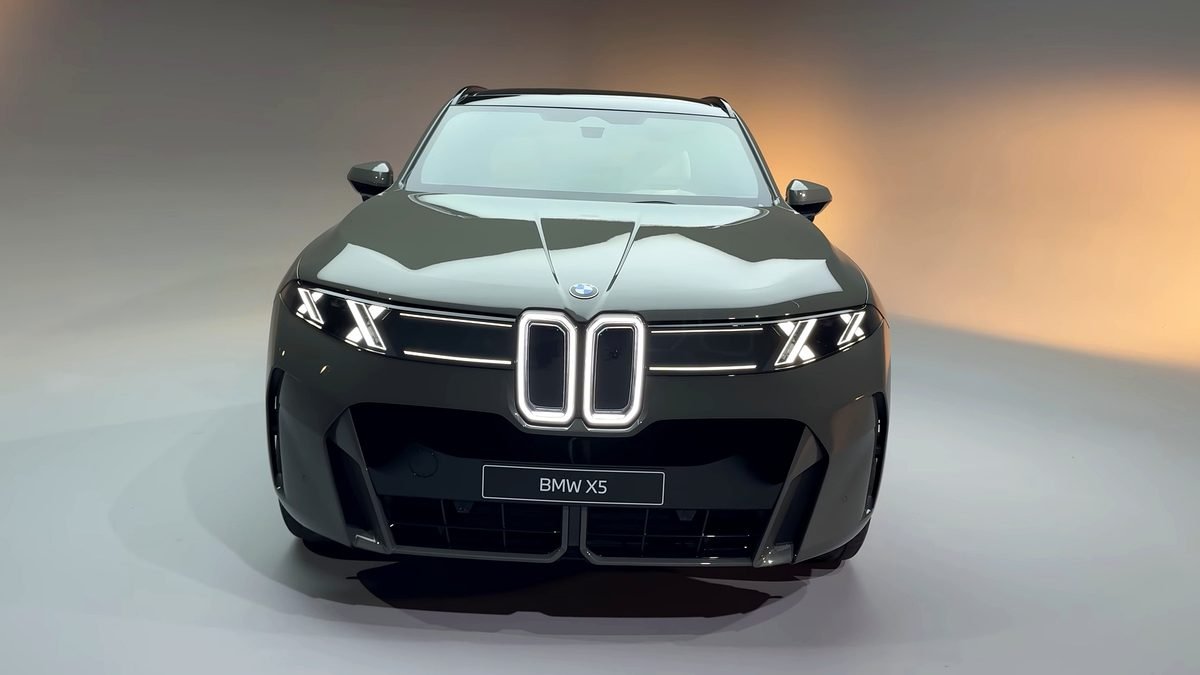
Size-wise, the iX5 is a full-size family SUV: 197.2 inches long, 78.7 inches wide, and 68.9 inches tall, or about the size of the Porsche Cayenne Electric. It seats five, and it looks like an X5 from most angles – but the face is new. BMW’s Neue Klasse design brings a slimmer, more upright kidney grille and a Double-X light signature that folds the headlights, daytime running lights, side lights, and turn signals into a single unit. The Double-X headlights come as standard, though drivers who find them too loud can switch them off for simpler diagonal stripes.
The battery is the big number: 144 kWh of usable energy, the largest pack BMW has ever fitted to a fully electric car. BMW estimates up to 435 miles of range from it. That figure needs a clear label: it is BMW’s own estimate, based on its testing to EPA procedures, not an EPA-certified rating. The official number will land before the car reaches showrooms, and it may differ.
Charging is where the iX5 tries to stand out. BMW rates the pack at up to 460 kW on a fast charger, and at a media event in Southern California with charging networks IONNA and Alpitronic, the SUV hit a 464 kW peak and added 170 miles of range in 10 minutes. Treat that as a best case: peak rates taper as a battery fills, and everyday road-trip stops will usually be slower than a staged demo. Still, 170 miles in 10 minutes is the kind of number that changes how a long drive feels.
Orders open in November, and the car goes on sale in the first quarter of 2027. Do not confuse the two dates: putting your name down this month is not the same as driving one home, and the first cars will reach buyers early next year.
| 2027 BMW iX5 60 xDrive | |
|---|---|
| Starting price | $79,800 ($81,250 with $1,450 destination) |
| Battery | 144 kWh usable, Gen6, 800-volt |
| Range | Up to an estimated 435 miles (BMW estimate) |
| Power | 578 hp, 593 lb-ft |
| 0 to 60 mph | 4.4 seconds |
| Towing | Up to 6,000 lbs |
| Peak charging | Up to 460 kW; 170 miles in 10 minutes (demo) |
| Size | 197.2 in long, 78.7 in wide, 68.9 in tall |
| Built | Plant Spartanburg, South Carolina |
| Orders open | November 2026; on sale Q1 2027 |
Specs from BMW Group and BMWBlog, October–November 2026. Range is BMW’s estimate, not an EPA rating.
Inside the Gen6 battery
The battery is the real story of the Woodruff plant, and it is a clean break from the packs BMW has built until now. The Gen6 pack uses cylindrical cells that are 46 mm wide and 120 mm tall, built straight into the pack with no modules in between – a cell-to-pack design. BMW says the taller cells hold almost 30 percent more usable energy than the 95-mm cells in the iX3, and the 144-kWh iX5 pack is the biggest the company has fitted to a fully electric BMW.
How a pack comes together in Woodruff says a lot about how BMW builds cars now. After a voltage check, the cells are grouped into clusters and connected to coolers. The clusters are laser-cleaned and welded, and every weld seam is checked inline. Foam then fills the pack and hardens around the parts, binding them into one mechanical unit. The housing is sealed and riveted, and the Energy Master control unit goes in last. Every pack gets a full end-of-line inspection before it is loaded for Spartanburg.
One thing Woodruff does not do is make cells. The plant assembles packs from cells bought from suppliers, and that supply chain has a wrinkle. When BMW announced the project in 2022, its cell partner was AESC, which was building a factory in Florence, South Carolina, about two hours away. AESC paused construction there in June 2025, citing policy and market uncertainty, and will keep supplying cells to BMW as a bridge. Deliveries from LG Energy Solution’s existing American plant in Arizona are set to start in the late 2020s. So the cells in the first American-made iX5s will come from a supplier, not from a BMW plant – and the US-made cell supply is still a few years out.
BMW also points to the greener side of the Gen6 cell: a high share of recycled cobalt, lithium, and nickel, with CO2 emissions per watt-hour about 28 percent below the Gen5 cell in the iX. That is BMW’s own figure, and it covers the cell, not the whole car.
Why South Carolina matters
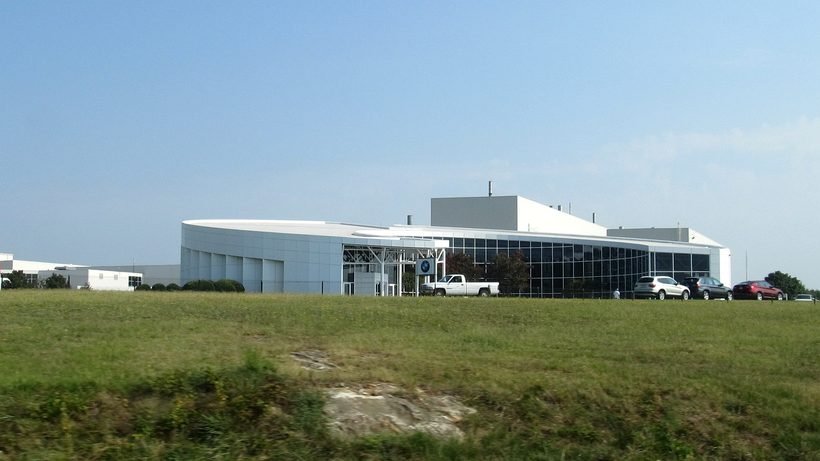
South Carolina is not a new bet for BMW – it is a 30-year one that just got bigger. In 1992, BMW announced that its first plant outside Germany would be built in the state, and Plant Spartanburg opened in 1994. Back then, the company said it would invest $600 million and employ 2,000 people by 2000. Today, more than three decades later, the plant employs over 11,000 people and builds about 1,500 vehicles a day. It built more than 412,800 vehicles last year, and it is the largest plant in BMW’s global network.
The money around the plant is large, too. A University of South Carolina Darla Moore School of Business study puts Plant Spartanburg’s annual economic output in the state at $36.1 billion in 2026. The study’s jobs multiplier is 4.2, which means for every 10 jobs at the plant, another 32 jobs exist elsewhere in South Carolina. All told, the plant has created around 55,327 jobs in the state. Research economist Joey Von Nessen, who led the study, called the multiplier “such an outlier compared to what we see for the average industry.”
Woodruff is part of a $1.7 billion package BMW announced in 2022: $1 billion to prepare Spartanburg for EVs and $700 million for the battery plant. And the iX5 is only the start. Raymond Wittmann, the BMW board member responsible for production, said the company will assemble at least six fully electric models at Plant Spartanburg by 2030. “The start of series production of Gen6 high-voltage batteries in Woodruff is therefore much more than the successful launch of a new site,” Wittmann said. “It lays the foundation for the first-ever series production of fully electric BMW vehicles at Plant Spartanburg and on the American continent.”
BMW has already signaled what comes next: the iX6 and iX7 are reported to be in line for Spartanburg as well, and the X5 lineup will keep growing. The gas X5 40 xDrive is already on sale, the plug-in hybrid X5 50e and the battery-electric iX5 follow in early 2027, and a hydrogen-powered iX5 is scheduled for production at a later stage.
There is a tariff angle here, too. An electric flagship assembled in Spartanburg, with batteries from 15 miles away, sidesteps the import-duty exposure hanging over German-built rivals in a year when tariffs have shaped nearly every carmaker’s plans. BMW’s “local for local” pitch is as much about trade policy as it is about logistics.
What to watch: the fine print
Four things deserve a second look before you put the iX5 on a shortlist.
First, the range. The 435-mile figure is BMW’s estimate, not an EPA-certified rating. BMW tested to EPA procedures, but the official number has not landed. Treat 435 as a target until the EPA test comes back.
Second, the dates. Orders open in November, production starts before the end of the year, and the car goes on sale in the first quarter of 2027. Ordering early gets you in line; it does not get you a car this year.
Third, the cells. Woodruff builds packs, not cells, and the US-made cell supply from LG Energy Solution’s Arizona plant does not start until the late 2020s. Until then, AESC supplies the cells as a bridge. If you care where the parts in your car come from, that gap is the honest answer for now.
Fourth, the volume. BMW has not said how many battery packs Woodruff can build in a year. With at least five more electric models due at Spartanburg by 2030, that number is the one to watch – it decides whether the iX5 stays a niche flagship or becomes a volume seller.
How the iX5 stacks up
The iX5 lands in a US electric market that has shrunk and reset over the past year. A year after the $7,500 federal tax credit ended, US EV sales are growing again, but the market is smaller and more price-sensitive than it was. In that market, a $79,800 luxury SUV with 435 miles of estimated range is not a volume play – it is a flagship meant to prove BMW can build a serious electric X5 in America.
The price gap to the gas X5 is the iX5’s best argument: $7,700 before options is a small premium for an electric version of the same SUV, and the iX5’s 578 horsepower and 4.4-second sprint are well beyond what the $72,100 gas model offers. The charging speed is the other argument. A 460-kW peak and 170 miles in 10 minutes, if the demo holds up in the real world, puts the iX5 among the fastest-charging electric SUVs you can buy.
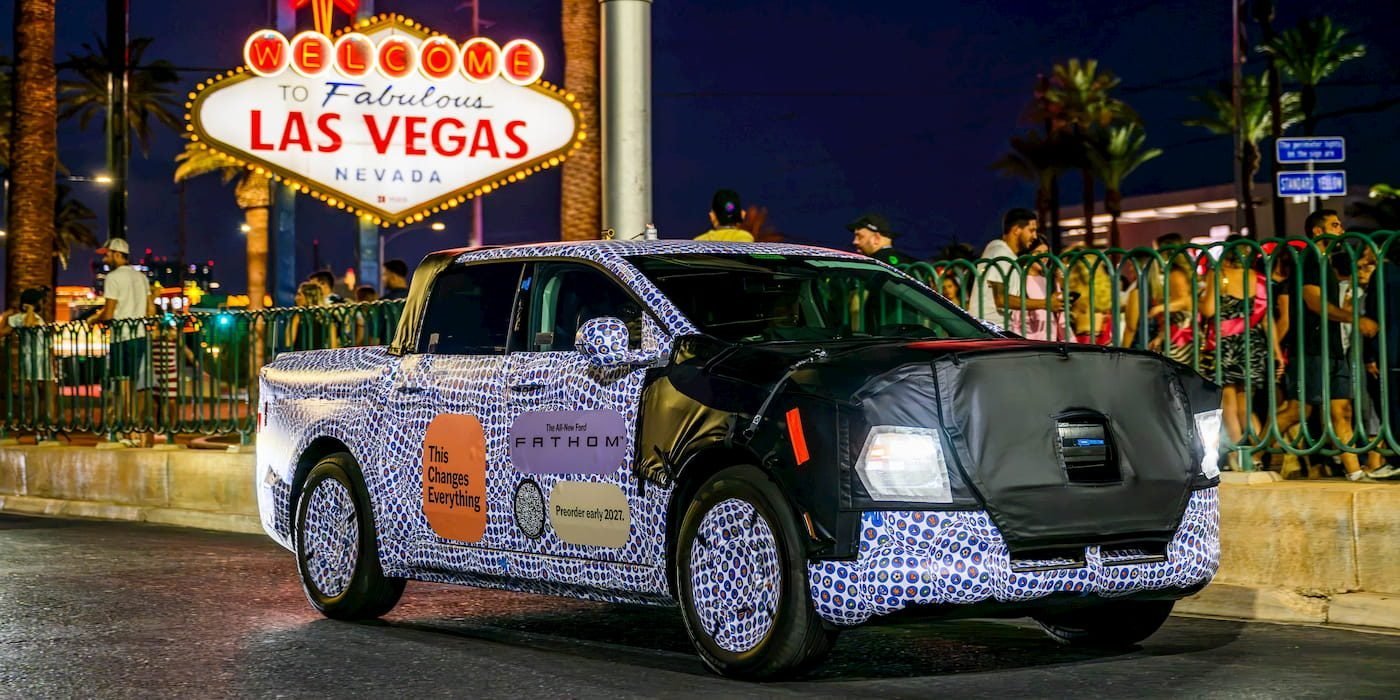
The counterpoint is choice. Ford’s Fathom electric pickup starts at $28,350, and the cheap end of the market is where most of the growth is. BMW is betting the other way: that buyers who already pay $70,000-plus for an X5 will pay a little more for the electric one, built in the same state. The Woodruff plant is the bet behind that bet.
BMW’s electric push does not stop with the X5. The new BMW i3, a Neue Klasse sedan with up to 603 horsepower expected, is due in the US in late 2027 at about $75,000. Between the i3 and the iX5, BMW is building its American electric lineup from the top down – and now, for the first time, it is building it in America.
The plant is open, the batteries are rolling, and the first American-made BMW EV is weeks from production. The iX5 has to prove the rest: the range, the charging, and the price, in the hands of buyers, not on a stage in Spartanburg.
More on BMW’s electric lineup is on our EV news page, and the rest of today’s car news is on the EVThrottle homepage.
BMW iX5 and Woodruff plant questions, answered
When does the BMW iX5 go on sale?
BMW will open orders for the iX5 60 xDrive in November 2026, and the SUV goes on sale in the first quarter of 2027. Production starts at Plant Spartanburg in South Carolina before the end of 2026.
How much does the BMW iX5 cost?
The iX5 60 xDrive starts at $79,800 before a $1,450 destination charge, or $81,250 all in. The gas-powered 2027 X5 40 xDrive starts at $72,100, so the electric version costs $7,700 more before options.
How far can the BMW iX5 go on a charge?
BMW estimates up to 435 miles of range from the 144-kWh battery. That is BMW’s own estimate, not an EPA-certified rating yet. The pack charges at up to 460 kW, and a BMW demo added 170 miles of range in 10 minutes.
What is the Woodruff battery plant?
Plant Woodruff is BMW’s $700 million, one-million-square-foot battery plant in Woodruff, South Carolina. It opened November 13, 2026, employs more than 300 people alongside about 250 robots, and builds sixth-generation high-voltage battery packs for the iX5 and future electric models built 15 miles away in Spartanburg.
Is the iX5 the first BMW EV built in America?
Yes. The iX5 is the first fully electric BMW assembled in the United States. BMW plans to build at least six fully electric models at Plant Spartanburg by 2030.
Where do the iX5’s battery cells come from?
Woodruff assembles battery packs but does not make the cells. AESC supplies cells as a bridge while its South Carolina cell factory stays on hold, and LG Energy Solution is set to start supplying US-made cells from its Arizona plant in the late 2020s.