
The short answer
Yes, the US electric car market is coming back. It took a year, and the comeback is still lopsided, but the numbers now point the same way. Americans bought about 262,649 new EVs in the third quarter of 2026, according to Cox Automotive’s Kelley Blue Book estimates. That is up 6.1% from the second quarter and the highest quarterly total since the federal tax credit ended. EVs took 7.9% of retail car sales in September, JD Power says, up from a low of 5% last November.
The $7,500 federal tax credit for a new EV, and up to $4,000 for a used one, ended on September 30, 2025. What followed was the worst sales shock the US EV market had ever seen. Then, slowly, buyers came back. They came back for cheaper used EVs first, then for the brands that kept building cars people wanted, and now for a wave of lower-priced new models that were already on the way.
This is not a story about a market that snapped back to where it was. Sales are still far below the tax-credit rush of 2025, and close to two dozen electric models have been canceled or delayed since the credit went away. It is a story about a market that found its floor, and then started climbing off it.
The crash: September 2025 was the rush, October was the cliff
To see why the last year felt so rough, start with the month before the credit ended. In September 2025, buyers rushed to grab the $7,500 credit before it vanished. EVs soared to more than 14% of retail car sales, JD Power data shows, a level the market had never touched before. Dealers cleared lots. Waiting lists vanished.
Then the credit ended, and the floor dropped out. In October 2025, the EV share of retail sales plunged to 7.1%. By November it was 5%, a level not seen since 2022. Kelley Blue Book counted just 74,835 EVs sold in October 2025, down 48.9% from September and down 30.3% from the year before. The average price of a new EV actually rose that month, to $59,125, because the cheaper EVs that the credit had made affordable were the ones that stopped selling first.
Hyundai CEO José Muñoz, talking to InsideEVs a year later, put it plainly: “That was something that nobody expected, and it made very important and sudden changes in the market, and for us too, right? All of a sudden, you either add the incentive, or you lose sales, or you do something in between.”
Automakers mostly chose the third option. They cut prices, added their own discounts, and in many cases quietly slowed down. But the damage was done in the first three months. The first half of 2026 tells the tale: Americans bought 462,892 EVs in the first six months of the year, down 23.8% from the same stretch of 2025, Cox Automotive says. August 2026 was still down 46.9% from August 2025, when the rush was building. Nobody in the industry pretends the credit did not matter. The question was always whether the market could stand on its own once the help was gone.
The slow climb back: three quarters of growth
It could, but slowly. The EV share of retail sales bounced back above 6% in December 2025, then climbed past 8% in May 2026, JD Power says. Sales grew for three straight quarters after the credit ended, and the third quarter of 2026 was the best of them: about 262,649 EVs, up 6.1% from the second quarter, and the highest quarterly volume since the credit went away.
Tyson Jominy, JD Power’s senior vice president of data and analytics, told InsideEVs the recovery came faster than many in the industry expected. “In general, the EV market has been perhaps more resilient in some ways than we would maybe expect,” he said. “Sales certainly fell as expected, but we kind of hit the floor quickly.” His read on the year: “We only went back about two years, which doesn’t seem so bad.”
The year-over-year numbers still look ugly, and buyers should know why. The third quarter of 2026 was down close to 40% from the third quarter of 2025, because that quarter was the rush itself. The US Energy Information Administration, using Omdia data, puts battery EVs at 6% of new light-duty vehicle sales in the third quarter of 2026, down from 10% a year earlier. Hybrids, which never got the credit, rose to 16% of sales in the same quarter.
That gap between the quarterly trend and the yearly comparison is the whole story of 2026. Quarter by quarter, the market is growing. Year by year, it is still paying for the rush. Charles Lester, data manager at Benchmark Mineral Intelligence, told Electrek the yearly math gets easier from here: from the fourth quarter, the comparison is against the months right after the credit was removed, when US sales collapsed, so the year-over-year picture “should improve markedly.” Smaller declines will not by themselves mean demand has fully recovered, but the direction is now clear.
There is one more sign the market is finding its balance. New EVs sat on dealer lots for an average of 89.4 days in September 2026, according to Cars.com data, down from 115.6 days in March and only a little above the 80.5 days seen during last year’s buying frenzy. “That, I think, is showing that we’re getting closer to the moment where the demand and the supply are in good balance,” Jenni Newman, Cars.com’s editor-in-chief, told InsideEVs.
Tesla and Rivian are carrying the recovery
The recovery is real, but it is not shared evenly. Two companies are doing most of the carrying: Tesla and Rivian. Take Tesla out of the third-quarter numbers, and the US EV market would have shrunk slightly instead of growing, according to Cox Automotive’s estimates. Tesla’s share of the American EV market is back above 50%.
Tesla sold about 144,094 EVs in the third quarter of 2026, Cox says, down 19.7% from a year earlier. That is a steep drop on its own. But it is far smaller than the market’s fall as a whole, and it came while Tesla kept the Model Y at the top of the sales charts. Around half of Model Y owners buy another one as their next car, according to Tom Libby, director of loyalty solutions and industry analysis at S&P Global Mobility. Model-level loyalty across the whole market is just 26%. “Tesla has pretty much withstood the decline we’ve seen among the non-disruptors,” Libby told InsideEVs.
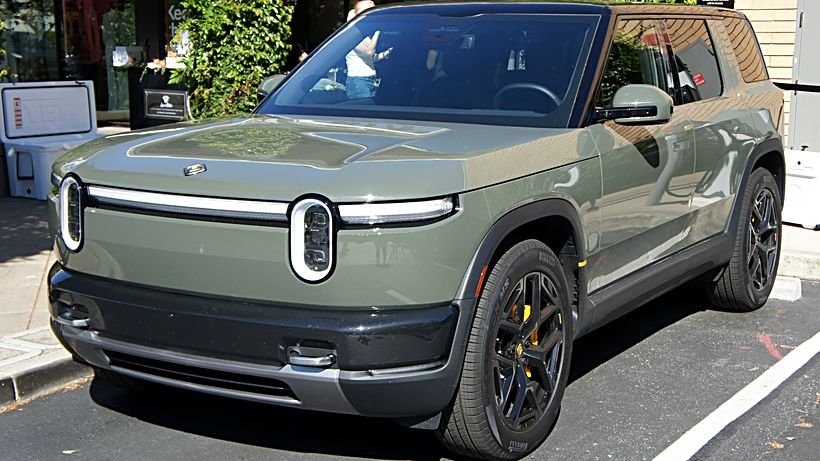
Rivian is the other half of the story. The company’s R2 midsize SUV, which started deliveries in June, is now its best-selling vehicle by volume. Rivian sold 19,239 EVs in the third quarter, up 45.7% from 13,201 a year earlier, Kelley Blue Book estimates show, making it the second-biggest EV brand in America behind Tesla. The R2 is expected to make up most of Rivian’s deliveries in the fourth quarter, and the company raised its full-year delivery outlook to 67,000 to 70,000 vehicles while lifting its profit guidance. Wall Street noticed: Jefferies and UBS both upgraded Rivian to Buy in the days after the results, with a $17 price target.
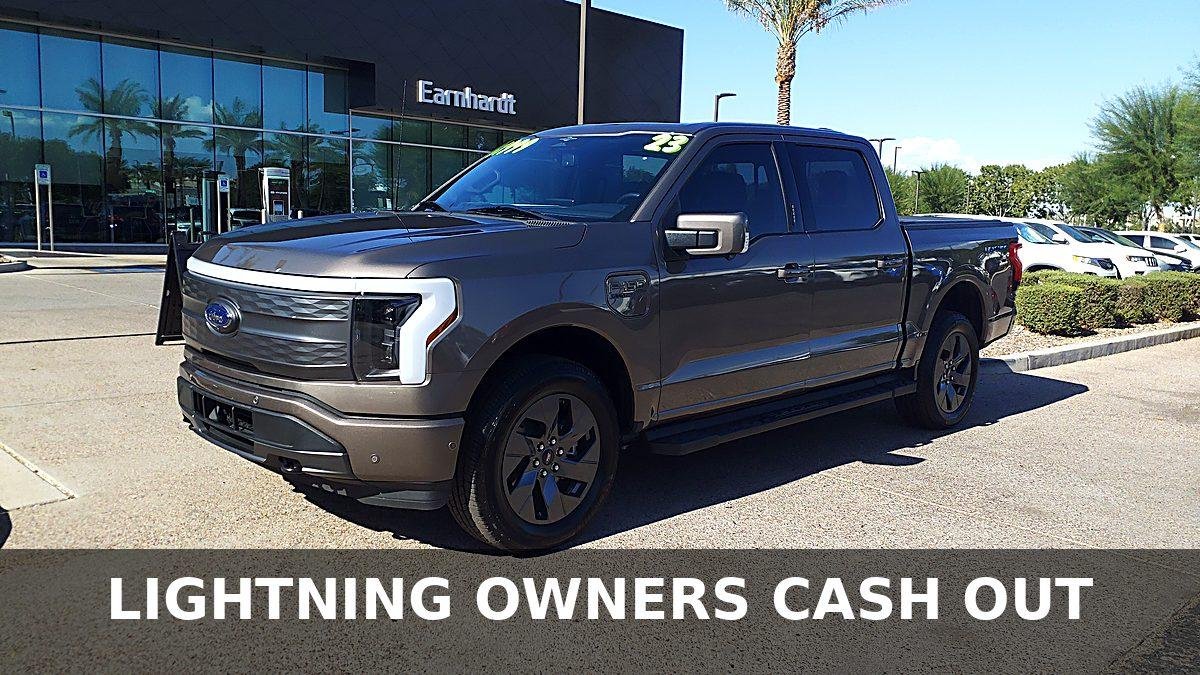
The R2’s pull is strong enough to move buyers across brands. Ford F-150 Lightning owners are trading their trucks for R2s, in some cases getting close to what they paid new, after Ford ended Lightning production. The first R2s on sale are the dual-motor Performance version, listed at $57,990 plus a $1,495 destination fee. The roughly $45,000 Standard version is not due until late 2027, which means Rivian’s cheapest car is still a year away.
Toyota is the quiet outlier. While most legacy brands pulled back, Toyota steadily grew EV sales as new models arrived, with sales of the refreshed Toyota bZ and Lexus RZ roughly doubling after larger batteries, faster charging, and Tesla-style charging ports reached dealers. Edmunds’ Ivan Drury summed up the year for the broader market in a line that has held up well: EV sales had “not fallen off of a cliff.”
The other side: two dozen EVs canceled or delayed
For every Tesla and Rivian, there is a brand that stepped back. Since the credit ended, legacy automakers have canceled or delayed close to two dozen electric models, InsideEVs reports, including the Ford F-150 Lightning, the Volkswagen ID.4, and the Honda Prologue. The product gap hurt sales, but from the carmakers’ side it made sense: with looser fuel-economy rules and no credit to close the price gap, building EVs stopped paying in the short run.
General Motors shows how fast the turn came. The Chevy Equinox EV was GM’s top-selling electric car, then its sales fell 92% in the third quarter, to just 1,905 cars from more than 25,000 a year earlier. GM still sold 18,154 Equinox EVs in the first nine months of 2026, but that is down 65% from the same stretch of 2025. Reuters reported that GM now plans to build about 75% fewer Chevy Bolt EVs than it had planned before the credit ended. GM blamed what it called “the much smaller EV market and discontinued vehicles” as its total US sales fell 6% in the quarter.
Tom Libby’s point about the business behind the cars is worth keeping in mind: “A lot of people, myself included, tend to forget that the manufacturers are not really in business to make cars. They’re in business to make money.” The companies that could not simply shift buyers to gas models, Tesla and Rivian, had no choice but to keep pushing EVs. The ones that could, did.
Gas prices did what incentives could not
If the tax credit was the push that built the US EV market, gas prices may be the pull that keeps it going. Gas near $4 a gallon has done more for EV demand this year than any ad campaign, and the effect shows up in the places you would least expect it: dealer order books.
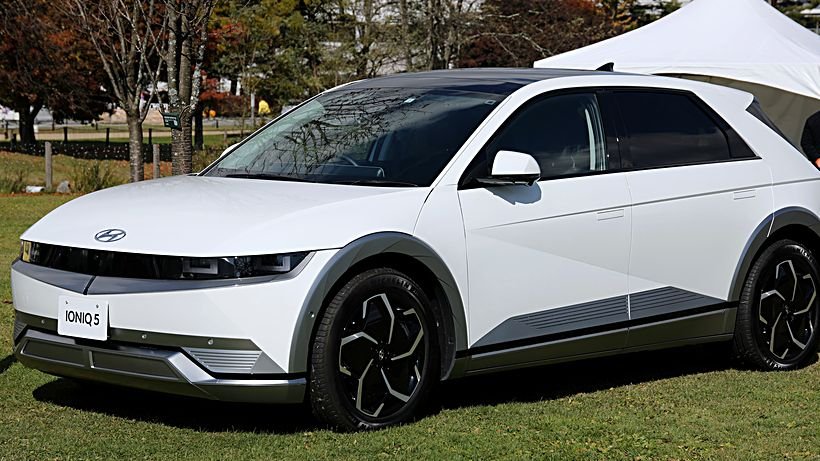
Muñoz told InsideEVs that Hyundai dealers who had been asking the company to slow down shipments of the Ioniq 5 suddenly started asking for more of them after the war in Iran pushed gas prices up. The Ioniq 5 is still one of America’s best-selling EVs, and the shift in dealer demand was fast enough for the company’s chief executive to notice it in real time.
The clearest proof is in the used market, where buyers vote with their own money and no credit is involved. Americans bought more than 47,000 used EVs in September 2026, Cox Automotive says, up 21% from a year earlier and the largest share of the used-car market EVs have ever taken. Used EVs sold in 41 days on average, Cars.com says, about 12 days faster than gas cars. And while prices for lightly used gas cars stayed roughly flat over the last year, used EV prices rose close to 10%, according to iSeeCars.
That is a strange thing to see in a market that was supposed to be in trouble: the cars are selling faster and for more money. The fastest-selling used EVs are turning in about 30 days on the lot, iSeeCars found, led by the Audi Q4 Sportback e-tron at 29.8 days, with the Toyota bZ4X, Lexus RZ300e, Honda Prologue, and Polestar 2 all at 35 days or less. The average used EV cost $32,533 in September 2026, up $2,896 from a year earlier. The reason is simple supply and demand. More modern, long-range EVs are hitting the used market as three-year leases from the boom years end, and buyers who could not afford a new EV at $59,000 can afford a used one at $32,000.
Charging kept growing while sales wobbled
While sales fell and rose again, the thing buyers worry about most kept getting better. The US passed 80,000 DC fast charging ports last quarter, up from 70,000 at the end of last year, InsideEVs reports. The country has now passed 262,000 public chargers in total, and reliability, the complaint that used to top every survey, is finally improving with it.
That matters because the next wave of EV buyers will not be the early adopters who planned their lives around charging. They will be people who buy an EV the way they bought a gas car, and expect fueling to just work. A charging network that grew by more than 10,000 fast ports in nine months, during the worst sales year the market has had, is the quietest good news in this whole story.
The rest of the world did not wait
America’s slow year looks slower still next to the rest of the world. Europe sold nearly 600,000 EVs in September 2026, a monthly record and a 39% jump from a year earlier, Benchmark Mineral Intelligence says. China’s BYD sold 305,743 battery EVs in October 2026, the first month any carmaker has passed 300,000, and more battery EVs in a single month than the entire US market sold in the whole third quarter. Australia’s EV adoption has reached 25% of new car sales, while the US sits near 6%.
The gap is not a mystery. Europe kept its incentives and its fuel taxes. China built scale that no one else can match. Australia opened its doors to affordable Chinese EVs that Americans cannot buy. The US took away its biggest incentive and watched its market shrink, while the rest of the world kept growing. BYD’s October numbers are the sharpest single illustration of that gap: one company, one month, more EVs than an entire country sold in three.
None of that means the US market is doomed. It means the recovery here runs on different fuel: gas prices, used-car value, and cheaper new models, not government help. Jominy’s case for the long run rests on simple economics. EVs have fewer parts and are cheaper to build at scale than gas cars, so as the world keeps buying them, the cost gap keeps closing. “Once you can produce something 30% cheaper,” he said, “you really can’t just maintain the old way for very long.”
What comes next: cheaper trucks and kinder math
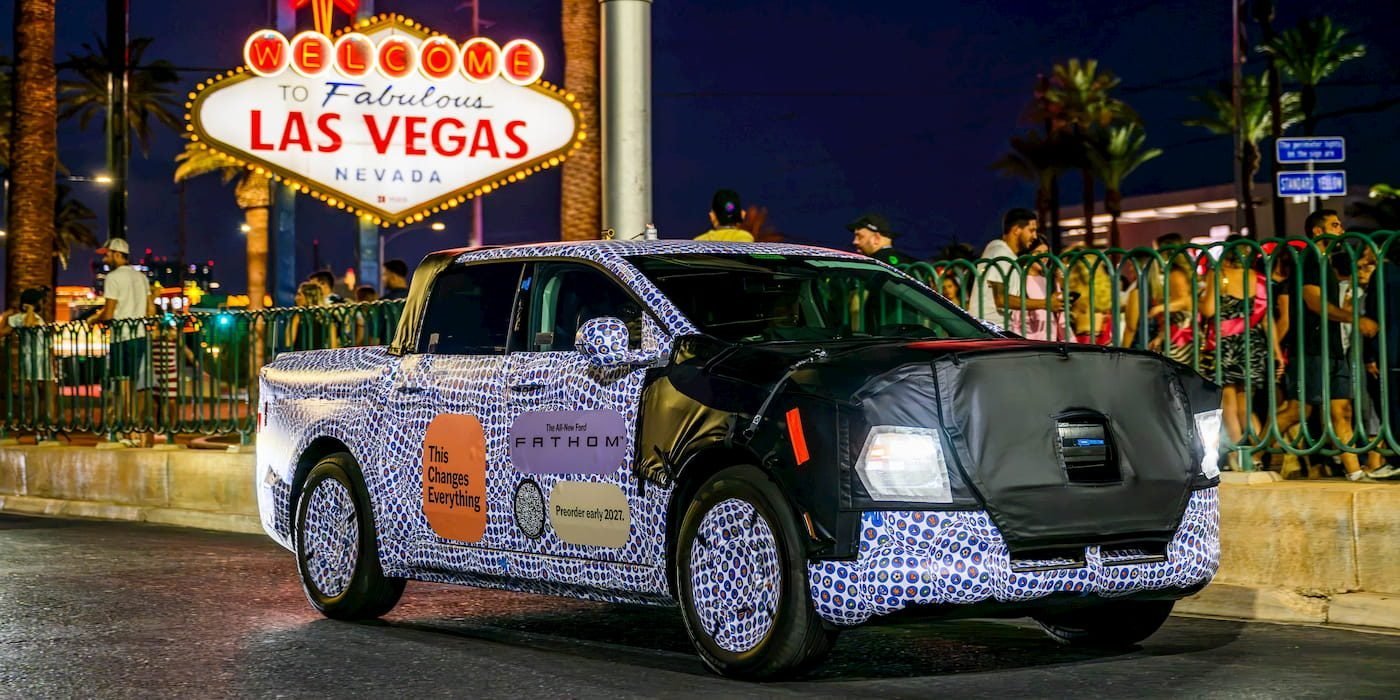
The next year of the US EV market will be decided by price, and the cars coming are cheaper than the ones that left. Ford’s Fathom pickup, the truck that is supposed to save Ford’s EV business, is priced at $28,350, and Ford has already opened its preorder list. Slate, the startup building a bare-bones electric truck for $24,950, reports about 180,000 reservations. Both are aimed at the same buyer the credit used to serve: someone who wants an electric truck and does not want to pay $60,000 for one.
The timing matters. The Cybertruck, the truck that defined the last era of expensive electric pickups, is winding down: Tesla will end Cybertruck production around the middle of 2027 to make room for the Cybercab. The industry is moving the other way, toward smaller and cheaper. The Rivian R2, the Ford Fathom, and the Slate Truck are all bets that the buyer who shows up next is not the one who paid six figures for a Hummer EV. It is the one who does the math on gas, on a trade-in, and on a monthly payment.
Jominy is blunt about where that leads. “We remain optimistic, quite frankly, on the space,” he told InsideEVs. EVs are taking off around the world, he said, and once someone goes electric they tend to stay electric. Muñoz agrees, and his version is shorter: “What you see everywhere when you look at the trends in the market, EV is there to stay.”
What it means if you are buying an EV now
A year without the credit has made the US EV market easier to read, and harder to game. The $7,500 is gone, and it is not coming back soon, so the deal is the deal. Here is what the numbers say right now.
New EVs are still pricey, and the cheapest ones are the ones selling. The average new EV cost $59,125 in October 2025, the month the crash hit, and the mix has stayed top-heavy since. If you want a new EV, the cars to watch are the ones priced for the post-credit world: the R2 at around $45,000 when the Standard version arrives in late 2027, the Fathom at $28,350, and the Slate at $24,950. None of them is cheap today, and two of them are not on sale yet.
Used EVs are the deal right now. More than 47,000 changed hands in September, prices are up because demand is strong, and the best cars are selling in about a month. A three-year-old EV with 250 miles of range or more is a very different buy than it was two years ago, when the used market was mostly short-range Bolts and Leafs. Check the battery health report the way you would check a used gas car’s service history, and check whether the car can use Tesla’s Supercharger network, since most new EVs now can.
And if you already own an EV, the loyalty numbers say you are likely to buy another one. Half of Model Y owners do. The market that the credit built did not vanish when the credit did. It shrank, it steadied, and it started growing again on its own. That is a smaller story than the rush of 2025. It is also a healthier one.
For the full picture, see our latest EV news and our homepage for the day’s top stories.
EV tax credit questions, answered
When did the federal EV tax credit end?
The credit for a new EV, worth up to $7,500, and up to $4,000 for a used EV, ended on September 30, 2025. Buyers who took delivery before that date could still claim it. Everyone after that date pays the full price.
How far did US EV sales fall after the credit ended?
In October 2025, the first full month without the credit, Americans bought 74,835 EVs, Kelley Blue Book says, down 48.9% from September. The EV share of retail sales fell from more than 14% in September 2025 to 7.1% in October and 5% in November, JD Power data shows.
How many EVs did the US sell in the third quarter of 2026?
About 262,649, according to Cox Automotive's Kelley Blue Book estimates, up 6.1% from the second quarter and the highest quarterly total since the credit ended. Tesla sold about 144,094 of them, and Rivian sold 19,239.
Which EVs are selling best in the US now?
The Tesla Model Y is still the best-selling EV in America, and Tesla holds more than half of the market. The Rivian R2 is the fast riser, with sales up 45.7% in the third quarter. In the used market, more than 47,000 EVs sold in September 2026, up 21% from a year earlier.
Are EV prices going up or down without the tax credit?
Both. Used EV prices rose close to 10% over the last year, iSeeCars says, because demand is strong and supply is tight. New EVs are still pricey, with an average price of $59,125 in October 2025, but cheaper new models are coming, including the $28,350 Ford Fathom and the $24,950 Slate Truck.
Is now a good time to buy an EV?
For used EVs, yes. Supply of long-range cars is better than ever, they sell in about 41 days on average, and the average price was $32,533 in September 2026. For new EVs, the best deals are on the models that sell in volume, and the cheapest new options, the Fathom and the Slate, are still months away.