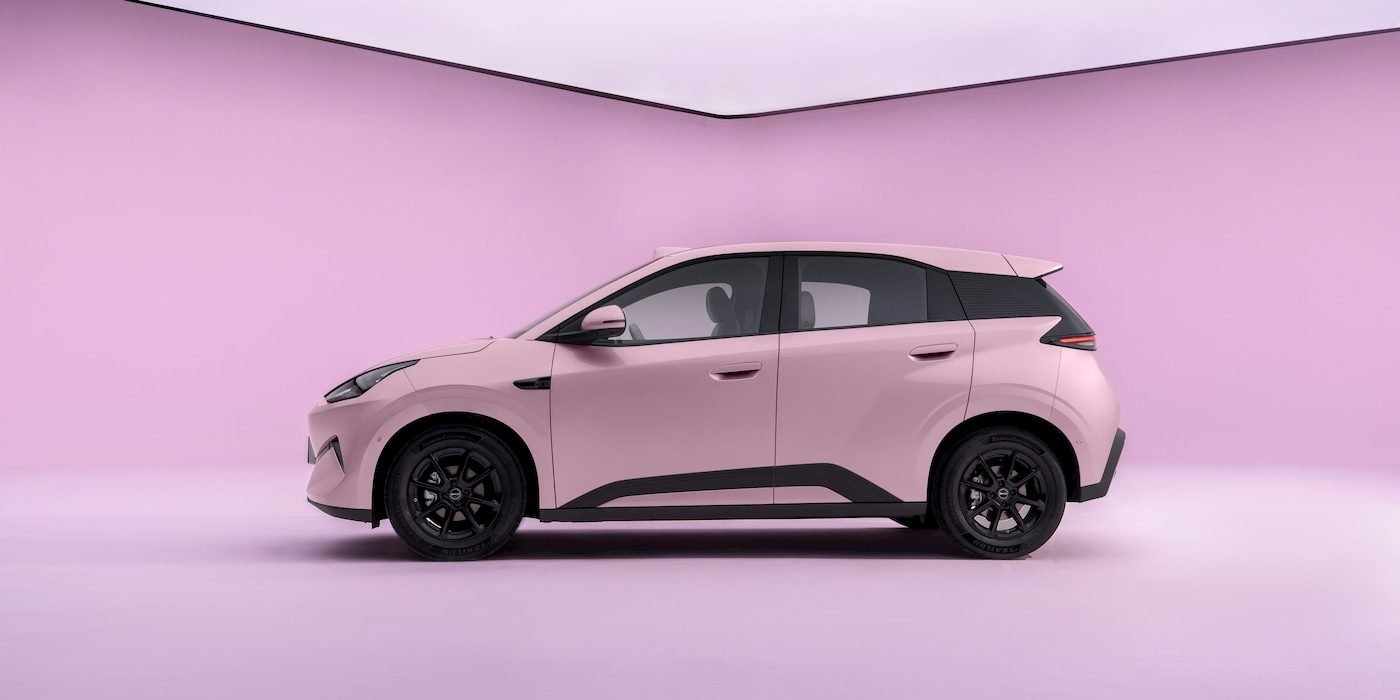
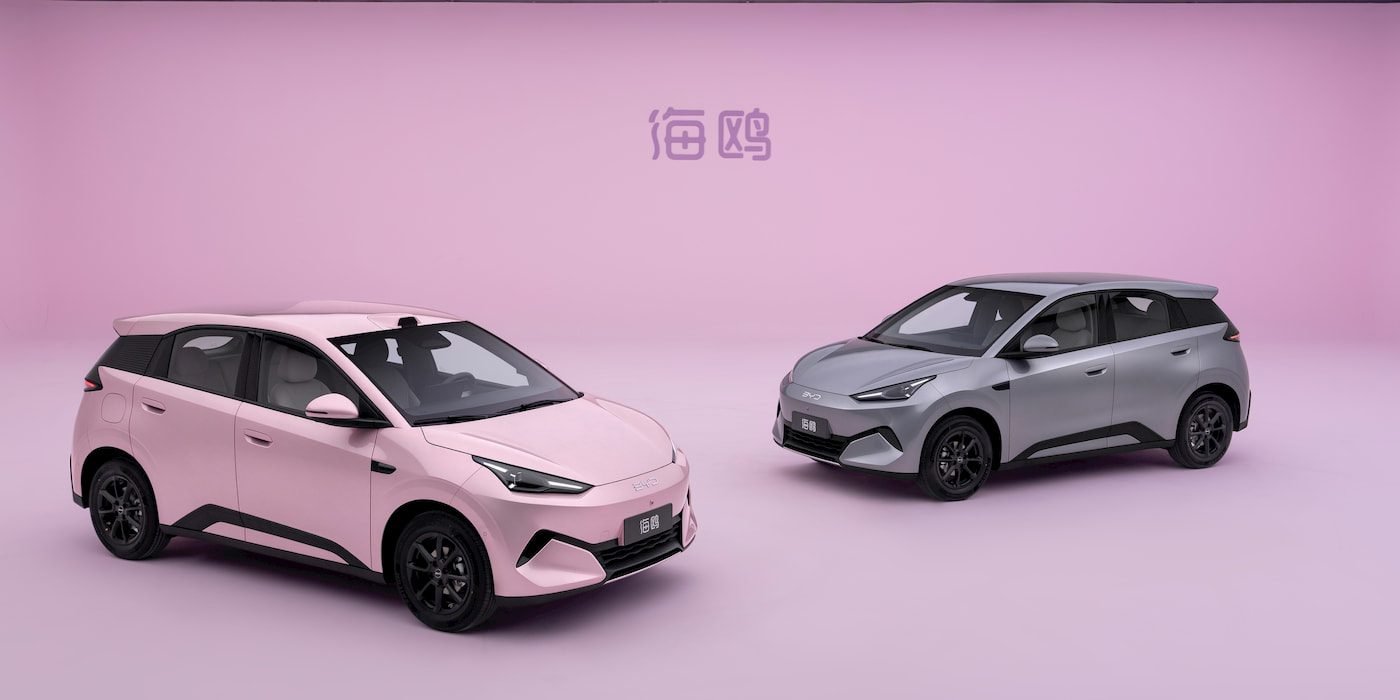
Yes, you read that right. Five minutes. About the time you spend standing at a gas pump. BYD just launched the second-generation Seagull in China on October 20, 2026, and the headline numbers are almost hard to believe: 65,900 yuan — roughly $9,810 — to start, a bigger five-seat body, rear-wheel drive, and a charging speed that makes every other budget EV on the planet look like it's filling up with a garden hose.
Here's the deal: the Seagull was already one of the best-selling EVs in the world. Now it's bigger, cheaper than before, and faster to charge than cars costing ten times as much. We dug through the launch reporting to bring you everything that changed, what it costs, and the big question — is this thing ever coming to America?
| Question | Answer |
|---|---|
| What is it? | BYD's second-generation Seagull, its smallest and cheapest EV — sold overseas as the Dolphin Surf, Dolphin Mini, or Atto 1 |
| When did it launch? | October 20, 2026, at an event in Zhengzhou, China — on sale now |
| How much? | 65,900–99,900 yuan ($9,810–$14,900); with trade-in, as low as 62,900 yuan (~$9,500) |
| How fast does it charge? | 10% to 70% in 5 minutes on the three higher trims, using BYD's Flash Charging |
| Range? | 320 km (199 mi) or 420 km (261 mi) CLTC, depending on battery |
| What's new vs. the old Seagull? | 425 mm longer, 5 seats instead of 4, rear-wheel drive, new Blade Battery 2.0, optional LiDAR |
| Can I buy one in the US? | No. China only for now — a global version is expected later, but US tariffs make an American launch unlikely |
Everything that changed: it's basically a different car
Calling this a refresh would be generous to the word "refresh." The new Seagull is 4,205 mm long, 1,810 mm wide, and 1,570 mm tall on a 2,650 mm wheelbase — that's 425 mm longer than the outgoing model with a 150 mm stretch in the wheelbase, according to CarNewsChina's launch coverage. The extra metal goes straight into the cabin: the car now seats five instead of four, and there's a 94-liter frunk up front plus 380 liters of cargo space that expands to 1,380 liters with the rear seats folded.
Then there's the drivetrain. The old Seagull was front-wheel drive with a torsion-beam rear axle — basic budget-car stuff. The new one switches to rear-wheel drive with an independent multi-link rear suspension, CnEVPost reports. That's the kind of hardware you'd expect on a BMW, not a $10,000 hatchback. Power nearly doubles too: 85 kW (114 hp) or 95 kW (127 hp) from the new motor, up from the old car's 55 kW (75 hp), with top speed rising from 130 to 150 km/h. And with a 4.95-meter turning radius, it'll still dart through city traffic like a go-kart.
The 5-minute charge, explained
Okay, let's talk about the number everyone's sharing. On the three higher trims — Ease, Flight, and Smart, all fitted with the larger 39.2 kWh Blade Battery 2.0 pack — BYD's Flash Charging takes the battery from 10% to 70% in five minutes at the company's dedicated stations. A fuller 10%-to-97% charge takes nine minutes. And here's the one that made us do a double-take: even at -30°C (-22°F), the car charges from 20% to 97% in 12 minutes, Electrek reports.
Real talk: the two cheaper trims don't get Flash Charging — the 65,900-yuan Vitality and 72,900-yuan Freedom use a smaller 30.1 kWh pack rated at 320 km of CLTC range and charge at conventional speeds. But the three Flash-equipped trims start at just 75,900 yuan (about $11,300). That's the important context: five-minute charging doesn't require the top trim. It starts barely above the base price.
The catch, as always, is infrastructure. Flash Charging needs BYD's own stations, and BYD says it has built 12,165 of them so far with plans to hit 20,000 by the end of the year. To sweeten the deal, "starting today, every purchase comes with 12 months of free flash charging, with no limit on electricity," a BYD executive said at the launch event. Buyers of the two cheaper trims get a 7 kW home charger with free installation instead.
Trims and prices: the full breakdown
Five trims, and the price spread tells you exactly where BYD is aiming. Here's the lineup from the launch:
| Trim | Price (yuan / USD) | Battery / range | Flash charging? |
|---|---|---|---|
| Vitality | 65,900 (~$9,810) | 30.1 kWh / 320 km | No |
| Freedom | 72,900 (~$10,900) | 30.1 kWh / 320 km | No |
| Ease | 75,900 (~$11,300) | 39.2 kWh / 420 km | Yes |
| Flight | 82,900 (~$12,400) | 39.2 kWh / 420 km | Yes |
| Smart | 99,900 (~$14,900) | 39.2 kWh / 420 km | Yes |
Notice something wild? The new generation's entry price is 4,000 yuan lower than the previous model-year Seagull, which started at 69,900 yuan in May — and a full 7,900 yuan below what the original Seagull cost at its April 2023 debut. BYD made the car bigger, faster, fancier, and cheaper at the same time. The EV price war isn't winding down; it's getting worse.
With BYD's Super Trade-In promotion, real-world starting prices drop another 3,000 yuan per trim — down to 62,900 yuan, or roughly $9,500, for the Vitality.
The interior is ridiculous for this money
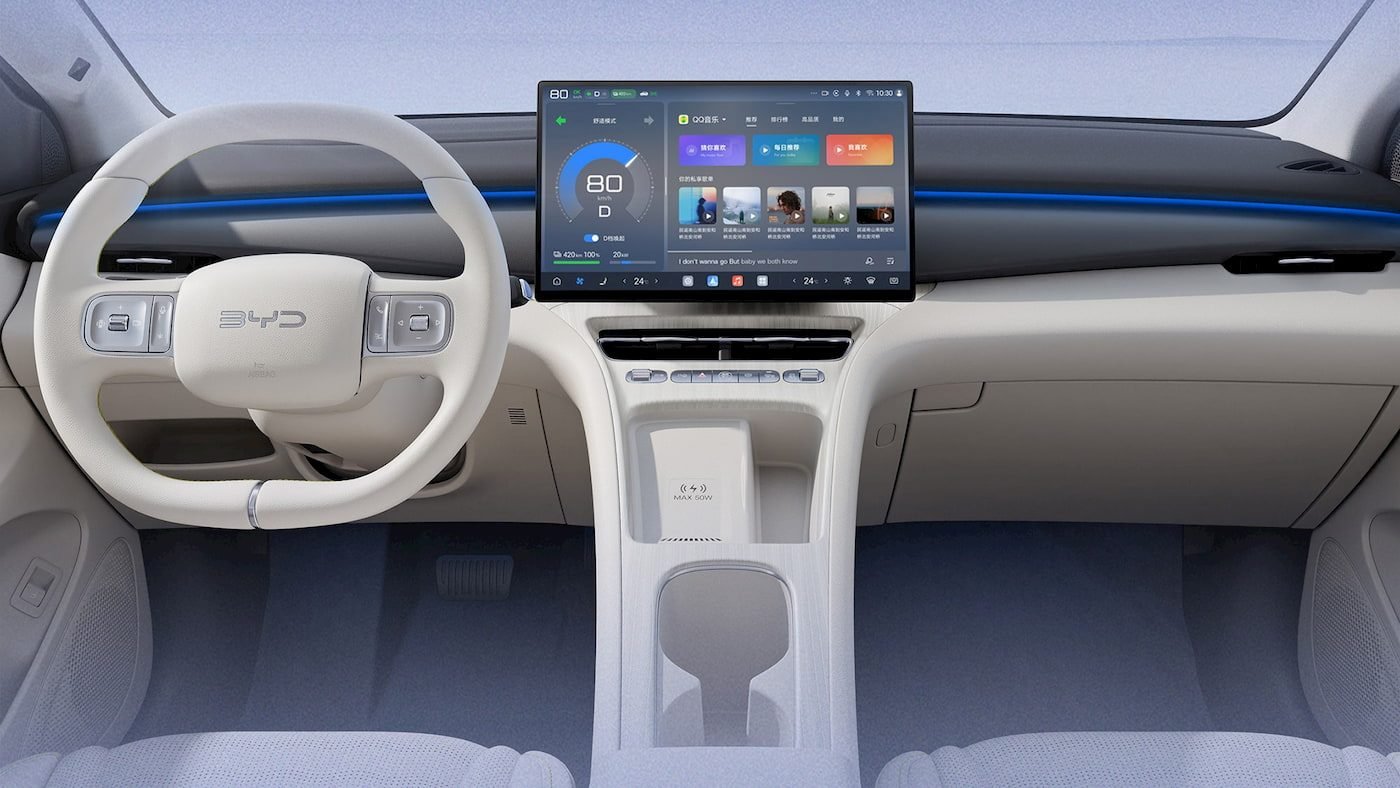
This is where the spec sheet starts to feel like a typo. The cabin gets a 15.6-inch touchscreen running BYD's DiLink 150 system with a full version of DeepSeek AI baked in, a two-spoke steering wheel, a redesigned console with real physical buttons, and three new interior color schemes — Shell White, Clear Sky Pink, and Polar Star Grey.
Then the features: six-way power driver's seat, four-way power passenger seat, three-level heating and ventilation for both front seats, a multi-mode massage function for the driver, 50W wireless phone charging, 127-color ambient lighting, and an eight-speaker audio system. Massage seats. In a car that costs less than a used Honda Civic. WhichCar's breakdown of the launch notes this same car is expected to arrive in Australia as the next Atto 1, where buyers currently get a 65 kW motor in the entry trim — the new car nearly doubles that.
And the tech doesn't stop at comfort. Buyers can option the DiPilot 300 "God's Eye" B system with a roof-mounted LiDAR, enabling City Navigation on Autopilot, highway autopilot, traffic-light recognition with countdowns, and full-scenario obstacle avoidance. Every trim also gets BYD's tire-blowout stabilization system, rated up to 140 km/h.
Why BYD had to go this big
Here's the part nobody at the launch event put on a slide. The Seagull is losing. Globally it moved 266,000 units in the first nine months of 2026 — down 33% from the same period last year. In China, the collapse was brutal: sales fell 66% to just 83,600 units, per CarNewsChina.
The reason has a name: Geely's EX2 (Xingyuan). The little Geely hatchback sold 310,000 units from January to September, making it China's best-selling car — period, gas or electric — ahead of even the Tesla Model Y at 277,000. BYD's cheapest car was getting its lunch eaten by a cheaper, newer rival. "With aggressive pricing, ADAS, larger dimensions, and Flash Charging, BYD expects the new Seagull to make a comeback in the small hatchback segment," CarNewsChina's Liu Miao concluded. Translation: this launch is a counterattack.
It also explains the kitchen-sink spec sheet. When you're fighting for your life in the world's most cutthroat car market, you don't hold features back for next year. You ship the LiDAR, the massage seats, and the five-minute charging all at once — and you cut the price anyway.
Will America ever get it?
Want the honest answer? Don't hold your breath. The Seagull is a China launch, and while Electrek notes BYD is expected to bring the larger, upgraded version overseas — likely as the second-generation Dolphin Surf in Europe and the Dolphin Mini or Atto 1 elsewhere — the United States is a different story. Current US tariffs on Chinese-built EVs effectively price a $9,810 car out of the market before it leaves the dock, and BYD has shown no signs of setting up North American passenger-car sales.
That doesn't mean it won't matter here. Every time BYD ships a sub-$10,000 EV with five-minute charging, it resets the global cost benchmark that Ford, GM, and Tesla have to beat. The $28,350 Ford Fathom and the Slate Auto truck exist partly because Detroit can see this coming. The Seagull won't be in American showrooms — but its shadow is all over the affordable EVs that will be.
What the internet thinks
The launch lit up EV communities within hours. The dominant reaction: disbelief at the math. A bigger car, rear-wheel drive, five-minute charging, massage seats — for less than the old model cost — reads like a spec sheet from an alternate universe where batteries are free. The skeptics' counter is fair too: CLTC range ratings run generous (the 420 km figure converts to roughly 340 km WLTP), Flash Charging needs BYD's own stations, and none of this is available outside China.
The smarter take is the competitive one. If BYD can profitably sell this car at these prices while Geely's EX2 outsells the Model Y in China, the question isn't whether Western automakers should worry — it's how many years behind they are. The Seagull's real audience isn't just Chinese buyers. It's every product planner in Detroit, Wolfsburg, and Tokyo doing the math on 2028.
Quick answers
How much is the new BYD Seagull? 65,900 to 99,900 yuan (about $9,810–$14,900). With trade-in, the base trim drops to 62,900 yuan (~$9,500).
How long does the BYD Seagull take to charge? The three higher trims charge from 10% to 70% in 5 minutes at BYD Flash Charging stations; 10% to 97% takes 9 minutes. The two base trims don't get Flash Charging.
What is the range of the new BYD Seagull? 320 km (199 miles) CLTC with the 30.1 kWh pack, or 420 km (261 miles) CLTC with the 39.2 kWh pack.
Is the BYD Seagull coming to the US? No plans announced. It's on sale in China now, with an overseas rollout expected later under names like Dolphin Surf, Dolphin Mini, or Atto 1 — but US tariffs make an American launch unlikely.
Is the new Seagull bigger than the old one? Yes — 425 mm longer, 150 mm more wheelbase, now seats five instead of four, with a 94-liter frunk.
The bottom line
BYD just took its cheapest, most popular EV and made it bigger, faster, better equipped, and cheaper — then gave the mid-range trims a charging speed that embarrasses six-figure European flagships. The second-generation Seagull is the clearest proof yet that the EV price war has a new phase: it's no longer about who can discount the hardest, but who can ship genuinely better hardware for less money. Geely forced BYD's hand, and BYD responded with a car that resets the benchmark for the entire industry. You can't buy one in America. But every affordable EV you can buy here is now being measured against it.