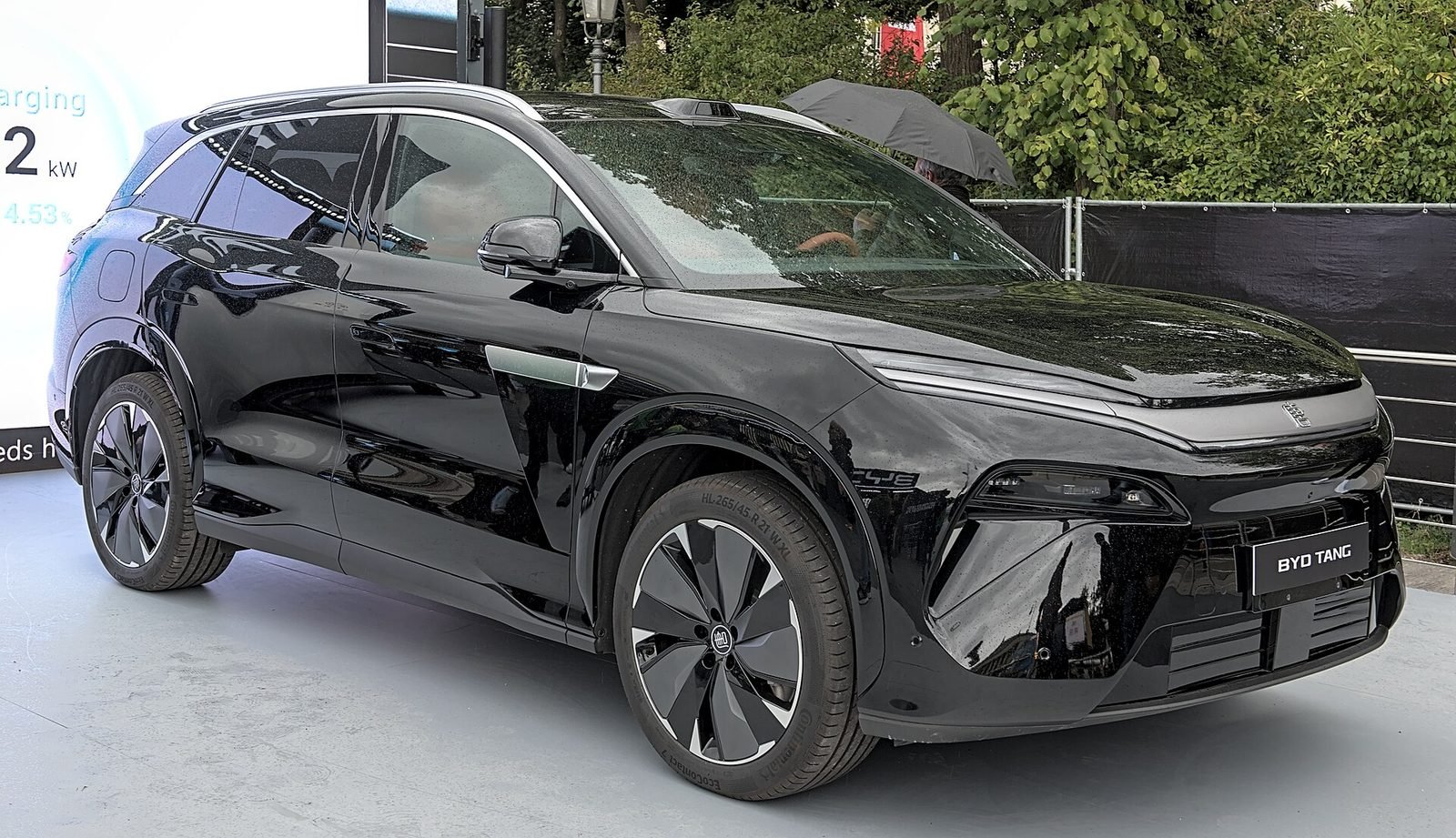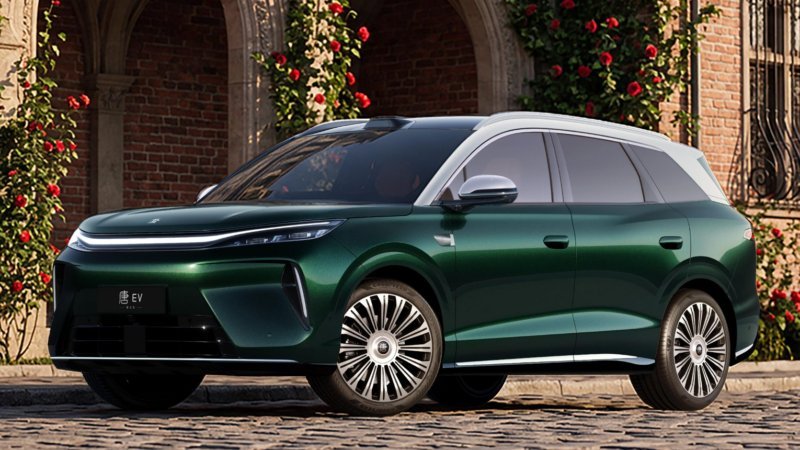
BYD didn’t hold a splashy launch event for one of its most important new models. It didn’t have to. On October 19, China’s Ministry of Industry and Information Technology published its latest batch of vehicles cleared for sale — and buried in the paperwork was the complete spec sheet for the third-generation BYD Tang EV: a 690-horsepower, five-seat flagship SUV with Blade Battery 2.0, flash charging, and a cockpit dominated by two screens that look ripped out of a sci-fi film.
Here’s the deal: this isn’t just another Chinese-market EV. The Tang is the nameplate that put BYD on the global map — it first debuted at the 2014 Beijing Auto Show and has sold in the hundreds of thousands since. But the current model is getting old, and buyers are voting with their wallets: Tang family sales dropped nearly 50% year-over-year through August. The third generation is BYD’s answer — a full reset with more power, more range, more tech, and five-minute charging that makes even 800-volt rivals look slow.
| Question | Answer |
|---|---|
| What is it? | Third-generation BYD Tang EV — five-seat flagship electric SUV |
| How was it revealed? | China MIIT regulatory filing, October 19, 2026 |
| How much power? | 690 hp combined (515 kW), dual-motor all-wheel drive |
| Range? | Up to 850 km (528 miles) CLTC, depending on configuration |
| Charging? | 10–70% in about 5 minutes with Blade Battery 2.0 flash charging |
| Interior screens? | 35.4-inch Star Ring display + 30-inch panoramic screen |
| When does it go on sale? | Expected by end of 2026 in China |
| Price? | Not announced yet |
| Coming to the US? | No — BYD doesn’t sell passenger cars in America |
The MIIT filing: how BYD’s new Tang leaked
If you’re wondering why one of the world’s biggest automakers launches cars through government paperwork, welcome to China. Every new vehicle has to be approved by the Ministry of Industry and Information Technology before it can be sold, and the MIIT publishes the filings — photos, dimensions, motors, batteries, all of it — in regular batches. Car nerds worldwide treat these batches like unboxing videos.
This batch was a doozy. As Electrek reported, the filing lays out the third-generation Tang in full: it’s 5,045 mm long (about 16.5 feet), 1,980 mm wide, and rides on a 2,950 mm wheelbase — 145 mm longer than the model it replaces. That wheelbase is the number that matters, because it’s what buys cabin space. And the new Tang goes five-seat only, ditching the old model’s six-seat option. Bigger body, fewer seats, more room per person: that’s the flagship playbook.
The timing lines up with what BYD has been telegraphing. The third-gen Tang debuted at the Chengdu Auto Show in August, and BYD’s Dynasty lineup boss Lu Tian released the first official interior images in early October. The MIIT filing is the final bureaucratic step before sales start, and Electrek expects a launch before the end of the year.
690 hp: the powertrain breakdown
Let’s talk numbers, because this is where the new Tang stops looking like a family SUV and starts looking like a muscle car. The MIIT filing lists a dual-motor, all-wheel-drive setup: a 215 kW (288 hp) motor up front and a 300 kW (402 hp) motor out back, for a combined 515 kW — that’s 690 horsepower.
To put that in perspective: a Porsche Cayenne Turbo E-Hybrid makes 729 hp and starts around $150,000. A BMW iX M70 makes 650 hp. The new Tang plays in that league on paper while BYD’s flagship SUVs have historically cost a fraction of German money — the bigger Great Tang starts at 239,900 yuan, about $35,500, so expect the smaller five-seater to land below that. Nothing about pricing is confirmed yet, but BYD’s entire brand is built on this ratio: six-figure specs at mainstream prices.
The motors are fed by a lithium iron phosphate (LFP) pack from BYD’s own Wuwei Fudi battery subsidiary — no outsourcing the most important part. That vertical integration is BYD’s superpower. When every other automaker is begging battery suppliers for capacity and prices, BYD makes its own cells, its own motors, and increasingly its own chips.
Blade Battery 2.0 and the five-minute charge
Here’s the spec that should make every EV engineer in Munich and Detroit sit up: the new Tang will use BYD’s Blade Battery 2.0 with flash-charging tech that takes the pack from 10% to 70% in roughly five minutes.
Real talk: that number needs context. Five-minute charging claims depend on finding a charger that can deliver the goods — and BYD is building exactly those, with megawatt-class flash-charging stations rolling out across China. It’s the same playbook that made the Great Tang’s 9-minute 10-to-100% claim possible. Without the charger network, the car’s capability is theoretical. With it, a coffee stop becomes a full battery.
Two battery sizes are listed in the filing: 88.682 kWh and 105.792 kWh, delivering CLTC ranges of 730 km (453 miles), 830 km (515 miles), and 850 km (528 miles) depending on configuration. A quick reality check on CLTC: China’s test cycle is the most optimistic in the world, typically 20–30% higher than what the EPA would rate. So think more like 370–420 real-world miles — still excellent for a 690-hp family SUV, but not the headline 528.
Even so, the combination is the story: 690 hp, 400-plus real miles of range, and gas-station-fast charging, all from an LFP chemistry that’s cheaper and longer-lived than the nickel batteries most rivals use. If BYD ships this on schedule, it resets what buyers should expect from a mid-priced electric SUV — everywhere in the world.
Inside: the sci-fi cockpit with two 30-inch-class screens
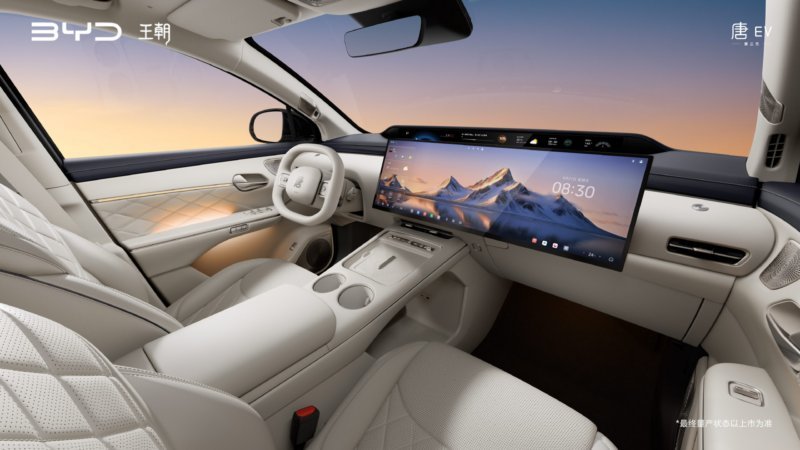
BYD’s Dynasty Series boss Lu Tian calls the new Tang the “8-series, five-seat, tech-savvy flagship SUV,” and the interior is where that description earns its keep. Official images released in October show a cabin built around two enormous displays: a stretched 35.4-inch integrated screen and a separate 30-inch panoramic display spanning nearly the full width of the dash.
Lu said the design takes inspiration from sci-fi spaceship control consoles, and honestly, he’s not overselling it. The center stack is essentially gone — replaced by glass, diamond-stitched leather, and an ambient light strip that runs across the dash and into the doors. Two color schemes: Dune Beige (light, airy) and Amber Brown (dark, moody). The second row gets zero-gravity captain’s chairs with over 1,000 mm of legroom and recline up to 130 degrees. That’s business-class seating in a car that will likely cost less than a loaded Toyota Highlander.
Want the honest answer on whether screen overload is a good thing? The industry is split. Buttons are coming back in some cabins after years of touchscreen everything, and a 35-inch display doesn’t drive the car for you. But in China, this is what flagship means right now — the Tang’s rivals are stuffing screens everywhere too, and BYD can’t afford to look restrained when the competition looks like a spaceship.
DiSus-A and God’s Eye B: the tech stack under the glass
Screens get the headlines, but the engineering underneath is arguably more interesting. The new Tang carries BYD’s DiSus-A intelligent body control system with dual-chamber air suspension and road-surface preview — cameras read the road ahead and the suspension pre-adjusts damping before the wheels hit the bump. It’s the same idea as Mercedes’ E-Active Body Control, democratized.
Then there’s God’s Eye B, BYD’s LiDAR-based advanced driver assistance system. BYD has been rolling God’s Eye across its lineup all year, and putting the B-tier system — the more advanced version — in the Tang signals that this is a technology flagship, not just a big battery in a pretty box.
Stack it all up: 690 hp, air suspension with predictive damping, LiDAR driver assistance, five-minute charging, a 35-inch screen, and captain’s chairs with massage-grade recline. Five years ago, this spec sheet would have described a $150,000 German flagship. In 2026, it describes a BYD that will probably cost less than a BMW X3.
Why now: the Tang needed saving
Here’s the part BYD won’t put in a press release. Tang family sales fell 49.87% year-over-year to 81,614 units in the first eight months of 2026. The model that helped build BYD’s empire was getting crushed by its own siblings — the newer Tang L and the bigger Great Tang — plus a swarm of rivals from Li Auto, Aito, and Zeekr that all figured out the same formula: big screens, long range, aggressive pricing.
The third generation is a rescue mission dressed as a flagship launch. The 145 mm stretch, the five-seat-only layout, the 690-hp headline, the sci-fi interior — every choice is aimed at one problem: making the Tang feel new again in a market where “new” has a six-month shelf life.
And the naming tells you how crowded BYD’s own house has gotten. The new car is the “8-series” Tang, slotting under the 9-series Da Tang (Great Tang) and alongside the Tang L. The Great Tang pulled in 150,000 pre-orders before pricing was even announced — the most reservations for any BYD model ever — and launched at that shocking $35,500 base price. The new five-seater has to carve out space between the Tang L below and the Great Tang above, without cannibalizing either. Good luck with that, product planners.
What about America? Here’s why you should care anyway
The question every American reader asks about every BYD story: can I buy one? The answer is still no. BYD sells electric buses in the US — LA Metro runs them — but no passenger cars, and there’s no sign that changes while tariffs on Chinese EVs sit at prohibitive levels.
So why does the Tang matter to you? Three reasons.
First, the technology migrates. Blade batteries, flash charging, predictive air suspension — BYD’s innovations don’t stay in China. They show up in BYD’s export markets (Europe, Southeast Asia, Latin America, the Middle East), and they force every global automaker to respond. The five-minute charge becomes the new benchmark whether or not you can buy the car that does it.
Second, the price pressure is global. Every time BYD ships 690 hp and 400 miles of range at mainstream money, it tightens the screws on what Ford, GM, Hyundai, and Toyota can charge for less. American buyers benefit from BYD existing even if they can’t buy a BYD.
Third, the export naming is already in motion. Related models already wear the Atto 8 and Sealion 8 names in overseas markets, and BYD’s European and Asian lineups keep expanding. The Tang you can’t buy today might be the Sealion you can buy tomorrow.
What we still don’t know
For all the detail in the MIIT filing, the two things buyers actually care about are still missing: price and exact launch date. BYD hasn’t announced either, and with the Great Tang starting at $35,500, the pricing window for the smaller five-seater is genuinely wide open. Too close to the Great Tang and it cannibalizes; too far below and it leaves money on the table.
We also don’t have independent verification of the big claims — the 690 hp combined output, the five-minute charge, the 850 km range. MIIT filings are regulatory documents, not marketing, so the numbers are usually honest — but they’re manufacturer-submitted, and CLTC range figures are the rosiest in the business. Treat the headline range as a best case until real-world tests land.
And one more honest caveat: the photos in the filing are pre-production. The official images BYD released look production-ready, but fit, finish, and software polish are where Chinese flagships sometimes stumble at launch. The screens can look like a spaceship in photos and feel like a beta test in person. We’ll know when reviewers get seat time.
Quick answers
What is the new BYD Tang? The third-generation Tang EV: a five-seat, dual-motor electric flagship SUV revealed in a Chinese MIIT filing on October 19, 2026.
How fast is the new BYD Tang? 690 hp combined (515 kW) from dual motors. BYD hasn’t published a 0–60 time yet.
What’s the BYD Tang’s range? Up to 850 km (528 miles) on the CLTC cycle; expect roughly 370–420 miles in real-world driving.
How fast does it charge? BYD claims 10–70% in about 5 minutes with Blade Battery 2.0 flash charging — on compatible megawatt-class chargers.
When does it go on sale, and for how much? Expected by end of 2026 in China. No price announced; the larger Great Tang starts at about $35,500, so expect less.
Can I buy the BYD Tang in the US? No. BYD doesn’t sell passenger cars in America, and there’s no announced plan to change that.
The bottom line
The third-generation BYD Tang is the most complete answer yet to the question of what a mainstream electric SUV can be: 690 horsepower, 400-plus real miles of range, five-minute charging, predictive air suspension, LiDAR driver assistance, and a cabin that looks like the flight deck of a starship — all in a package that will probably cost less than a mid-trim BMW X3. It has to be this good, because Tang sales were cratering and BYD’s own siblings were eating its lunch.
For American buyers, the Tang is a preview, not a purchase — a rolling benchmark that resets expectations for what your next EV should deliver. Watch the price announcement. If BYD lands this under $35,000, every automaker selling electric SUVs anywhere in the world just got a problem. We’ll update this story when pricing drops.