The quick answers
| Question | Answer |
|---|---|
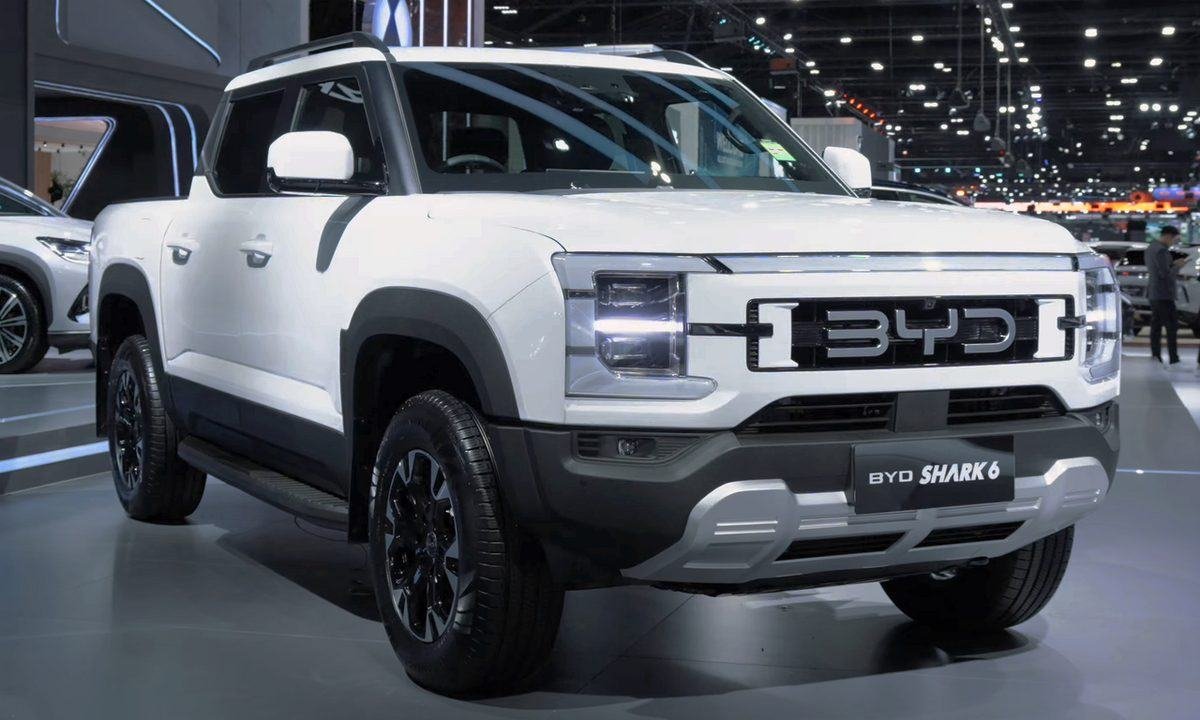
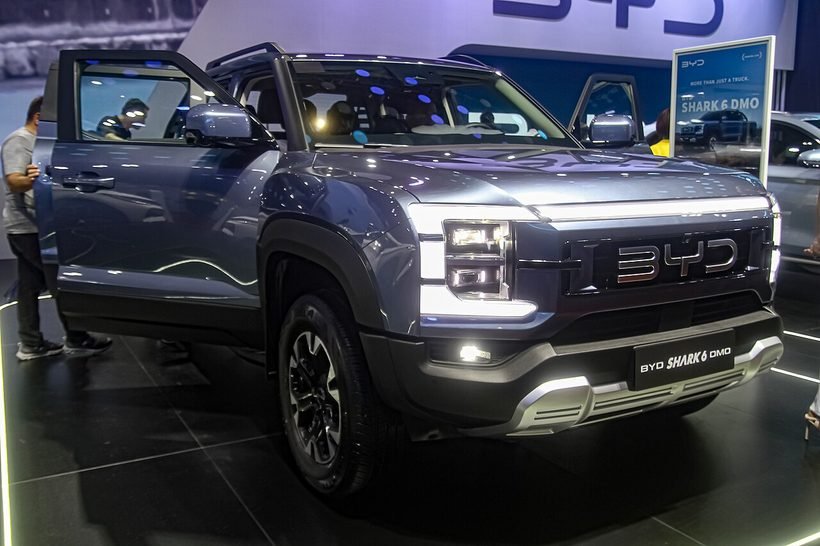
| What is the BYD Shark 6? | BYD’s first pickup: a 1.5L turbo plug-in hybrid with dual motors, 430+ hp, 0–100 km/h in 5.7 seconds |
| Where is it sold? | Mexico, Brazil, Australia — launched in Mexico in May 2024 |
| Mexico price | 899,980–969,800 pesos — about $53,400–$57,500 at launch |
| Is it banned in the US? | Not literally — but tariffs and federal rules make it effectively unavailable |
| The 100% tariff | Section 301 duty on Chinese-built EVs, in place since September 27, 2024; confirmed continuing in October 2026 |
| The Chicken Tax | A 25% US tariff on imported light trucks, in place since 1964 |
| The tech rule | Federal connected-vehicle rule bars Chinese-controlled vehicle software (model year 2027) and hardware (model year 2030) |
| Any US plans? | None — BYD’s Americas chief told Reuters the company has no US sales plans yet |
| Can I import one myself? | Not legally for road use — the 25-year import rule and missing US safety certification block it |
First, the word “banned”
The US has not banned the BYD Shark — no law names it. What exists is a tariff wall so high, layered with a 1960s truck duty and a tech rule biting from 2027, that selling it here makes no business sense. The effect looks like a ban. The mechanism is math.
1. The 100% tariff on Chinese EV imports
Under Section 301, the US applies a 100% tariff to China-built EVs — effective September 2024 and confirmed continuing in October 2026. With base duties, the effective rate runs 102.5% to 115%.
At its Mexican price of about $53,400, a 100% tariff pushes the landed cost toward $107,000 — before other duties, dealer margin, or profit. The truck’s pitch is value; double the price and the pitch evaporates.
2. The 60-year-old “Chicken Tax” hurdle
Even if the EV tariff vanished tomorrow, the Shark would hit a second wall — one that’s been standing since 1964. The Chicken Tax is a 25% US tariff on imported light-duty trucks, born from a trade spat over frozen chicken and never repealed. Any pickup built outside North America pays it, full stop.
A Shark shipped from a Chinese factory would pay that 25% on top of everything else — and unlike the EV tariff, this one has survived every administration for six decades.
3. Why BYD launched the Shark in Mexico instead
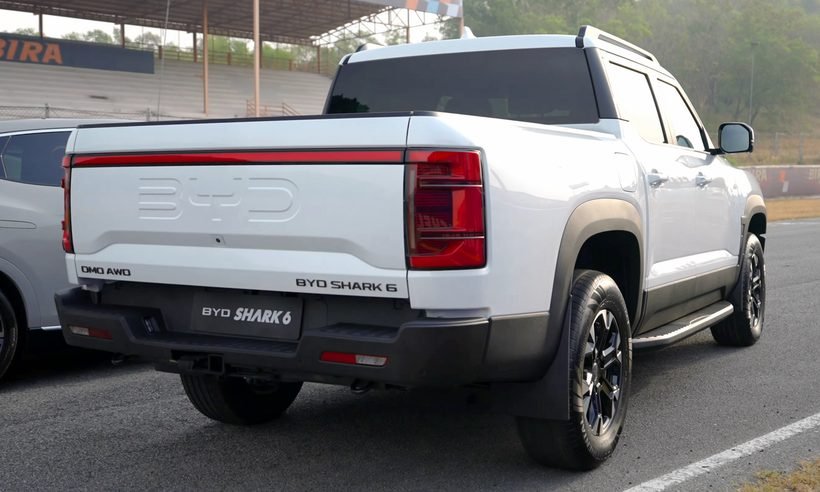
Mexico was the strategy, not a consolation prize. The Shark debuted there in May 2024 at 899,980 to 969,800 pesos (about $53,400), with no punitive tariffs on Chinese vehicles and a huge midsize-truck market.
That feeds the persistent rumor: if BYD is planning a Mexican factory, couldn’t it build Sharks there and ship them north tariff-free under the USMCA? In practice, the USMCA demands 75% North American parts for tariff-free treatment, Washington opposes Chinese automakers using Mexico as a back door, and the federal connected-vehicle rule (finalized January 2025) bars Chinese-controlled vehicle software from model year 2027 and hardware from 2030. A Mexico-built Shark would need re-engineering, not just paperwork.
BYD isn’t pushing either: Americas chief Stella Li told Reuters the company has no US sales plans yet.
4. Can Americans import the BYD Shark personally?
This is the question under every forum thread, so here’s the straight answer: not for road use, and not any time soon. The obstacle isn’t the border — it’s what happens after you cross it.
First, the money. US Customs assesses duty by country of manufacture, not country of purchase. A Shark bought at a Mexican dealer is still a Chinese-manufactured vehicle at the border, and the 100% EV tariff applies just the same.
Second, certification. The Shark isn’t FMVSS-certified, so you can’t register it for road use. The 25-year import rule is the only exception — and the Shark launched in 2024. See you in 2049.
Summary: will the BYD Shark ever come to the USA?
- Current status: Strictly unavailable in the US, with zero announced plans for a domestic launch — BYD’s own Americas chief says there are none.
- The blockers, in order: the 100% Section 301 tariff on Chinese-built EVs (confirmed continuing through the 2026 trade review), the 25% Chicken Tax on imported light trucks, and the federal connected-vehicle rule barring Chinese-controlled software from model year 2027 and hardware from model year 2030.
- Personal import: blocked by the same 100% tariff (assessed by country of manufacture), missing FMVSS certification, and the 25-year rule.
- What to buy instead: the Toyota Tacoma i-Force Max hybrid and the Ford Maverick hybrid are the closest US-market answers to the Shark’s formula — midsize, electrified, and actually on dealer lots.
The bottom line
The BYD Shark isn’t banned — it’s outpriced, out-taxed, and out-regulated. Three US policies across six decades stack into a wall no workaround climbs. Until one of those layers moves, the most talked-about midsize hybrid pickup stays everywhere except here.