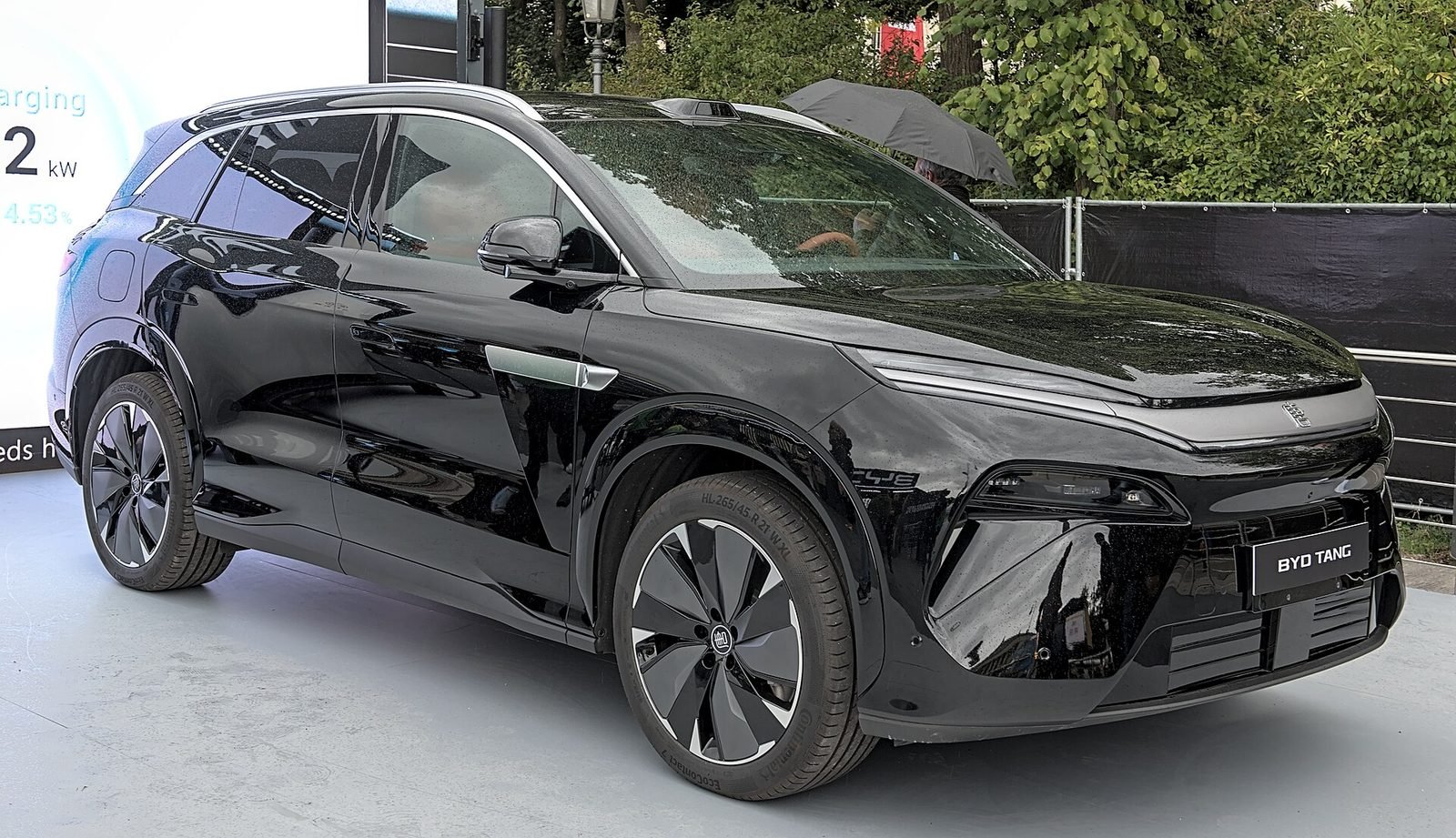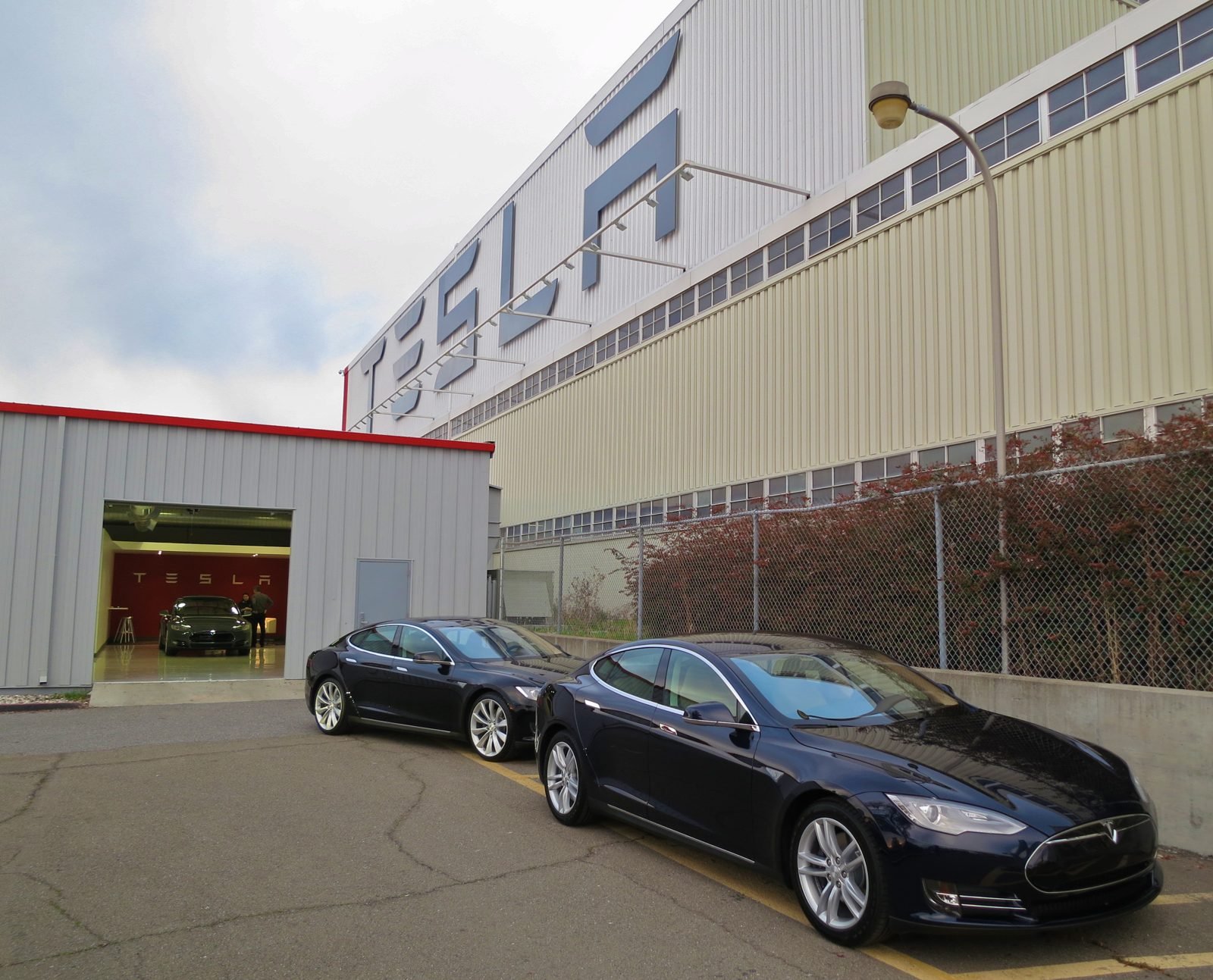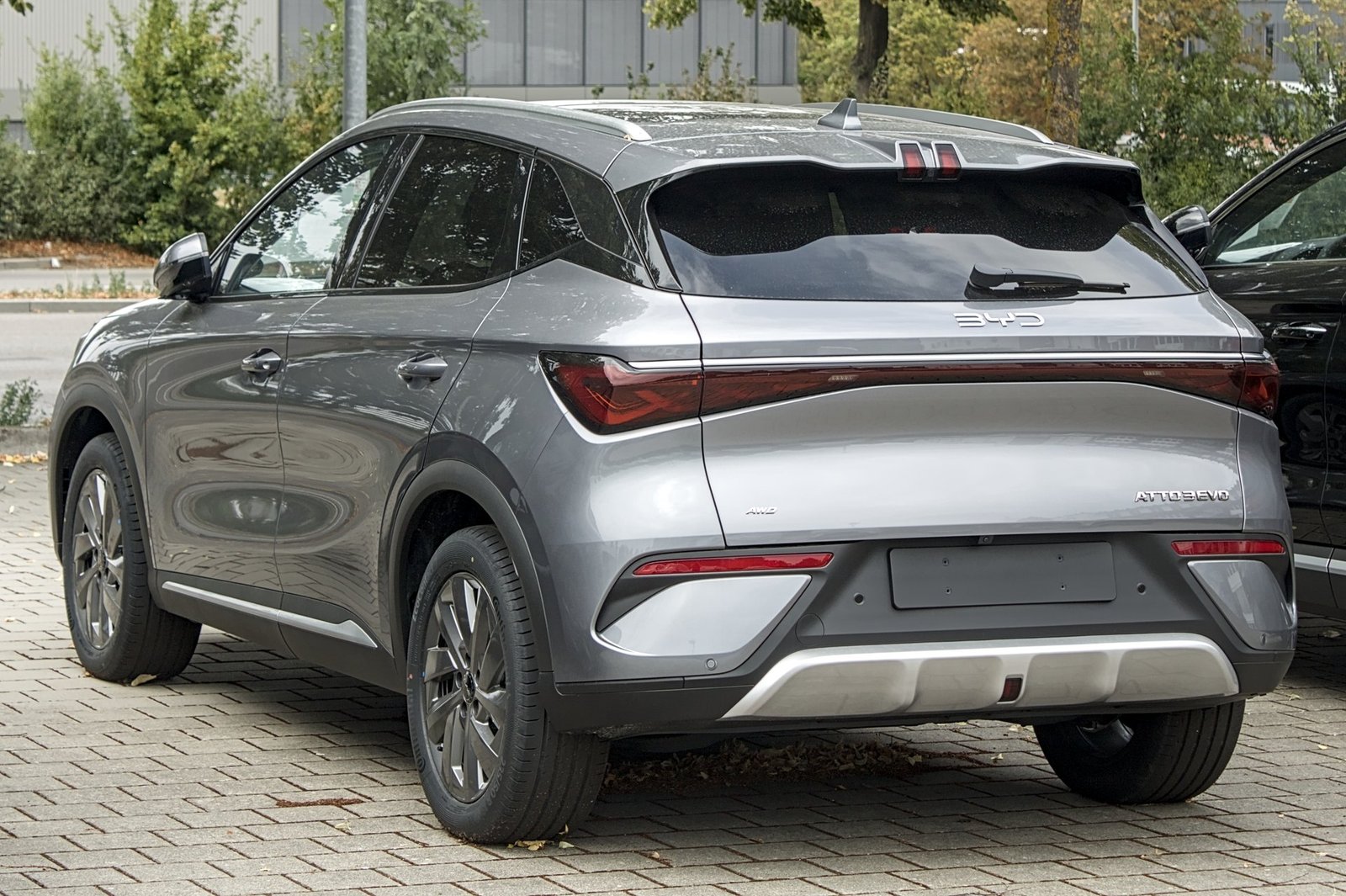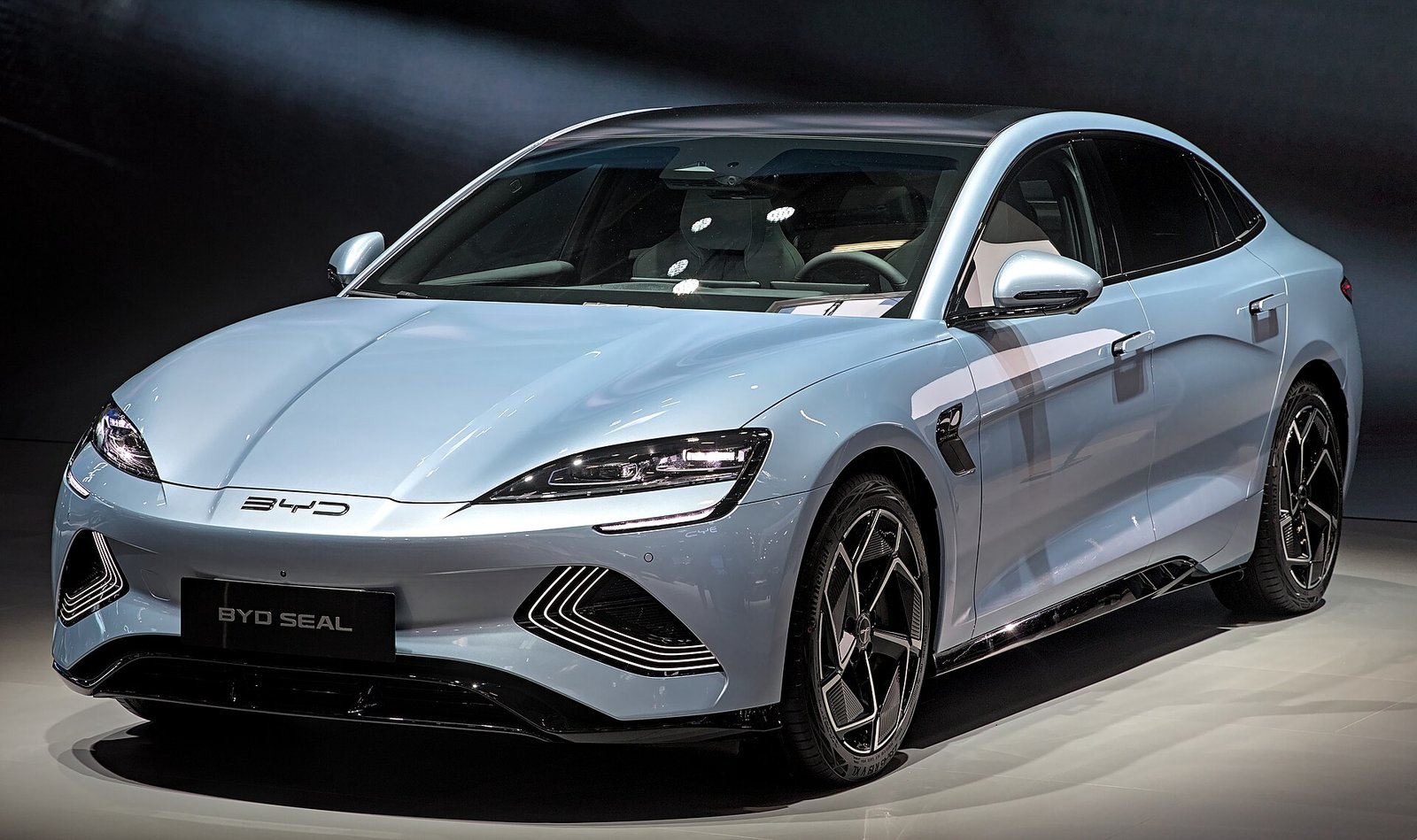
Here's a fight worth having. The best-selling electric car company on Earth is not Tesla anymore. It's BYD, a Chinese automaker most Americans have never seen in person — because federal policy makes sure of it. BYD sold 2.26 million battery-electric cars in 2025. Tesla sold 1.64 million, according to the Associated Press. In China, BYD's cheapest new EV costs about $9,900. The average new vehicle in America now changes hands for $50,089, according to Kelley Blue Book's August figures. So the question writes itself: should the United States let BYD sell cars here — or keep the gate locked?
This is not a theoretical debate, and it is not one the companies are having quietly. Ford's CEO has called Chinese rivals an "existential threat." The head of the United Auto Workers has vowed to stop a "race to the bottom." Tesla's Elon Musk has warned that without trade barriers, Chinese automakers "will pretty much demolish most other car companies in the world." And yet BYD itself is in no rush: this month, executive vice president Stella Li told Reuters the company has decided to hold off on US passenger-car sales because there is no "clarity, visibility and stability" in the market. The gate is shut, the challenger isn't even pushing on it — and Americans are paying $50,000 for new cars on the other side of it. That's the argument. Let's run the numbers first.
The scoreboard at a glance: BYD vs Tesla
| Category | BYD | Tesla |
|---|---|---|
| Global EV (BEV) sales, 2025 | 2.26 million | 1.64 million |
| Global BEV sales, Jan–Sep 2026 | 1.63 million | 1.32 million |
| Revenue, 2025 | $116 billion | $94.8 billion |
| Cheapest EV | Seagull, ~$9,900 (China only) | Model 3, $36,990 (US) |
| Fastest charging claim | 1,500 kW Flash Charging | 500 kW (V4 Supercharger) |
| Sells passenger cars in the US? | No | Yes |
| US tariff on its Chinese-built EVs | 100% (Section 301) | Not applicable — builds in the US for this market |
Read that table the way a shopper in Ohio would. One company sells more EVs, makes more revenue, charges faster and starts at a quarter of the price. The other one is the one you can actually buy. Everything below is about whether that gap is a scandal or a strategy.
How BYD passed Tesla
The crossover happened in plain sight. In 2025, BYD's battery-electric sales rose 28% to 2.26 million while Tesla's fell 9% to 1.64 million, the Associated Press reported — and once you count BYD's plug-in hybrids, the company moved more than 4.5 million vehicles in a single year. Revenue followed the volume: BYD took in about $116 billion (RMB 804 billion) against Tesla's $94.8 billion, making it the bigger company by revenue as well as units. The lead has held through 2026: across the first nine months, BYD sold 1,629,957 passenger BEVs to Tesla's 1,324,681 — about 23% ahead — with a 762,478-to-486,532 edge in the third quarter alone, according to industry sales tallies.
How did a company most Americans couldn't name five years ago do it? Start with the unglamorous stuff. BYD makes its own batteries (the Blade Battery), much of its own semiconductors, its own motors — even the ships that carry its cars to export markets. That vertical integration, plus sheer scale in the world's biggest car market, lets it cut prices in ways rivals can't match. It also sells across every price band at once: a $9,900 city car at the bottom, and premium sub-brands like Denza at the top. Tesla, by contrast, still leans heavily on two models, the Model 3 and Model Y, that have been on sale for years.
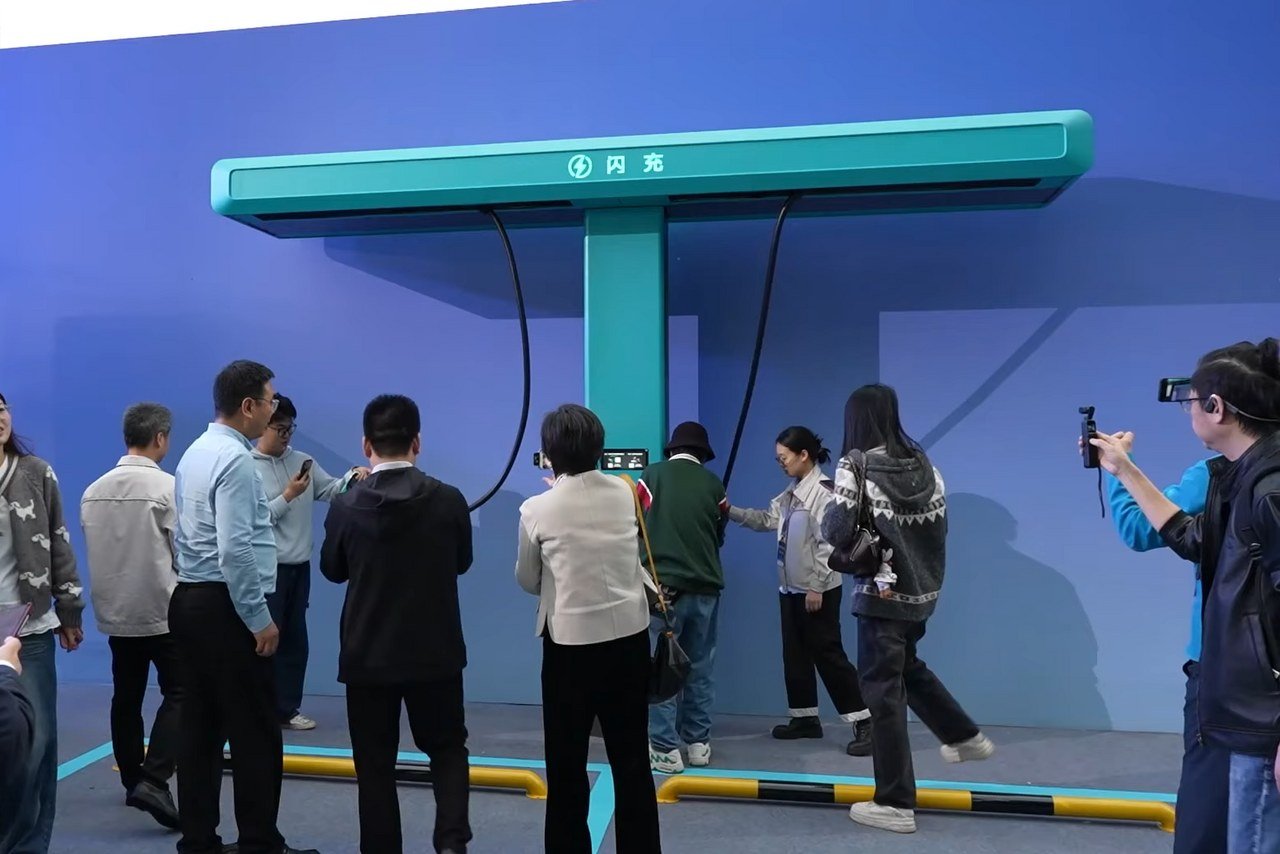
Then there's the technology headline. In March 2026, BYD launched Flash Charging on its second-generation Blade Battery, claiming peak rates of up to 1,500 kW and a 10–70% charge in five minutes, with more than 5,700 flash-charging stations already built in China, Electrek reported. Its earlier Super e-Platform claimed 1,000 kW and 249 miles of range added in five minutes. Tesla's newest V4 Superchargers peak at 500 kW — and most Tesla cars on the road today can't take more than 250 kW. To be fair to Tesla: its network is the one that actually exists across America, it works, and BYD's fastest chargers are an ocean away. But as a statement of where the engineering frontier sits, the charging race says a lot about how this rivalry flipped.
One more number keeps the story honest: BYD's 2025 profit fell 19% to about $4.7 billion, squeezed by a brutal price war at home, and its domestic sales have slumped at times this year even as exports surge. BYD is winning, but it is winning ugly — which matters for the argument below, because both sides cite that fact.
The price gap that scares Detroit
Now the part that keeps American executives awake. This month BYD launched the second-generation Seagull in China from 65,900 yuan — about $9,900 — with launch offers briefly taking it near $9,500, Electrek reported. It's a real car with real range and five-minute flash charging, not a golf cart. The cheapest Tesla you can buy in the US, the Model 3, starts at $36,990 before fees — and the $7,500 federal EV tax credit that used to soften that expired on September 30, 2025.
Two caveats, stated plainly. First, the Seagull's price is a China-market price for a car built to Chinese specs; the same car sold in Europe as the Dolphin Surf starts at €22,990 (about $26,600), and a US version would need US safety compliance, shipping and dealer margins on top. Nobody serious claims a $9,900 BYD would land here at $9,900. Second, "state subsidies" is only part of the explanation. A February 2026 analysis by Rhodium Group, a research firm that tracks Chinese industry, found BYD undercuts Tesla by roughly $4,700 per car in China — and estimated direct subsidies explain only about $235 of that gap, around 5%. The rest is integration, scale and lower development costs. Critics respond, fairly, that cheap state-bank loans, subsidized land and energy don't show up neatly in a per-car subsidy tally — the two camps genuinely disagree about how "earned" BYD's advantage is, and we're not going to pretend otherwise. But nobody in the industry disputes the gap itself.
Not even Detroit. Ford CEO Jim Farley has said Chinese automakers are an "existential threat" and warned on CBS: "They have enough capacity in China with the existing factories to serve the entire North American market, put us all out of business." By April 2026 he was calling BYD "the best in the business for us, cost-wise and competition-wise" — while adding that Tesla was no longer the rival keeping him up at night. And Musk said the quiet part out loud back on Tesla's January 2024 earnings call: Chinese companies are "the most competitive car companies in the world," and "if there are no trade barriers established, they will pretty much demolish most other car companies in the world." When the people who run Ford and Tesla both say the same thing, believe them: at equal prices, this fight is not close. The tariff is what makes it a contest at all — which is exactly the argument for it, and against it.
The wall: a 100% tariff, and a software ban behind it
So how locked is the gate? Since September 27, 2024, Chinese-made EVs have carried a 100% Section 301 tariff in the US, stacked on the standard 2.5% car duty and the 25% auto tariff — well over 100% all-in, as the Detroit Free Press puts it. That alone ends the conversation commercially: at those rates, a $9,900 Seagull would cost more to import than a Model 3 costs to buy.
The tariff isn't even the strongest lock. In January 2025, the Commerce Department finalized a connected-vehicle rule that bars companies controlled by China from selling connected cars in the US if they use Chinese covered software from model year 2027, and Chinese hardware from model year 2030. Read that again: it applies even if the car is built in the United States, by American workers. Under those rules, the issue isn't where the car is screwed together — it's whose software runs it. A bipartisan Senate bill (the Connected Vehicle Security Act, S.4429) that moved through committee in July 2026 would write that ban into permanent law.
Who does the wall protect? Directly: General Motors, Ford and Tesla, whose US prices face no pressure from the world's cheapest EVs. Tesla is, awkwardly, one of the wall's biggest beneficiaries — the company that fights BYD in the open in China and Europe gets a protected home market here. Indirectly, the wall protects something less tangible: time. Time for legacy makers to get their EV costs down before the flood arrives. The critics' word for that same arrangement is "complacency subsidy" — and 2026 has produced the first cracks in the consensus. In September, President Trump told Fox News he would be fine with Chinese automakers building cars in the US: "The big thing is they hire our people." And Canada, which copied the US with its own 100% surtax, scrapped it effective March 1, 2026, replacing it with a quota of 49,000 Chinese EVs a year at a low 6.1% tariff. Same continent, opposite bet.
The case for letting BYD in
Your wallet. The average new vehicle in America transacted at $50,089 in August 2026, per Kelley Blue Book — and EVs averaged higher still. There is no $25,000 electric car in this country, and there won't be one as long as the cheapest serious EV maker on Earth is banned from the showroom. Competition is the only force that has ever reliably lowered car prices in America; protection has never done it once. And shoppers seem to get it: a February 2026 Harris Poll found about 4 in 10 Americans would consider buying from a Chinese automaker — including 43% of Republicans and 55% of Democrats. Washington is more afraid of Chinese EVs than the people buying cars are.
Competition makes Detroit better, not dead. America has run this experiment before. Japanese imports in the 1970s and 80s were supposed to kill Detroit; instead they forced it to build cars people actually wanted, and Toyota and Honda now run some of the most American factories in the industry. Detroit's own leaders concede BYD is the cost and technology benchmark — Farley studies its products firsthand. A managed opening — say, Canada-style quotas, or US-built cars with US-audited software — would pressure American makers to match BYD's costs instead of lobbying against them.
The subsidy bogeyman is smaller than advertised. If Rhodium Group is right that subsidies explain roughly 5% of BYD's price advantage, then blocking BYD isn't leveling a rigged playing field — it's banning a better mousetrap. The honest response to a rival that out-engineered you is to out-engineer them back, not to make their products illegal. There's a climate footnote too: every year America's EV transition stalls on price is a year the fleet turns over more slowly. Cheap EVs are the adoption lever, and right now the US has outlawed the cheapest ones.
Jobs can be part of the deal. BYD already operates in the US in other businesses — executive vice president Stella Li noted this month that the company has been in the US "for a long time," just not in passenger cars. The Trump condition — build here, hire here — is a coherent one: a BYD plant in the American South would employ Americans at American wages under American labor law, the same bargain the US struck with Japanese and Korean makers. Opponents are right that a plant alone doesn't solve the software question (see below) — but "no cars, ever, at any condition" is a position, not a policy.
The case against: jobs, security, and a rigged game
The jobs argument is real, and it's about more than assembly lines. UAW president Shawn Fain, fresh off re-election this month, told Reuters: "We're not going to stand for China driving a race to the bottom in America" — and he has called even US-built Chinese plants a national security issue. The union's fear isn't abstract: the US auto supply chain supports hundreds of thousands of jobs beyond the big assembly plants, and it was hollowed out once before by an import shock. Scott Paul, president of the Alliance for American Manufacturing, put it bluntly on October 2, 2026: "The biggest threat to manufacturing is China's massive industrial overcapacity... China is coming for these jobs." His group's earlier research called a flood of Chinese vehicle imports an "extinction-level event" for the US auto industry. Hyperbole? Maybe. But Farley's own math — enough Chinese capacity to supply all of North America — says the fear isn't invented.
The security argument is the one with no easy answer. Paul again: "Modern vehicles are rolling computers. When their software or hardware is subject to Beijing's control or influence, they pose unacceptable risks to our national and economic security." A connected car knows where you live, where you work, when you drive to a military base — and it can be updated, or bricked, over the air by whoever controls its software. Chinese law obliges Chinese companies to cooperate with state intelligence work. That is precisely why the Commerce rule targets software rather than sticker prices, and why it closes the "build it in Mexico" loophole. Supporters of a ban ask a fair question back: would China let an American company sell connected cars, running American-controlled software, to Chinese buyers at scale? It would not — Tesla's data in China is walled off by Chinese law, and its driver-assistance software has spent years stuck in Chinese approvals.
The game behind the game. BYD's price war is so savage it cut its own profit 19% last year and has crushed smaller Chinese rivals. Skeptics argue this is what state-directed overcapacity looks like: build far more than your market can absorb, dump the surplus abroad at prices nobody unsubsidized can match, and let foreign industries die before the shakeout ends. Europe — which took a middle path with additional duties of up to 35% — has spent two years arguing with itself about whether it moved fast enough. And the strategic point underneath all of it: a supply base, once closed, does not reopen. If the US decides in 2036 that it needs a mass-market EV industry and discovers it no longer has one, there is no tariff that fixes that.
What happens to Tesla either way
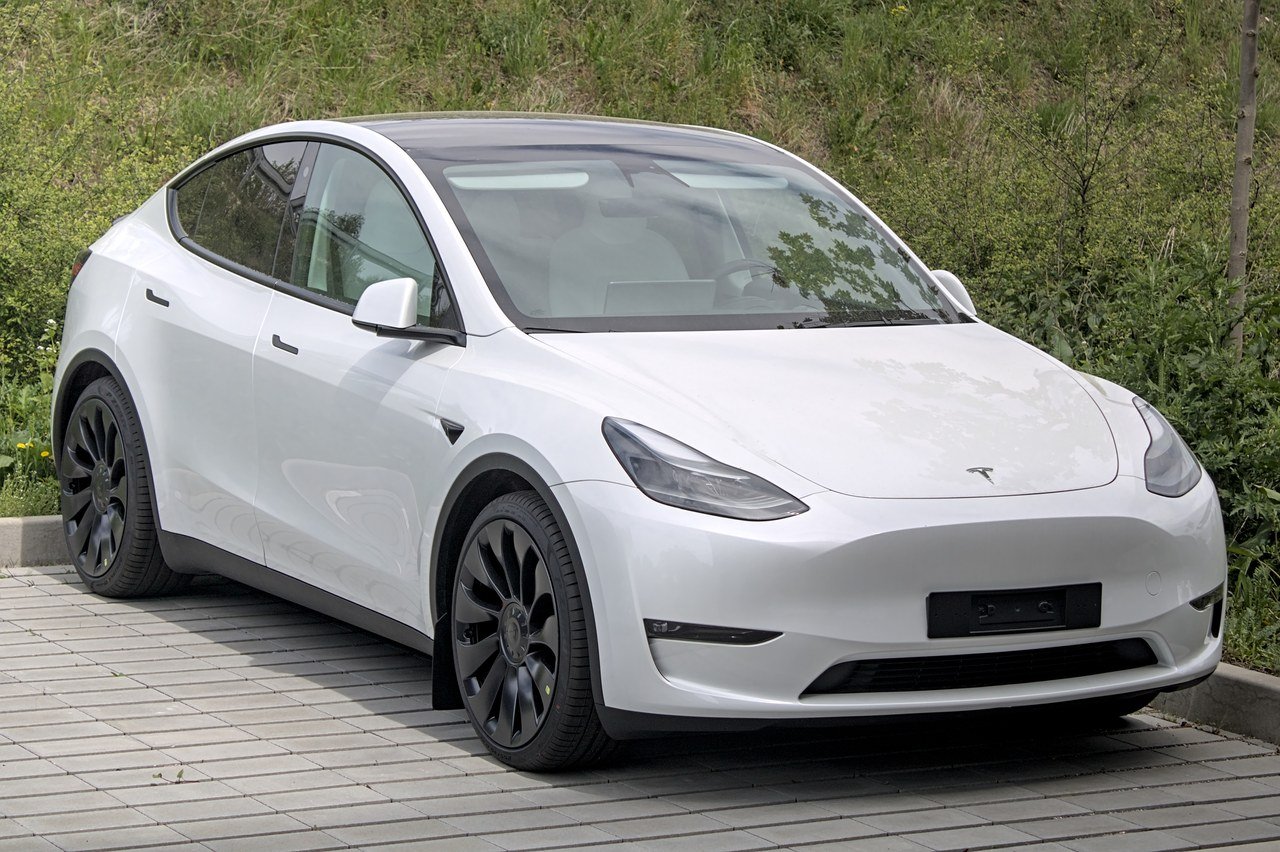
Tesla sits at the center of this argument in a way no other company does. It is simultaneously the wall's biggest beneficiary and BYD's biggest global rival — and it fights that rival with no protection at all in China and Europe, where its sales have been sliding while BYD's climb. If the wall holds, Tesla keeps its US fortress: no price pressure from below, and room to chase the robotaxi-and-robots future its most bullish investors are pricing in. The risk is slower rot — an aging two-model lineup, a cost base that never has to match Shenzhen's, and a growing technology gap in areas like charging speed that American buyers will eventually read about.
If the wall cracks — a Canada-style quota, or BYD building in the US under strict software rules — Tesla is also the American maker best built to survive it. It has the factories, the charging network, the brand, and a decade of cost-cutting scar tissue from fighting BYD in China. Musk's "demolish" warning was aimed at "most other car companies," and he may have been right about the ordering: in an open US market, the first casualties probably aren't Tesla — they're the legacy EV programs selling $55,000 crossovers with modest range. Either way, Tesla's next decade gets decided less in Austin than in Washington: it is the only company in this fight that profits from the wall and could also win without it.
The detailed scoreboard
| Metric | BYD | Tesla |
|---|---|---|
| Global BEV sales, 2025 | 2.26M (+28%) | 1.64M (−9%) |
| Global BEV sales, Jan–Sep 2026 | 1.63M | 1.32M |
| Total vehicles, 2025 (incl. plug-in hybrids) | Over 4.5 million | 1.64 million (EVs only) |
| Revenue, 2025 | $116 billion | $94.8 billion |
| Cheapest model | Seagull, ~$9,900 (China) | Model 3, $36,990 (US) |
| Home-market cost edge | ~$4,700 cheaper per car in China (Rhodium Group) | — |
| Peak fast-charging claim | 1,500 kW (Flash Charging) | 500 kW (V4 Supercharger) |
| Marquee charge claim | 10–70% in 5 minutes | ~170 miles in 15 minutes |
| Sells passenger cars in the US | No — on hold (Reuters, Oct 2026) | Yes |
| Tariff to enter the US | 100% Section 301 (100%+ all-in) | Builds in the US for the US |
Charging figures are manufacturer claims measured on different test cycles and networks — treat them as claims, not lab results. Sales and revenue figures as reported by the Associated Press and industry sales trackers; where trackers differ slightly on totals, we've used the AP figures.
Quick answers
Can I buy a BYD in the US today? No. BYD sells no passenger cars in the US, and on October 8, 2026, executive vice president Stella Li told Reuters the company is holding off: "We don't have clarity, visibility and stability there, so we're saying let's hold and not to go to the US for passenger cars at this moment." Between the 100% tariff and the connected-vehicle software rule, there is currently no legal, profitable way for BYD to sell you a car.
Why is the tariff 100%? The US raised the Section 301 tariff on Chinese EVs to 100%, effective September 27, 2024, on top of existing duties — and followed it with a Commerce Department rule targeting Chinese connected-vehicle software from model year 2027. The stated reasons mix trade (Chinese industrial subsidies and overcapacity) and national security (vehicle data and software control).
Would a BYD really cost $10,000 in America? No — $9,900 is the Seagull's China price, and its European twin sells from €22,990. US compliance, shipping and retail margins would push a US version well above $10,000. But even at $22,000–$25,000 it would be thousands cheaper than any new EV currently sold in the US, which is the entire point of the debate.
What does Tesla think? Elon Musk, January 2024: Chinese automakers are "the most competitive car companies in the world," and without trade barriers "they will pretty much demolish most other car companies in the world." Tesla benefits from the wall at home while competing against BYD unprotected in China and Europe.
Could BYD just build a factory in the US? Politically, maybe — President Trump said in September 2026 he'd be OK with Chinese automakers building in the US if they hire Americans. Legally, it's harder: the Commerce connected-vehicle rule bars China-controlled companies from selling connected cars with Chinese software from model year 2027 regardless of where the car is built, and the UAW's Shawn Fain opposes Chinese plants outright. A US factory solves the tariff. It does not solve the software rule.
What did Canada do? The opposite. Effective March 1, 2026, Canada repealed its 100% surtax on Chinese EVs and replaced it with an annual quota of 49,000 vehicles at a 6.1% most-favored-nation tariff — a managed opening instead of a wall. Watch Canada: it's the test case both sides of the US argument will be citing for the next five years.
The bottom line
Our take, for what it's worth: the scoreboard is not in dispute, and neither is the fact that the wall — not the market — is what keeps the world's biggest EV maker out of American showrooms. A permanent, unconditional ban is hard to defend as anything but a tax on American car buyers, currently paying record prices, to protect incumbents from a competitor their own CEOs call the best in the business. But the security argument is not a lobbyist's invention, and "just let them in" is not a serious answer to it. The honest options are the ones in the middle: a Canada-style quota, or US-built cars under US-audited software and data rules, with labor standards attached — competition with conditions. What isn't defensible is a wall with no expiry date and no conditions, pretending to be a strategy.
For now, none of it changes anything on the lot: the gate is shut, and BYD isn't pushing on it. When it does — and the biggest car company on Earth eventually will — Washington will have to answer the question for real. So let's argue it now, while it's still cheap to argue about: if BYD sold a $25,000 EV built in Ohio by American workers, with its data hosted and audited in the US, would you buy one? And if not — what, exactly, would have to change? Tell us where you land, and why. The comments are open, and for once, both sides are actually worth hearing.