Searching for an ev charging station near me? Here’s the fastest answer: open Google Maps, type “EV charging station,” and you’ll see every public charger around you with live availability. But finding the pin on the map is the easy part — knowing which charger to pick, what it’ll cost, and how long you’ll wait is where most people get stuck.
This guide covers all of it: the 5 best ways to find a charger near you right now, how the major US networks compare, what charging actually costs, how long it takes, and the etiquette that keeps you from becoming that person at the charging station.
5 fastest ways to find an EV charging station near you
1. Google Maps (fastest for most people)
Open Google Maps, search “EV charging station” or “EV charger near me.” You’ll get a map of nearby stations with connector types, charging speeds, photos, reviews, and often live availability. Tap a station to see pricing details and whether chargers are currently in use. It works on iPhone, Android, and desktop — no app download needed.
2. The US Department of Energy’s station locator
The DOE Alternative Fuels Data Center runs the official station locator for every public charger in America. It’s the most complete database that exists — filter by connector type, charging level, and network. Bookmark it.
3. PlugShare (best for real-world intel)
PlugShare is the crowd-sourced bible of EV charging. Drivers leave reviews, photos, and check-ins reporting broken chargers, long waits, and pricing surprises. Before you drive to an unfamiliar station, check its PlugShare score — a 9+ with recent check-ins means you’re safe.
4. Your car’s built-in navigation
Teslas route you to Superchargers automatically and pre-heat the battery for faster charging. Most newer EVs from Hyundai, Kia, Ford, and GM do the same for major networks. If your car offers it, use it — battery preconditioning alone can cut your charging time significantly.
5. Network apps (ChargePoint, EVgo, Electrify America)
If you regularly use one network, its app shows live stall availability and lets you start and pay for sessions from your phone. Worth installing for the network nearest your home or commute.
The major US charging networks, compared
Not all chargers are equal. Here’s who runs what — and who can actually use it:
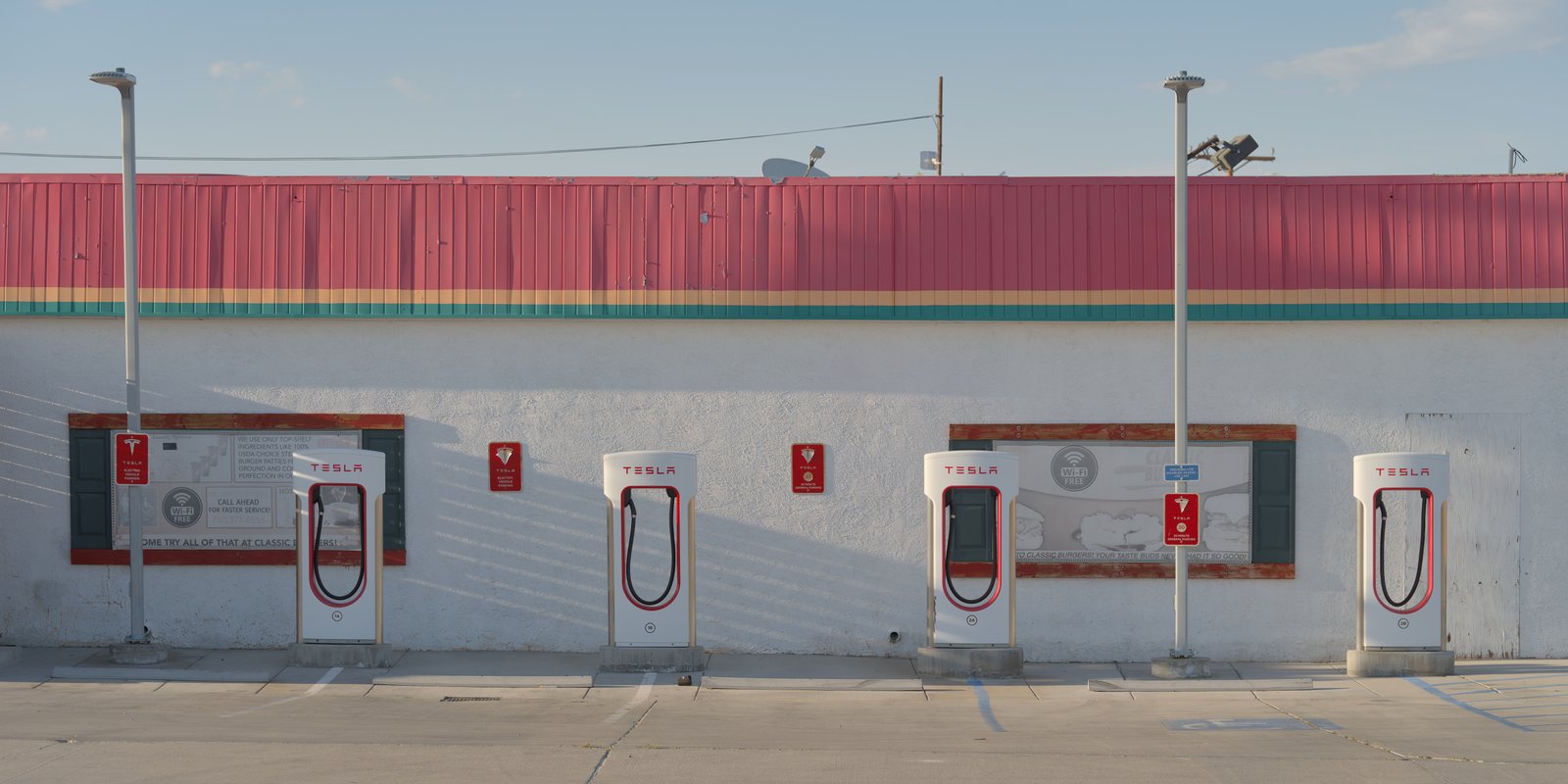
- Tesla Supercharger — the biggest fast-charging network in America, with 25,000+ stalls. Originally Tesla-only, now open to most other EVs via a built-in NACS port or adapter. Tesla’s own map shows every location.
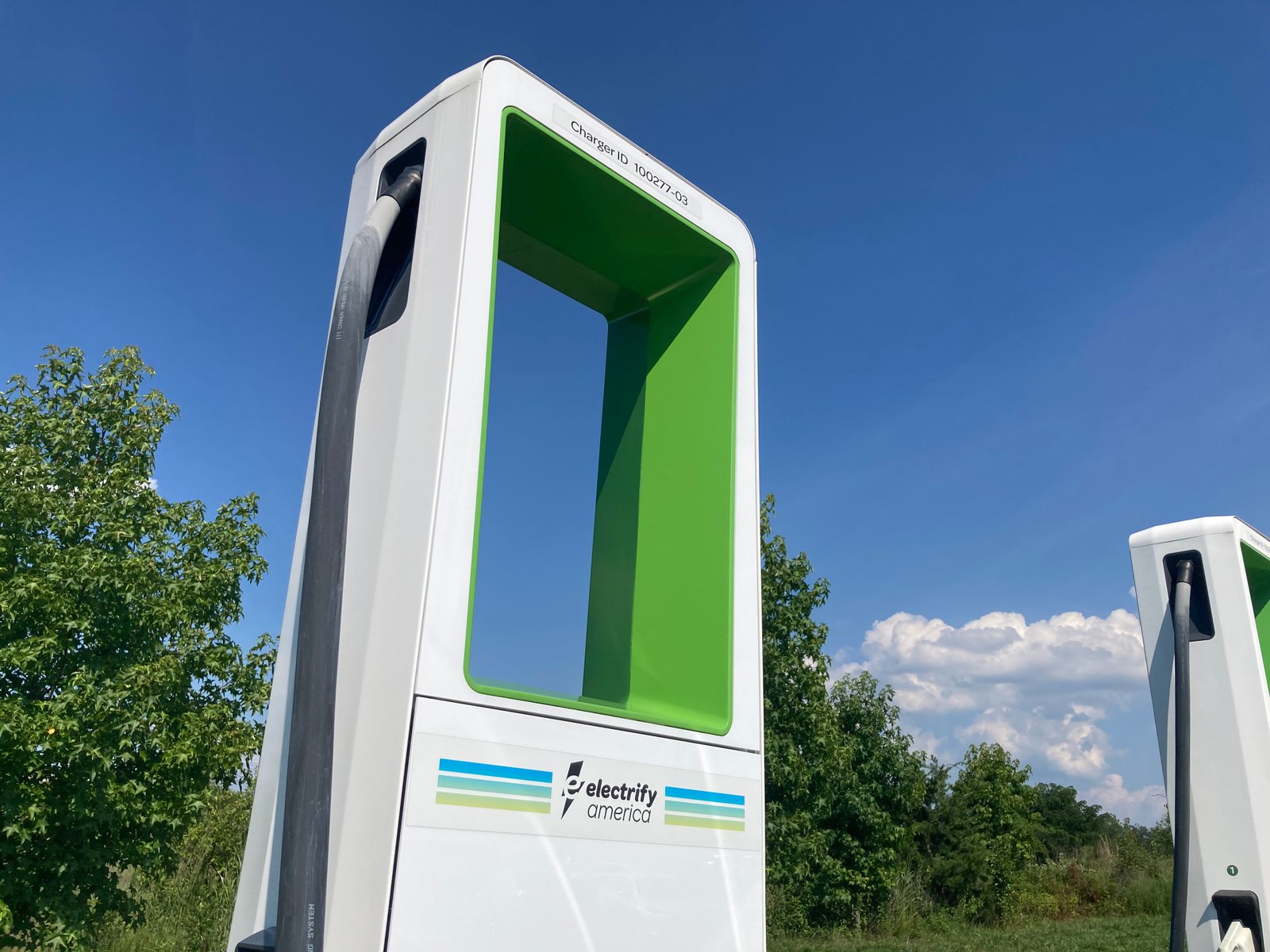
- Electrify America — the largest open CCS network, strong along highways. 350-kW chargers can add ~200 miles in under 20 minutes on cars that support it.
- EVgo — big in cities and suburbs, partnered with GM and others. Good for topping up while you shop.
- ChargePoint — the largest network by location count, but many are slower Level 2 chargers at workplaces, hotels, and parking garages rather than highway fast chargers.
- IONNA — the new joint venture from BMW, GM, Honda, Hyundai, Kia, Mercedes, Stellantis, and Toyota, building high-power stations with canopies, lounges, and food — the “gas station of the future” model.
The short version: if you drive a Tesla, Superchargers are your home base. Everyone else, look for the fastest DC charger on your route regardless of brand — and check PlugShare first.
Charging speeds explained (no engineering degree needed)
Chargers come in three levels. This is the single most useful thing to understand:
- Level 1 (regular wall outlet): adds 3–5 miles of range per hour. Fine overnight in a pinch, useless on a trip.
- Level 2 (240V, like a dryer outlet): adds 20–30 miles per hour. This is home charging, workplace charging, and hotel charging. Plug in overnight, wake up full.
- DC fast charging (Level 3): adds 100–200+ miles in 15–30 minutes. This is what you want on a road trip — and what “EV charging station near me” searches are usually hunting for.
One more thing: charging isn’t linear. Your car charges fastest from about 10% to 80%, then slows dramatically. The pro move on road trips is to charge to 80% and go — that last 20% can take as long as the first 60%.
What does it actually cost?
Public charging typically runs $0.30–$0.60 per kWh at DC fast chargers, which works out to roughly $15–$35 for a meaningful charge — still cheaper than a tank of gas for most cars. Level 2 public chargers are often cheaper, sometimes free at workplaces, hotels, and shopping centers trying to attract you inside.
Watch for idle fees: most networks charge you per minute if you leave your car plugged in after it finishes charging. Tesla’s can hit $1.00/minute when stations are busy. Set a phone alarm — your wallet will thank you.
Cheapest of all is home charging: at the US average of ~$0.17/kWh, a full charge costs less than a fancy coffee. If you can install a Level 2 charger at home, public charging becomes a road-trip-only affair.
Charging etiquette (don’t be that person)
- Move when you’re done. Unplug at 80% on a busy fast charger and free the stall.
- Don’t unplug someone else’s car unless it’s clearly finished and idle fees are racking up — and even then, tread carefully.
- Park properly. Charging stalls are for charging, not parking. Never ICE a stall (that’s parking a gas car in an EV spot).
- Leave a PlugShare check-in when a charger is broken or great. The community runs on this.
Road trip tips
Plan charging stops with your car’s nav or A Better Route Planner before you leave — don’t wing it past half battery in unfamiliar territory. Always have a backup charger in mind (check PlugShare for the next-nearest option). In winter, expect 20–30% less range and longer charging times; precondition the battery if your car allows it. And keep a CCS-to-NACS or NACS-to-CCS adapter in the frunk if your car didn’t come with the native plug — it doubles your options.
What if there’s no charger near me?
If the map looks empty, you’ve got options. A standard 120V outlet adds a few miles per hour — enough to get you to a real charger the next day. Many RV parks rent 240V (NEMA 14-50) outlets by the night, which charge at Level 2 speeds. And dealerships — especially Ford, Hyundai, and Kia stores — often have public-facing chargers even if you didn’t buy from them. When in doubt, call ahead.
Longer term, the map is filling in fast: the US charging network is growing every month, with IONNA and Tesla both adding stations at a rapid clip. The “charging desert” problem is shrinking every year.
Quick answers
How do I find an EV charging station near me right now? Google Maps → search “EV charging station.” For the most complete database, use the DOE’s station locator.
Can any EV use a Tesla Supercharger? Most newer non-Tesla EVs can, via a built-in NACS port or an adapter. Check your manufacturer’s site for compatibility.
How long does it take to charge an EV? 15–30 minutes at a DC fast charger (10–80%), 4–8 hours on Level 2, overnight on a wall outlet.
Is it free to charge at public stations? Sometimes — workplaces, hotels, and some shopping centers offer free Level 2 charging. DC fast charging almost always costs money.
What’s the cheapest way to charge? At home, overnight, on a Level 2 charger — typically under $10 for a full charge.
The bottom line
Finding an ev charging station near me takes ten seconds — it’s everything after the search that matters. Use Google Maps or PlugShare to find it, pick the fastest DC charger your car supports, charge to 80% and roll. Do that, and public charging stops being a chore and starts being a coffee break.