Analysis
America Just Passed 262,000 Public EV Chargers — and They're Finally Getting Reliable
For years, the knock on American EV charging was simple: not enough plugs, and half of them broken. In 2026, both halves of that complaint are finally cracking. The US blew past 250,000 public charging ports this year — and as of this month sits at 262,367, per Department of Energy data — while the share of drivers who show up and can't charge just hit an all-time low. The buildout isn't just continuing; it's accelerating into the parts of the market the early network ignored. Here's where the plugs are, who's building them, and what still isn't working.
The numbers: 262,000 ports and climbing
The Department of Energy's Alternative Fuels Data Center counted 82,942 locations and 262,367 public ports as of October 11 — 182,528 Level 2 and 79,134 DC fast chargers. That's up 14% from a year earlier, with DC fast charging growing 25%. The pace is the real story: the country crossed 200,000 ports in March and 250,000 around mid-year, meaning roughly 50,000 ports — about half of everything that existed in 2021 — went live in a matter of months.
It's not just plug counts, either. Total available public charging power jumped 47% in the past year, from 14.1 to 20.7 gigawatts, as new stations skew toward higher-powered hardware — two-thirds of DC fast ports now deliver 250 kW or more. And drivers have noticed: the share of EV owners who rate public charging coverage as good or better climbed from 28% to 47% in a single year. For the first time, nearly half the EV-driving public thinks the network is fine.
Tesla still builds the most — but lost the crown
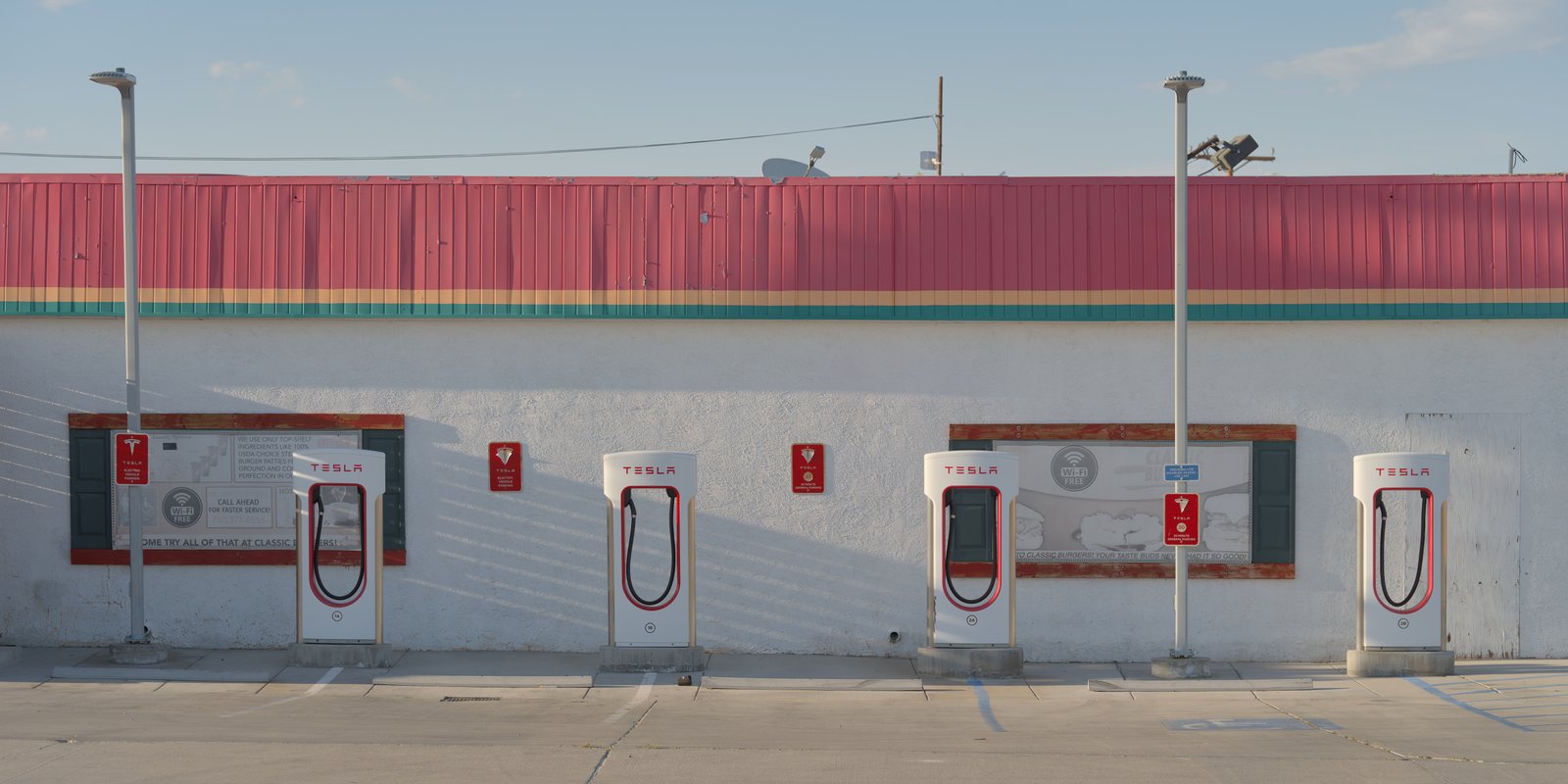
Tesla passed 40,000 Supercharger stalls in the US this September — about half of every DC fast stall in the country — and in Q3 it still deployed more new stalls (1,287) than any other network. But look closer and the dominance is softening: Tesla's share of new DC fast ports fell to 49% from 57% in early 2025, its expansion pace slowed year over year, and Supercharger prices rose in 2026 while most rival networks held steady.
The bigger symbolic loss came in August, when JD Power's 2026 charging study knocked Tesla off the top satisfaction spot it had held for five straight years. Tesla scored 701 out of 1,000 — respectable, but no longer the best. The network's consolation prize is scale plus openness: more than two-thirds of its North American Superchargers now welcome non-Tesla EVs, putting over 27,500 stalls within reach of every NACS-equipped car on the road. New hardware helps too — September brought the 1.2-megawatt "Accordion" Supercharger cabinet feeding up to eight 500 kW dispensers at roughly 20% lower install cost.
The challengers are real now
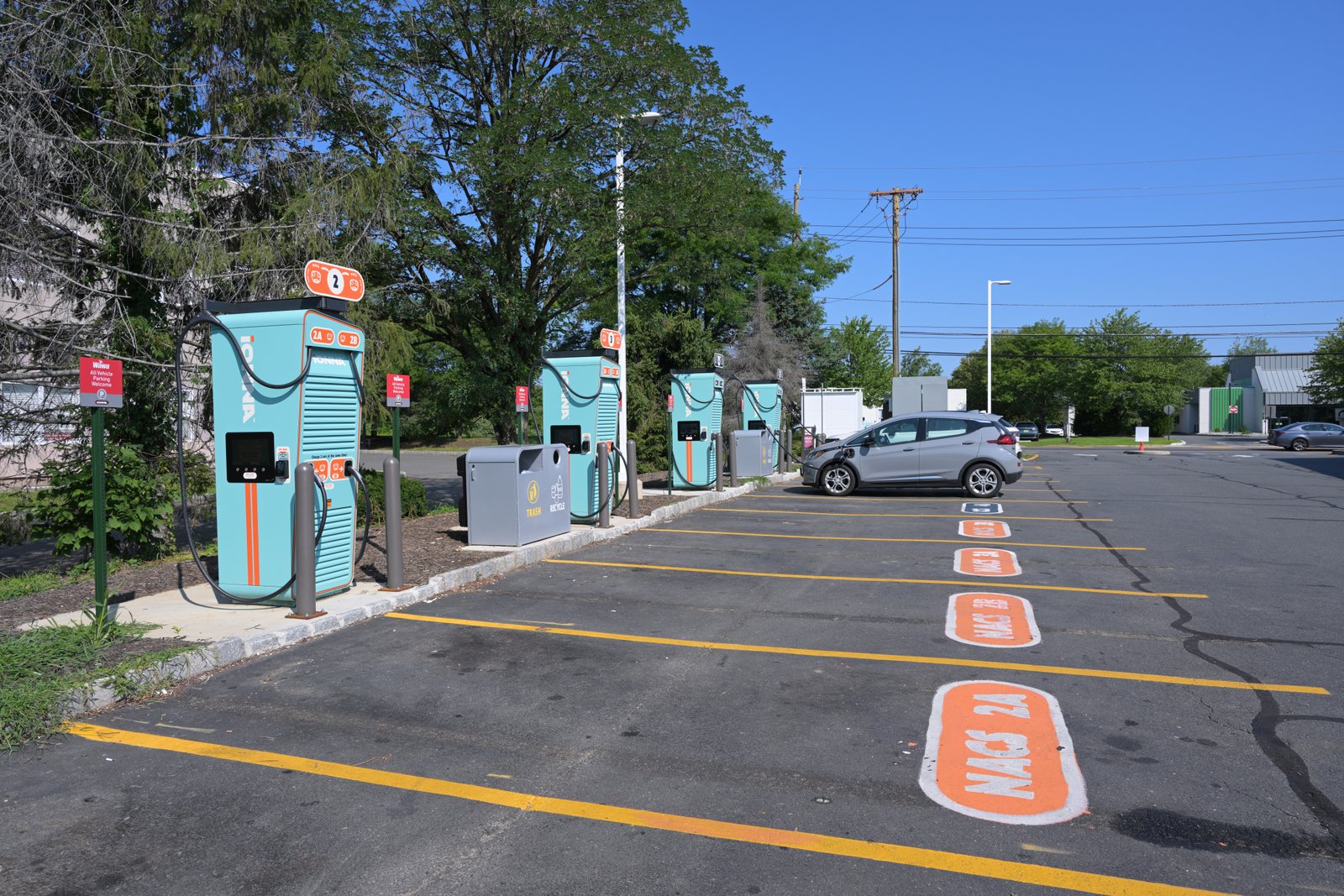
The company that took Tesla's satisfaction crown is Ionna — the eight-automaker joint venture (BMW, GM, Honda, Hyundai, Kia, Mercedes, Stellantis, Toyota) that scored 807/1000 in its first eligible year. Ionna went from 80 sites at the start of 2026 to more than 120 locations and 1,130 chargepoints by mid-year, with a stated goal of tripling the network this year and 30,000 bays by 2030. Its playbook is gas-station thinking: 350-site partnership with Circle K "Rechargeries," plus Wawa, Sheetz, and Casey's — chargers where people already stop.
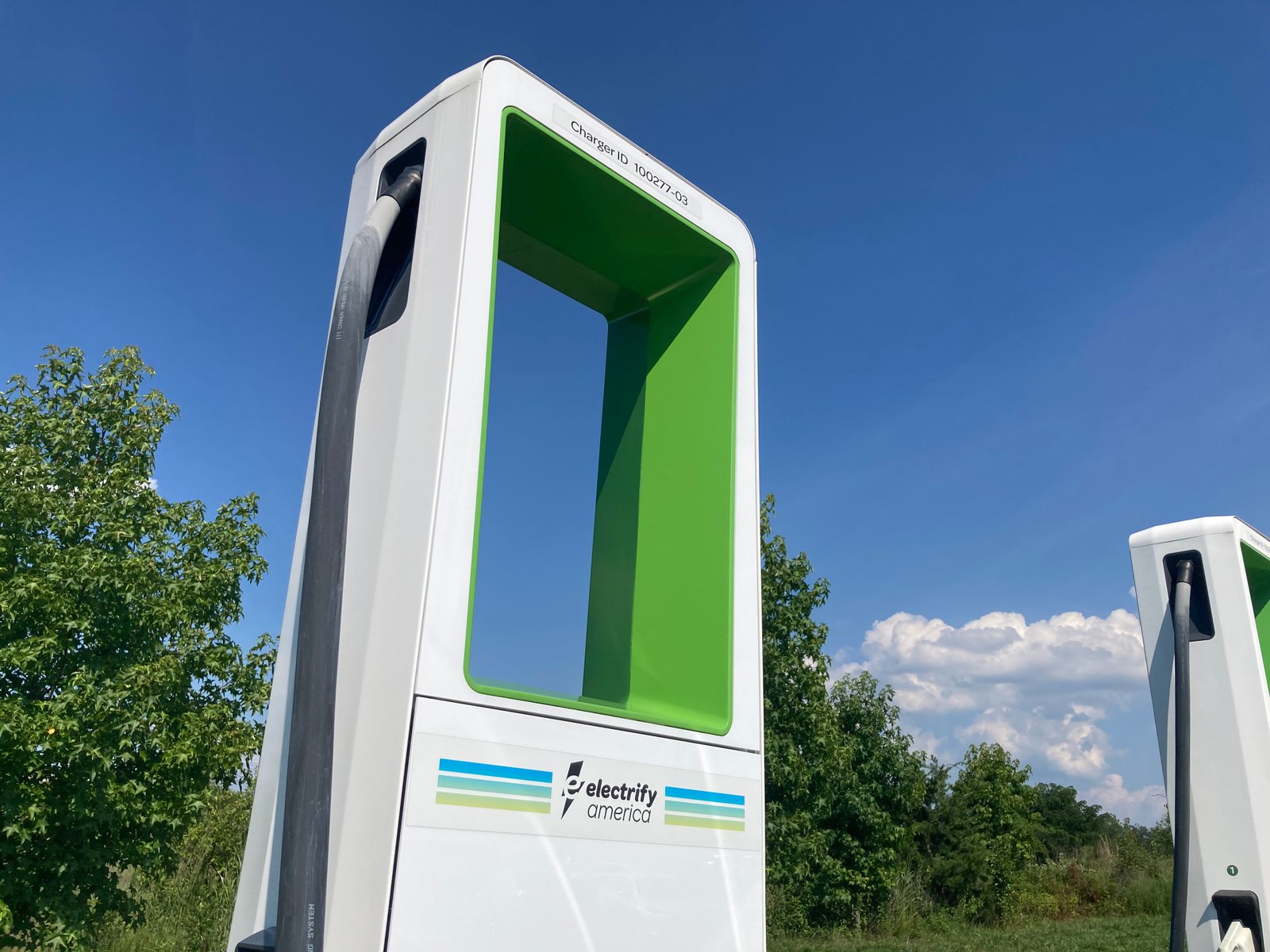
Behind it, the field is thickening fast. EVgo runs ~2,400 stalls across 32 states and is deploying "EVgo Superchargers" built on Tesla V4 hardware this fall; its GM and Pilot/Flying J partnerships put 300-plus locations and 1,300 stalls across 40 states. Electrify America counts 3,400-plus fast chargers at around 800 stations and is adding 1,000 more at TravelCenters of America truck stops. Even Walmart cracked the top three new deployers last quarter with 344 new ports. Mercedes' own charging network took second in the JD Power rankings (797), and Rivian's Adventure Network took third (755). ChargePoint still owns Level 2 with 76,000-plus plugs — but finished last among major DC networks on satisfaction, a maintenance problem it needs to fix.
NEVI: the federal money is still a trickle
Then there's the $7.5 billion elephant. The NEVI program from the 2021 infrastructure law was supposed to blanket highway corridors with fast chargers; a June 2026 Congressional Research Service report counted just 183 NEVI-funded stations across 20 states — "hundreds, not thousands" against a 30,000-port goal. The administration paused disbursements in early 2025 for federal review, delaying construction in around 30 states by 6 to 12 months, and fewer than 10% of planned corridor stations are operating.
The state-by-state picture is uneven to the point of comedy. Illinois energized its first NEVI station in July (four 350 kW ports, $855,000 grant). Michigan earned "fully built out" certification and unlocked another $51 million. Pennsylvania has 40 NEVI-built stations of its 2,000-plus statewide. Massachusetts was allocated $64 million and has spent exactly $0 on hardware — zero stations after four years. The lesson of NEVI so far: the private market is building the network; the federal program is writing the footnotes.
Reliability is finally turning the corner
Here's the number that matters most for anyone who's ever stared at a dead charger in the rain: 12% of public charging visits now end without a charge — an all-time low, down from 14% last year and 19% in 2024. Overall DC fast-charger satisfaction rose to 666/1000, up 12 points, with every measured factor improving; charger availability posted the biggest gain (+27 points). When chargers do fail, it's usually the unglamorous stuff — about 60% of failed visits are chargers out of service, with payment failures and car-to-charger communication errors close behind. The connector itself is almost never the problem.
The weak link has moved. Level 2 satisfaction actually fell 12 points — payment hassle, clunky sessions — and JD Power flags neighborhood and multifamily charging as the next frontier. That tracks: the highway corridor problem is being solved, but the "I live in an apartment" problem isn't. California leads with 69,306 ports; Wyoming, North Dakota, South Dakota, and Montana each have fewer than 200 stations. And 90% of new DC fast sites last quarter went up in urban areas — rural America is still waiting.
The bottom line
Strip away the noise and 2026 is the year American EV charging grew up: 262,000 ports, power capacity up 47%, failed sessions at a record low, and genuine competition — an eight-automaker startup now outscores Tesla on satisfaction. The federal program built 183 stations; the market built tens of thousands of ports. The remaining gaps are specific and fixable: rural corridors, apartment-dweller Level 2, and keeping the maintenance culture that drove this year's gains. For the first time, "just build more chargers" is being replaced by a harder and better question: build them where?
Sources & further reading
- Electrek — Tesla still leads US fast-charger growth (Oct 13, 2026)
- J.D. Power — 2026 EVX Public Charging Study (Aug 12, 2026)
- GCN — US public ports cross 250,000 (Oct 2026)
- InsideEVs — DC fast charging satisfaction up, Ionna takes top spot (2026)
- The Drive — Ionna CEO on making charging profitable (Oct 1, 2026)
- DOE data walkthrough — EV chargers by state, 262,000 ports (YouTube)
- Why public chargers fail — ChargeX failure analysis (YouTube)
Port counts from the DOE Alternative Fuels Data Center (Oct 11, 2026); network figures from Paren, JD Power, and company reports. Tracker-derived counts are marked where applicable.