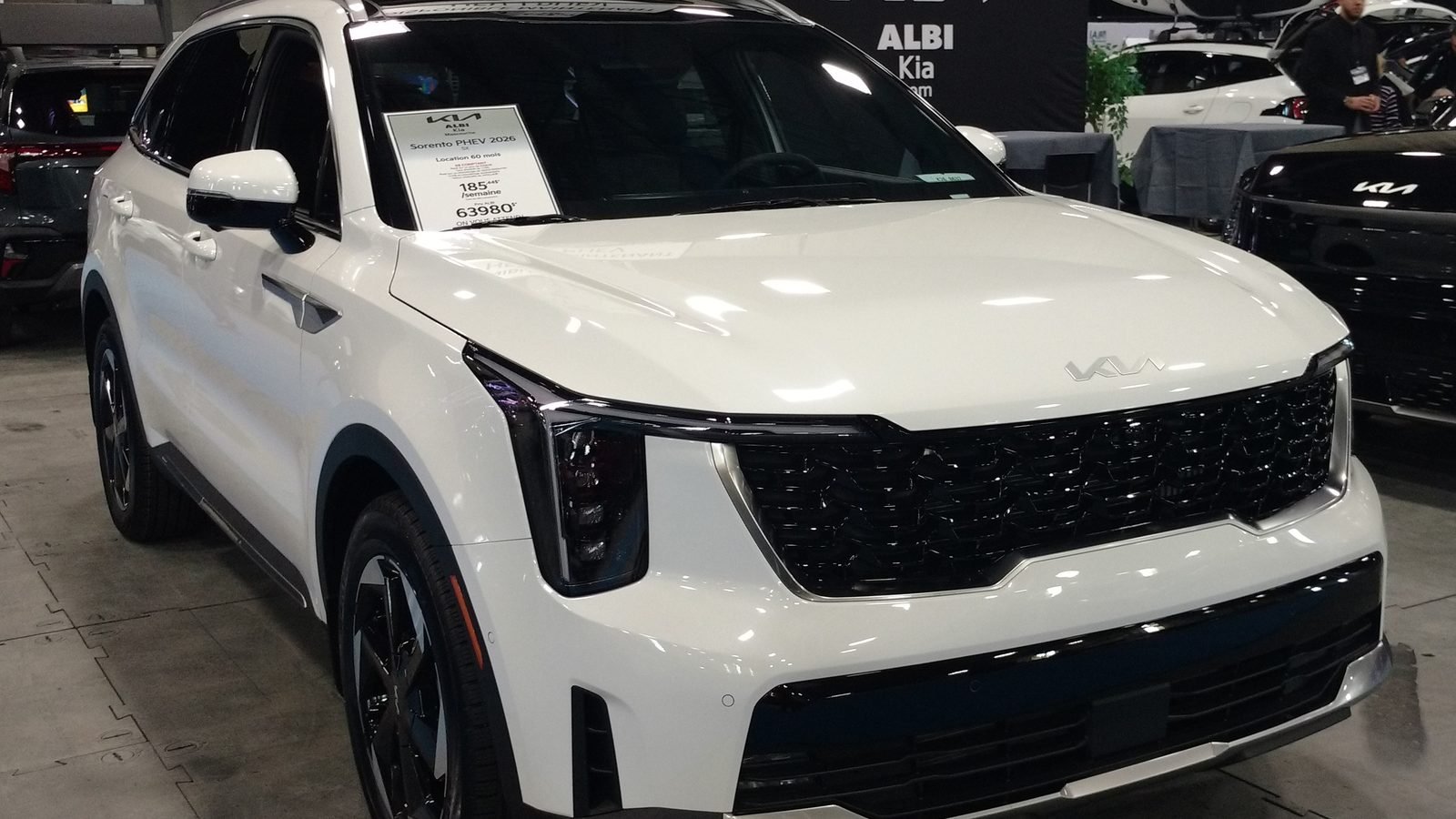
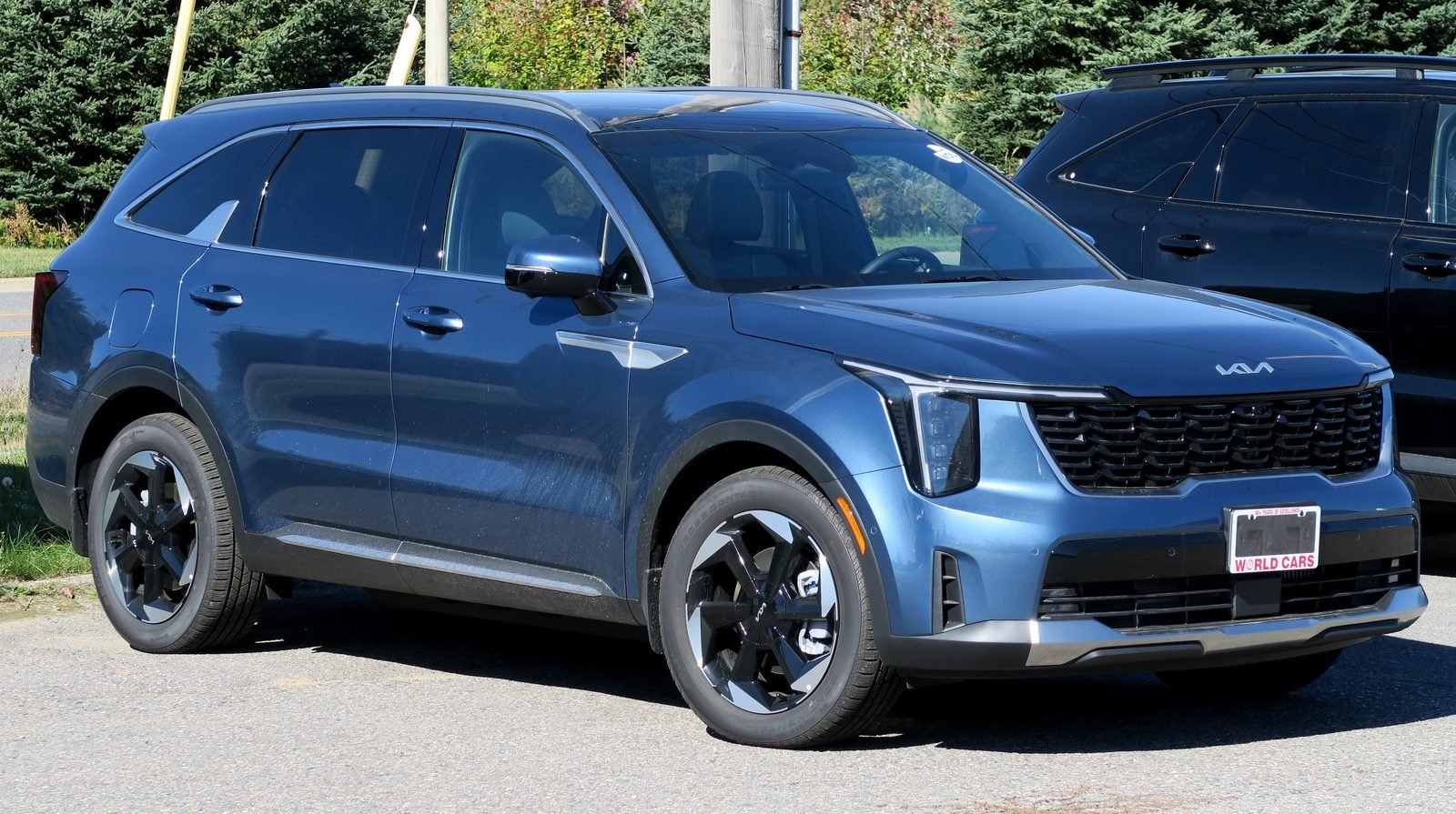
Kia giveth, and Kia taketh away. On October 19, Kia America announced pricing for the 2027 Sorento PHEV — and buried in the release was a gut punch for budget-conscious families: the affordable EX trim is gone. The plug-in Sorento now comes in exactly one flavor, the fully-loaded X-Line SX-Prestige AWD, at $53,890 before destination. With Kia’s $1,495 destination charge, that’s $55,385 to get into the cheapest — and only — Sorento plug-in hybrid.
Here’s the deal: last year’s EX started at $48,290, which means the price of entry just jumped $5,600 overnight. If you were cross-shopping the Sorento PHEV against a Mitsubishi Outlander PHEV or a Mazda CX-90 PHEV, that changes the math completely — both rivals now undercut the Kia by thousands. And this isn’t happening in a vacuum: plug-in hybrids are quietly vanishing from American lineups, one trim at a time.
| Question | Answer |
|---|---|
| What changed for 2027? | EX trim dropped; X-Line SX-Prestige is the only Sorento PHEV trim |
| New starting price? | $53,890 MSRP + $1,495 destination = $55,385 |
| How much more than last year? | $5,600 more than the 2026 EX’s $48,290 starting price |
| EV range? | 33 miles (EPA), up 3 from last year |
| Fuel economy? | 83 MPGe combined (+9); 36 mpg gas-only (+3) |
| Power? | 268 hp combined, standard AWD |
| Cheapest three-row PHEV alternative? | Mitsubishi Outlander PHEV at $43,245 |
What Kia actually announced
Kia’s press release frames it as simplification: “the Sorento PHEV has a simplified trim lineup,” with the X-Line SX-Prestige as the sole offering. And to be fair, the loaded trim itself barely moved in price — it’s up just $400 over last year, and Kia threw in some extra kit to sweeten it: machined wood inlays on the dash and doors, X-Line logos embossed into the front seatbacks, and a head-up display that’s now standard.
There’s also a quiet mechanical win the press release didn’t headline: the 2027 Sorento PHEV got more efficient. EPA estimates now show 33 miles of electric range (up from 30), 36 mpg on the gas engine alone (up from 33), and 83 MPGe with a full battery (up from 74). Those are meaningful gains — a 12% jump in combined efficiency without any announced hardware change suggests Kia squeezed real improvements out of the calibration.
Oh, and one practical upgrade: a combined Level 1 / Level 2 charging cable now comes standard, so you can plug into a regular wall outlet or a 240-volt home charger without buying extra gear. Small thing, but it’s the kind of inclusion that tells you Kia knows exactly who buys these cars — people charging at home overnight.
For context, the Sorento PHEV has been on sale since the 2022 model year, and for its first few years it was a one-trim proposition too — the affordable EX only appeared for 2025 and survived through 2026. So in a sense, Kia is returning the plug-in to its original positioning: a loaded flagship for tech-hungry buyers, not a volume play. The open question is whether the market of 2027 — with the federal tax credit gone and rivals thousands cheaper — still shows up for it.
The $5,600 question: what did the EX actually cost you?
Let’s be blunt about what disappeared. The EX was the Sorento PHEV for normal people: cloth-and-leatherette seats instead of quilted Nappa, fewer chrome bits, a smaller screen stack — but the same 1.6-liter turbo plug-in powertrain, the same three rows, the same ability to do your commute on electrons. At $48,290, it was already the priciest way into a Sorento by a wide margin. At $55,385, the plug-in now costs more than $16,000 over the Sorento Hybrid EX.
Want the honest answer on whether the loaded trim is $7,095 better than the hybrid’s top trim? For most buyers, no. The X-Line SX-Prestige PHEV gets you the HUD, the Bose audio, the panoramic sunroof, captain’s chairs, and 33 miles of electric range — versus the hybrid SX-Prestige at $47,590 plus destination. You’re paying roughly seven grand for the plug, the bigger battery, and standard AWD.
Here’s the weird part, though: Kia did the exact opposite move on the regular hybrid last week. For the 2027 Sorento Hybrid, Kia added a new value-packed X-Line EX trim at $43,090 that gives you the rugged styling of the top trim for $4,500 less, and the hybrid range still starts at $39,090. So the hybrid lineup got more choice and better value, while the plug-in got less choice and a higher floor. That tells you everything about where Kia thinks the demand is.
What the Sorento PHEV is up against
The two closest rivals are the Mitsubishi Outlander PHEV and the Mazda CX-90 PHEV — both three-row plug-ins, both now cheaper than the Sorento. Let’s line them up with CarBuzz’s comparison numbers:
| 2027 Kia Sorento PHEV | Mitsubishi Outlander PHEV | Mazda CX-90 PHEV | |
|---|---|---|---|
| Starting price (incl. destination) | $55,385 | $45,240 | $52,340 |
| Power | 268 hp | 297 hp | 323 hp |
| Electric range (EPA) | 33 miles | 44 miles | 27 miles |
| Combined MPGe | 83 | 73 | 56 |
| Gas-only mpg | 36 | 27 | 26 |
The table tells a brutal story. The Mitsubishi is more than $10,000 cheaper, more powerful, and goes 11 miles farther on electricity — though it’s thirstier once the battery runs out and less efficient overall. The Mazda is about $3,000 cheaper, the most powerful of the three at 323 hp, and widely praised for its rear-drive-biased driving dynamics — but it’s the efficiency laggard, with just 27 miles of EV range and 56 MPGe.
Real talk: the Sorento’s remaining advantage is efficiency. 83 MPGe and 36 mpg on gas alone are genuinely class-leading numbers — neither rival comes close once you’re past the battery. If you charge every night and your commute is under 33 miles, the Sorento will sip less fuel than anything else with three rows and a plug. But that advantage now costs $55,385 to access, and “most efficient” is a tough sell at a $10,000 premium over the Mitsubishi.
The bigger picture: plug-in hybrids are quietly dying
Zoom out, and Kia’s move looks less like a pricing quirk and more like a trend. As CarBuzz’s Joel pointed out in his analysis, the Sorento PHEV trim cut lands in the middle of a slow-motion plug-in exodus: the Hyundai Tucson is losing its plug-in option, Nissan is discontinuing its rebadged Mitsubishi plug-in, Jeep has dropped all of its plug-in models, and Hyundai confirmed that weak demand led it to cancel the plug-in Tucson for the US entirely.
The pattern is hard to miss. Automakers keep the plug-in alive only where it sells in profitable volumes — and where it doesn’t, they don’t kill the model outright, they just stop selling the cheap one. Kia’s bet, as Joel puts it, is that demand is concentrated at the top: “it may be seeing limited demand, too, so it’s only going to sell the most profitable, desirable one.” Translation: if you want a plug-in Sorento, Kia has decided you’re the kind of buyer who’ll pay $55,000. If you’re not, there’s a hybrid with your name on it.
There’s a possible plot twist on the horizon. Joel notes the Sorento PHEV could eventually be succeeded by an extended-range EV — a gas engine that only generates electricity, never drives the wheels — especially since the related Hyundai Santa Fe is already getting one. EREVs are having a moment: they deliver EV-like driving with none of the range anxiety, and Chinese brands have proven the formula at scale. If Kia goes that route, the PHEV’s days are numbered regardless.
Should you still buy one? A buyer’s honest guide
Cut to the chase: the 2027 Sorento PHEV only makes sense for a specific buyer now. Here’s the decision framework.
Buy the PHEV if: you can charge at home every night, your daily driving is under 33 miles, you need three rows, and you want the most efficient plug-in in the class. At 83 MPGe and 36 mpg gas-only, nothing with a plug and a third row sips less. The $7,500 federal tax credit is gone, so run the fuel math honestly — at $55,385, the payback versus the hybrid takes years unless gas prices spike.
Buy the Sorento Hybrid instead if: you want the same three rows and the same 1.6-liter turbo character for $16,000 less. The hybrid EX starts at $39,090, hits 37 mpg combined in front-drive form, and the new X-Line EX at $43,090 gives you the rugged look without the flagship price. For most families, this is the smart money — no plug required, no charging routine, no premium.
Cross-shop the Mitsubishi if: the plug is non-negotiable but $55,385 makes your eyes water. The Outlander PHEV starts at $43,245 — over ten grand less — with more power and more EV range. You give up efficiency and some refinement, but that’s a lot of money to keep in your pocket.
Cross-shop the Mazda if: you care about how the thing drives. The CX-90 PHEV’s 323 hp and rear-drive-biased chassis make it the enthusiast pick, and at $50,695 it still undercuts the Kia. Just know you’re trading efficiency for fun.
One more heads-up: with the federal EV tax credit dead and plug-in demand softening, don’t be surprised to see dealer discounts on the Sorento PHEV by spring. A $55,385 sticker on a slow-selling plug-in is practically begging for incentives. If you’re set on one, patience might be worth a few thousand dollars.
Quick answers
How much is the 2027 Kia Sorento PHEV? $53,890 MSRP plus $1,495 destination = $55,385. It’s the only trim: X-Line SX-Prestige AWD.
Why did the price go up $5,600? Kia dropped the $48,290 EX trim. The remaining SX-Prestige itself rose only $400 and gained a head-up display, wood trim, and embossed seatbacks.
What’s the electric range? 33 miles EPA (+3), with 83 MPGe combined (+9) and 36 mpg on gas alone (+3).
Is the Sorento PHEV still worth it over the hybrid? Only if you charge nightly and drive under 33 miles a day. Otherwise the $39,090 Sorento Hybrid is the far better value.
What are the cheaper alternatives? The Mitsubishi Outlander PHEV starts at $43,245 and the Mazda CX-90 PHEV at $50,695 — both undercut the Sorento.
The bottom line
Kia didn’t raise the Sorento PHEV’s price so much as it raised the floor — by deleting the only version regular families could afford. The remaining X-Line SX-Prestige is genuinely good: more efficient than ever at 83 MPGe, better equipped with a standard HUD, and still the efficiency champ among three-row plug-ins. But $55,385 is a lot of money for the privilege, and both the Outlander and CX-90 now undercut it by thousands.
The real story isn’t the price, though — it’s the signal. When an automaker keeps only the most profitable trim of its plug-in while expanding choice on the hybrid, it’s telling you where the market is. Plug-in hybrids aren’t dead, but they’re becoming a niche for the committed — and the merely curious are being pointed, firmly, toward the hybrid lot. If you want a plug-in Sorento at a sane price, your best move might be finding a leftover 2026 EX before they’re gone.