Here’s the deal: a used Tesla is the cheapest way into a good EV right now, and it’s not close. A 2018 Model 3 can trade for less than $20,000, a 2021 Model Y lands in the high $20,000s, and Tesla’s own certified pre-owned program now backs used cars with a factory inspection and a warranty. But the spread between a great deal and a money pit is wide, and it mostly comes down to two things: the model year and the battery.
Type “used Tesla for sale near me” into Google and you’ll get thousands of listings from Tesla itself, CarMax, Carvana, dealers, and private sellers. This guide sorts them. You’ll find what to pay by model and year, the battery check that matters more than the sticker price, which years to buy and which to avoid, and a step-by-step way to search near you — including why the best car for you is often one state away, not one town over.
One thing to get out of the way first: there is no $4,000 federal tax credit for a used EV anymore. It ended September 30, 2025. If an older article promises it, that article is stale. More on that trap below.
| Quick answer | The short version |
|---|---|
| The deal | 2018–2019 Model 3s under $21,000; 2021–2023 Model 3s and Model Ys are the value sweet spot |
| Cheapest way in | Tesla certified pre-owned Model 3 from $20,600; private listings run cheaper, with more risk |
| Battery rule | Aim for 90%+ state of health; below 80%, negotiate hard or walk away |
| Warranty that follows the car | The 8-year battery and drive unit warranty transfers to any buyer |
| Federal used EV credit in 2026 | $0 — the credit ended September 30, 2025 |
| The catch | 2021 Model Ys and 2017–2018 Model 3s have the worst reliability records — check the year, then the car |
What used Teslas actually cost right now
Start with the numbers that matter, from Kelley Blue Book’s October 2026 values. A 2018 Model 3 runs $19,150–$20,500, a 2019 runs $20,800–$23,700, and a 2020 runs $21,000–$25,700. Move into the sweet-spot years and a 2021 Model 3 is $22,700–$27,000, a 2022 is $24,000–$29,200, a 2023 is $26,200–$31,900, and a 2024 is $32,500–$41,600. Those are base-to-top trim ranges at typical mileage, and they explain why the used market feels so different from the new one: a car that started near $40,000 can now cost half that.
Model Y prices sit higher, as you’d expect for the bigger car. A 2020 Model Y runs $26,900–$27,500, a 2021 runs $25,300–$29,000, a 2022 runs $29,900–$31,100, a 2023 runs $32,100–$34,400, and a 2024 runs $33,900–$38,800. All of those figures come from KBB’s October 2026 values, and they line up with what independent trackers found earlier in the year: Recurrent’s June 2026 medians put a 2021 Model 3 near $23,800 and 2021–2023 Model Ys between $27,600 and $33,600.
The floor is even lower if you hunt. USA Today found 2019 Model 3s under $20,000 on CarMax and Carvana in February 2026, including a 2019 Standard Range with 73,000 miles listed at $18,998. KBB’s fair purchase price for that car was $17,590, against an original sticker near $36,200 — about $17,200 of depreciation doing the buyer’s work for them.
Two warnings on prices. First, marketplace averages are not the same as KBB values. iSeeCars’ listing averages run $27,274 for a Model 3, $39,305 for a Model S, and $48,763 for a Model X — useful as a sense of asking prices, but they’re listing averages, not valuations, so don’t compare them directly to the KBB figures above. Second, snapshot listings move daily. A CarMax search can show a 2023 Model Y Long Range with 36,000 miles at $37,998 and a 2024 Long Range with 11,000 miles at $43,998 one week and different cars at different prices the next. Treat any single listing as an example, never as the market price.
And never trust a single “average used Tesla price” with no model, year, or mileage attached. Trim, wheels, and battery health move the price by thousands on the same car.
Tesla’s certified pre-owned program changed the game
The biggest change in used Tesla buying landed August 14, 2026, when Tesla launched its certified pre-owned program across the US and Puerto Rico. Every CPO car passes a 115+ point inspection by Tesla technicians, gets refurbished with Tesla parts, and is screened out if it has structural damage or airbag-deployment history. Each listing carries a battery range estimate and a full vehicle history report, plus one month of Full Self-Driving (Supervised) free.
The warranty is the real story. A CPO car adds a 1-year/10,000-mile Pre-Owned Vehicle Limited Warranty on top of whatever original coverage remains, and the 8-year Battery & Drive Unit warranty carries over in full. At launch, Model 3s started from $20,600 and Model Y and Model S from around $25,000. Prices are non-negotiable, which some buyers hate and some love — there’s no haggling, but there’s also no wondering if you left money on the table.
Here’s the part that matters for a “near me” search: Tesla delivers CPO cars nationwide. You pick “All Deliverable” and you don’t need to live near the car at all. Moving a car to a closer delivery center can add a transport fee in the $500–$2,500 range, and Tesla charges a $500 order deposit on used inventory. That nationwide reach is the single biggest reason to widen your search radius, which we’ll get to below.
One catch to remember: the extra 1-year/10,000-mile CPO warranty only comes with Tesla-direct purchases. It does not follow a car you buy from a dealer or a private seller. The original battery and drive unit warranty does follow the car no matter who sells it — that distinction matters when you’re comparing a CPO car to a cheaper private listing.
The battery check that matters more than the price
Forget the paint. The battery is the purchase. Tesla warrants its packs to 70% capacity within 8 years, and it repairs or replaces a pack that falls below that line. In the real world, degradation is slower than most buyers fear: packs typically hold about 90–93% of their original capacity at 50,000 miles, 89–90% at 100,000 miles, and around 85% at 200,000 miles, with most packs still above 80% at 200,000 miles. That’s why a high-mileage Tesla with a healthy battery can be a better buy than a low-mileage one with a weak pack.
The buyer’s bar is simple: aim for 90%+ state of health. Below 80%, you’re either negotiating a big discount or walking away. Between 80% and 90%, the price has to reflect it — and the seller should be able to show you proof, not just promise it.
How do you actually check? Four ways, easiest first. Charge the car to 100% and compare the displayed range to the car’s original rated range — a big gap tells you plenty. Run Tesla’s built-in Service Mode battery health test, which is free and built into the car. Pull a Recurrent battery report if one exists for the car. Or go deep with an app like Tessie or Stats, or an OBD reader setup that shows cell-level voltage: under 20 mV of cell delta is healthy, over 50 mV needs attention, and over 100 mV likely means a bad module.
Chemistry matters too. Long Range and Performance cars use NCA packs, which drop 5–8% early and then plateau. The 2022–2023 rear-wheel-drive Model 3s use LFP packs, which degrade slower and tolerate daily charging to 100% — Tesla actually recommends it for those cars. Heat, frequent DC fast charging, and sitting at 100% age any pack faster. Cold weather can cut range 20–40% on a given day, but that’s temporary, not permanent damage — don’t let a winter test drive scare you off a healthy car.
Which years to buy — and which to walk away from
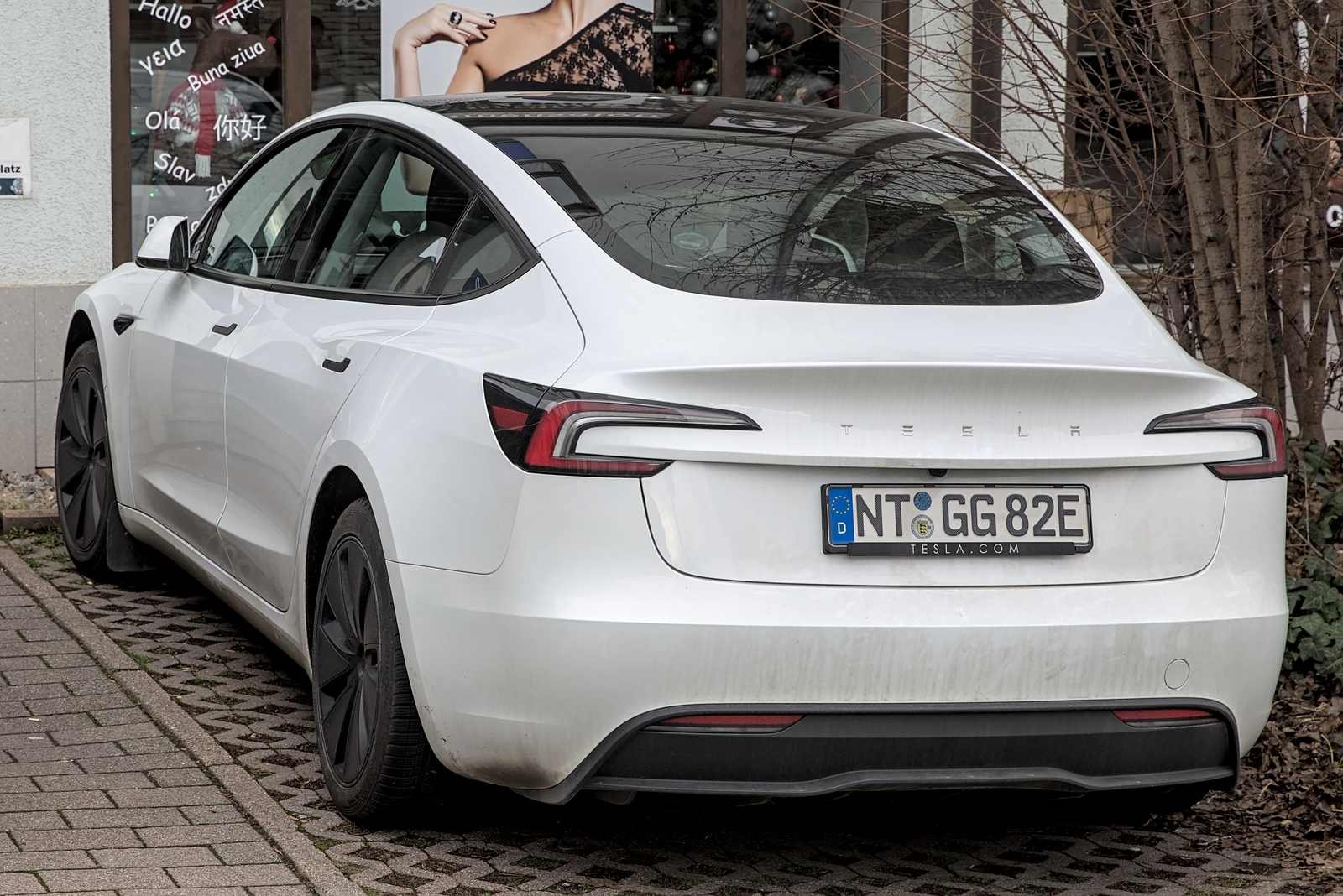
For the Model 3, the consensus sweet spot is 2021–2023. The 2021 refresh brought the heat pump (on cars built from around October 2020), the chrome delete, a powered trunk, and a wireless charging console. The AMD chip arrived mostly in 2022 cars, so verify it on the actual car rather than trusting the model year alone. The 2022–2023 rear-wheel-drive cars with LFP batteries are the pick for commuters: 272 miles when new, slower degradation, and daily 100% charging with no guilt. The 2024 Highland refresh is the best late-generation pick, but it has less long-term data behind it.
On the other side, approach 2017–2018 Model 3s with care. They have the roughest build quality of any Model 3 years, the oldest Autopilot hardware, and battery warranties that are now expiring. The 2019 cars are the worst by complaint count, mostly for suspension and sealing issues. None of that makes an early car an automatic no — a clean one with a healthy battery at the right price can still work — but you’re buying the car’s condition, not its badge year.
For the Model Y, the year matters even more. 2021 is the worst year by a wide margin: 991 complaints, 21 recalls, and a 46/100 reliability score, including 6 fire-related complaints and 313 forward-collision-avoidance complaints. Quality varies sharply by year after that, so verify the individual car no matter what year it is. Context helps: the Model Y’s new price fell from $49,990 at its 2020 launch to $39,990 for 2026, and KBB puts an average 2020 Model Y resale near $25,300 — early cars took the biggest hit, which is exactly why they’re cheap now.
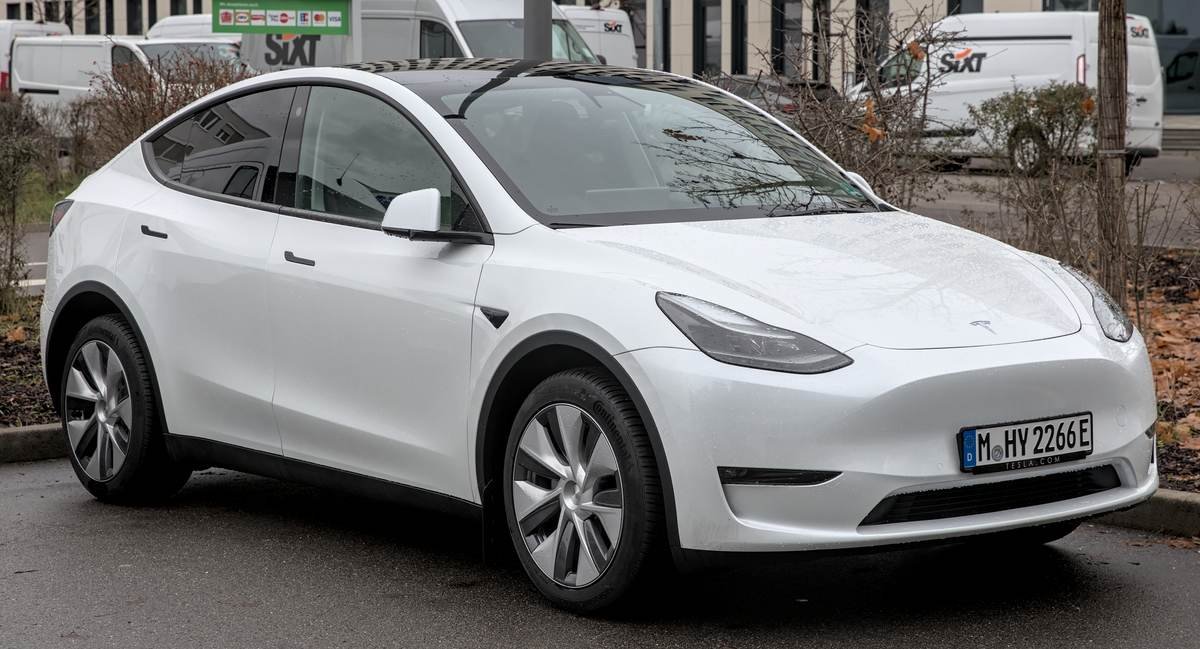
Across both models, run through the known trouble spots before you buy. Listen for front suspension creak and check the lateral-link fasteners — around $1,000 to fix, and covered by recall 21V835 on 2019–2021 cars. Ask about the heat-pump failure below 14°F, covered by recall 22V050 with an over-the-air fix on 2021–2022 cars. Look for touchscreen yellow banding, which runs $1,500–$2,000 out of warranty. Check trunk seals on 2018–2020 cars and liftgate water seals on Model Ys for leaks, listen for upper control-arm ball-joint creak, and on rust-belt cars check the brakes — regenerative braking means the friction brakes sit idle and corrode.
How to actually search near you
Here’s the honest answer about “near me”: it’s a local-intent search for a national market. Tesla ships CPO cars anywhere in the country, CarMax and Carvana ship too, and the best deal is often one state away. Your job isn’t to find a car in your zip code. It’s to search well, then let shipping do the rest.
Work in this order. First, Tesla’s own used inventory and CPO program — factory-inspected, warranty-backed, nationwide delivery, non-negotiable prices. Second, CarMax and Carvana — big national used-Tesla stock, delivery or shipping, no-haggle pricing, and the source of most sub-$20,000 Model 3 examples. Third, the aggregators with a zip-code radius: iSeeCars, CarGurus, Autotrader, and Cars.com, which add price-vs-market ratings and city-level averages. As a labeled example, iSeeCars’ Los Angeles average for a Model Y sits near $31,499 — a useful benchmark, not a listing. Fourth, Find My Electric, a Tesla-specialist marketplace with filters for model, year, Autopilot version, and battery. Fifth, local dealers and private sellers — often the cheapest route, but with no CPO warranty, so the original battery warranty following the car is your only safety net.
Five rules for the search itself. Set a zip-code radius, then widen it — shipping at $0–$500 on many CarMax cars beats settling for a worse local car. Filter for battery-health report availability wherever the site offers it. Check the remaining warranty by VIN before you travel anywhere. Never pay a deposit before an inspection on a private or dealer car. And when a deal looks too good, check the year first: a cheap 2021 Model Y or 2018 Model 3 is cheap for a reason.
The tax-credit trap: there’s no $4,000 credit anymore
Real talk: if your used-Tesla budget includes a $4,000 federal credit, redo the math. There is no federal EV tax credit for any EV purchase in 2026 — not new, not used, not leased. The new-vehicle credit of up to $7,500 and the previously-owned credit of up to $4,000 both ended for vehicles acquired after September 30, 2025, under Public Law 119-21. Used prices fell far more than $4,000 since then, which is cold comfort if you were counting on the credit, but it’s why the deals exist at all.
That makes a lot of older buying guides dangerous. Any article from 2023 or 2024 promising a $4,000 used credit is stale, and any seller doing the same math is either behind or hoping you are. Some states still run their own incentives, but the amounts vary and change, so check your state’s current program before counting on a single dollar of it. And don’t assume prices will keep falling just because they fell before — the post-credit market has moved both ways, so buy on the car’s value today, not on a promised drop tomorrow.
Before you hand over money: the checklist
Run this list on every car, CPO or not. It takes an hour and it’s the difference between a deal and a regret.
- Warranty by VIN: confirm the remaining battery and drive unit coverage and the basic vehicle warranty balance before you travel.
- Battery health: state of health report plus the Service Mode test, or a 100% charge compared against the original rated range.
- Recalls: 21V835 (suspension fasteners, 2019–2021) and 22V050 (heat pump, 2021–2022) — confirm the fixes are done.
- Suspension and steering: listen for creaks over bumps and at full lock.
- Screen: check for yellow banding around the touchscreen edges.
- Seals: trunk on 2018–2020 cars, liftgate on Model Ys — look for water marks, not just damp carpet.
- Brakes: on rust-belt cars, check for corrosion from brakes that rarely get used.
- Charging: test a fast charge and a home charge, and confirm the charge port and cable work.
- Hardware vs. advertising: confirm the Autopilot hardware version and options on the actual car, not the listing headline.
- History: CPO cars include a history report; for anything else, get your own before money moves.
- Deposit rules: never pay a deposit before inspection on a private or dealer car, no matter how good the price looks.
Quick answers
How much does a used Tesla cost? KBB’s October 2026 values put Model 3s from $19,150 for a 2018 to $41,600 for a top-trim 2024, and Model Ys from $25,300 for a 2021 to $38,800 for a 2024. The cheapest real-world examples — 2019 Model 3s under $20,000 — show up on CarMax and Carvana, and Tesla’s own CPO Model 3s start from $20,600.
Is there a federal tax credit for a used Tesla in 2026? No. The used credit of up to $4,000 ended for vehicles acquired after September 30, 2025, along with the new-vehicle credit. Any article promising it is stale.
Which used Tesla should I buy? A 2021–2023 Model 3 is the consensus sweet spot, especially a 2022–2023 rear-wheel-drive with the LFP battery. Be careful with 2017–2018 Model 3s and 2021 Model Ys, which carry the worst reliability records in the lineup.
How do I check a used Tesla’s battery? Aim for 90%+ state of health. Check it with a 100% charge against the original rated range, Tesla’s built-in Service Mode battery test, or a Recurrent report. Below 80%, negotiate hard or walk away.
Does the warranty transfer when I buy used? The 8-year battery and drive unit warranty follows the car to any buyer, as does the remaining basic vehicle warranty. The extra 1-year/10,000-mile CPO warranty only comes with Tesla-direct purchases.
The bottom line
A used Tesla right now is a genuinely good deal, not a consolation prize. The playbook is simple: start with Tesla’s CPO inventory if you want warranty peace of mind, or go private and dealer hunting if you want the lowest price and you’ll run the checks. Buy a 2021–2023 Model 3 or a post-2021 Model Y, demand 90%+ battery health with proof, confirm the warranty by VIN, and search nationally — the car one state away beats the mediocre car down the street, and shipping is cheaper than regret. Leave the $4,000 credit out of your budget entirely, and you’re looking at the best value in the EV market: a fast, efficient car with a battery warranty that follows it, for used-Camry money.