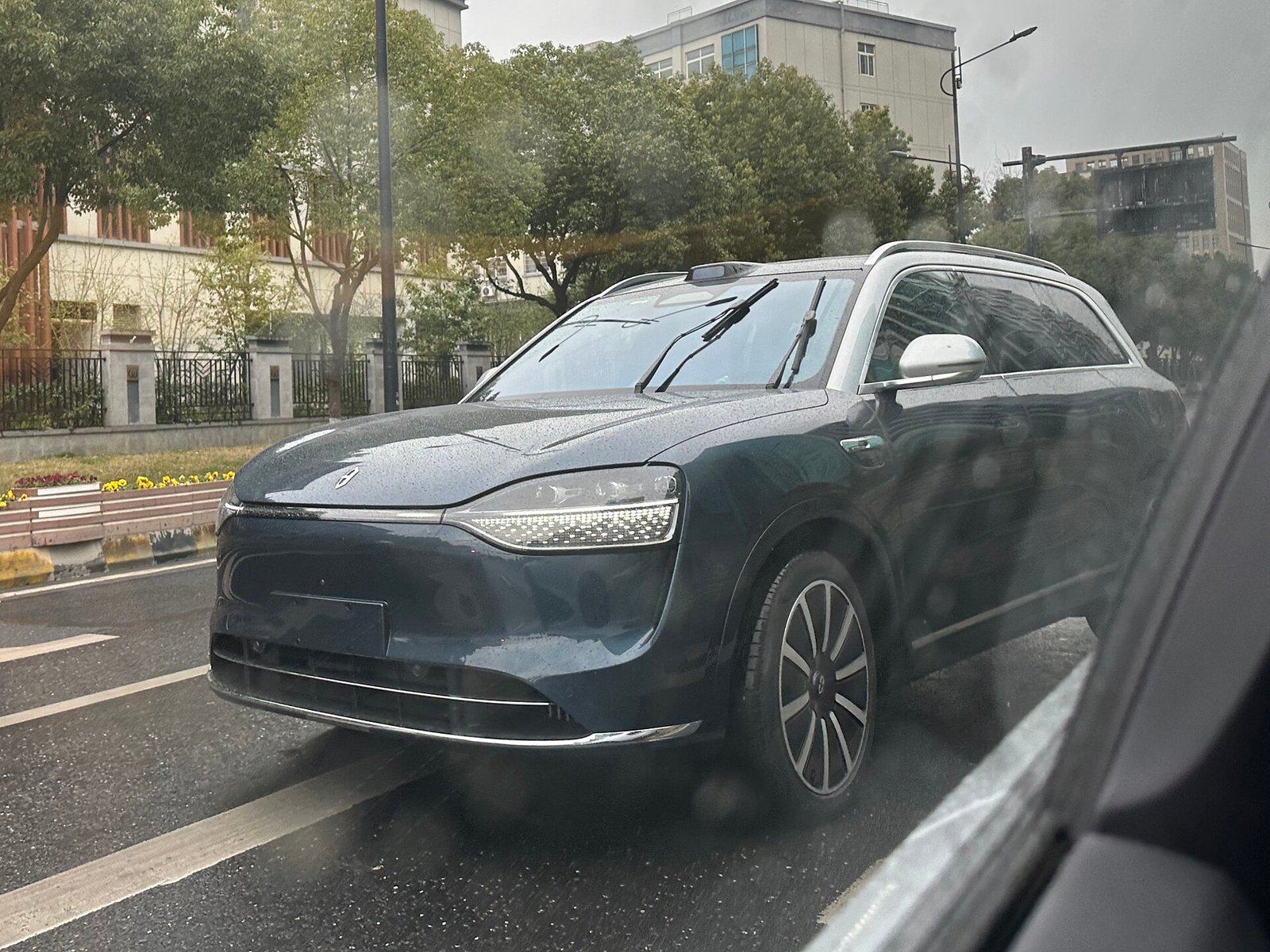
On October 12, at the 2026 Paris Motor Show, a Chinese car brand most Americans have never heard of made one of the boldest announcements of the year: AITO will start selling cars in Europe in the fall of 2027. Four luxury SUVs, German certification already underway, and a stated mission to take on Mercedes-Benz and BMW on their home turf.
If the name doesn’t ring a bell, the backers will. AITO is the joint automotive project of Seres, the Chinese automaker that builds the cars, and Huawei, the tech giant that supplies the brains. In 2025, AITO sold 426,000 vehicles — more than any other Chinese luxury brand, per Electrek — and cumulative deliveries have passed 1.2 million. Now it wants a third of its sales to come from overseas. Europe is where that bet gets tested.
What is AITO, exactly?
AITO — which stands for “Adding Intelligence to Auto,” according to electrive — was founded in December 2021 and sits inside Huawei’s Harmony Intelligent Mobility Alliance (HIMA). The division of labor is simple: Seres provides the vehicle platform and manufacturing, Huawei provides the digital technology — the smart cockpit, the driver-assistance systems, the software-defined everything.
That formula has worked spectacularly in China. The flagship M9 became the top seller in its price and size class, and Brand Finance’s 2026 ranking placed AITO among the top 10 global luxury automotive brands — the only Chinese brand on the list. Seres vice president Clifford Kang summed up the pitch in Paris: “For AITO, New Luxury is where traditional luxury meets technological luxury.”
Here’s the curious detail, though: Electrek noticed that the word “Huawei” appears nowhere in AITO’s Paris press kit. In a market where Huawei’s name carries geopolitical baggage, the tech giant is staying deliberately in the background while Seres takes the bow.
The 2027 Europe plan: what’s confirmed
AITO showed four SUVs in Paris — the AITO 9, 8, 7, and 6 — covering everything from large SUVs to the flagship. They correspond to the M9, M8, M7, and M6 sold in China, but the “M” prefix is being dropped for export, reportedly to avoid a trademark clash with BMW and BYD, per Drive.
What’s actually nailed down:
- Timing: fall 2027 — roughly August to October.
- Certification: EU Whole Vehicle Type Approval (WVTA) is underway, with Germany chosen as the lead market for testing under the strict E1 framework, per chinaevhome.
- Safety: targeting a five-star Euro NCAP rating under the tougher 2026 standards — a target, not yet a test result.
- Localization: driver-assistance and parking functions are being retuned for European roads and driving habits, with local partners.
- Service: a European service network is being built out — diagnostics, mobility services, spare parts, dedicated support teams.
What’s not confirmed: which countries get cars first, which of the four models launch on day one, or what any of them will cost. Those answers will decide whether this is a real invasion or a press-conference promise.
The Huawei tech edge
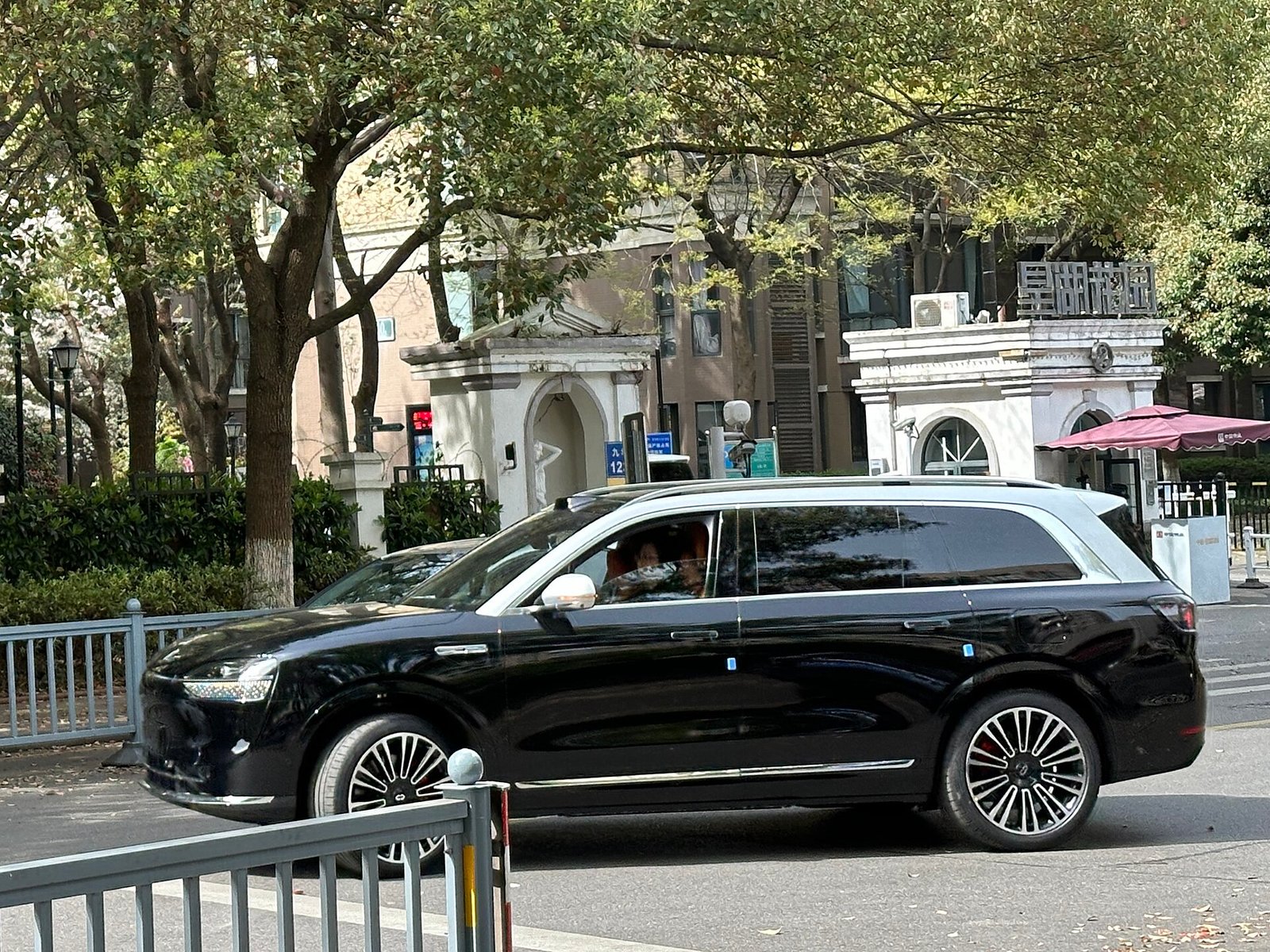
AITO’s calling card isn’t the sheet metal — it’s the software. Every model runs Huawei’s smart cockpit and intelligent driving-assistance stack, with batteries supplied by partners including CATL. The flagship M9 shows how far the tech goes: 497 kW (666 hp), 0–100 km/h in 4.6 seconds, an 800-volt architecture, fully active suspension, rear-wheel steering, and a range-extender version rated at 1,474 km on China’s CLTC cycle, per russpain.
Then there’s the theater: a ceiling-mounted 32-inch retractable cinema screen for rear passengers, DLP projection headlights that can throw a 100-inch image onto a wall, and zero-gravity executive seats — all demonstrated in a Paris Motor Show walkaround of the car now badged AITO 9. This is “technological luxury” as a product strategy, and it’s aimed directly at buyers who think a German flagship’s party trick is ambient lighting.
Who it’s coming for
AITO isn’t shy about the target. “We are actually looking at the Mercedes-Benz, BMW, these kinds of brands,” Kang told Drive in Paris — explicitly placing AITO a rung above fellow Chinese exporters like Zeekr and Denza. Automotive News Europe’s take framed it the same way: SUVs aimed at Mercedes, Audi, and BMW buyers.
That positioning sets up a crowded battlefield. BYD is already Europe’s best-known Chinese brand, NIO and Xpeng are expanding, and Tesla still defines the EV conversation. AITO’s bet is that none of them — and neither do the Germans — offer Huawei-grade cabin tech at a Chinese price point. Whether European luxury buyers will pay flagship money for a badge they’ve never heard of is the trillion-yuan question.
The tariff wall
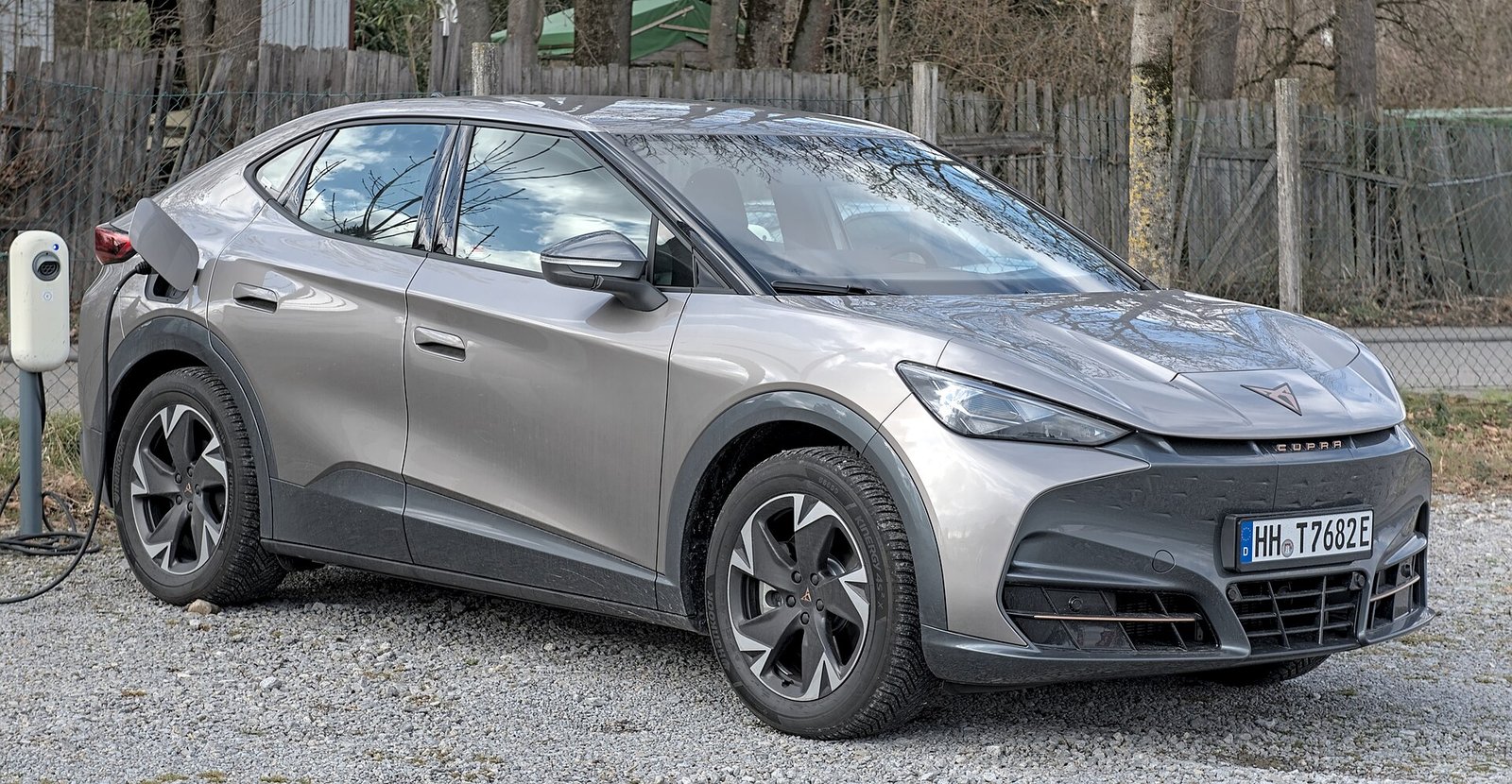
Here’s the problem no press conference can wave away: the EU’s countervailing duties on China-built battery-electric vehicles. AITO hasn’t said a word about its tariff strategy — no price undertaking like Volkswagen’s Cupra Tavascan deal, no local-assembly announcement, nothing.
One possible escape hatch: the range-extender versions. The M9’s headline 1,474-km figure comes from its EREV powertrain, and hybrids face a different — and currently negotiable — EU trade regime than pure BEVs. After the October 2026 EU-China hybrid understanding, a range-extender-first European lineup would be a canny way to dodge the harshest duties. That’s our read, not AITO’s statement — the company hasn’t confirmed which powertrains Europe gets.
The other risk is political, not technical. Scrubbing “Huawei” from the press kit shows AITO knows exactly how its backer’s name plays in Brussels. Selling a Huawei-powered car in Europe in 2027 means navigating data-privacy scrutiny and techno-nationalist headwinds that BYD simply doesn’t face to the same degree.
What the internet thinks
The announcement is six days old and still mostly a trade-press story, so social chatter is modest — but here’s what’s out there:
- @aito_auto (Instagram reel, video) — AITO’s own account (350K followers) posted Kang’s Paris keynote announcing the autumn 2027 launch: 100 likes, 6 comments — the most-discussed post on the story so far.
- AITO (Facebook reel, video) — the brand’s cinematic “SEE YOU ON THE ROAD 2027” cut with CGI footage of an AITO SUV in European landscapes: 220 likes, 2 comments.
- Automotive News Europe (Facebook post) — “China’s Aito plans European launch with SUVs aimed at Mercedes, Audi and BMW buyers”: 13 likes, 2 comments.
Translation: the industry is watching, but European consumers haven’t noticed yet. That’s both the opportunity and the warning — AITO has a year to build a brand from zero.
Quick answers
When is AITO launching in Europe? Fall 2027 — roughly August to October — as confirmed at the 2026 Paris Motor Show on October 12, 2026.
Which AITO models are coming to Europe? Four SUVs were shown — the AITO 9, 8, 7, and 6 (M9–M6 in China). AITO hasn’t confirmed which ones launch first.
What is AITO’s connection to Huawei? AITO is a joint project: Seres builds the cars and platforms, Huawei supplies the smart cockpit, driver-assistance, and software tech through its Harmony Intelligent Mobility Alliance. Huawei’s name was notably absent from the Paris press kit.
How much will AITO cars cost in Europe? No pricing announced yet. In China the brand plays in the premium segment against German flagships, and it says it will hold that positioning in Europe.
Will AITO face EU tariffs? Very likely, as a China-built BEV brand — but AITO hasn’t announced a tariff strategy. Its range-extender models could face lighter treatment under the EU’s evolving hybrid rules.
The bottom line
AITO has the two things most Chinese export brands lack: a genuine luxury hit at home and best-in-class cabin tech from Huawei. What it doesn’t have yet is a single European customer, a price list, or an answer to the tariff question. The 2027 launch date gives it a year to solve all three — and gives Mercedes and BMW a year to prepare. If AITO lands with competitive pricing and its tech intact, Europe’s luxury SUV establishment is in for an uncomfortable autumn.