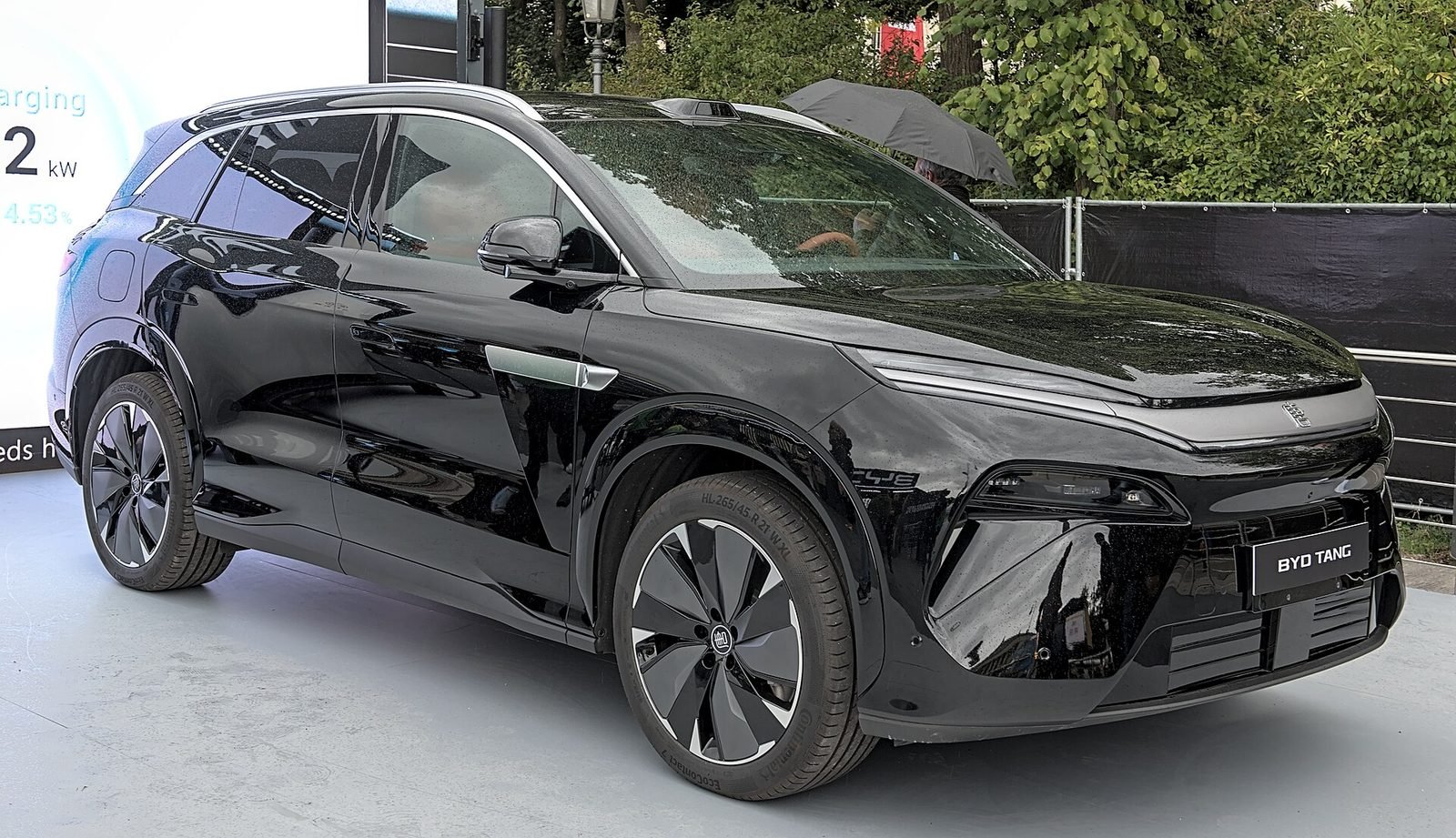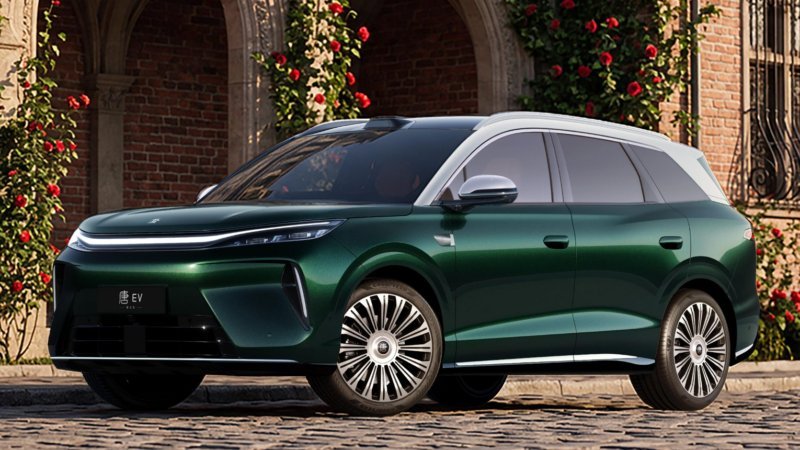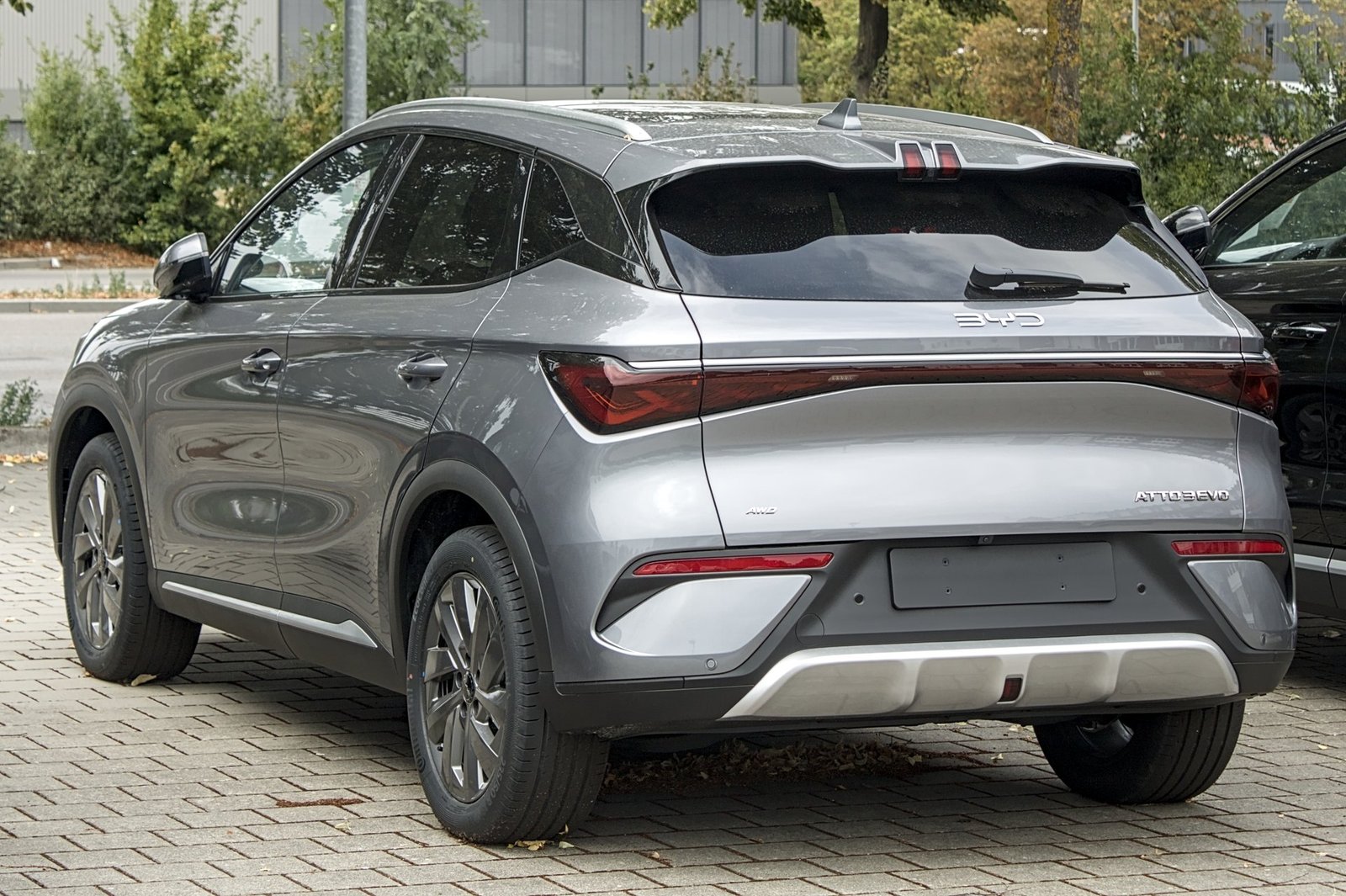
Here's the deal: the BYD Atto 3 is having the busiest season of its life, and it's doing it on three continents at once. The electric SUV that carried BYD into Europe, Australia and dozens of other markets has been reworked into the Atto 3 EVO — new face, new cabin, an 800-volt electrical platform, and a rear-drive flagship with genuine muscle-car pace. The freshest full breakdown of the EVO comes from Autoncell, with pricing and spec sheets confirmed by WhichCar and EcoCarGuide in Australia, where the car is already on sale.
And that's only half the story. In China, where the Atto 3 wears a Yuan Plus badge, BYD has already launched a third-generation car — bigger in every dimension, rear-wheel drive across the board, with five-minute flash charging and a starting price that works out to about $16,600, as Electric Cars Report covered from the car's May launch in China. Two updates, one nameplate, and a rollout landing market by market.
The unavoidable footnote for American readers: you can't buy any of it here. BYD doesn't sell passenger cars in the United States, and no Atto 3 variant has been announced for the US. So why should you care? Because this is the car — and the price — that every electric SUV you CAN buy is now benchmarked against. Let's get into it.
BYD Atto 3: the quick answers
| BYD Atto 3 (2026) | Key figures |
|---|---|
| What's new | The EVO update for export markets — and a larger third-generation car already on sale in China |
| EVO price (Australia) | AU$41,990-46,990 before on-road costs — roughly $27,000-$30,500 US |
| China gen-3 price | 119,900-149,900 yuan (about $16,600-$20,800) |
| EVO powertrains | Europe: RWD 230 kW / AWD 330 kW. Australia: FWD 150 kW / RWD 230 kW |
| EVO battery | 74.88 kWh Blade (LFP); Australian Dynamic keeps a 60.48 kWh pack |
| EVO range | Up to 510 km WLTP (317 miles) |
| EVO charging | 800V, 220 kW DC — 10-80% in 25 minutes (Australian Dynamic: 110 kW) |
| China gen-3 range | 540-630 km CLTC (335-391 miles) |
| China gen-3 charging | Flash charging — 10-70% in about 5 minutes |
| 0-100 km/h | 5.5 seconds (EVO Premium / EU Design); 3.9 seconds (EU Excellence AWD) |
| Size | EVO: 4,455 mm long, same as before. China gen-3: 4,665 mm (184 in) |
| US sales | Not sold in the US — no US launch announced |
Two updates, one nameplate
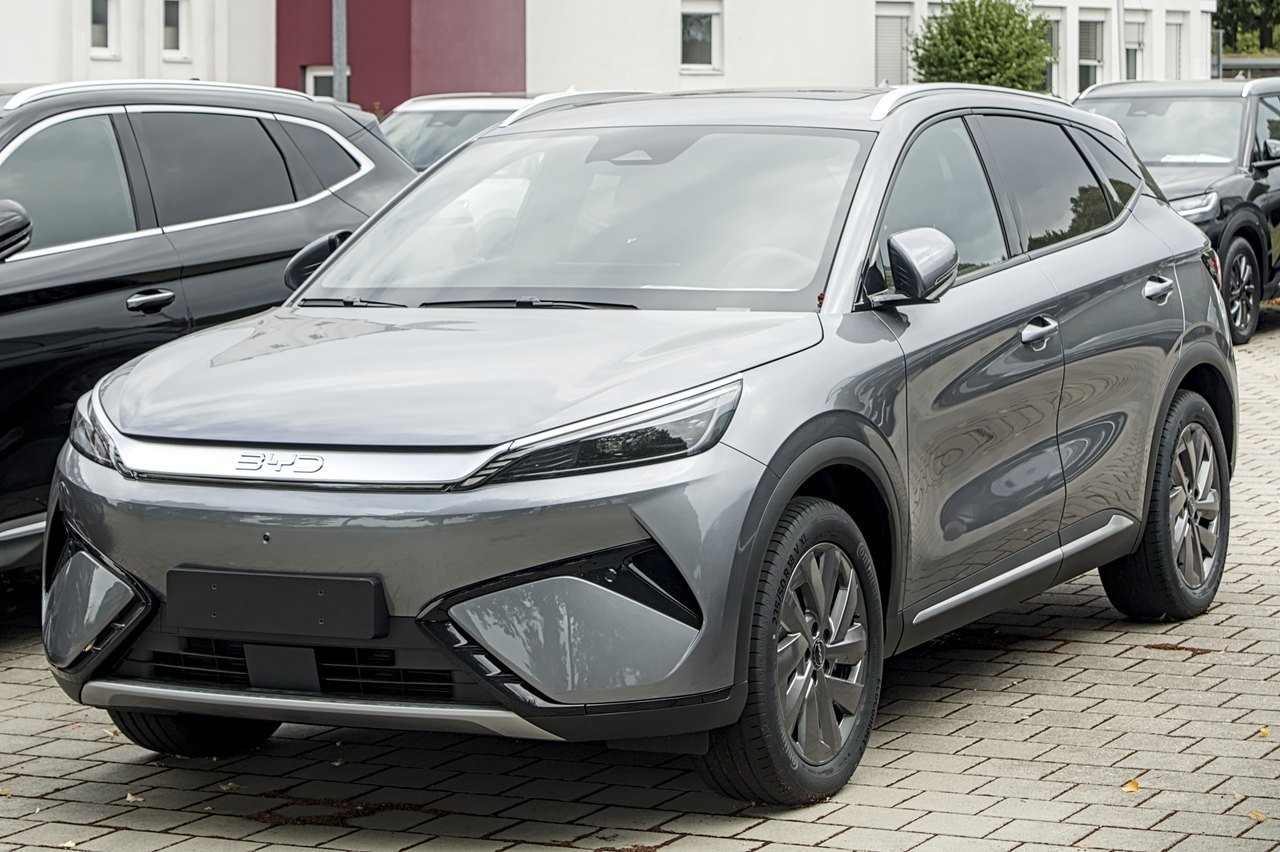
First, let's untangle the naming, because BYD won't do it for you. The Atto 3 EVO is a deep overhaul of the car that launched globally in 2022: same 4,455 mm (175 in) footprint, same basic shape, but with reworked styling, a heavily revised cabin and — on the versions that matter — a completely different electrical architecture underneath. It's the car rolling into European and Australian showrooms now: European deliveries began in spring 2026, per Autoncell, and Australian orders are open with deliveries expected from September, according to EcoCarGuide.
The third-generation car is a separate, larger machine that China got first. It surfaced in Ministry of Industry and Information Technology (MIIT) regulatory filings — WapCar walked through the filing, which lists rear motors of 272 PS and 326 PS, optional roof-mounted lidar and a body stretched in every direction — and then launched on May 21 in four variants, as Electric Cars Report covered, sourcing Car News China. The outlets describe the timeline slightly differently — regulatory filing first, launch coverage later — but between them the hardware picture is consistent.
Why the rush? The Atto 3 is BYD's global workhorse. Cumulative sales passed 1.1 million units across 116 countries and regions by April 2026, per Electric Cars Report, but competition at home has intensified — rivals like the Geely Galaxy E5 are pressing hard on its home turf. The EVO defends the export markets; the third-generation car defends China. Both matter, and both are worth your attention if you follow where electric SUV prices go next.
The EVO hardware: 800 volts and a rear-drive flagship
Here's where the EVO stops being a facelift. In Europe, the front-wheel-drive layout of the original is gone entirely. The range opens with a rear-drive Design model making 230 kW (313 PS) and 380 Nm of torque — good for 0-62 mph in 5.5 seconds and a WLTP range of 317 miles (510 km). Above it sits the Excellence, which adds a front motor for all-wheel drive, 330 kW (449 PS) and 560 Nm, and a 0-62 mph time of 3.9 seconds. That's sports-car pace in a family SUV, with a still-useful 292 miles (470 km) of WLTP range. Both European variants share the same 74.8 kWh Blade battery using lithium iron phosphate (LFP) chemistry, built into the chassis with BYD's Cell-to-Body construction, per Autoncell's spec sheet.
The charging leap is just as big. The EVO's 800-volt architecture supports 220 kW DC fast charging, taking either European variant from 10 to 80 percent in 25 minutes. The rear suspension grows from a four-link to a five-link setup, there's a 101-liter frunk where the driven front axle used to complicate packaging, cargo space runs 490 liters with the seats up and 1,360 folded, and both variants tow up to 1,500 kg (about 3,300 lb) braked — a number that embarrasses most electric SUVs in this class. Vehicle-to-load is standard too, so the car can power tools, appliances or camping gear at up to 3 kW.
BYD isn't shy about the performance pitch. As WhichCar reports, BYD says the rear-drive flagship's numbers are "the type of numbers produced by homegrown Aussie V8 muscle cars from generations gone by — but without the guzzling fuel consumption." A 5.5-second family SUV at this price earns the comparison.
Same badge, different menus: the market split
Now the fine print, because "Atto 3 EVO" does not mean the same car everywhere. In Australia, the entry-level Dynamic keeps the old formula: a front-mounted 150 kW (201 hp) motor, the smaller 60.48 kWh battery, 420 km (261 miles) of WLTP range, and the old 400-volt architecture with 110 kW DC charging — 0 to 80 percent in 41 minutes. The Australian Premium is the real overhaul: rear-drive, 230 kW, the 74.88 kWh battery, 510 km of range and the 800-volt/220 kW charging setup. Prices are AU$41,990 for the Dynamic and AU$46,990 for the Premium before on-road costs, per WhichCar — roughly $27,000 and $30,500 in US dollars at current exchange rates. Both carry a six-year, 150,000 km vehicle warranty and eight years or 160,000 km on the battery.
So read any EVO headline with your market in mind. Europe gets the full-fat lineup only; Australia splits the difference; New Zealand's first drive of the entry Dynamic — priced at NZ$59,990, notably up from the NZ$49,990 run-out price of the old car — found a firmer ride but sharper handling, per EVsandBeyond. And some markets haven't gotten the EVO at all yet: in India, this month's Atto 3 news was a new Atlantis Gray paint color replacing Surf Blue, with prices from 24.99 lakh rupees, as Cars24 reported. Same nameplate, staggered rollout, different cars depending on where you stand.
China's third-generation car is bigger — and cheaper
If the EVO is the current car perfected, the third-generation Yuan Plus is the sequel. It grows to 4,665 mm long, 1,895 mm wide and 1,675 mm tall on a 2,770 mm (109 in) wheelbase — 210 mm (about 8 inches) longer than the EVO, with a flatter front fascia, slimmer headlights, semi-hidden door handles and a full-width rear light bar with woven-style graphics. Every version is rear-wheel drive, with a choice of 200 kW (268 hp) or 240 kW rear motors — the same outputs, 272 PS and 326 PS, that appeared in the MIIT filing WapCar documented — and a top speed of 190 km/h (118 mph).
The battery story is the headline. Two second-generation Blade packs — 57.5 kWh and 68.5 kWh — deliver CLTC range ratings of 540 km and 630 km (335 and 391 miles). Keep your skeptic hat on: CLTC is the most generous of the major test cycles, and as EVCarLatest notes, WLTP equivalents haven't been published and would likely land 15-20 percent lower. Even so, the bigger pack's 630 km is a 120 km jump over the outgoing car. And then there's the charging: BYD's flash-charging system takes the battery from 10 to 70 percent in about five minutes under ideal conditions. One honest caveat — the peak DC rate in kilowatts and an official 10-80 percent time haven't been confirmed in the launch materials, so treat the five-minute claim as a BYD figure awaiting independent testing.
The packaging gains are real, too: a powered 180-liter frunk — nearly double the EVO's — and up to 750 liters of rear cargo space. A new 12-in-1 integrated powertrain replaces the old 8-in-1 unit, higher trims get DiSus-C intelligent damping, and for an extra 12,000 yuan (about $1,700) most versions can add the DiPilot 300 "God's Eye B" driver-assistance package with lidar and 30 sensing units, enabling highway and urban navigation assist. Prices run from 119,900 to 149,900 yuan — about $16,600 to $20,800 — and here's the twist: the entry price actually went UP slightly versus the predecessor, as Electric Cars Report points out, a rare increase in the middle of China's EV price war. Whether this car eventually replaces the EVO overseas, BYD hasn't said — we won't print it as fact until it does.
The cabin: the shifter moved, the screens grew
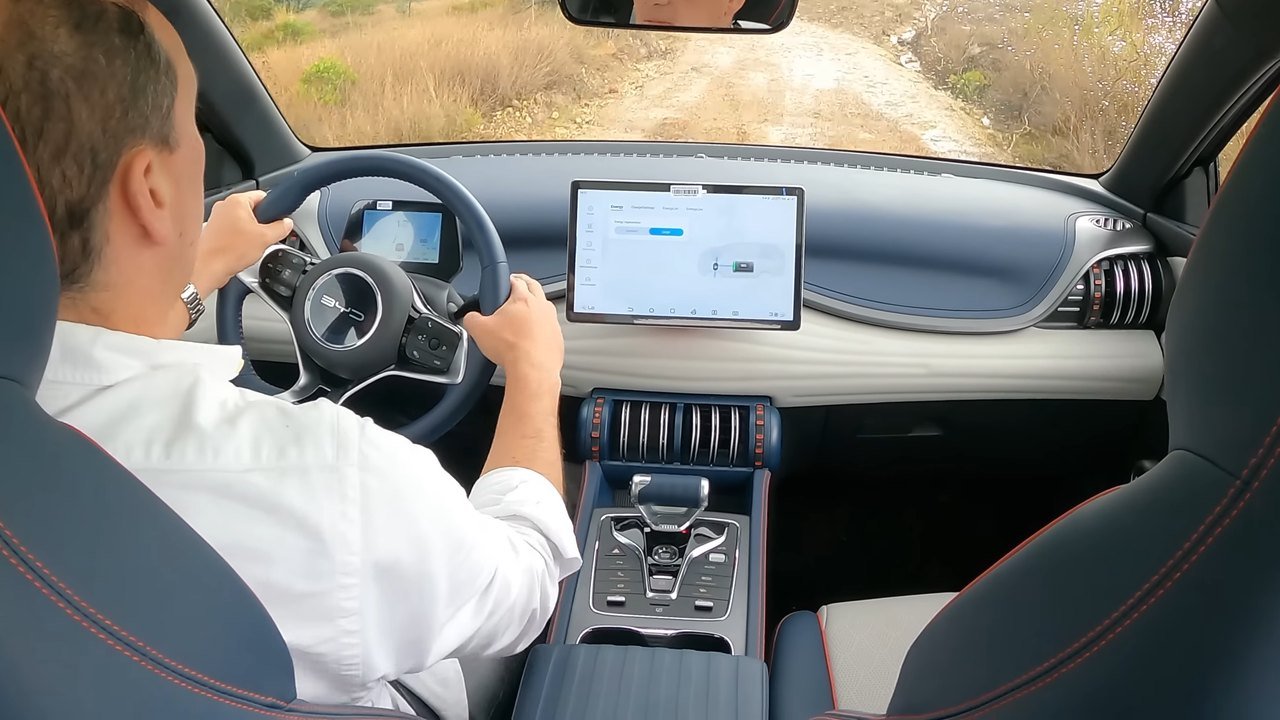
BYD calls the EVO's cabin work its most comprehensive interior upgrade for the model to date, and the changes are the kind you notice every day. The gear selector moves from the center console to the steering column, freeing up storage between the front seats. The driver display grows from 5 to 8.8 inches, wireless phone charging jumps from 15 to 50 watts, and there are redesigned door panels, re-sculpted seats and multi-color ambient lighting, per EcoCarGuide's walkthrough. The Premium adds dual-zone climate control and four-way power lumbar support for the driver.
The software splits by market again. European cars get a fixed 15.6-inch touchscreen — the largest in the segment, per Autoncell — running Google Maps, Google Play and Google Assistant built in, plus an AI voice assistant that understands natural commands. Australian cars run BYD's interface with wired and wireless Apple CarPlay and Android Auto, NFC key access and an app with remote lock, climate and location functions. China's third-generation car goes its own way with the latest DiLink system, a head-up display, a refrigerated storage compartment, a powered front passenger "Queen Seat" with leg support, a 16-speaker audio system and under-seat rear drawers. Different dashboards for different continents — the hardware underneath is converging faster than the software on top of it.
Safety gets quieter but meaningful upgrades. European EVOs carry seven airbags and the full driver-assistance suite — adaptive cruise, blind spot detection, front and rear cross-traffic alert, lane departure assist, collision warnings and traffic sign recognition — while Australian cars add child presence detection, which alerts you within seconds if a kid is left in a locked car, plus a driver monitoring system that watches for fatigue and distraction. None of it is glamorous. All of it matters in a family SUV.
So why should US readers care about a car they can't buy?
Real talk: there's no version of this story where an Atto 3 lands at your local dealer next spring. BYD has no US passenger-car sales operation, the Atto 3 has never been announced for America, and the 100 percent US tariff on Chinese-built EVs keeps the economics shut regardless. If you want one, you're booking a flight, not a test drive.
But look at the math, because your next EV's price is being set by it. The EVO Premium — 317 miles of WLTP range, 220 kW charging, muscle-car acceleration — costs the equivalent of about $30,500 in Australia. The cheapest comparable electric SUVs actually sold in the US start thousands higher: the Chevrolet Equinox EV from $34,995 with up to 319 miles of EPA range, the Hyundai Ioniq 5 from $35,000 with up to 318 miles, and the Tesla Model Y from $39,990 with up to 321 miles, per BeeBulletin's 2026 roundup of manufacturer and FuelEconomy.gov figures. And since the federal EV tax credit ended for vehicles acquired after September 30, 2025, sticker price is now the whole fight — there's no credit left to close the gap quietly.
One fairness note before the comments catch fire: WLTP range figures run more generous than EPA numbers, so the Atto 3's range edge shrinks under US testing. Its real edges are price and charging speed. That's still plenty. Every time a US automaker cuts an EV price or speeds up a charge curve, this car — and the third-generation version starting at $16,600 in China — is part of the reason why. You can't buy the pressure, but you're already benefiting from it.
BYD Atto 3 EVO vs the US-sold rivals
| BYD Atto 3 EVO Premium (Australia) | Tesla Model Y (US) | Chevrolet Equinox EV (US) | Hyundai Ioniq 5 (US) | |
|---|---|---|---|---|
| On sale in the US | No | Yes | Yes | Yes |
| Starting price | AU$46,990 (about $30,500) | $39,990 | $34,995 | $35,000 |
| Max range | 510 km WLTP (317 mi) | Up to 321 mi EPA | Up to 319 mi EPA | Up to 318 mi EPA |
| Fast charging | 220 kW DC, 10-80% in 25 min | Supercharger network; up to 182 mi added in 15 min | 150 kW peak DC | 800V; 10-80% in about 18 min |
| Vehicle-to-load | Standard, up to 3.3 kW | Not offered | Not offered | Standard |
| Drive | Rear-wheel drive, 230 kW | RWD or AWD | FWD or AWD | RWD or AWD |
Read the table with the WLTP-versus-EPA caveat in mind — on an EPA cycle, the Atto 3's range number would come down, probably into the 260-280 mile zone. Even with that haircut, the shape of the problem for US brands is obvious: a well-equipped electric SUV with 800-volt charging is selling overseas for the price of America's entry-level trims. The gap is the story, and it's not closing from BYD's side.
Quick answers
Can you buy a BYD Atto 3 in the US? No. BYD doesn't sell passenger cars in the United States, no Atto 3 variant has been announced for the US, and the 100 percent tariff on Chinese-built EVs makes a quiet launch a non-starter. The EVO is on sale in Europe and Australia; the third-generation car is on sale in China.
How much does the BYD Atto 3 EVO cost? In Australia, AU$41,990 for the Dynamic and AU$46,990 for the Premium before on-road costs — roughly $27,000 and $30,500 in US dollars. European pricing varies by market; the third-generation car in China runs 119,900-149,900 yuan (about $16,600-$20,800).
How far does the BYD Atto 3 EVO go on a charge? Up to 510 km (317 miles) on the WLTP cycle for the 74.88 kWh rear-drive versions; the all-wheel-drive Excellence is rated at 470 km (292 miles), and Australia's 60.48 kWh Dynamic at 420 km (261 miles). WLTP figures run higher than EPA ratings would.
How fast does the Atto 3 EVO charge? The 800-volt versions charge at up to 220 kW DC, taking the battery from 10 to 80 percent in 25 minutes. China's third-generation car claims flash charging from 10 to 70 percent in about five minutes, though BYD hasn't published a confirmed peak rate yet.
What's the difference between the Atto 3 EVO and the third-generation Atto 3? The EVO is a deep update of the existing car — same 4,455 mm footprint — sold in export markets. The third-generation car is all-new and bigger (4,665 mm), rear-drive only, with 540-630 km of CLTC range, and it's currently China-only.
Will the third-generation Atto 3 come to the US or Europe? BYD hasn't announced export plans for it, and a US launch isn't on the table. An eventual European and Australian rollout would follow the EVO's pattern, but that's expectation, not a confirmed plan.
The bottom line
EVThrottle score: 8.4/10 — for the car the rest of the world gets. Want the honest answer? The BYD Atto 3 EVO is what a mid-cycle update should be: it fixes the old car's two real weaknesses — slow charging and a front-drive layout that wasted its motor — and adds 800-volt charging, a 317-mile range rating and a flagship that outruns yesterday's muscle cars, all at prices that start around $27,000 in the markets where it's sold. China's bigger third-generation car, from roughly $16,600 with five-minute flash charging, shows the ceiling rising even faster. The deductions are for the fine print: the entry Australian car keeps the old 400-volt hardware, the range figures are WLTP and CLTC rather than EPA, BYD's flash-charging peak rate is still an unconfirmed claim, and — the big one for our readers — none of it is sold in America. As a product, it's an 8.4. As a preview of the pricing pressure heading for every US showroom, it's a 10.