FIA President Mohammed Ben Sulayem confirmed that BYD and Geely approached the FIA about joining Formula 1 as a 12th team. BYD rejected his suggestion to buy an existing team and wants its own team. Ben Sulayem told BYD to come back with a “serious proposal” — but there is no formal entry process open, and no deal has been signed.
That is the state of play as of November 14, 2026. The talks are real, the door is open, and nothing else is settled. BYD is the world’s largest maker of electric cars and plug-in hybrids, and it has spent 2026 circling Formula 1. Geely, the group behind Volvo, Polestar and Lotus, is in the same conversation. But the FIA is not actively looking for a 12th team, the rules are moving toward the kind of engine an EV maker has the least reason to build, and the price of entry has never been higher. Here is what was said, what it would cost, and why BYD and Geely are not in the same position.
What Ben Sulayem actually said
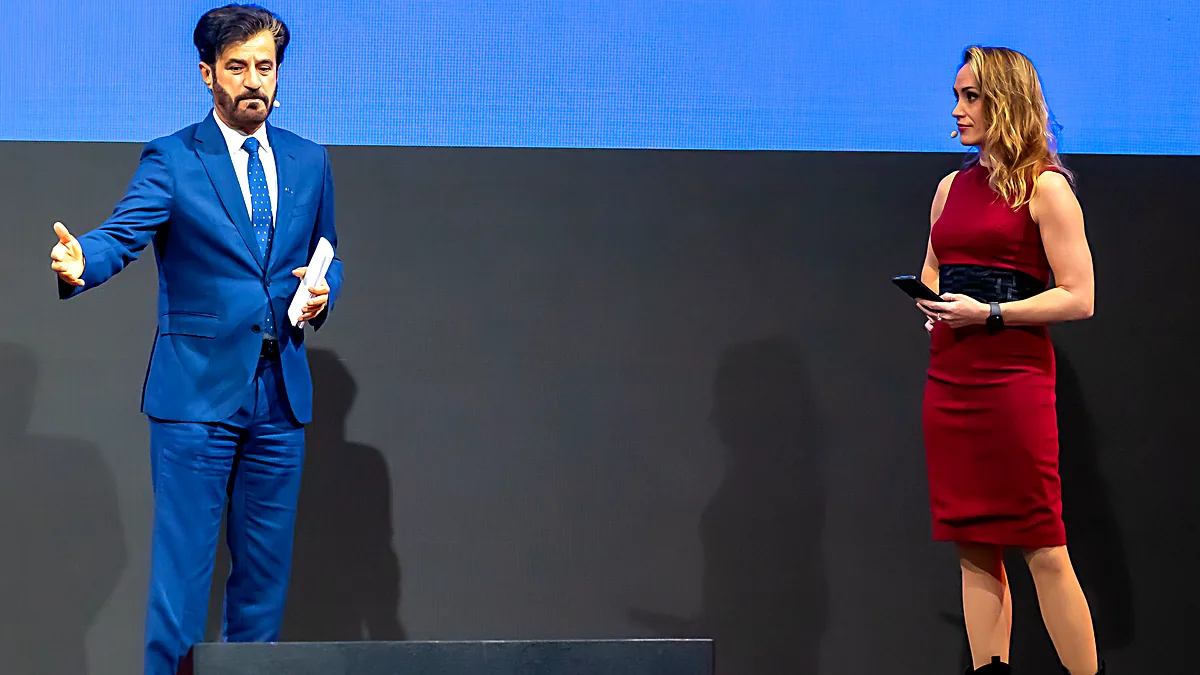
Ben Sulayem named both companies while speaking at the New Economy Forum in Madrid. The comments were first reported by Brazilian outlet Grande Prêmio in September 2026 and drew fresh attention in November after BYD’s Yangwang hypercar set a new speed record. “I met with other manufacturers, and they came saying they wanted to join,” he said. “One of them was BYD and another was Geely.”
He was clear about the terms. Chinese manufacturers will not get special treatment, and the rules will not be rewritten to suit them. “The regulations will not be changed just because of the Chinese manufacturers,” he said. “We cannot do that. The regulations need to remain stable.” Any bid would go through the same process as other prospective entrants, and right now there is no expansion process at all. The FIA is not actively looking for a 12th team.
He did repeat that he would like F1’s next newcomer to come from China, pointing to the country’s EV technology and the Chinese Grand Prix in Shanghai. “The FIA can open the door for a 12th team,” he said. “But do we need a team? No. We don’t need a team, we need the team.” The door, in other words, is open. The invitation is not.
BYD has been circling F1 all year
This did not come out of nowhere. Bloomberg reported in March 2026 that BYD was weighing an entry into Formula 1 or endurance racing, with no decision made. In April, executive vice president Stella Li said BYD had met F1 CEO Stefano Domenicali in Shanghai and that an entry was “something we’re discussing.”
By July, the tone had cooled. Speaking at the Goodwood Festival of Speed, Li said “the dream is always there, but we don’t have a concrete agenda.” Special adviser Alfredo Altavilla set a clear condition the same month: “We will never participate in Formula 1 just to put a sticker on the side of a car.” BYD, he said, would only consider F1 to the extent its technology can serve the sport.
That is the thread running through the whole story. BYD is not shopping for a logo placement. It is the world’s largest maker of electric cars — 2.26 million battery-electrics in 2025, overtaking Tesla’s 1.63 million — and the world’s largest maker of plug-in hybrids, with 2.29 million sold in 2025. Total new-energy vehicle sales reached 4.6 million. A company that big does not join F1 to be a sponsor. It joins to show off what it builds.
Why BYD refused to buy an existing F1 team
Ben Sulayem said he suggested BYD start by buying an existing team, as Audi did with Sauber. “I said, ‘Why don’t you take over a team to start with?’ That was with BYD — why would I hide it? And they said, ‘No, we want to have our own team.’”
The answer fits how BYD works. The company builds almost everything in-house — batteries, motors, power electronics, software — and it has spent two decades turning that vertical integration into a cost advantage no other carmaker matches. Buying a team would mean buying someone else’s factory, someone else’s staff and someone else’s way of doing things. BYD would rather build its own.
It is also the harder path. Cadillac took the long road: the FIA opened an expression-of-interest process in 2023, and General Motors’ team only joined the grid as the 11th team in 2026, running Ferrari power until its own power unit arrives. Audi got in the other way, by taking over Sauber. BYD is choosing the Cadillac route, not the Audi route — and Cadillac’s experience shows how long and expensive that road is.
BYD F1 entry vs V8 engine regulations
Here is where it gets awkward for an EV maker. The 2026 F1 power units split output roughly 50/50 between the combustion engine and electric power, with the MGU-K jumping to 350 kW and the cars running on 100% sustainable fuel. The FIA is already walking that back. In June 2026, it agreed to shift the split to 60-40 in favor of combustion for 2027 and 2028.
And Ben Sulayem has been pushing further. He has said V8 engines running on sustainable fuel with “minor electrification” will return for the next rules cycle, starting in 2031 at the latest, possibly 2030 if manufacturers agree. The preferred concept is a naturally aspirated V8 with around 10% hybridization, producing roughly 760 hp in base trim and closer to 880 hp with the hybrid system engaged, all without a turbocharger. Engine costs would fall from around €1.5 million to roughly €700,000 per unit. Mercedes team principal Toto Wolff has backed the plan. Audi, which joined F1 to build a turbo hybrid, is opposed.
So the FIA president wants a Chinese EV maker on the grid, while pushing a rulebook that makes their main strength less relevant. BYD’s technology is batteries and electric drive. A V8 with 10% hybridization does not showcase any of that. The Race noted that Ben Sulayem is pointing manufacturers toward the 2031 V8 transition as the logical entry window — which pushes any real decision years past this news cycle and leaves the current cost cap and prize-money split untouched in the meantime. For BYD, the engine question is not a detail. It is the reason to wait.
Will BYD enter F1 as Yangwang
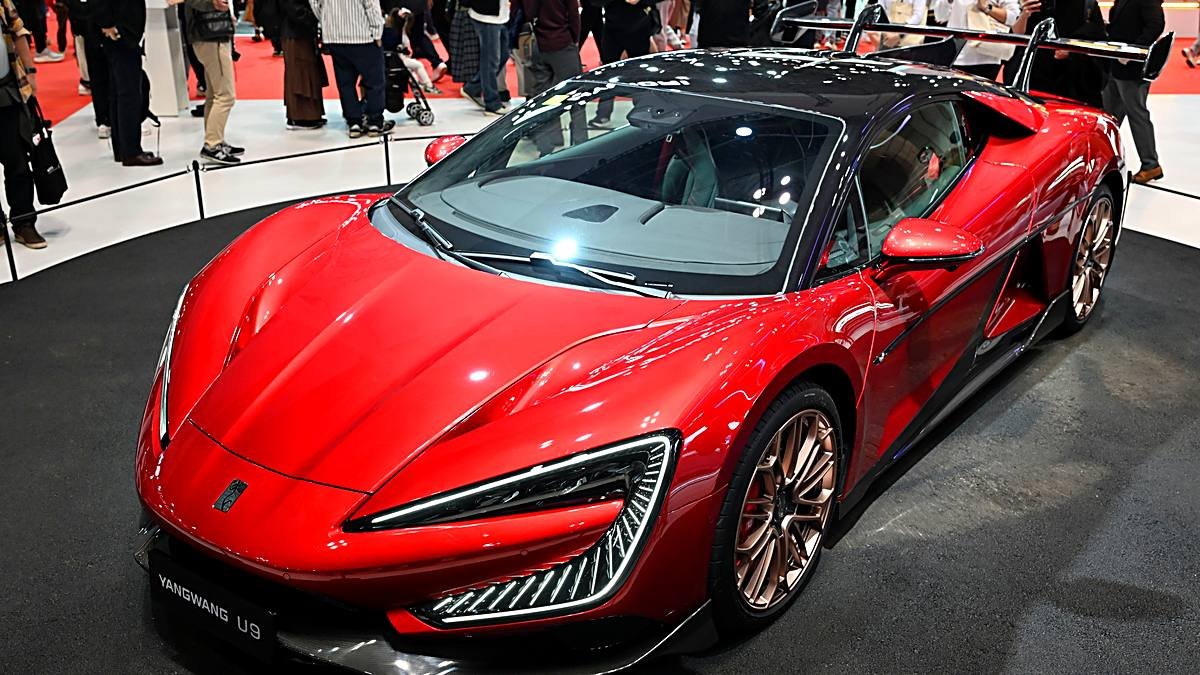
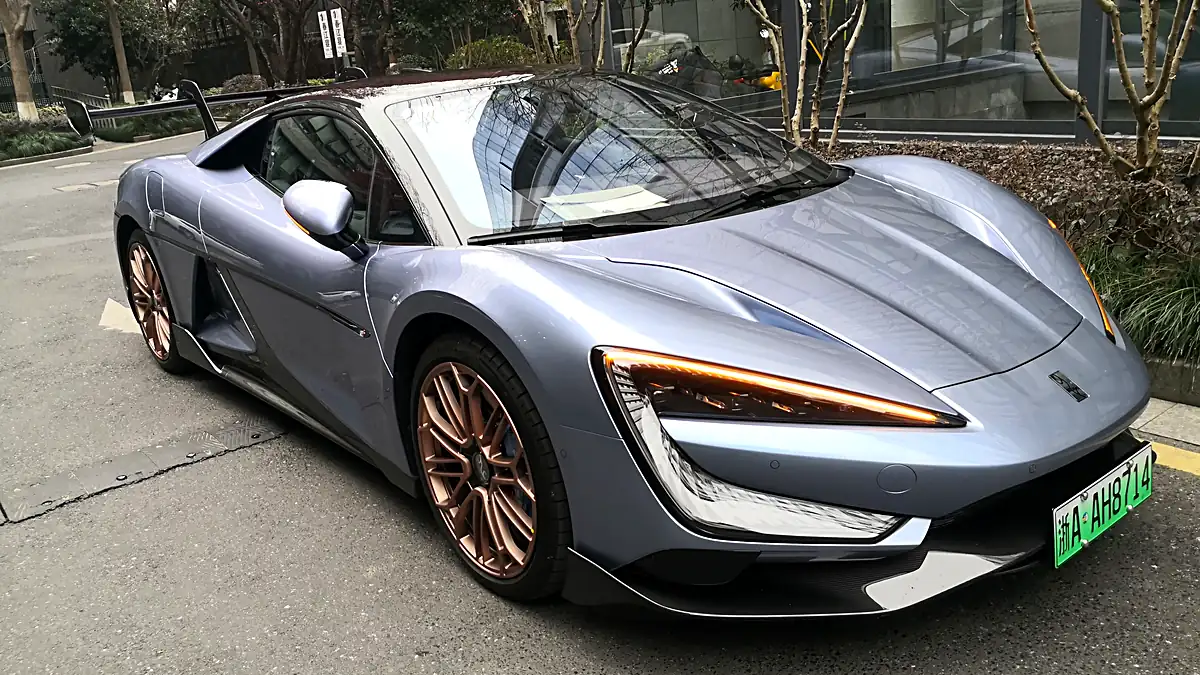
If BYD does enter, the badge is an open question. Its luxury performance sub-brand Yangwang is the obvious candidate, and the reason is speed. On November 1, 2026, the Yangwang U9 Xtreme reached 503.17 km/h — 312.65 mph — on a closed stretch of motorway in Abu Dhabi, with German driver Marc Basseng at the wheel. Guinness World Records certified it as the fastest production car in a single-direction run, and the FIA recognized the achievement. It beat the car’s own previous record of 496.22 km/h (308.4 mph), set at the ATP Papenburg test track in Germany in September 2025.
The car behind the number is extreme by any measure: four electric motors producing 2,220 kW, about 2,977 horsepower (3,019 PS in metric terms), a 1,200-volt electrical system, and a Nürburgring lap of 6:59.157 — the first production EV under seven minutes. BYD plans to build just 30 of them, priced at around $2.76 million each. For the full record story, see our report on the Yangwang U9 Xtreme 312 mph record.
That is why the Yangwang name keeps coming up. A BYD badge says mass-market electric cars. A Yangwang badge says the fastest production car in the world. For a company trying to tell Europe it is not just a cheap car brand, F1 under the Yangwang name would be the loudest possible version of that message. But BYD has not said which badge it would race under, and the Yangwang idea is speculation, not a confirmed plan.
BYD vs Geely Formula 1 entry chances
BYD and Geely are not in the same position, and the comparison shows it. Geely has the motorsport infrastructure BYD does not. BYD has the scale and the EV technology Geely does not. Here is how they stack up on the facts.
| BYD | Geely | |
|---|---|---|
| 2025 vehicle sales | 4.6 million NEVs | 4.1 million vehicles |
| EV position | World’s largest EV maker | Volvo, Polestar, Zeekr |
| Motorsport today | None | Lotus, Cyan Racing, WEC |
| Engine capability | Batteries, e-motors | Horse Powertrain (45%) |
| Performance proof | U9 Xtreme, 312.65 mph | Lotus Type 135 V8 hybrid |
| Entry preference | Own team, no buyout | Not stated publicly |
Geely’s case is built on what it already owns. Zhejiang Geely Holding owns 51% of Lotus, the British sports car maker with decades of F1 history. Its Lynk & Co brand has won touring car championships with Cyan Racing. It owns 45% of Horse Powertrain, the engine joint venture with Renault (45%) and Aramco (10%), which builds combustion engines and hybrid systems and has just revealed a 4.0-litre twin-turbo V8 for the Lotus Type 135 hybrid supercar. Geely is also taking over Alpine’s Hypercar program in the World Endurance Championship for 2026, and it holds a 17% stake in Aston Martin. Geely’s chief met Ben Sulayem in China to discuss F1, according to the FIA president.
BYD’s case is built on scale and technology. It sold more electric cars than any company in the world in 2025, it makes its own batteries and motors, and its Yangwang sub-brand holds the production-car speed record. What it does not have is a single day of motorsport experience, a racing engine program, or a team to build on. Geely could enter F1 with existing racing infrastructure and an engine partner. BYD would have to build both from scratch — which is exactly what it says it wants to do.
How much would it cost BYD to join F1
The entry fee alone is a nine-figure number. Cadillac paid about $450 million in anti-dilution fees to join the grid as the 11th team in 2026 — money that goes to the existing teams to compensate them for splitting the prize fund one more way. The old Concorde Agreement set the fee at $200 million. Existing teams pushed for up to $600 million in the new agreement, so a 12th team should expect to pay somewhere in the $450 million to $600 million range. The fee has never been officially confirmed; the Concorde Agreement is confidential, and the $450 million figure comes from reports citing unnamed sources.
That is only the ticket. Cadillac spent over $1 billion building its team — factories in North America and Europe, staff, equipment — before it raced a single lap. And the annual running costs are large on top of that. F1’s cost cap is about $140 million a year for car operations, but that excludes driver salaries, marketing, and the top three staff salaries. A competitive team spends several hundred million a year all in. BYD can afford it — its 2025 revenue was about $113 billion — but the money is the easy part. The hard part is building a team that can compete.
Christian Horner BYD F1 team rumors
The most persistent rumor around BYD’s F1 plans involves a person, not a car. In May 2026, former Red Bull team principal Christian Horner met BYD executive vice president Stella Li at the Cannes Film Festival. The Financial Times reported that they discussed an F1 entry. Horner was photographed with BYD executives at the event, and all parties — BYD, Horner, F1 and the FIA — declined to comment.
That meeting is verified. What it means is not. Horner was dismissed from Red Bull in July 2025 after two decades as team principal, and his gardening leave ended around May 2026. He has said any return to F1 would require a compelling project, ideally with significant operational control or an equity stake. He has since been linked to Alpine and Aston Martin as well as BYD, and the BYD talks are reported to have stalled. In June 2026 he joined London-based private equity firm Oakley Capital as an adviser.
So the rumor that Horner could lead BYD’s F1 project is just that — a rumor. The Cannes meeting happened, and it fueled talk of a new Chinese team. But by July, Stella Li was saying there was “no project,” and no forward momentum has emerged from the Horner talks since. If BYD does build a team, it will need a team principal with F1 experience. Horner is the most available one. That is as far as the facts go.
What this means for US readers
BYD does not sell passenger cars in the United States, and it has no plans to. So a BYD F1 team would not put a BYD in your driveway. What it would do is change what American buyers think of Chinese cars. BYD already outsells Tesla globally, and it is expanding fast in Europe, Southeast Asia and Latin America. F1 is the fastest way to tell the world’s richest car buyers that a Chinese brand belongs at the top of the sport.
For US readers, the more direct angle is the engine. F1 is the sport that sets the direction for high-performance road car technology, and the FIA is steering it back toward combustion. A V8 with 10% hybridization is a very different future from the all-electric one BYD represents. If the world’s largest EV maker joins F1 anyway, it will be because the brand value outweighs the technology mismatch. If it stays out, it will be because the rules do not let it show off what it does best. Either way, the decision will say a lot about where the car industry is heading.
What to watch next
Three dates matter. First, F1 CEO Stefano Domenicali has said the sport should have a package ready to discuss by the end of 2026 — the outline of the next engine rules. Second, the 2031 rules cycle, when the FIA can impose a V8 formula without manufacturer agreement. Third, whether BYD comes back with the “serious proposal” Ben Sulayem asked for. Until one of those moves, the story stays where it is: real talks, no process, no deal.
Geely is the one to watch in the meantime. It has the racing infrastructure, the engine partner and the F1 heritage, and its chief has already met Ben Sulayem in China. If a Chinese manufacturer joins F1 first, the smart money is on Geely getting there before BYD — even though BYD is the bigger carmaker. Watch for a formal expression-of-interest process. That is the moment this stops being a conversation and starts being a bid.
BYD Formula 1 entry: quick answers
Is BYD officially joining Formula 1 as the 12th team? No. FIA President Mohammed Ben Sulayem confirmed BYD held entry talks and rejected buying an existing team, so the FIA told BYD to return with a formal “serious proposal” once an expansion process opens. No deal has been signed and no process is open.
Why did BYD refuse to buy an existing Formula 1 team? BYD prefers to build its own factory team from the ground up rather than acquiring an existing F1 constructor, matching its vertically integrated manufacturing model. Its special adviser has said BYD would only enter if its technology can serve the sport, not to put a badge on a car.
How much would it cost BYD to join Formula 1? Cadillac paid about $450 million in anti-dilution fees to join as the 11th team in 2026, and existing teams pushed for up to $600 million. On top of that, Cadillac spent over $1 billion building its team, and F1’s cost cap is about $140 million a year for car operations.
Will BYD enter F1 as Yangwang? BYD has not said which badge it would race under. Its luxury brand Yangwang set a 312.65 mph production-car speed record with the 2,977-hp U9 Xtreme, which has fueled speculation that BYD could race as Yangwang — but that is speculation, not a confirmed plan.
The verdict
BYD wants into Formula 1, the FIA wants a Chinese team, and the two sides are talking. But BYD turned down the shortcut, the FIA has not opened a process, and the engine rules are moving toward a V8 that an EV maker has little reason to build. The talks are real. A team is not. Until BYD files a serious proposal and the FIA opens a tender, this is a story about intent, not entry — and the most likely next step is a long wait until the 2031 rules make the decision for them.