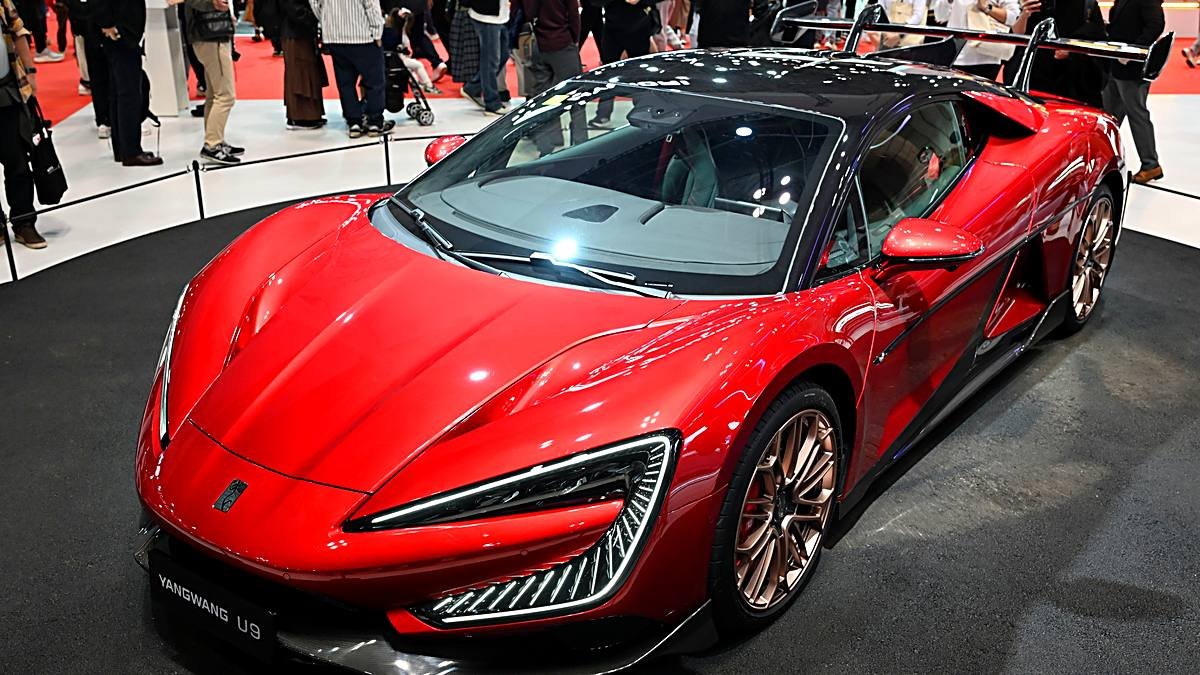
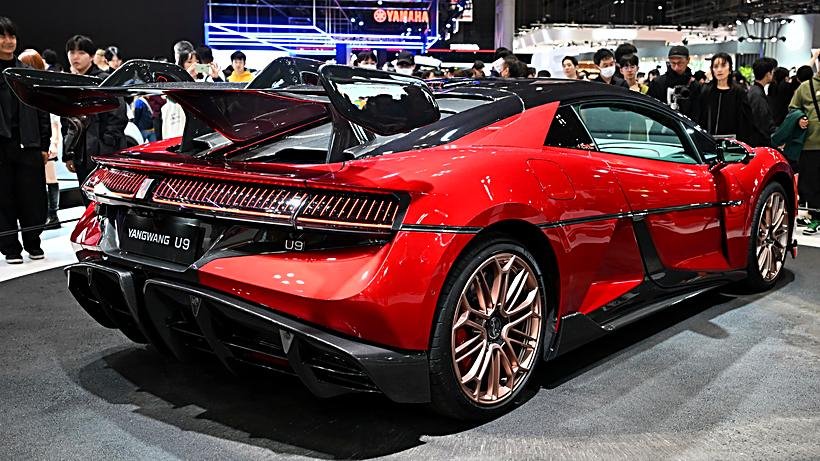
A Chinese electric hypercar is now the fastest production car in the world. BYD’s Yangwang U9 Xtreme hit 503.17 kilometers per hour, about 312.6 miles per hour, on a closed stretch of public road in Abu Dhabi on November 1, 2026. It is the first production car ever to pass 500 km/h, and Guinness World Records and the FIA, motorsport’s world governing body, both confirmed the run.
German racing driver Marc Basseng was behind the wheel. The run took place on Sheikh Khalifa Bin Zayed International Road, the E11, in Abu Dhabi’s Al Dhafra region, on a roughly 10-kilometer stretch closed to traffic. BYD announced the result on November 6, along with two Guinness records: fastest production car in a single-direction run, and fastest electric production car in a single-direction run.
Guinness World Records said: “Exceeding 500 km/h marks a significant engineering milestone for a production EV and highlights the vehicle’s high-performance capabilities.”
The number matters for a simple reason. For a century, carmakers chased 500 km/h and never got there in a production car. Gas-powered hypercars came close. An electric car from a brand most Americans have never heard of did it first, and it did it on a public road, not a test track.
The record, in 30 seconds
If you only need the facts, here they are. The car is the Yangwang U9 Xtreme, the track version of BYD’s luxury brand’s flagship hypercar. The speed is 503.17 km/h, or about 312.6 mph. The place is the E11 highway in Abu Dhabi. The date is November 1, 2026. The driver is Marc Basseng, the same driver who set the car’s last record in Germany. The result was announced November 6, and it broke the car’s own record of 496.22 km/h, set in September 2025.
Two records came with it, both from Guinness World Records: the highest speed by a production car in a single-direction run, and the highest speed by an electric production car in a single-direction run. The FIA confirmed the speed on its own website. That is the whole story in one paragraph. The rest is how it happened, what the car is, and the one honest catch.
How the run actually went
The record took four runs over two days, and it nearly did not happen on the first day. BYD’s team had 10 kilometers of the E11 closed, with the longest straight measuring seven kilometers. The road runs through desert, so the crew swept it before every run and then checked every meter for stray wire bristles from the cleaning brushes, any one of which could have cut a tire at speed.
Two runs on October 31 topped out at 490 km/h. Overnight, the engineers changed the rear wing angle for more downforce, reworked the suspension software to handle small bumps in the road surface, and fine-tuned the tire pressures. On November 1, the first run showed the changes had worked. The second run made it official at 503.17 km/h, measured by a calibrated VBOX recorder and checked by FIA officials.
Basseng said: “This time, we took on an entirely different challenge, pushing the limits of speed on a public road in Abu Dhabi. Unlike a dedicated test track, a public road presents a different set of challenges, making precision, stability and confidence in the vehicle more important than ever. Breaking a world record once is extraordinary but doing it again in such a different environment is truly special.”
Stella Li, BYD’s executive vice-president, said: “I always tell people that our engineers are young, bold and maybe a little crazy, but in a good way! And again, we must congratulate them and the whole YANGWANG U9X team for an incredible next step and these astonishing records. Even as the team celebrated the astonishing 496.22km/h in Germany last year, they were looking through the data and discussing how to take U9X to its next level. 503.17km/h is a fantastic achievement, and it moves the benchmark for pure electric power even further ahead of where others might dream.”
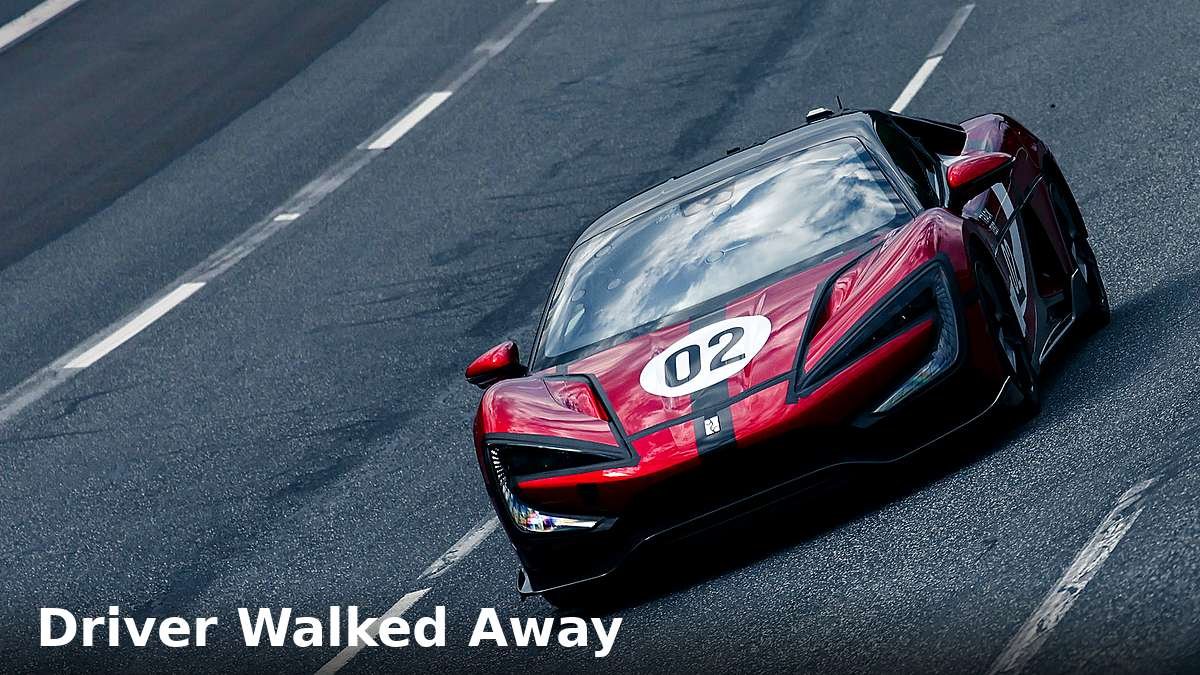
This was not the car’s first brush with a barrier. During high-speed testing in China earlier this year, a U9 Xtreme hit a guardrail. The driver walked away unhurt, and the passenger cell held. We covered that crash here.
The catch: one direction, not two
There is one honest catch, and it matters. The record is for a single-direction run. Guinness certified it as a single-direction record, and the FIA confirmed the speed. But the usual way of settling top speed claims is two runs in opposite directions, averaged, to cancel out wind and slope. BYD did not publish a two-way average.
That leaves the old benchmark standing under the stricter rules. The SSC Tuatara’s two-way average of 455.3 km/h, about 283 mph, remains the fastest two-way production car run. InsideEVs noted that the single-direction format could make Bugatti, Rimac and Koenigsegg raise an eyebrow.
The other question is what counts as a production car. BYD will build just 30 U9 Xtremes. That is a real production run, with paying customers and cars being delivered, but it is a long way from a car anyone can walk into a showroom and buy. The record is real, and so is the asterisk. Both belong in the same sentence.
The hardware behind 2,977 hp
The number on the spec sheet is almost as wild as the speed. Four electric motors, one at each wheel, make 555 kW each, for a combined 2,220 kW. That is 3,019 PS, or 2,977 horsepower, which makes the U9 Xtreme the most powerful production car in the world at the moment, according to InsideEVs. Each motor spins to 30,000 rpm.
Getting a motor to spin that fast took new materials. BYD says the stator, the fixed part of the motor, uses the world’s thinnest super-silicon steel in mass production, at 0.1mm. The rotor uses 970MPa ultra-high-strength silicon steel, and the motor housing is aerospace-grade aluminum. It is the kind of detail that sounds like trivia until you remember the motor has to hold together at 30,000 rpm while making 755 PS.
The power runs through a 1,200-volt system, the first of its kind in a production car, up from 800 volts in the standard U9. BYD says the higher voltage cuts heat generation by up to 67 percent at the same power output. The Blade battery, a lithium iron phosphate pack, can discharge at 30C, which BYD says is up to 10 times the rate of a normal EV battery and twice the rate of other electric supercars. Even at 20 percent charge, the pack can still put out 1,800 kW, and its peak energy recovery rate is more than 700 kW.
The car also thinks fast. The e4 quad-motor system adjusts the torque at each wheel more than 100 times a second, so no wheel slips or loses grip at speed. BYD claims 0 to 100 km/h in 2.36 seconds, the same figure quoted for the standard U9.
| Yangwang U9 | U9 Xtreme | |
|---|---|---|
| Power | 1,287 PS | 3,019 PS (2,977 hp) |
| Motors | 4 x 240 kW | 4 x 555 kW |
| Voltage | 800V | 1,200V |
| Top speed | 391.94 km/h | 503.17 km/h |
| Price | From 1.8 million yuan (about $265,000) | Over 20 million yuan (about $2.8 million) |
| Production | Regular production | 30 units |
Yangwang U9 vs U9 Xtreme. Sources: BYD, CnEVPost, InsideEVs.
The gap between the two cars shows what the Xtreme really is: not a new car, but the standard U9 pushed as far as BYD’s engineers could push it. Same body, same battery chemistry, same brand. Everything else turned up until something broke, then fixed and turned up again.
Tires and suspension at 312 mph
Power is the easy part of going 312 mph. Staying on the road is the hard part. At that speed the car covers about 140 meters every second, roughly an American football field in three quarters of a second. A small bump, a gust of wind, or a tire problem at that pace leaves no time to react.
The tires are semi-slicks built with Giti Tire for speeds above 500 km/h, with a tread and compound made for the job and a knurled rim interface plus thick lubricant to stop the tire slipping on the wheel under hard acceleration or braking. Titanium calipers and carbon-ceramic rotors handle stopping.
The suspension is BYD’s DiSus-X fully active system, which can push with up to 50 kN of force in 120 milliseconds. It can hold the car flat in a corner, or even lean it into the corner like a motorcycle, by up to 2.43 degrees. At record speed, that control is what keeps the tires pressed evenly onto the road, and it is the same system that lets the standard U9 do its party tricks, driving on three wheels and hopping in place.
Three years to 500
The record was three years in the making, and the steps are all on the record. The standard U9 set its first benchmark in January 2024, hitting 309 km/h at Wuhan Hannan Airport in China. By October that year it reached 391.94 km/h at the ATP Papenburg proving ground in Germany.
The Xtreme took over in 2025. It hit 472.41 km/h at Papenburg in August, then 496.22 km/h there a month later, which made it the fastest production car in the world at the time. The Abu Dhabi run added less than 7 km/h to that mark, but those last few km/h were the ones nobody had ever reached.
| Date | Car | Speed | Place |
|---|---|---|---|
| January 2024 | U9 | 309 km/h | Wuhan Hannan Airport, China |
| October 2024 | U9 | 391.94 km/h | ATP Papenburg, Germany |
| August 2025 | U9 Xtreme | 472.41 km/h | ATP Papenburg, Germany |
| September 2025 | U9 Xtreme | 496.22 km/h | ATP Papenburg, Germany |
| November 1, 2026 | U9 Xtreme | 503.17 km/h | E11, Abu Dhabi |
The road to 500 km/h. Source: BYD.
The same car also holds the production EV lap record at the Nürburgring Nordschleife, 6 minutes 59.157 seconds, set with the same specification that took the speed record. Top speed and lap time rarely live in the same car. BYD is keen to point out that this one does both.
Can you buy one? No, and not in the US
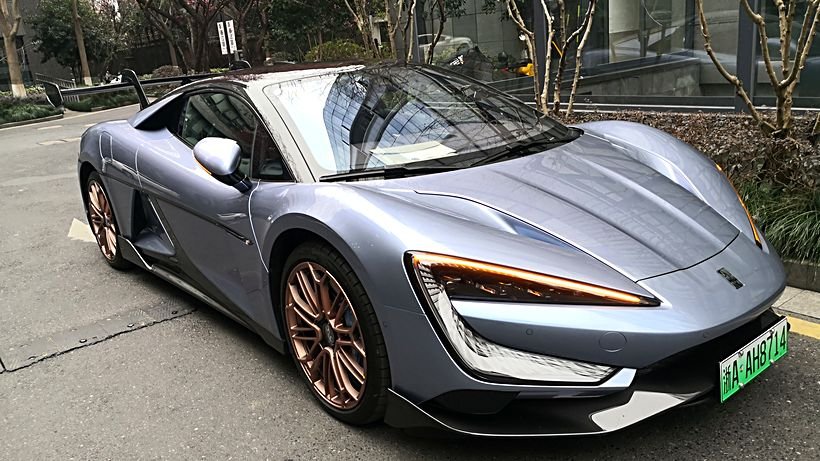
No, almost certainly not. BYD will build 30 U9 Xtremes in total, and the company says some buyers have already signed contracts and approved their own specifications. The first production car, called Dawn Moment, was shown at the Beijing Auto Show in April 2026 with a gold-flecked paint finish. BYD has published no list price, but one car sold at that show for more than 20 million yuan, about $2.8 million.
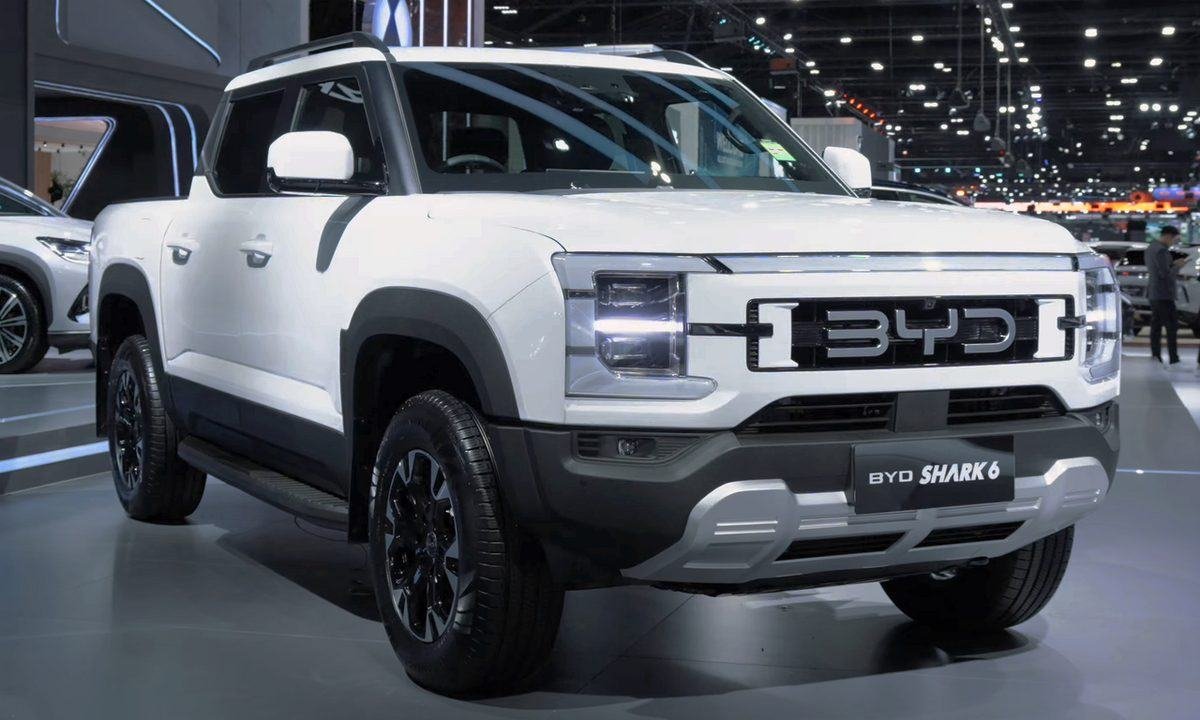
Americans are out of luck twice over. The U9 Xtreme is not sold in the United States, and BYD does not sell passenger cars in America at all. The same rules that keep the BYD Shark pickup out of the US apply here, with tariffs and federal tech rules on top. Our look at why Americans can’t buy the Shark explains the full picture.
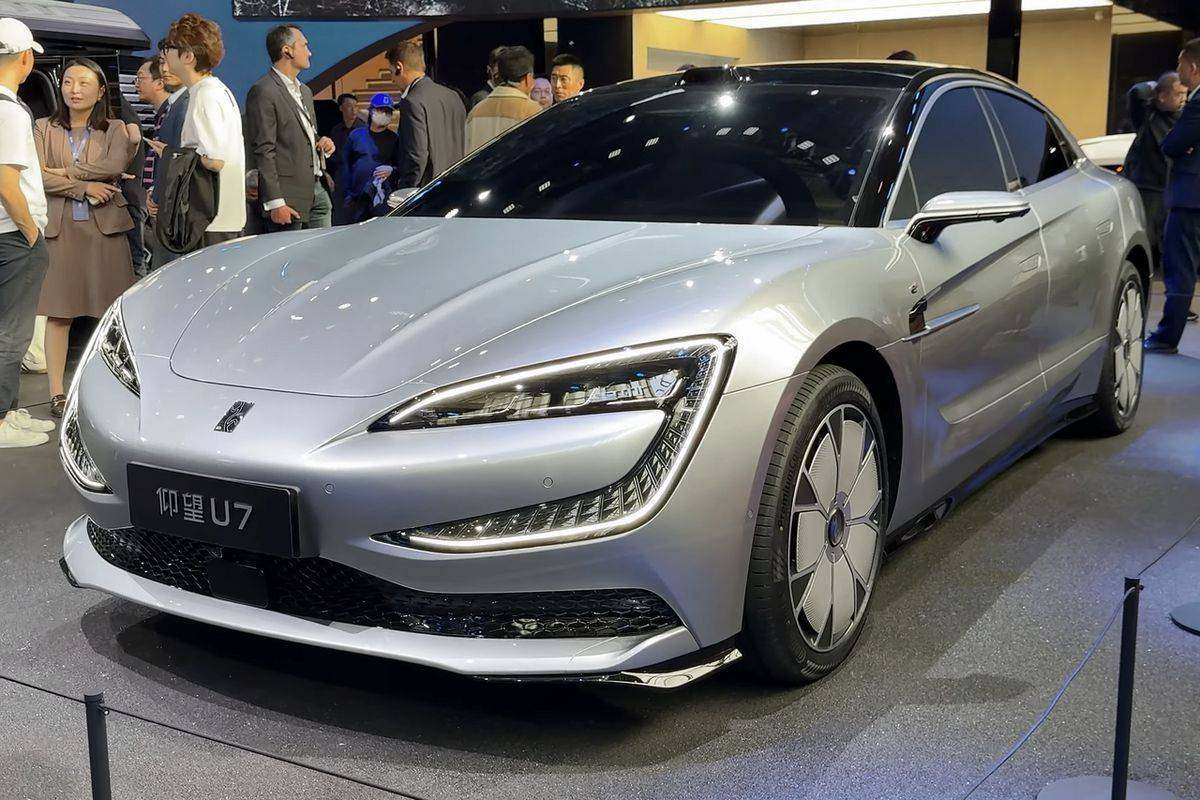
The standard U9 is the reachable version, and even that is a stretch. It starts at 1.8 million yuan in China, about $265,000, with 1,287 horsepower. It is the car the Xtreme is built from, and the one most likely to show up at auto shows outside China. We covered Yangwang’s flagship sedan launch in the UAE here.
What it means for the speed race
The record redraws the top speed map. No production car had ever passed 500 km/h before, gas or electric, and the first one to do it runs on batteries. That is a statement about where the performance frontier sits now: the fastest car in the world is Chinese, electric, and built by the world’s biggest maker of new-energy vehicles.
It also raises the bar for everyone else. Bugatti, Rimac and Koenigsegg have built their names on top speed, and none of them has put a production car past 500 km/h. Tesla’s next Roadster, revealed in October, exists so far as a set of claims and a show car, not a car you can buy. The U9 Xtreme is a real car, with real customers, that really went 503.17 km/h. Claims are cheap. A certified run is not.
The honest version is shorter. An electric hypercar just did what no gas car ever did, on a public road, with a driver and a VBOX watching. The record has a caveat, a single direction and a 30-car run, and the caveat does not change the headline. Five hundred is done. The next question is who goes faster, and how.
More from BYD’s corner of the speed race is on our BYD News page, and the rest of today’s car news is on the EVThrottle homepage.
Yangwang U9 Xtreme record questions, answered
How fast did the Yangwang U9 Xtreme go?
503.17 km/h, about 312.6 mph, on a closed stretch of the E11 highway in Abu Dhabi on November 1, 2026. Guinness World Records and the FIA both confirmed the speed.
Is the U9 Xtreme really the fastest production car?
By the Guinness single-direction records, yes. It holds the records for the fastest production car and the fastest electric production car in a single-direction run. Under the stricter two-way average rules, the SSC Tuatara’s 455.3 km/h average still stands.
How much power does the U9 Xtreme make?
2,977 horsepower (3,019 PS, 2,220 kW) from four electric motors, one at each wheel, each making 555 kW and spinning to 30,000 rpm. It runs on a 1,200-volt system with a Blade battery that can discharge at 30C.
How many U9 Xtremes will BYD build?
Just 30, worldwide. BYD has published no list price, but one sold at the Beijing Auto Show in April 2026 for more than 20 million yuan, about $2.8 million.
Can I buy a Yangwang U9 Xtreme in the US?
No. BYD does not sell passenger cars in the United States, and the U9 Xtreme was never offered there. The standard U9 is also not sold in the US.
What was the previous record?
The same car’s 496.22 km/h, about 308.3 mph, set at the ATP Papenburg proving ground in Germany in September 2025. Before that, the U9 Xtreme hit 472.41 km/h at Papenburg in August 2025.