Tesla reports third-quarter 2026 earnings today, October 21, after the market closes — and the setup is one of the strangest in the company's history. Tesla just beat its own delivery expectations by more than 24,000 vehicles. Wall Street's response? Expect profits to fall roughly 14% anyway.
Here's the deal: this report isn't about how many cars Tesla sold — we already know that number. It's about whether selling more cars actually made the company more money, or whether the great Tesla margin squeeze is still eating the business alive. The call starts at 5:30 p.m. ET. Here's everything to watch before it does.
| Question | Answer |
|---|---|
| When does Tesla report Q3 2026 earnings? | Today, Wednesday, October 21, after the 4 p.m. ET market close; earnings call webcast at 5:30 p.m. ET |
| What does Wall Street expect? | Adjusted EPS of ~$0.43–$0.45 (down ~10–14% YoY) on revenue of ~$27.8B (roughly flat) |
| How many cars did Tesla deliver? | 486,532 — already reported, beat consensus by ~5.3%, down 2.1% from last year's record |
| What are the key metrics? | Automotive gross margin, free cash flow, energy storage, and capex spending |
| Where can I watch? | The quarterly update posts to Tesla's investor relations site after the close; the call replays there too |
What Wall Street expects — and why it's gloomy
The consensus is remarkably consistent across the major datasets, and remarkably downbeat. Reuters reports analysts expect adjusted earnings of roughly 43 cents a share on revenue of about $27.88 billion, compared with 50 cents a year earlier — a 14% earnings decline on flat revenue. Zacks' consensus lands in the same place: 44 cents and $27.8 billion, with the EPS estimate drifting 3 cents lower over the past month. Bloomberg's consensus, via the Foreign Policy Journal, sees $28.13 billion in revenue and 44 cents EPS, with adjusted EBITDA of $3.66 billion.
Context matters: last quarter, Tesla missed earnings expectations by 34%, posting $0.33 against a $0.50 consensus. Over the trailing four quarters the company has missed twice and beaten twice. The bar for today is "don't do that again" — and even clearing it won't impress anyone, because the estimates themselves have been walked down for a month.
The delivery beat that didn't fix profits
Rewind to October 2, when Tesla dropped its production and delivery numbers. The company delivered 486,532 vehicles in Q3 — 2.1% below the all-time record of 497,099 set in Q3 2025, but a solid 5.3% above the 461,974 consensus Tesla itself compiled from 24 analysts. Sequentially, deliveries rose from 480,126 in Q2.
Here's the weird part: it's still a two-car company. Model 3 and Model Y accounted for 478,237 of those deliveries. "Other models" — Cybertruck, Semi, and whatever's left of the Model S and X — collapsed 48% year-over-year to just 8,295 units, Electrek's preview notes. The halo lineup is basically a rounding error now.
And here's the number that explains the gloomy earnings estimates: Tesla built only 464,391 vehicles but delivered 486,532 — it sold 22,141 more cars than it made, the second quarter in a row of working down inventory after building roughly 50,000 excess vehicles in Q1. Selling down inventory is healthy. But it also means the delivery "beat" came partly from clearing the lot, not from surging demand. As one preview put it, "volume held up better than feared, but investors want proof the business is converting that volume into sustainable profit." That's the entire bull-bear debate in one sentence.
There's also a year-ago distortion worth knowing. Q3 2025's record 497,099 deliveries were goosed by buyers rushing to grab the $7,500 federal EV tax credit before it expired on September 30, 2025. That pull-forward is still echoing: Cox Automotive estimates Tesla sold around 144,100 EVs in the US in Q3, down nearly 20% year-over-year, as the credit's absence keeps weighing on demand. Europe was the bright spot — registrations up 43.3% across the EU, UK, and EFTA from January through August, per ACEA data — and Tesla's Shanghai operation posted its best month of 2026 in September with exports up 58%.
The energy problem nobody's talking about
Buried in the delivery report was the quarter's real disappointment: energy storage. Tesla deployed 13.7 GWh — up 9.6% from 12.5 GWh a year ago, but well short of the roughly 15.9 GWh analysts expected and below the 14.2 GWh record set in Q4 2025. For a business line that's supposed to be Tesla's second growth engine, missing expectations by 14% is a problem.
Watch for two things on the call: whether management blames project timing (lumpy utility deployments are normal) or something structural, and whether energy margins held up. Zacks' preview projects segment revenue growth of 10.2% — decent, but not the breakout the bulls wanted. If energy can't pick up the slack while auto margins compress, Tesla's growth story gets a lot thinner.
The cash burn: Tesla is spending like a startup again
This is the number that should scare you more than any EPS miss. Tesla's free cash flow went negative $1.1 billion in Q2 — the first time in over two years — and analysts expect Q3 to be far worse: negative $4.92 billion, per the estimates cited by Reuters. Tesla's own sell-side consensus puts Q3 capex at $7.77 billion for the quarter, against nearly $4 billion in positive free cash flow a year ago.
Where's it all going? AI compute, robotaxi infrastructure, the Optimus humanoid robot program, and manufacturing capacity. Tesla has said capital spending will exceed $25 billion this year. That's startup-level burn from a company valued like a tech giant — and it's the core reason the stock is down about 17% in 2026 despite the delivery beat. Investors aren't questioning whether Tesla can sell cars. They're questioning whether it can afford its own ambitions.
Barron's reported Tesla arranged credit facilities expanding its borrowing capacity by $25 billion as AI investment rises. That's flexibility, not cash — but it tells you management sees the burn continuing.
What Elon will actually talk about (hint: not margins)
If history is any guide, the earnings call will spend less time on automotive gross margins — the number analysts actually need — and more on the future. The menu of distractions is unusually rich this quarter:
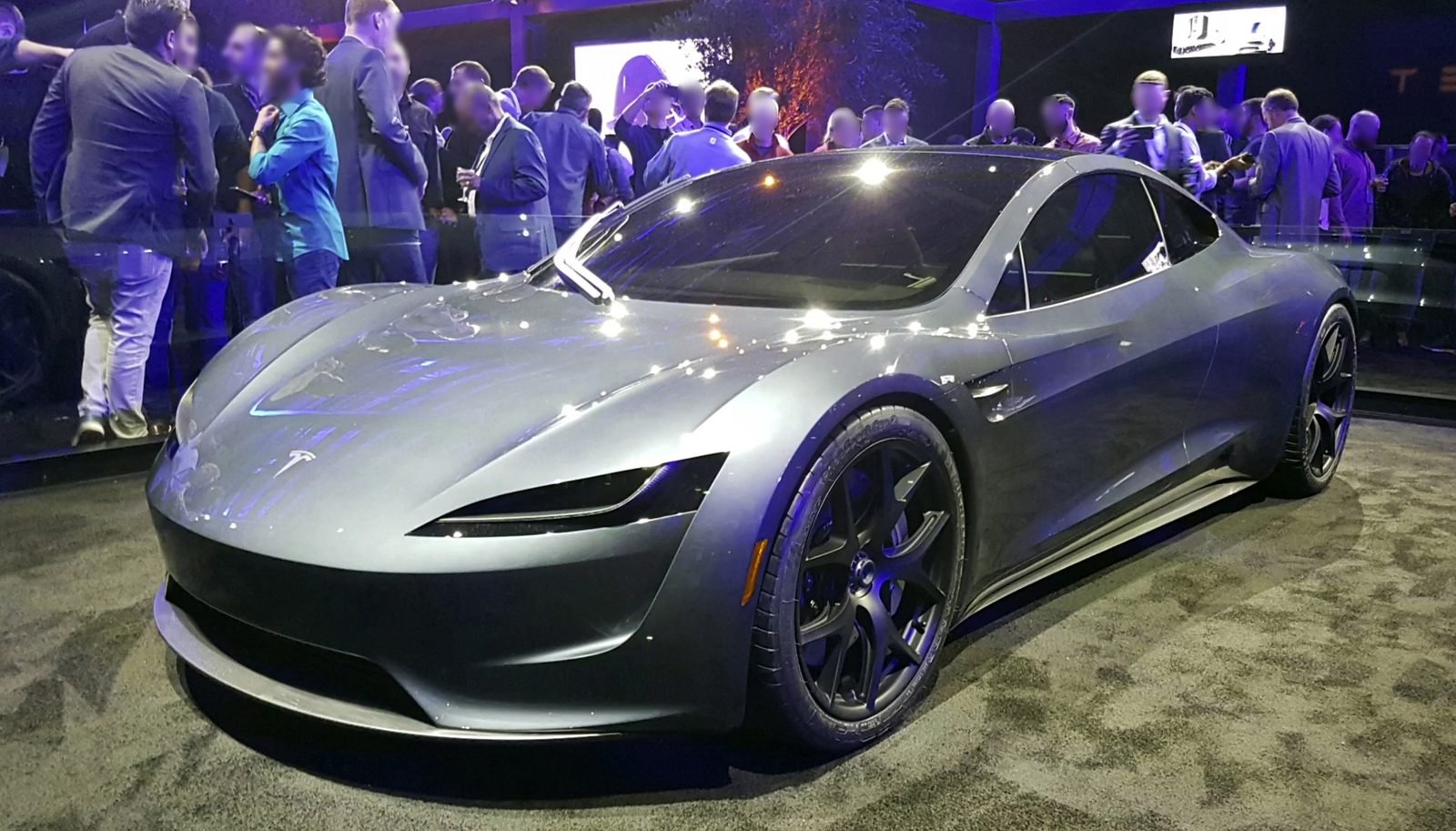
The Roadster. Six days ago, Tesla unveiled the new Roadster at a SpaceX test site in Texas — a car that can jump, flip mid-air on cold-gas thrusters, and hit 60 mph in 0.81 seconds, with production targeted for 2028. It won't show up in a single Q3 number, but expect Musk to frame it as proof of Tesla's engineering edge.
Robotaxi and Optimus. Wall Street has "largely focused on robotaxis and the Optimus humanoid robot to assess the company's growth, citing them as high-margin product lines that could overshadow its traditional car sales business eventually," Reuters notes. Tesla's robotaxi services in Texas and Florida now operate without onboard safety supervisors, though the fleet remains far smaller than Waymo's. The question analysts will push: when does any of this become revenue?
The merger subplot. SpaceX reported its own Q3 results Tuesday — only its second quarter as a public company — and merger speculation is, in Reuters' words, gathering momentum. Barclays suggested a deal could be announced before Tesla's December 3 annual meeting. Bill Birmingham, head of research at REX Financial, told Reuters the Roadster's SpaceX-tech showcase was no accident: "Musk is blending the future of mobility together by integrating auto and rocket technology; at the very least it's a subtle plant in investors' minds making an engineering efficiency argument for a merger."
FSD subscriptions. One underappreciated bright spot: TipRanks data shows active Full Self-Driving subscriptions hit 1.48 million in Q2, up from 1.28 million in Q1, with about 55% of North American deliveries opting in. Recurring software revenue is the highest-margin line in the car business — if that growth continued in Q3, it's the number bulls will cling to.
Why the stock is down 17% despite beating deliveries
Cut to the chase: the market has stopped grading Tesla on cars. "Tesla is on track to grow deliveries this year for the first time since 2023, but investors are more focused on profits and its robotaxi bets," Reuters sums up. The stock's 2026 decline reflects three compounding worries — margin compression from pricing pressure, a cash-burn trajectory that looks more aggressive every quarter, and a valuation that only makes sense if robotaxis and robots actually arrive.
Shawn Campbell, an adviser at Camelthorn Investments who owns shares in both Tesla and SpaceX, told Reuters what he's watching: "In terms of metrics, it would have to be Starlink revenue growth more than launch counts and improvement in auto margins for Tesla." Strip out the SpaceX half of that sentence and you've got tonight's assignment for Tesla: show the car business stabilizing while you spend like the future depends on it.
The stock did gain 3.6% heading into the report, per Digital Trading Lab — the classic pre-earnings drift. Whether it holds depends entirely on the margin line.
What happens tonight, hour by hour
Practical info for following along: Tesla publishes its quarterly update deck on its investor relations site shortly after the 4 p.m. ET close. The webcast call starts at 5:30 p.m. ET (that's 2:30 p.m. PT, or 3 a.m. Thursday IST). Meta reports at the same time — 4:30 p.m. ET — so the after-hours tape will be noisy. The first regular session that can trade on the numbers is Thursday, October 22.
FactSet's consensus sits at $0.45 EPS on $27.935 billion in revenue — a touch above the Reuters/Zacks numbers, which is worth knowing because "beat" or "miss" headlines will be written against whichever dataset the writer prefers. If you see conflicting takes tonight, that's why.
What this means if you're buying a Tesla, not the stock
Here's the angle most earnings coverage misses: a cash-burning Tesla with compressing margins is a Tesla that needs to move metal. The company already drew down inventory two quarters running. If Q3 margins disappointed because of incentives and price cuts, expect Q4 to bring more of both — especially with the federal tax credit gone and Cox showing US sales down 20%. For buyers, bad news for the stock has a habit of becoming good news at the dealership. Watch Tesla's inventory listings and financing offers in the weeks after this report; that's where margin pressure turns into your discount.
Quick answers
When is Tesla's Q3 2026 earnings date? Wednesday, October 21, 2026, after the market closes at 4 p.m. ET, with the earnings call at 5:30 p.m. ET.
What are analysts expecting from Tesla Q3 earnings? Adjusted EPS of roughly $0.43–$0.45 (down 10–14% year-over-year) on revenue of about $27.8–$28.1 billion (roughly flat).
How many vehicles did Tesla deliver in Q3 2026? 486,532 — down 2.1% from last year's record but about 5.3% above analyst consensus. Production was 464,391.
Why is Tesla's stock down in 2026? Margin compression, negative free cash flow (Q2 was -$1.1B; Q3 is expected near -$4.9B), and heavy AI/robotaxi capex — the market is pricing the cash burn, not the delivery beat.
Is Tesla merging with SpaceX? It's speculation for now. Barclays suggested a deal could be announced before Tesla's December 3 annual meeting; neither company has confirmed anything.
The bottom line
Tonight's report is a referendum on the central tension in Tesla's story: the car business is still moving 486,000+ vehicles a quarter, but it's doing it with thinner margins, shrinking US demand, and a cash furnace burning $25 billion a year in capex. If automotive margins stabilize and free cash flow comes in better than the feared -$4.9 billion, the delivery beat finally means something. If they don't, no amount of Roadster theatrics or merger talk will cover it. The stock is down 17% because investors have stopped believing volume equals health. Tonight, Tesla gets to prove them wrong — with numbers, not demos.