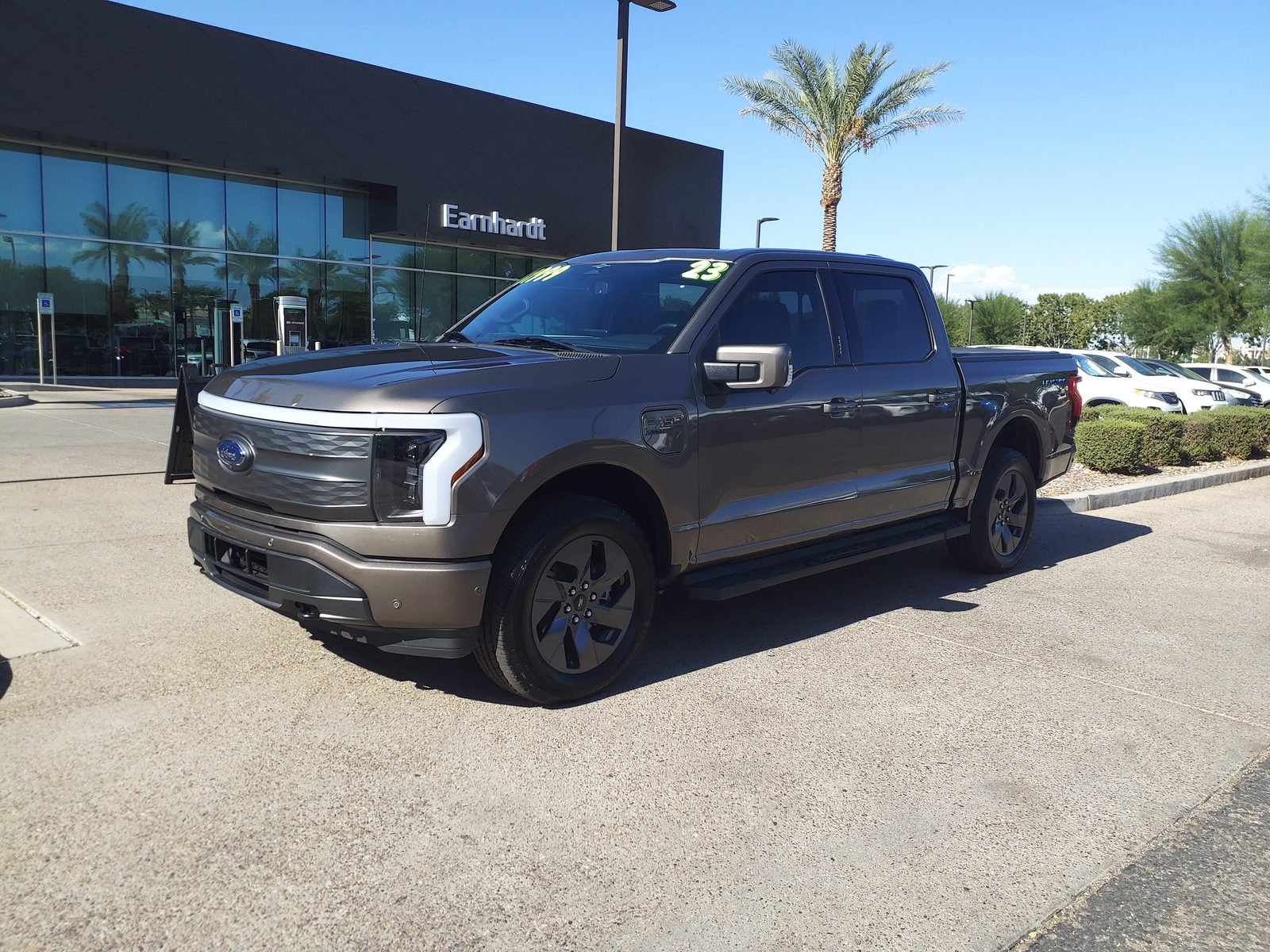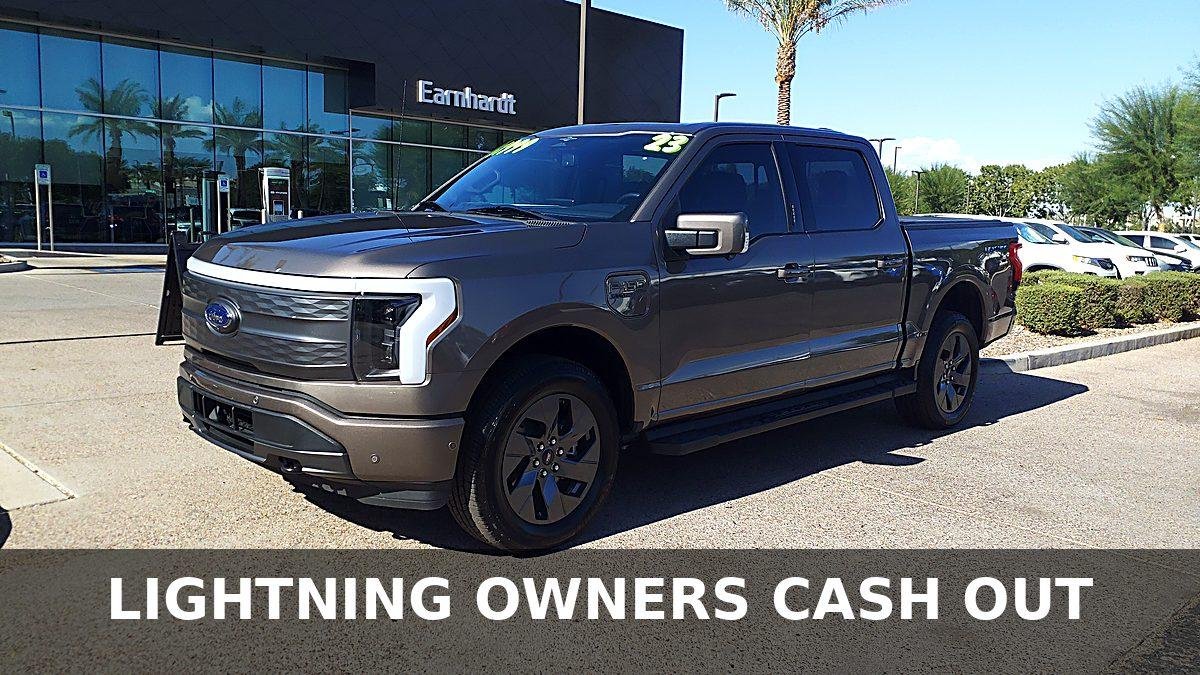
Some Ford F-150 Lightning owners are getting trade-in offers close to what they paid for their trucks — and a growing number of them are spending the money on the same replacement: a Rivian R2. One owner told Torque News that Carvana offered him “just a little less than we paid new” for his Lightning, more than $48,000. He ordered an R2.
It is a strange moment for a truck that was supposed to be the future of Ford. The Lightning is gone — Ford ended production of the battery-only version in 2025 — and yet the trucks left on the road are holding their value better than almost anyone expected. Used EV prices are up, gas is over $4 a gallon, and no new Lightnings are coming to push used prices down. For owners who rarely used the truck bed in the first place, the math has flipped: sell now, while the market is kind, and step into the smaller SUV Rivian can actually deliver.
What Lightning owners are actually getting
The story started in the Ford F-150 Lightning Owners Group on Facebook, where a member known as JF posted that Carvana had offered him just under what he paid new for his truck. He took more than $48,000 for it and ordered an R2, telling Torque News he had no plan to give up the truck until the offer landed.
“We really liked the Lightning. We got a great deal on it and liked the idea of the utility of having a truck. In the end, we almost never actually used the bed, although the cab was great for hauling dogs. We wanted something smaller, and with the current increase in resale value, the time to trade seemed right.”
He was not alone. Other members of the group reported similar numbers: one was offered $47,500 for a 2024 Lariat, another about $46,000 for a 2024 Flash. A member called PT said he sold through the online dealer Plug because he did not trust Ford to keep supporting the truck after canceling it. Another, KVM, wrote that he had made the same switch. And one owner, RK, is keeping his Lightning and trading a Model Y for an R2 instead — the move runs in both directions, but it keeps ending at Rivian.
Keep the scale of this in mind. These are individual offers from a small, self-selected group of owners, not a market average — both Torque News and Autoblog say so plainly. JF’s original purchase price was not disclosed, so “close to what he paid” is his account, not a verified break-even. What makes the posts worth more than anecdotes is that the wider numbers point the same way, and that is where the story gets interesting.
Why now: three things lined up at once
First, used electric cars are worth more than they were a year ago — a lot more. iSeeCars studied more than 1.5 million one- to five-year-old used vehicles and found the average used EV cost $32,533 in September 2026, up 9.8% from $29,637 a year earlier. Gas cars barely moved: $31,954, up just 0.3%. A year ago the average used EV cost $2,227 less than a gas car. Now it costs $579 more. Used EVs also sold in 41.9 days on average, down from 46.6 a year ago — nearly two weeks faster than gas cars, which took 54.8 days. September was the sixth straight month of year-over-year price gains for used EVs, after prices fell in the first three months of 2026.
“Used EVs have moved from selling slightly slower than gasoline vehicles to selling nearly two weeks faster in just one year,” said Karl Brauer, executive analyst at iSeeCars. “That reversal, combined with substantially higher average prices, is one of the clearest signs of how dramatically the used car market has changed across drivetrain types.”
Second, gas is expensive. AAA put the national average at $4.10 a gallon on November 5 — down 12 cents in a week, but still the highest average ever recorded in November. Before 2026, the national average had never gone above $4 a gallon in November. A year ago it was $3.03. Every dollar at the pump makes a used EV look cheaper to run, and buyers are acting on it.
Third, and most specific to the Lightning, there will never be another new one. Ford announced in December 2025 that it was canceling the all-electric Lightning in favor of an extended-range version, and production of the battery-only truck ended that year. What is left on dealer lots and in driveways is all there is. One member of the owners group credited the end of production for the strong values, and the logic is hard to argue with: a fixed supply of a truck people still want, meeting buyers who would rather pay for a used one than wait for a replacement that does not exist yet.
What they are buying: the Rivian R2
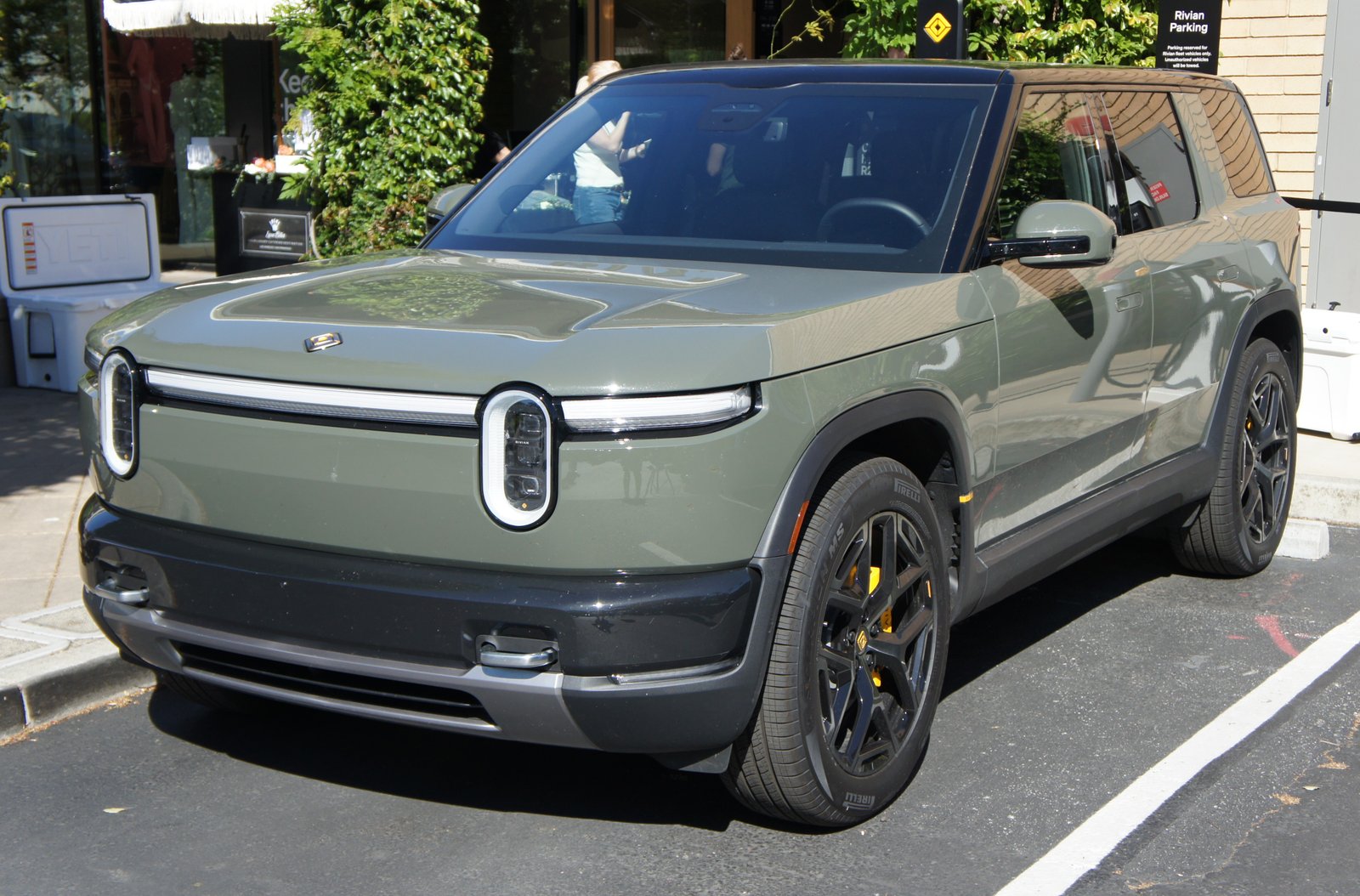
The R2 owners are moving to is Rivian’s new midsize SUV, built at the company’s plant in Normal, Illinois. Public deliveries began on June 9, 2026, and the only version on sale so far is the most expensive one: the dual-motor Performance with the Launch Package, at $57,990 plus a $1,495 destination fee — $59,485 before tax and registration. It makes 656 horsepower, hits 60 mph in 3.6 seconds, and carries an EPA-estimated range of up to 330 miles, though Torque News notes one real-world test found that range figure optimistic.
Cheaper versions are coming but not here yet. The Premium trim is listed at $53,990 and arrives later this year, and Rivian’s own site lists the R2 from $44,990, coming in 2027. That gap is the whole reason a strong trade-in matters: the R2 most people can afford is still a year away, so the owners cashing in now are the ones who can reach the $59,485 truck today.
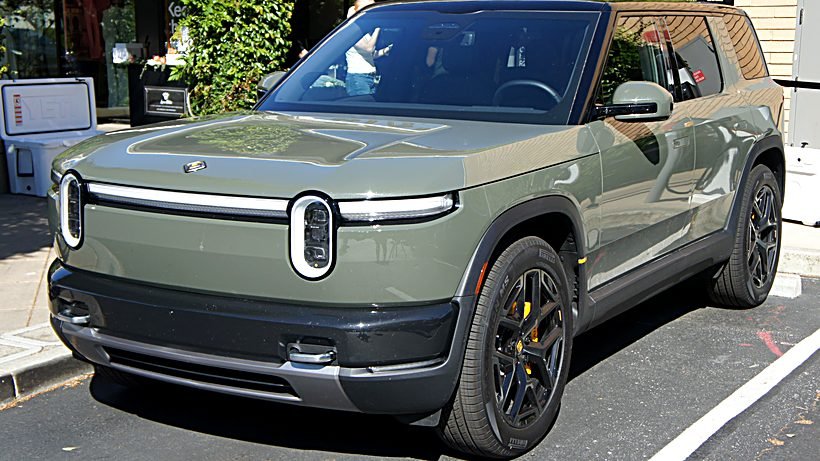
The R2 is not a niche product anymore. Rivian’s third-quarter results, released October 29, showed record deliveries of 19,248 vehicles, up 46% from a year ago, on revenue of $2.155 billion, up 38%. The company built 19,751 vehicles in the quarter and raised its full-year delivery guidance to 67,000–70,000 vehicles, up from 65,000–70,000. And the R2 did the heavy lifting: it became Rivian’s best-selling vehicle by volume in its first full quarter on sale, outselling both the R1 lineup and the company’s electric delivery van. It also won Top Gear’s SUV of the Year for 2027.
“We had great results with R2 becoming our best selling vehicle by volume in the third quarter. Customer and media feedback on R2 has been exceptional,” said RJ Scaringe, Rivian’s founder and chief executive, in the results announcement. On CNBC after the results, he tied the ramp to the company’s bottom line: “That ramp-up is critical for us getting to positive gross margin on R2 and that ultimately will contribute to positive gross margin for the business.”
For a family like JF’s, the fit is practical. The R2 is a five-seat midsize SUV with 90.1 cubic feet of total storage, a much smaller footprint than a full-size pickup, and it charges at Tesla Superchargers as well as Rivian’s own Adventure Network. It is the truck’s opposite in size and the closest thing to a direct replacement for the daily driving most Lightning owners actually do — school runs, dogs in the back, groceries, not lumber.
Why Rivian, and why not another Ford
The deeper story here is not about one truck or one SUV. It is about what happens when EV owners change cars. Torque News points to Experian data from the second quarter of 2026: 72.2% of EV owners who replaced their EV chose another EV. J.D. Power’s ownership surveys have put EV owners’ intent to buy another EV between 94 and 97 percent for years. But loyalty to the badge is far weaker. Escalent’s 2026 Brand DeepDive report found only 46 percent of current EV owners say they are likely to buy the same brand next time.
That is the gap Rivian is walking through. Ford ending Lightning production gave these owners a reason to shop around, strong trade-in values gave them the means, and the R2 happened to arrive at just the right moment to catch them — Torque News’s own summary of the pattern, and it fits the numbers.
Ford, for now, has nothing electric to sell them instead. The Lightning is gone, and its replacement is a next-generation truck built as an extended-range EV — a big battery paired with a gas generator, reported to target about 700 miles of range — with no sale date announced. Ford’s affordable electric pickup, the Fathom, is targeting about $28,000 but is not due until late 2027, and it is a midsize truck, not a full-size one. An owner who wants a new electric Ford truck today simply cannot buy one.
Rivian, meanwhile, is scaling up to meet exactly this demand. It added a second shift at Normal to build more R2s, and Scaringe says the company is on track to hit an autonomy milestone by year-end that would unlock a $250 million tranche of Uber’s planned investment of up to $1.25 billion through 2031. The two companies are targeting a driverless R2 robotaxi on Uber’s network by 2028. None of that changes what the R2 is today, but it explains why buyers feel safe betting on a startup: the truck they want is shipping now, and the company behind it just posted its best quarter ever.
Keep your Lightning or sell it?
If you own a Lightning, the honest answer is that both choices are defensible — and the numbers cut both ways.
The case for keeping it is stronger than the “discontinued” label suggests. Ford has said it will keep providing parts and service for the truck for 10 years and keep sending over-the-air updates, and owners in the forums are already making that argument to each other. The high-voltage battery is covered for 8 years or 100,000 miles. The truck itself has not changed: owners in the group keep saying they liked it, and the ones leaving are leaving because production ended and they want something smaller, not because the truck let them down.
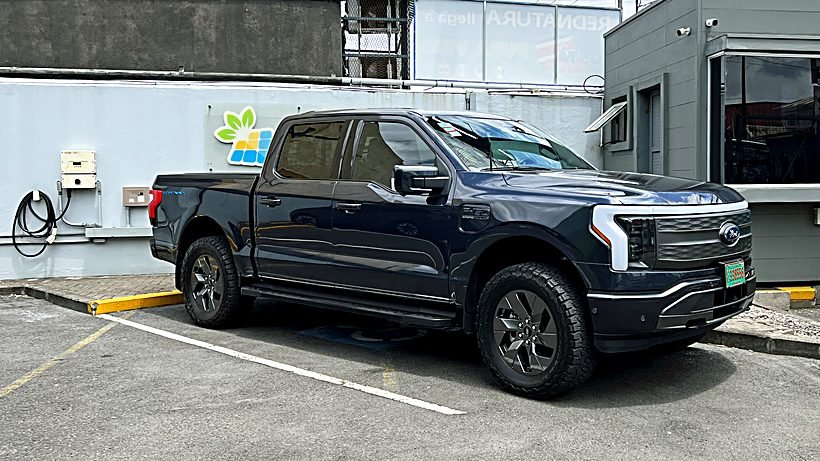
The case for selling is about timing. A trade-in window like this one does not stay open forever. Once the supply of used Lightnings settles and gas prices ease, values should soften — that is the warning in both the Torque News and Autoblog coverage of the story. And the R2 math only works today because of the trade-in: the only R2 on sale costs $59,485, so a $46,000–$48,000 offer for your truck covers most of it. Wait for the $44,990 base R2 in 2027 and you may find your Lightning is worth less by then, too.
If you are deciding, get three quotes before you do anything — Carvana, an online dealer like Plug, and your local Ford dealer — because the spread between them is where the money is. Check your battery warranty start date and your roadside coverage, which runs five years or 60,000 miles. And ask yourself the question JF asked himself: how often do you actually use the bed? If the answer is almost never, a smaller SUV that costs less to run is not a downgrade. It is the truck you were already driving, minus the part you never used.
One warning from the data is worth carrying into that decision. “Essentially, high-value, well-executed used EVs are benefitting from ongoing high gas prices, but even high fuel prices can’t save an unpopular electric car,” Brauer said. The Lightning’s value is holding because supply stopped, not because every electric truck is hot. Choose the replacement the way JF did — on what you actually drive, not on what the market is paying this month.
What this says about the used EV market
Step back and the Lightning story is a small, vivid piece of a bigger shift. The old rule about electric cars — that they lose value the moment you drive them off the lot — is bending. Used EVs gained 9.8% in a year while gas cars gained 0.3%, and used EVs now sell about 13 days faster than gas cars. The $7,500 federal tax credit is gone, gas is over $4, and buyers are paying up for used electric cars anyway.
But the shift is selective, and the iSeeCars data shows the other side of it. The slowest-selling used EVs are big electric trucks and SUVs: the Cadillac Escalade iQ sat for 128.7 days on average, the GMC Sierra EV for 93.2 days, the Chevrolet Silverado EV for 89.1 days. Big, expensive electric trucks are not flying off lots. The Lightning is the exception, and its value rests on a cutoff in supply. That is a fragile foundation: scarcity props up prices until it does not, and the owners cashing out now are the ones who read that correctly.
Our look at third-quarter US EV sales found the same split on the new-car side: the market held near a 6% share, Rivian grew 45.7%, and Ford2019s EV sales fell 80.2%. The winners in 2026 are not the companies with the most electric cars. They are the ones with the right electric car at the right price, shipping now. Right now, for a Lightning owner with a trade-in offer in hand, that car is a Rivian R2.
For now, the Lightning owners cashing out are not quitting on EVs. They are doing what the market is paying them to do: sell a discontinued truck while it is worth something, and buy the smaller electric SUV that is actually on sale today. If you own a 2024 Lightning, the offers these owners are reporting say it is worth getting a quote — before the market catches up with the fact that the truck is gone.
F-150 Lightning trade-in and Rivian R2 questions, answered
How much are F-150 Lightning owners getting on trade-in?
More than $48,000 from Carvana in one owner’s case, with $47,500 offered for a 2024 Lariat and about $46,000 for a 2024 Flash. These are individual owner reports from a Facebook owners group, not market averages.
Why are Lightning trade-in values so strong?
Three things at once: used EV prices are up 9.8% year over year, gas is above $4 a gallon, and Ford stopped building the truck, so no new supply is coming to push used prices down.
How much does a Rivian R2 cost?
The Performance Launch Package on sale now is $57,990 plus a $1,495 destination fee, or $59,485 before tax. A $53,990 Premium trim arrives later in 2026, and Rivian lists a $44,990 base version coming in 2027.
Is Ford still supporting the F-150 Lightning?
Yes. Ford says it will provide parts and service for 10 years and keep sending over-the-air updates. The high-voltage battery is covered for 8 years or 100,000 miles.
Is the Rivian R2 selling well?
Yes. Rivian delivered a record 19,248 vehicles in the third quarter of 2026, up 46% from a year ago, and the R2 was its best-selling vehicle by volume. The company raised its 2026 delivery guidance to 67,000–70,000 vehicles.
Are used EV prices rising?
Yes. iSeeCars found the average used EV cost $32,533 in September 2026, up 9.8% from a year earlier, and sold in 41.9 days on average — about 13 days faster than a gas car.