Here’s the number that matters: 262,649. That’s how many new electric vehicles Americans bought in the third quarter of 2026, according to Cox Automotive’s corrected Kelley Blue Book estimates. It’s the strongest quarter for EV sales in a full year, up 6.1% from the second quarter, and it pushed EVs to 6.4% of all new-vehicle sales — up from 5.8% in Q2. It also beat Cox’s own September forecast, which had expected about 239,000.
There’s a catch, and you’ve probably guessed it: sales are still down 39.5% from Q3 2025. But that comparison is lopsided. The third quarter of last year was the strongest EV quarter in American history — roughly 437,000 sales — because buyers rushed to claim the $7,500 federal tax credit before it expired on September 30, 2025. Two fresh analyses published this week, from Green Living Guy and My Electric Sparks, land on the same verdict: the market has stabilized, not recovered.
“The market was beginning to find its footing again,” said Stephanie Valdez Streaty, Cox Automotive’s director of Industry Insights, in the company’s Q3 2026 EV sales commentary. Through the first nine months of 2026, Americans bought 729,869 EVs — down 29.9% from the same stretch of 2025, but holding a steady 5-to-6% share of the market all year.
Winners and losers: Q3 2026 US EV sales by brand
The headline total hides a split-screen market. Here’s how the big brands fared, using Kelley Blue Book estimates compiled by Electron Motion:
| Brand | Q3 2026 EV sales | vs. Q3 2025 | Share of US EV market |
|---|---|---|---|
| Tesla | 144,094 | −19.7% | 54.0% |
| Rivian | 19,239 | +45.7% | 7.2% |
| Hyundai | 12,185 | −57.7% | 4.6% |
| GM (all EV brands) | 25,473 | −61.7% | 9.6% |
| Ford | 6,047 | −80.2% | 2.3% |
Brand figures are Kelley Blue Book estimates; automaker-reported totals may differ slightly. GM and Ford totals are from the companies’ official sales releases.
Tesla: still the whole game
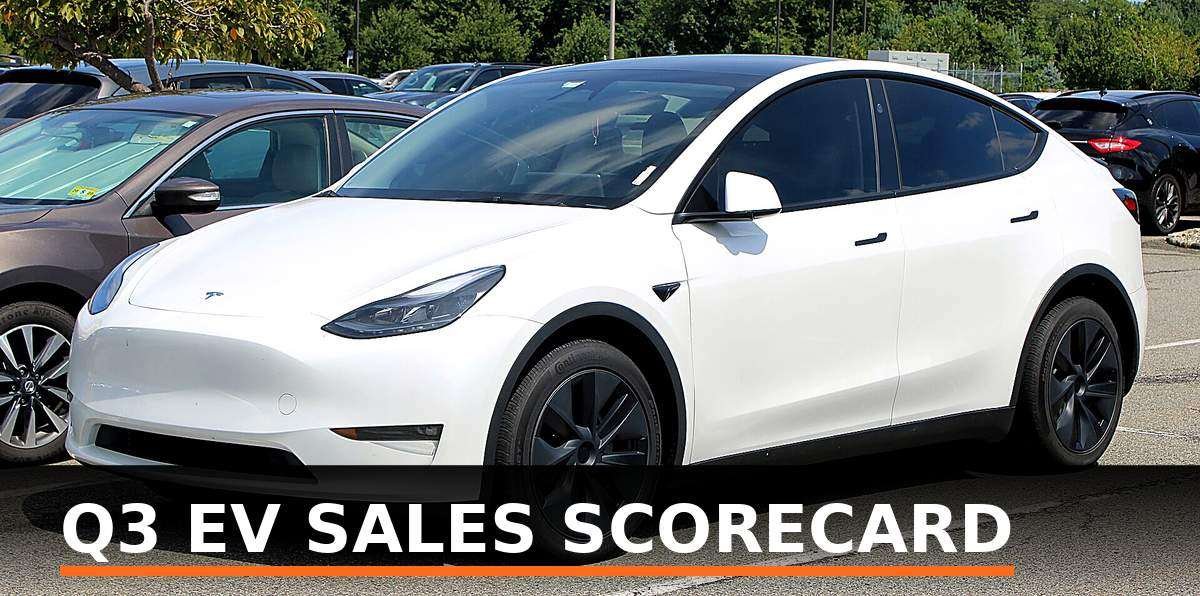
For all the talk of competition, the US EV market remains a Tesla market. The company’s estimated 144,094 US sales in Q3 were more than the next several brands put together, good for 54% of every EV sold in the country. And the Model Y did the heavy lifting — Cox estimates it made up 69% of Tesla’s quarter.
Globally, Tesla delivered 486,532 vehicles in Q3, down 2.1% from a year earlier, with the Model 3 and Model Y accounting for 98% of deliveries. October brought a bright spot: Tesla’s China-made sales rose 10.3% year over year to 67,829 units, Reuters reported, even as they slipped 28.9% from September’s pace. A 19.7% US decline sounds ugly until you remember Tesla was lapping its own credit-rush quarter — and it still outsold every rival by miles.
Rivian: the quarter’s only real winner
Rivian was the standout of Q3. Estimated US sales of 19,239 vehicles, up 45.7%, made it the second-best-selling EV brand in America for the quarter — ahead of every legacy automaker’s electric lineup. The R1T and R1S kept selling while Detroit’s EVs fell off a cliff, and the ramp of the more affordable R2 is the industry’s most-watched launch for 2027.
Detroit had a brutal quarter
Nobody felt the post-credit hangover like the Detroit Three.
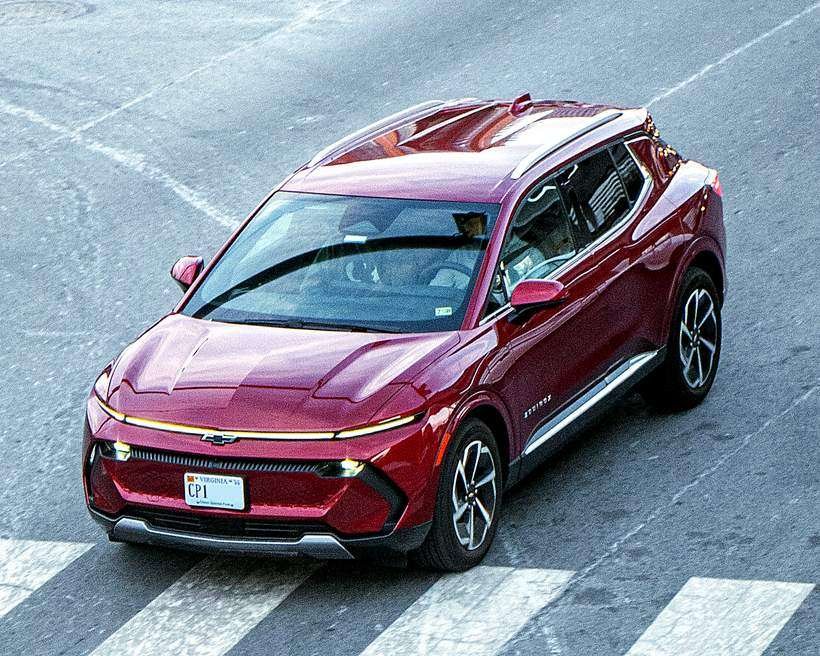
General Motors delivered 25,473 EVs in the US, down 61.7% from 66,501 a year earlier, according to the company’s official Q3 deliveries report. EVs slipped to just 3.8% of GM’s 670,974 total US deliveries, from 9.4% a year ago. The model-level numbers are worse than the average: the Chevrolet Equinox EV collapsed 92.4% to 1,905 units (from 25,085), the Blazer EV fell 84.4% to 1,261, the Silverado EV dropped 58% to 1,655, and the GMC Sierra EV slid 51%. Cadillac’s electric SUVs ended up carrying nearly half of GM’s EV volume for the quarter.
Ford had it even worse. The Blue Oval sold just 6,047 EVs, down 80.2% from 30,612 a year earlier, per Ford’s sales tables. The Mustang Mach-E accounted for 5,574 of those — down 72.4% from its record 20,177 in Q3 2025, and down 20.7% from Q2. The F-150 Lightning barely registered, at an estimated 289 units. EVs made up only 1.2% of Ford’s 509,764 total US sales, versus 5.6% a year ago. Through September, Ford has sold 22,653 EVs, down 67.5% on the year.
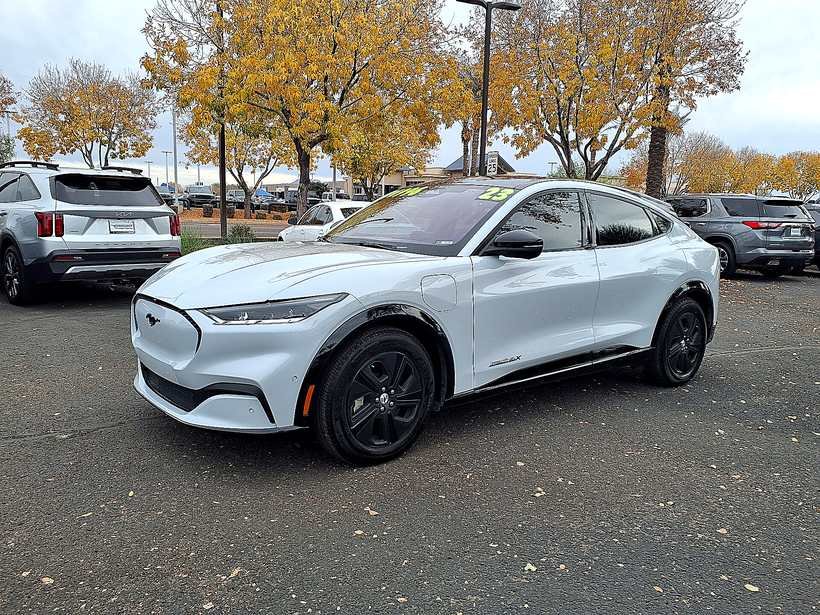
Ford’s sales team insists the demand hasn’t vanished. “We had a dealer this morning who had two customers looking for a specific Mach-E,” Rob Kaffl, Ford’s director of US sales and dealer relations, told the Detroit Free Press. “Although the sales are down year-over-year, the demand remains strong.” Ford is betting its next chapter on the Fathom midsize pickup, starting around $29,000, due in early 2027 on a new EV-only platform.
Buyers have the leverage now
Here’s the part that matters if you’re shopping. With the credit gone and inventory clearing, dealers are cutting prices to move metal. Cox data shows Kia EV9 incentives reaching as much as $16,000 in some cases, and the average new EV transaction price has fallen below $55,000 — about $54,700 in July. In September, incentives averaged close to 11% of the average transaction price, according to Cox’s September EV Market Monitor.
Inventory is moving, too. Days’ supply of EVs has fallen from 180 to 78, which Road Ethos notes is a market clearing stock, not one choking on it. The honest summary: the EV market isn’t collapsing — it’s flat at a lower level than the subsidy produced, while hybrids absorb the buyers who left. If you’ve been waiting for the right moment, check what your state still offers: our November 2026 state-by-state EV rebate guide has every verified program.
Used EVs just set a record
The sleeper story of Q3 is the used market. Cox counted 126,589 used EV sales in the quarter — and September alone set a record with 47,862 used EVs sold, or 3.3% of all used-vehicle sales. That’s up 13.3% from a year ago, helped by a growing supply of off-lease cars. For budget buyers, a two- or three-year-old EV with a verified battery is now the cheapest way into electric driving — see our guide on how to check a used EV’s battery health before you buy.
What Q4 will tell us
The fourth quarter is the one analysts are really watching. As ChargedUp Pro points out, Q4 2025 — the first quarter after the credit expired — fell to about 234,000 EV sales, down 46% from the record quarter before it. That means Q4 2026 is the first quarter that compares against a post-credit baseline instead of a credit-driven peak. Anything above 234,000 would be genuine year-over-year growth, though the easy comparison deserves a note of caution.
September already hinted at momentum: 86,632 new EVs sold, a 6.5% share — up from 6.3% in August. The market spent 2026 finding its floor. Q4 tells us whether it starts climbing.
Q3 2026 EV sales questions, answered
How many EVs were sold in the US in Q3 2026?
262,649, according to Cox Automotive’s corrected Kelley Blue Book estimates — up 6.1% from Q2 2026 and the strongest quarter in a year. EVs took a 6.4% share of all new-vehicle sales.
Why are EV sales down almost 40% from last year?
Q3 2025 was artificially inflated: buyers rushed to claim the $7,500 federal EV tax credit before it expired on September 30, 2025, pushing sales to a record of roughly 437,000. Every year-over-year comparison since is measured against that spike.
Which brand sells the most EVs in America?
Tesla, by a wide margin. An estimated 144,094 US sales in Q3 — 54% of the entire EV market — with the Model Y making up 69% of Tesla’s total.
Why did Ford and GM EV sales fall so far?
Both were lapping credit-rush quarters. Ford’s EV sales fell 80.2% to 6,047 units (Mach-E down 72.4%), and GM’s fell 61.7% to 25,473 (Equinox EV down 92.4%). Ford notes demand for specific models like the Mach-E remains solid at the dealer level.
Is now a good time to buy an EV?
Dealers are discounting hard: incentives averaged about 11% of the average transaction price in September, Kia EV9 deals reached $16,000 in some cases, and the average new EV now transacts under $55,000. Used EVs also just set a sales record, so the secondhand market is worth a look.
Will Q4 2026 EV sales grow?
Q4 is the first clean year-over-year test: Q4 2025 managed only about 234,000 sales after the credit expired, so beating that bar would be genuine growth. September’s 6.5% share suggests the market is stabilizing.