Analysis
Rivian's Record Quarter: R2 Deliveries, a 129 kWh Amazon Van, and the Autonomy Chase
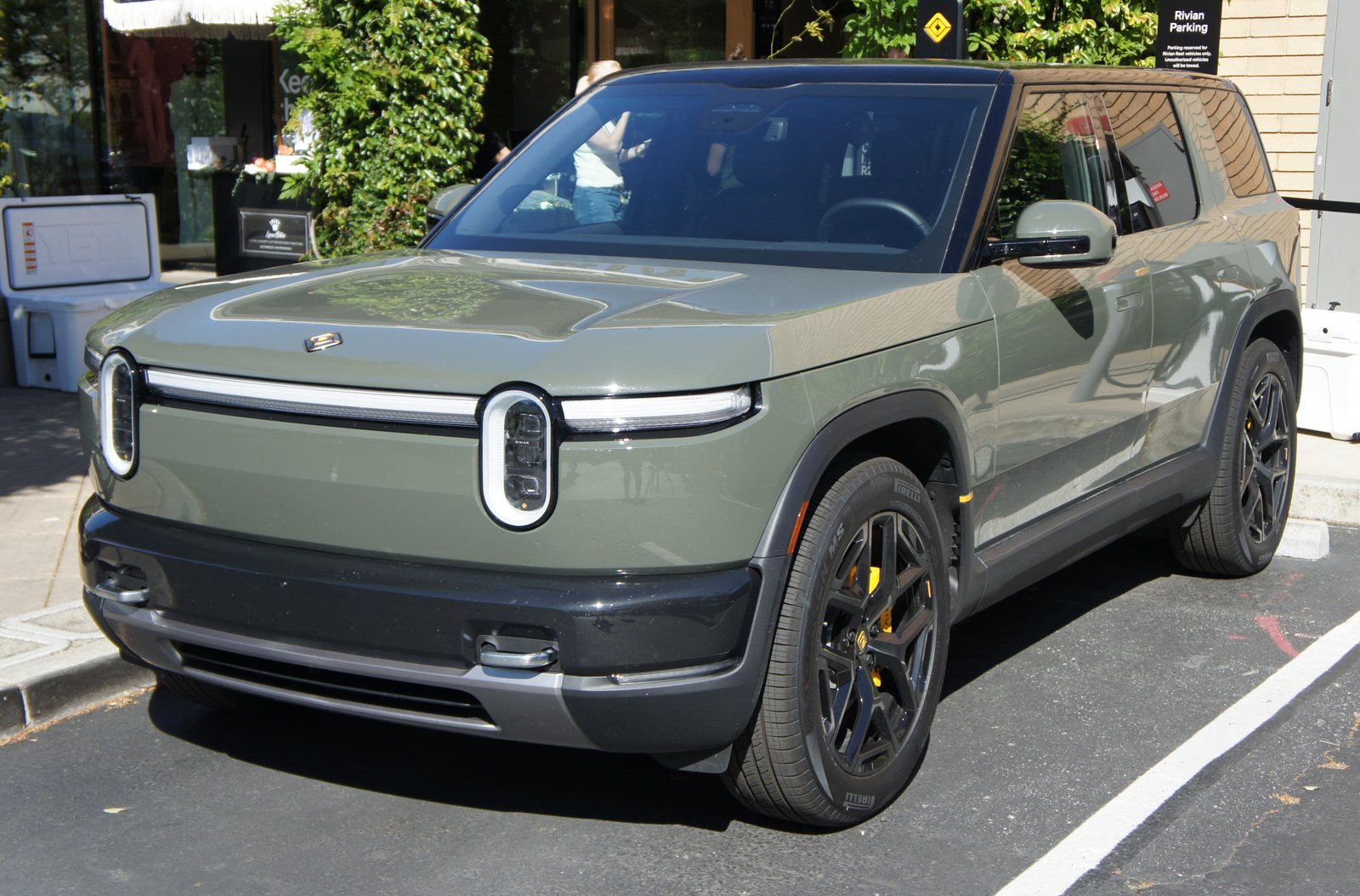
This was the quarter Rivian had been promising for years. The R2 — the $45,000-ish midsize SUV the whole company is betting on — is finally rolling off the line in Normal, Illinois in real numbers, deliveries just hit an all-time high, the delivery van got its first meaningful hardware upgrade since 2021, and the company's hands-free driving system is weeks away from its biggest leap yet. But record quarters raise harder questions than bad ones do: how many of those deliveries are actually R2s, when does the autonomy tech catch Tesla, and can the company turn momentum into money? Here's everything that matters, with the numbers checked.
The R2 ramp: record quarter, murky numbers
Rivian built 19,751 vehicles and delivered 19,248 in the third quarter — both company records, up 58% from Q2 and 46% from a year ago, and comfortably ahead of the roughly 18,000 analysts expected. The company reaffirmed full-year guidance of 65,000 to 70,000 deliveries, which means Q4 needs to land somewhere between 23,000 and 28,000. The second R2 production shift started before the end of September, so the factory side of that equation is in place.
Here's the catch: Rivian didn't break out R2 numbers. One total, no model split — so the single most important figure of the quarter has to be estimated. Cox Automotive's post-report estimate puts US R2 deliveries around 3,456 for the quarter. That's a plausible reading of registration data, but it also tells you how early this ramp still is — the R2 only started reaching customers on June 9, and through the end of 2026 the only version on sale is the loaded Performance trim at $57,990. The cheaper Premium version, expected around $53,990, arrives late this year. The real volume story starts when that truck shows up.
Wall Street's reaction was telling: shares slipped 2–3% on the record anyway, because guidance didn't move. The market has seen delivery beats before; what it wants is the October 29 earnings call to show the R2 bending the cost curve. That's the number to watch.
The van gets its first real upgrade
Quietly, the most concrete product news of the month belongs to the delivery van. On September 17, the EPA certified the 2027 EDV 700 "Large" in both front- and all-wheel drive — the first hardware upgrade to the van platform since it launched in 2021, according to RivianTrackr.
The headline is the battery: 129 kWh usable, up from 90 kWh, built on LFP cells. AWD adds a second motor (265 kW each). EPA lab figures put the FWD van at 355.5 miles — up nearly 36% from the standard van's 261.7 — and the AWD at 322.25 miles. Those are unadjusted lab numbers, so treat them accordingly: Rivian advertises roughly 160 miles of real-world range for the current Delivery 700, and highway-portion lab figures (279.6 miles FWD, 253 AWD) are the more honest preview of what drivers will see.
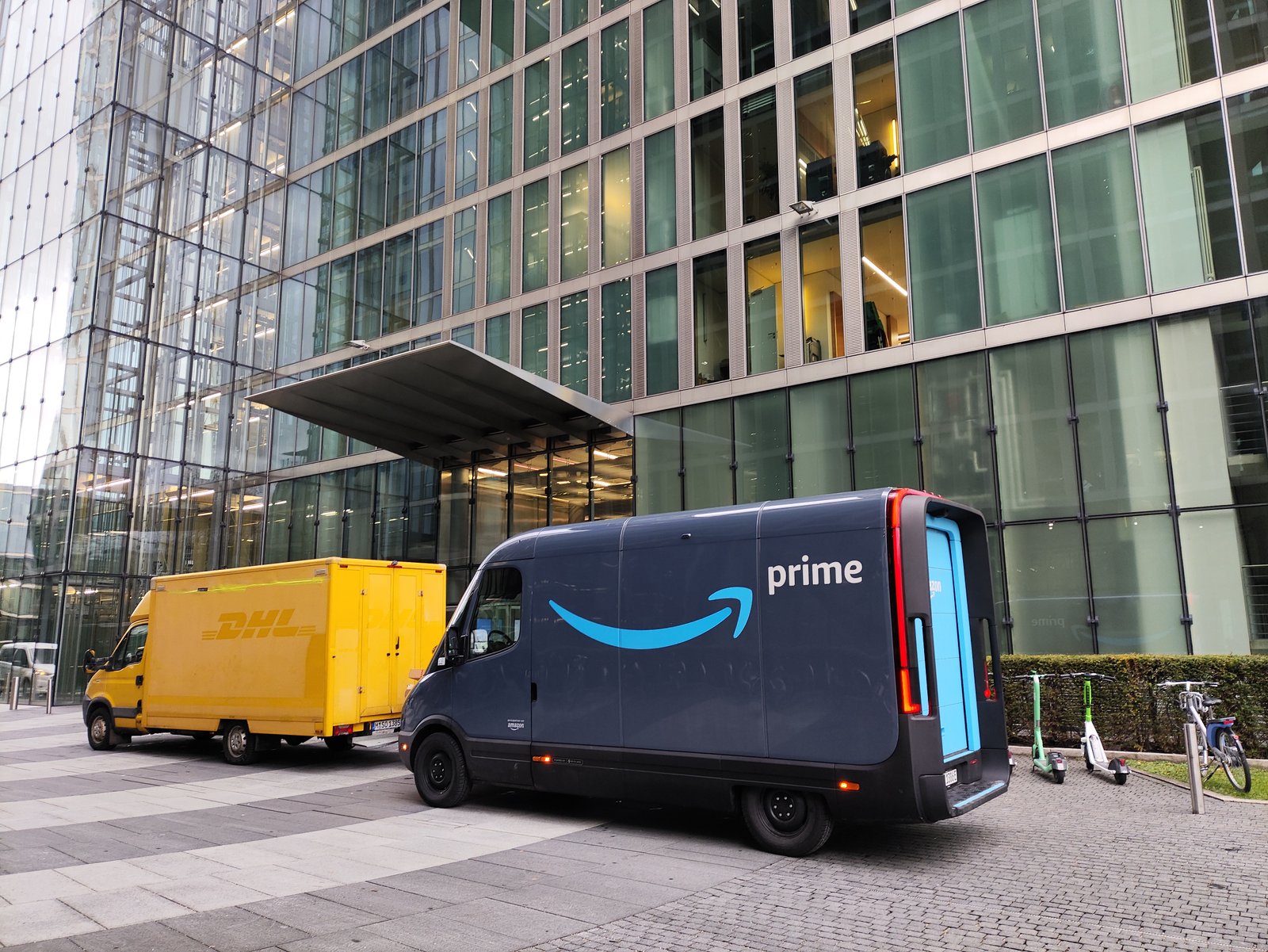
Two things worth knowing: Amazon has told drivers to expect the new vans "later this year," though Rivian hasn't set a date — and yes, you don't have to be Amazon to buy one. The Rivian Commercial Van carries the same battery and motor configurations (it just skips the Amazon badging), so other fleets get the upgrade too. For a vehicle whose entire job is miles per charge, a 36% range bump is the difference between one route and two.
Point-to-point: autonomy's next step, behind an NDA
Rivian's answer to Tesla's Full Self-Driving is called Autonomy+, and its biggest upgrade — point-to-point hands-free driving — is now close enough that the company is picking its testers. Electrek reports the launch will go first to an invite-only "Autonomy Early Access Program" whose members sign NDAs, pay for the Autonomy+ subscription, and need a heavy Autonomy usage history plus a clean safety record. Gen 1 R1 owners and Canadians are excluded for now. The program starts in December, with a broad rollout in 2027.
What it actually does: hands-free, eyes-on supervised driving — CEO RJ Scaringe calls it "Level 2++." Hands off the wheel, eyes on the road, short glances away at most. The first version skips parking lots and won't stop for traffic lights or stop signs (that's phase two). It runs on existing Gen 2 hardware and Rivian's own RAP1 chips — no new sensors required. Autonomy+ itself costs $49.99 a month or $2,500 outright, paid billing started back in April, and the hands-free system now covers 3.5 million mapped miles across the US and Canada.
The longer roadmap: LiDAR-equipped R2s go to employees before year-end and customers in 2027, "eyes-off" driving is targeted for 2027, personal Level 4 for 2028 — and the March 2026 Uber deal (up to $1.25 billion, 10,000 fully autonomous R2s to start) aims at commercial robotaxi launches in San Francisco and Miami in 2028.
Let's be honest about the gap, though. Tesla's robotaxi network is already running unsupervised in seven US markets, and Tesla delivered 486,532 vehicles last quarter — about 25 times Rivian's volume, which means 25 times the fleet data. Rivian's plan is coherent and the hardware strategy (ship the capability on today's sensors, add LiDAR later) is smart, but on autonomy timelines it's still playing catch-up. The December early-access launch is the moment to start judging whether the chase is real.
R2 vs Model Y: the efficiency gap is real
On paper, the R2 Performance looks like a Model Y Performance killer: 330 miles of EPA range vs 306, 656 horsepower vs 510, 4,400 pounds of towing vs 3,500 — all for the same $57,990 starting price. But Out of Spec Reviews ran the two side by side over five drive cycles, and the real world tells a different story: at a steady 80 mph, the R2 managed 2.46 miles per kWh against the Model Y's 3.3 — the Rivian burns about 26.5% more energy at highway speed. In a 10%-to-10% battery challenge, the R2 covered 92.8 miles to the Tesla's 103.
The R2 claws some of it back at the charger, peaking around 229 kW and adding 48.3 kWh in 15 minutes. And efficiency isn't everything — the R2's boxier shape, real off-road hardware, and 87.9 kWh battery explain some of the thirst. But if your driving is mostly 75–85 mph interstate, the Model Y remains the efficiency king, and Rivian's software and aero teams clearly have work to do.
The seat fan saga
No R2 story this month is complete without the seat ventilation mess. Starting around VIN 10,000, R2s began shipping with one fan per front seat (cushion only) instead of two (cushion plus backrest). Owners discovered it themselves — Rivian hadn't announced it — and the company later confirmed the change, blaming excessive cabin noise. Autoblog reports buyers in hot states canceled orders over it, and Rivian has ruled out retrofits for earlier builds. A related software glitch (build 2026.36.40) got pulled and fixed on October 12. Meanwhile the marketing still lists "heated and ventilated seats" with no cushion-only caveat. For a brand built on trust with early adopters, this was an unforced error — the fix was a sentence of disclosure, and it cost them orders instead.
The long game: batteries, margins, Georgia
Two announcements this week sketch Rivian's second act. On October 14, Rivian and Redwood Materials expanded their battery partnership to cover the full lifecycle: Redwood now recycles Rivian's manufacturing scrap and end-of-life packs, and builds second-life stationary storage — building on an April deal that already deployed 10 MWh from 100+ repurposed packs at the Normal plant. Redwood claims over 95% recovery of lithium, nickel, cobalt, and copper. It's the kind of unglamorous infrastructure that matters enormously at R2 scale.
The financial version of that story is still unwritten. Nobody has confirmed that R1 margins improve as R2 scales and parts get shared — that's a question for the October 29 earnings call, where analysts will also press on whether the R2 is tracking toward positive gross profit. The Georgia plant, which underwrites the real R2 volume ramp, is expected online in 2028. Until then, every quarter is about proving the Normal factory can build cheaper as it builds more.
The bottom line
Rivian just posted the best quarter in its history, and the substance behind it is real: the R2 is ramping, the van finally got a bigger battery, and point-to-point autonomy is weeks from its first testers. But the quarter also exposed the three things that will decide whether Rivian becomes a real rival to Tesla or a beloved niche player: undisclosed R2 volumes (3,456 estimated in the US isn't a revolution yet), a genuine highway efficiency deficit against the Model Y, and an autonomy program that's still years behind. October 29 is the next checkpoint. The R2's Premium trim, the December autonomy launch, and the new vans landing at Amazon will tell us more than any record quarter can.
Sources & further reading
- Reuters — Rivian deliveries hit record high as R2 rollout gains momentum (Oct 2, 2026)
- Electrek — Rivian's point-to-point early access program (Oct 15, 2026)
- RivianTrackr — AWD long-range vans EPA certified (Oct 14, 2026)
- Business Wire — Rivian and Redwood Materials expand battery partnership (Oct 14, 2026)
- Out of Spec Reviews — R2 vs Model Y efficiency test (YouTube)
- Out of Spec Reviews — Rivian R2 test drive (YouTube)
Delivery figures are Rivian-reported Q3 2026 results; R2-specific volumes are third-party estimates unless stated. EPA van figures are unadjusted lab numbers. Always confirm current specs and pricing with Rivian.