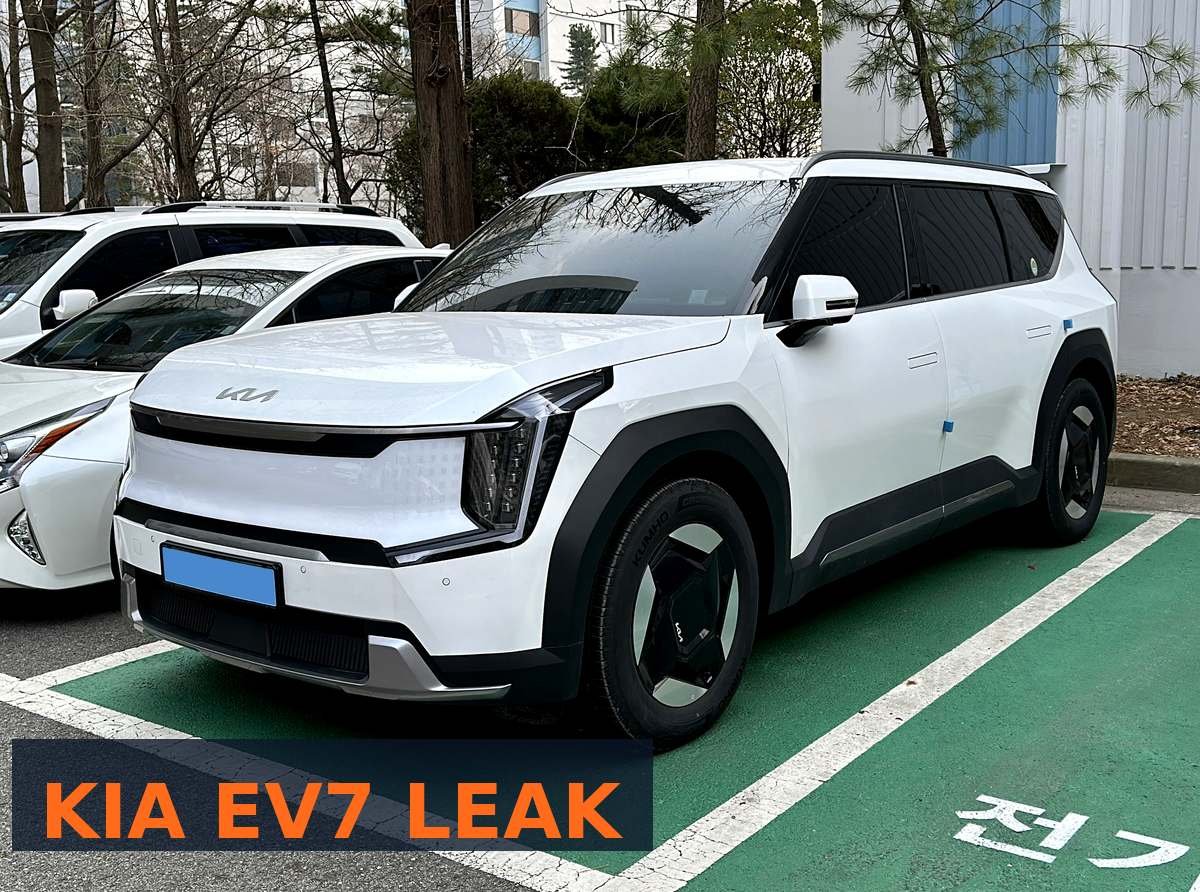
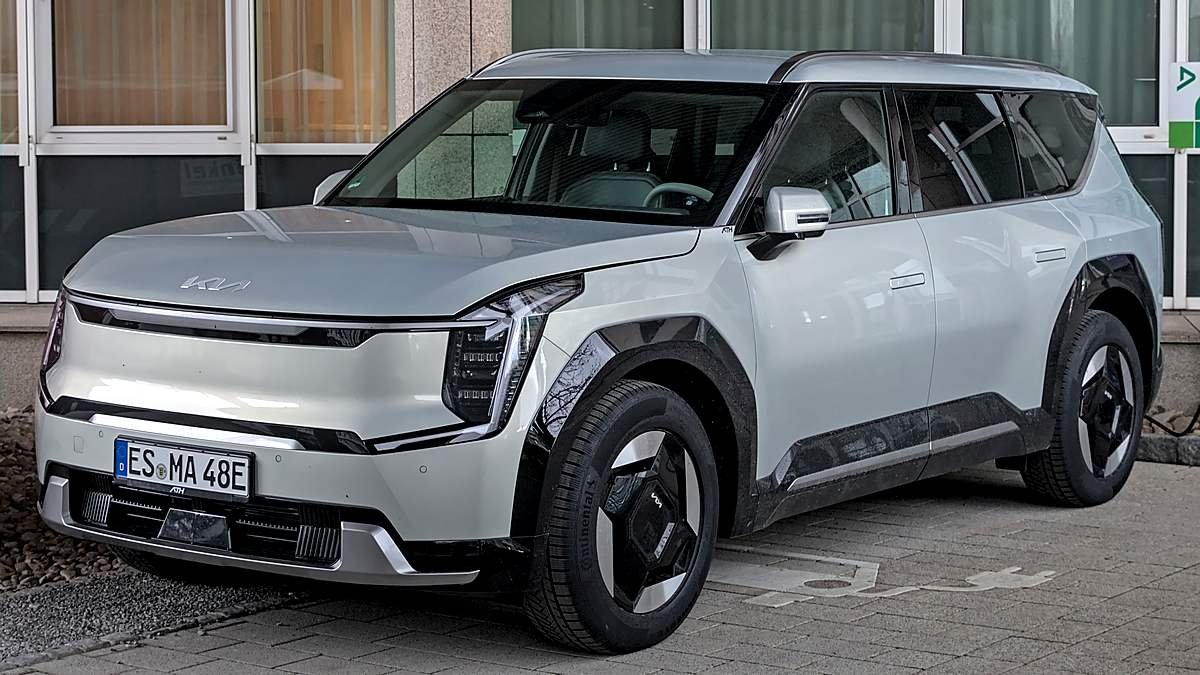
Kia will knock up to $10,000 off a new EV9 this month, and the discount is only the surface of the story. Behind it, Kia is spending about $12,000 in incentives on every electric car it sells in the United States — six times what it spends to move a gas car, and nearly twice the industry average for EVs. The deals are working: Kia's US electric sales jumped 174 percent in October. The trade-off is profit. Kia is buying market share with its own margins, and its hybrids are picking up the tab.
That is the picture from a report published November 11 by MoneyToday, backed by Kia's own October sales release and the deal sheets car shoppers can check today. The numbers line up across all three. Here is what Kia is offering, why it is offering it, and what it means if you are shopping for an EV right now.
The deals: $10,000 off the EV9, $5,000 off the EV6
Start with the money, because that is what brings people into the showroom. Kia's November programs run through January 4, 2027, and they cover the whole electric range:
- EV9: up to $10,000 in customer cash, or 0% APR for 60 months plus $5,000 in bonus cash. The 2027 EV9 starts at $54,990 for the Light short-range trim, which pairs a 76.1 kWh battery with up to 230 miles of range.
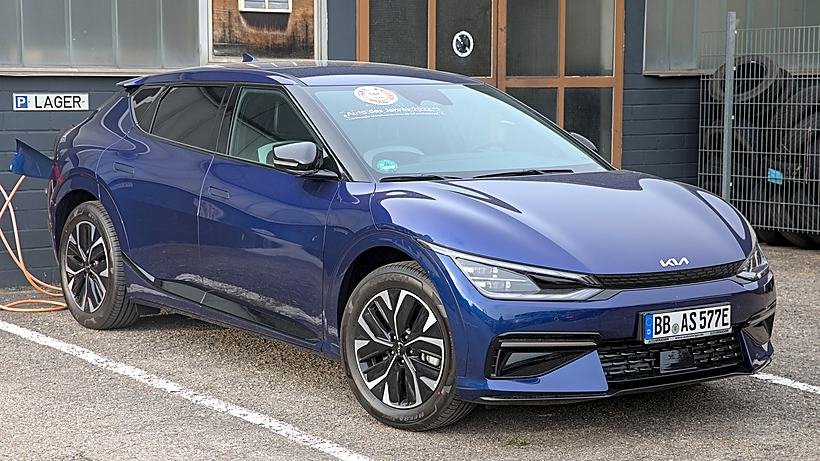
- EV6: $5,000 in customer cash, or 0% APR for 60 months. The 2026 EV6 starts at $37,900 for the Light rear-wheel-drive trim, before a $1,545 destination charge. A Light Long Range rear-wheel-drive lease runs $419 a month for 36 months with $4,499 due at signing.
- Niro EV: up to $10,000 in customer cash, or 0% APR for 72 months plus a $3,500 cash bonus. On a $39,700 sticker, the financing deal is worth $12,532 against a 7% loan.
- EV3: Kia's newest and cheapest EV, starting at about $30,000, with up to 321 miles of EPA-estimated range in Wind and Land front-wheel-drive trims.
Which deal saves more depends on the car and the loan. Take the EV9. CarsDirect's November pricing works it out like this: on a $60,000 EV9, the $10,000 rebate plus a 5-year loan at a hypothetical 7% APR lands a little over $59,400 all in, while the 0% financing option lands the same SUV at about $55,000. On the $54,900 EV9 Light, the 0% deal plus the $5,000 bonus cash is worth $15,325 against a 7% loan, according to FindTheBestCarPrice's November deal tracker. The cash and the cheap financing usually cannot be combined, so ask the dealer which combo applies to the car you want — and note that most of these offers need delivery by January 4, 2027.
Why Kia is doing this now
The scale of the spending is what makes this story bigger than a sale weekend. According to industry sources cited by MoneyToday, Kia's per-vehicle incentives in the US now run about $1,800 for a gas car and $2,000 for a hybrid. For an EV, the figure is $12,000 — six times the hybrid number. The gap opened up after US EV demand softened following the end of the $7,500 federal tax credit, and Kia widened its discounts to keep cars moving.
Put that next to the market average and the gap stays wide. Kelley Blue Book data, cited in the same report, puts the average incentive on an EV sold in the US at about $6,100 in September — roughly 11 percent of the transaction price. Kia is spending nearly twice that per car. It is a deliberate choice, not a fire sale: the company has decided that holding its place in the EV market now matters more than the profit on each car sold today.
An industry official quoted in the report put the thinking in plain terms: "If you lose market share when the EV market is growing, it is difficult to regain it." The same official added that "maintaining sales volume, even if profitability drops slightly, is better for future growth" — and that "the key is how quickly we can lower EV costs while holding on with hybrids." That last line is the whole strategy in one sentence: discount now, cut costs fast, and let the hybrids carry the business until the EVs can pay their own way.
The sales say it is working
October gave Kia the proof. The company sold 3,649 EVs in the US last month, up 174.2 percent from a year earlier, according to the MoneyToday report. Kia's own sales release fills in the detail: the EV9 sold 1,406 units, up 111 percent; the EV6 sold 803, up 58 percent; and the new EV3 added 976 sales in its first stretch in showrooms. Add the Niro EV and the total lands right on that 3,649 figure.
The EV surge sat inside a record month for the whole company. Kia America sold 80,008 vehicles in October, up 16 percent from a year earlier and its best October ever — the sixth straight month of record sales. Retail sales hit 68,926, up 20 percent. Electrified-vehicle sales rose 112 percent and hybrid sales rose 114 percent, both setting records for the category.
"With six consecutive months of record-breaking sales, Kia is accelerating toward a fourth straight annual sales record, powered by the strength of our world-class model lineup and our nationwide network of retail partners," said Eric Watson, Kia America's vice president of sales operations, in the company's October sales release.
One honest caveat sits inside those numbers. The EV9 is up 5 percent for the year so far, with 13,835 sold through October. The EV6, even after a strong October, is still down 39 percent for the year at 7,067 units. The discounts are lifting the current month more than they have repaired the full year — which is exactly why Kia is keeping them in place through January.

Hybrids are paying the bill
So who pays for $12,000 per EV? Right now, the hybrids do. Kia sold 27,409 hybrids in the US in October — more than double the figure from a year earlier. Hybrids are highly profitable for Kia, and US demand for them is running hot, so the company can afford to treat EV discounts as the cost of holding ground while the electric side of the business catches up.
The pressure is not the same everywhere. Europe is Kia's biggest EV market, taking about 50 percent of its electric sales, and the company still makes money on EVs there. Korea takes about 25 percent and the US about 8 percent, and those are the two markets where the discounting bites hardest. Even in Europe, Kia raised incentives by roughly 1,000 euros in the second quarter to stay competitive with Chinese brands — but the price gap with Chinese EVs has narrowed from around 30 percent to about 15 percent, and the European business stayed profitable.
That split explains the strategy. Kia is not discounting everywhere because it has to; it is discounting hardest where the fight for buyers is most expensive, and using the markets where it already wins to fund the fight.
The plan to stop losing money
Discounts alone are not a business plan, and Kia knows it. The company plans to cut the cost of key EV parts — batteries, motors, and heat pumps — by about 10 percent a year for three years. The goal is to fix EV profitability within two to three years by growing sales and cutting costs at the same time, and to get the operating profit margin back to the high 7 percent or around 8 percent level next year once raw material prices settle and the effects of Middle East conflicts ease.
The product pipeline helps. The EV3 is already in showrooms at about $30,000, giving Kia an affordable electric entry it did not have a year ago. And a midsize EV7 is on the way to fill the gap between the EV6 and the EV9 — a leaked Kia document confirmed production of the first-ever EV7 at the company's Gwangju plant, as we reported in our Kia EV7 leak story. More volume across more price points is how the scale economies in that cost-cutting plan are supposed to work.
The EV9 itself: what $10,000 off buys
It helps to remember what the EV9 is, because the discount lands differently depending on the car. This is Kia's three-row electric SUV — the biggest EV in its range, and the one that has carried the brand's electric sales all year. The base Light trim starts at $54,990 with a 76.1 kWh battery and up to 230 miles of range, and the line runs up through Long Range and GT-Line versions with more range and more kit. With $10,000 off, the base car lands near $44,990 before destination and taxes, which is family-SUV money for a three-row EV that was priced like a premium one.
That is why the EV9 is the center of this story and not the EV6 or the Niro. It is the model Kia most needs to keep moving: it sold 1,406 units in October, the best of any Kia EV, and it is up 5 percent for the year while the EV6 is still down 39 percent. The EV6 is the enthusiast pick and the Niro is the value pick, but the EV9 is the volume pick — the car that has to prove an American family will buy a big electric Kia at scale. Ten thousand dollars off is Kia's answer to anyone still on the fence.
What it means if you are shopping
For buyers, this is the best window Kia has offered in a while: up to $10,000 off the EV9, $5,000 off the EV6, 0% financing across the range, and a $30,000 EV3 for anyone who wants in cheaper. A few things are worth doing before you sign:
- Run both numbers. On the EV9, 0% APR plus the $5,000 bonus cash usually beats the $10,000 cash rebate if you are financing — but the cash wins if you are paying outright or your loan rate is low. Get the out-the-door figure both ways.
- Watch the date. The current programs end January 4, 2027, and most need delivery by then. A car that arrives in mid-January may not carry the same deal.
- Check your state. With the federal credit gone, state rebates are now the main extra saving on top of Kia's own discounts, and they vary widely. Our guide to EVs covers the current state picture.
- Do not wait for a bigger cut. Kia has already told the market its plan is to hold volume and cut costs — not to keep raising discounts. The $10,000 EV9 deal is the offer, not the opening bid.
Kia is betting that a buyer who gets $10,000 off an EV9 today becomes a Kia EV buyer for life, and that the cost of winning that buyer now is cheaper than the cost of winning them back later. October's 174 percent jump says buyers are taking the deal. The next two years will say whether Kia can afford to keep offering it. For the latest on the EV market, keep an eye on our EVThrottle home page — and if you are cross-shopping, the EV9's rivals are not standing still either.
Kia EV discounts, answered
How much can you save on a Kia EV9 right now?
Up to $10,000 in customer cash, or 0% APR for 60 months plus $5,000 in bonus cash. On a $54,900 EV9 Light, the financing deal is worth $15,325 against a 7% loan. The current programs run through January 4, 2027, and most need delivery by then.
Why is Kia discounting its EVs so much?
Kia is spending about $12,000 in incentives per EV sold in the US — nearly twice the roughly $6,100 industry average reported by Kelley Blue Book — to hold market share after the $7,500 federal tax credit ended. The company is leaning on its hybrids, which sold 27,409 units in October, to cover the gap while it cuts EV costs.
How many EVs did Kia sell in the US in October 2026?
3,649, up 174.2 percent from a year earlier. The EV9 led with 1,406 sales (up 111 percent), the EV6 sold 803 (up 58 percent), and the new EV3 added 976. Kia's total October sales hit a record 80,008 vehicles.
Is the EV9 a good deal at $10,000 off?
On the numbers, yes: the 2027 EV9 starts at $54,990, and $10,000 off brings the base Light trim to about $44,990 before destination and taxes. Just run the financing math first, because the 0% APR plus $5,000 bonus cash deal usually saves more than the cash rebate if you are borrowing.