Launch-day status
(Oct 18, 2026, as of ~11:00 AM Beijing time)
Let me be straight with you: the launch has not been confirmed yet. Leapmotor announced on Oct 15, through its official channels as reported by CnEVPost, that the A10s would launch in China on Oct 18, and Chinese outlets including Autohome and ZOL confirmed the date. But as of late morning Beijing time, no outlet has published launch-event coverage or pricing. Chinese-market launches frequently happen in the evening, so this article reports what is confirmed and pre-launch reporting says, and the price figure will matter more than anything else once it lands. I will update this page the moment the official pricing is out. Nothing below invents a number Leapmotor hasn't announced.
A sporty sequel to a budget blockbuster
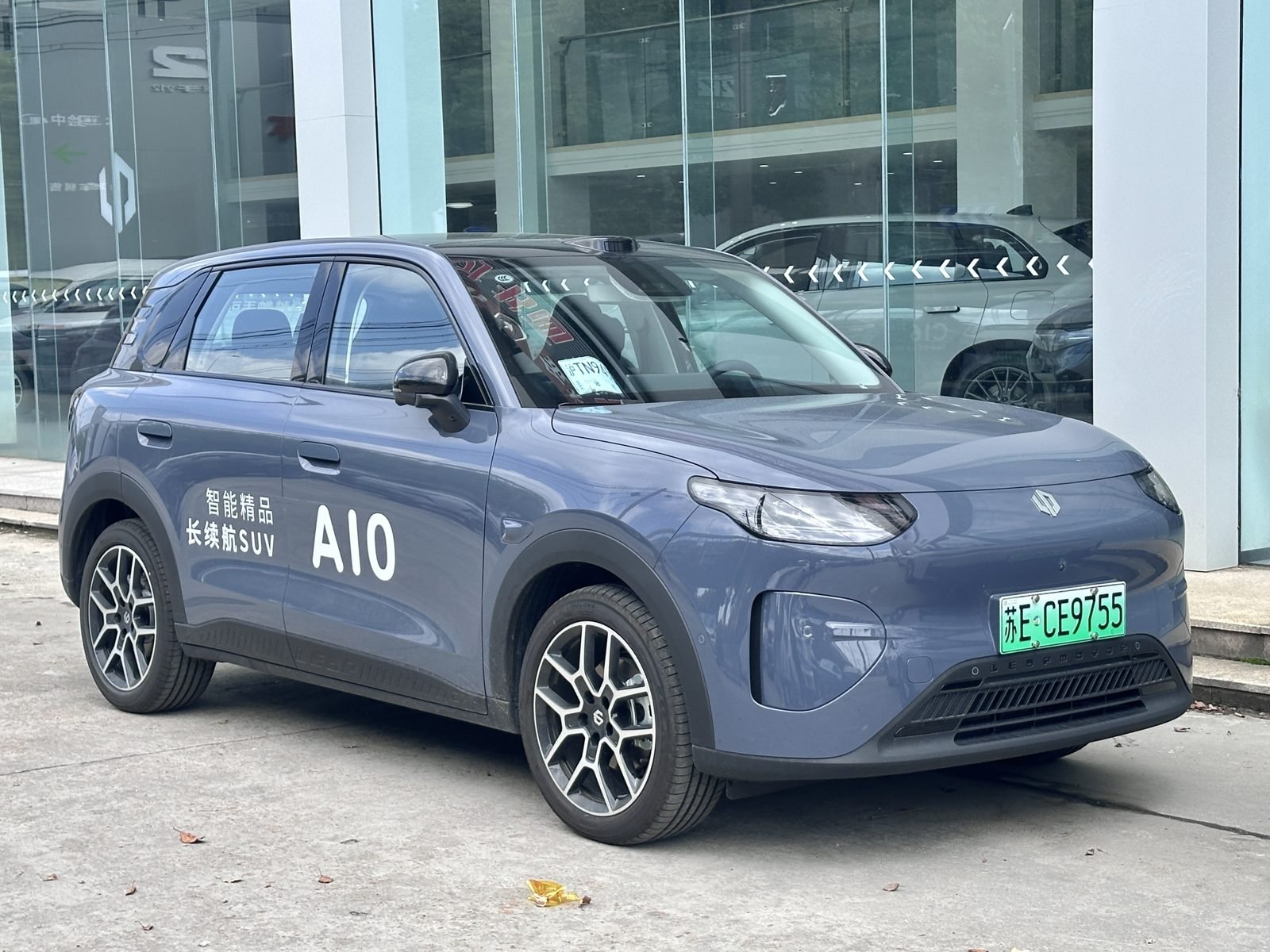
The Leapmotor A10 is one of the stories of the year in China's cutthroat EV market. Since it went on sale on March 26, 2026, this compact electric SUV has done something almost nobody else in the budget segment has managed: it put LiDAR and city-level assisted driving in a car that starts at 65,800 yuan, or roughly $9,300 at prevailing exchange rates. Cumulative deliveries had reached 122,587 units by the end of August, according to China EV DataTracker figures cited by CarNewsChina, and Leapmotor just posted its third straight month of more than 100,000 total deliveries company-wide in September, a record quarter of 310,052 vehicles CnEVPost's coverage of Leapmotor's September deliveries.
That is the backdrop for the A10s. Leapmotor first teased it on Oct 14 with posters showing a blacked-out compact SUV with red accents, then confirmed two days later that the launch would fall on Oct 18. The formula is familiar from the playbook of every automaker that has ever sold a special edition: take your volume car, give it the sinister blacked-out treatment, sprinkle red badges around, upgrade the cabin trimmings, and let buyers feel like they got something special. The A10s is to the A10 roughly what an N Line is to a Hyundai, or what a GT Line is to a Kia, a sporty trim with more attitude than outright extra performance.
And it arrives at a telling moment. After five months of growth, A10 deliveries slipped 24.08% month-on-month to 24,457 units in September, the model's first monthly decline since launch, per data compiled by CnEVPost. The A10 still accounted for nearly a quarter of Leapmotor's volume, so there is no crisis here. But in a market where rivals refresh trims every few months, a special edition is the cheapest way to put a halo back over your best seller.
What's new: black paint, red stitching, and the S badge
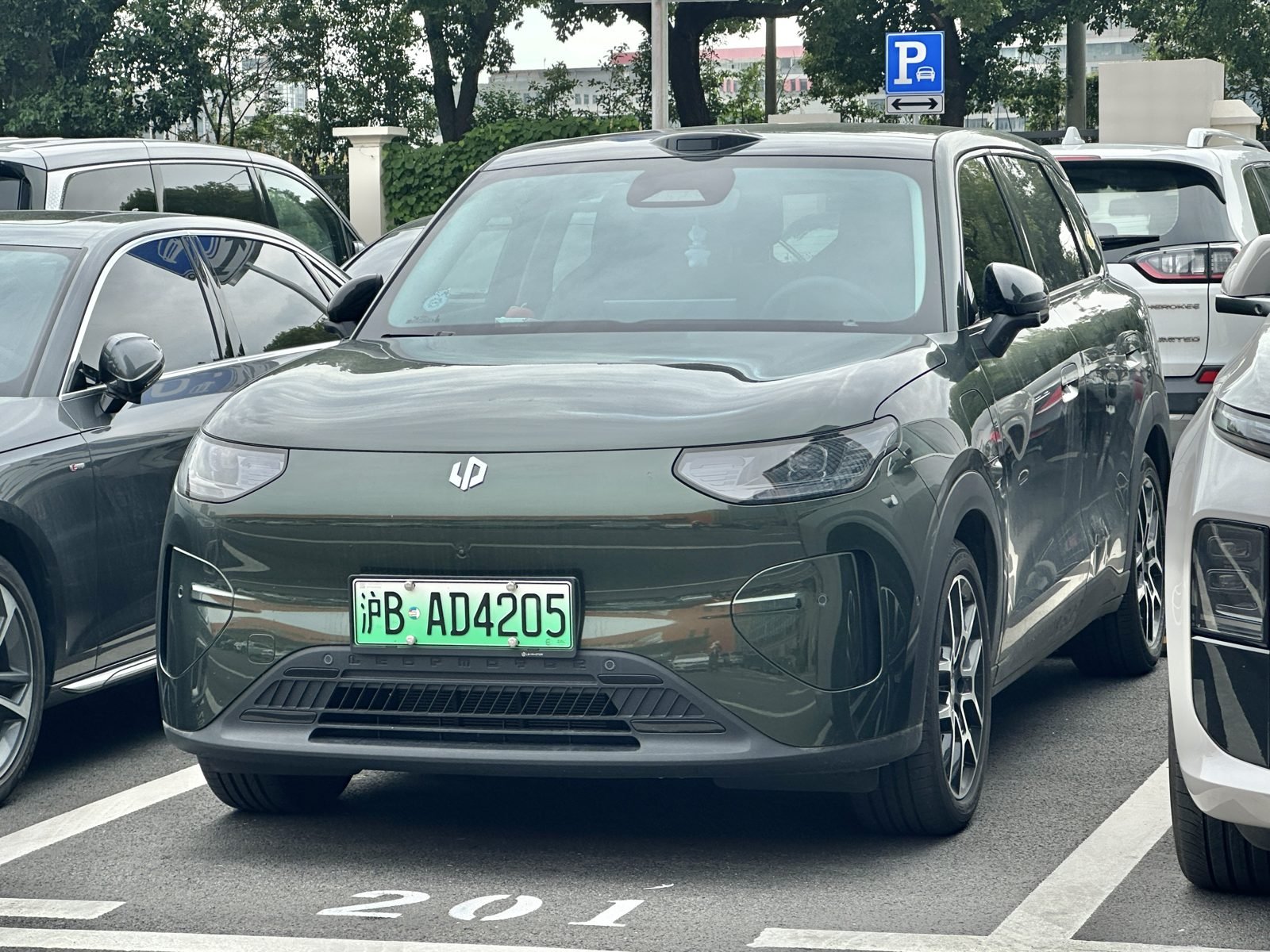
The A10s gets one headline color, and it is a good one. Leapmotor calls it Mirror Night Black, a deep black finish paired with gunmetal-gray brand badging instead of the usual chrome. The tailgate carries a red "S" badge, which is doing the heavy lifting in telling the world this is not the regular A10, and the 18-inch wheels are finished in black for the full murdered-out effect. Black C-pillars continue the floating-roof look of the standard car, and the playful "smiley" LED rear light signature, which Leapmotor whimsically calls its "Haha" taillight, carries over.
Inside, the theme continues with a "Modern Gray" cabin scheme, gunmetal-gray trim on the center console and door panels, and seats that mix suede with synthetic leather, stitched in red with special embroidery on the headrests. The two meaningful equipment upgrades are ventilated front seats and rear ambient lighting, neither of which the standard A10 offers. These are small things, but at this price point they read as genuine generosity rather than gimmickry.
The cabin tech is unchanged from the top-trim A10, which is no complaint. You get an 8.88-inch digital instrument cluster and a 14.6-inch floating center touchscreen with 2.5K resolution, running on a Qualcomm SA8295 cockpit chip. That is the same silicon found in cars costing multiples of this one's price, and it is part of why the A10 punched so far above its weight when it launched full specifications and launch pricing of the standard A10.
Powertrain, battery, and charging: familiar numbers, strong ones
Here is where reporting gets slightly split, so let me lay out both versions honestly. Per local outlet Yiche, as relayed by CnEVPost, the A10s carries over the A10's powertrain menu: single front motors rated at 70 kW (about 94 horsepower) or 90 kW (about 121 horsepower), paired with 39.8 kWh or 53 kWh lithium-iron-phosphate batteries for CLTC-rated ranges of 403 km (250 miles) and 505 km (314 miles) respectively. Chinese outlets ZOL and Autohome, meanwhile, describe the A10s as positioned as the high-spec version of the lineup, with the 90 kW motor, 150 Nm of torque, and the 53 kWh pack good for 505 km of CLTC range. Both can be true if the A10s launches in a single well-equipped configuration, which is how most of these special editions work. Expect confirmation at the launch event.
Either way, the numbers that matter are strong for the money. The car rides on an 800-volt electrical architecture, which is genuinely unusual at this price, and Leapmotor quotes a 30-to-80% fast charge in 16 minutes. For reference, the standard A10's Australian-market twin, sold there as the B03X, is quoted at the same 16-minute figure with peak DC charging of 100 to 133 kW depending on battery size. On the larger battery, that is enough to add roughly 200 km of rated range in the time it takes to buy a coffee. These are CLTC figures, China's generous test cycle, so real-world range will land lower, but the charging speed is the more important number for how the car actually fits into a driver's week.
Physically, the A10s is identical to the A10: 4,270 mm long (168.1 inches), 1,810 mm wide, 1,635 mm tall, on a 2,605 mm wheelbase. That puts it in the same footprint as a Ford Puma or a slightly shrunken Kia Niro, squarely in Europe's beloved B-segment crossover class. Cargo space on the global version runs 602 liters with the seats up, which is genuinely useful for a car this size.
The tech story: LiDAR for the price of a used Civic
The single most interesting thing about the A10 line, and presumably the A10s, is the driver-assistance hardware. The top-trim A10 carries a roof-mounted LiDAR sensor, 27 total perception sensors, and a Qualcomm SA8650 chip delivering a claimed 200 TOPS of compute, enabling urban navigate-on-autopilot, highway assisted cruising, and memory parking that can take the car from parking space to parking space with minimal intervention. At 86,800 yuan (about $12,300) for the LiDAR-equipped A10, that made it China's cheapest route into city-level assisted driving by a wide margin.
The A10s is expected to keep that hardware, which would make it one of the cheapest LiDAR-equipped vehicles on sale anywhere in the world. Whether the urban NOA functions work at full capability on day one is another question. Chinese outlets have noted that city-level assisted driving typically depends on over-the-air updates and map coverage that rolls out after delivery, an industry-wide caveat rather than a Leapmotor-specific one. Still, the hardware being in the car at this price is the story. Two years ago, this sensor suite lived exclusively in $50,000-plus flagships.
Why the price is the whole ballgame
Everything about the A10s launch hinges on one undisclosed number. The standard A10 launched at 65,800 to 86,800 yuan across four trims, and the A10s is widely expected to sit at or slightly above the top of that range. Chinese media describe it as the new flagship of the lineup. If Leapmotor prices it at or near the current top trim's 86,800 yuan, the pitch writes itself: the same money, more style, more equipment. If it pushes meaningfully past 90,000 yuan, it starts bumping into the next segment up, where the competition gets much tougher.
This matters because the A10's entire identity is value disruption. Leapmotor's whole corporate strategy, which it calls full-domain self-development, is about designing and building core components in-house, batteries, motors, electronics, software, to keep costs down. The company is chasing a stated target of 1 million deliveries in 2026, and the A10 is its designated volume weapon. A special edition that protects the A10's average selling price while reigniting showroom traffic is exactly the kind of low-cost, high-visibility move that strategy calls for. Get the price wrong, though, and it is just an appearance package nobody asked for.
The Stellantis connection: Europe is where the action is
For readers outside China, the A10s itself is not the news. The news is the machine behind it. Leapmotor is backed by Stellantis, the Jeep and Peugeot parent, which bought roughly a 20% stake in the Chinese company in October 2023 and controls 51% of Leapmotor International, the joint venture that sells and builds Leapmotor vehicles outside Greater China. That arrangement has moved well beyond a distribution deal. At the Paris Motor Show this month, Stellantis CEO Antonio Filosa described a relationship that has shifted from a largely sales-oriented cooperation toward engineering and production, and he has repeatedly framed the strategy around a "level playing field," arguing that anyone selling in Europe should invest in European development, plants, and supply chains electrive's analysis of the Stellantis-Leapmotor technology partnership.
The industrial side is moving fast. On Oct 12, Leapmotor's B10 electric crossover started production at Stellantis's Figueruelas plant near Zaragoza, Spain, the first Leapmotor model built at a European manufacturing site, in a facility with initial capacity of 40,000 cars a year. The plant will also build the A10's global twin, sold in Europe as the B03X, starting in 2027, and Stellantis is studying an Opel-badged C-segment SUV using Leapmotor technology for 2028. Building inside the EU sidesteps the countervailing duties Brussels has charged on Chinese-made EVs since October 2024, on top of the standard 10% import tariff.
The numbers suggest the bet is working. Leapmotor registered 73,297 cars across the EU, EFTA, and Britain in the first eight months of 2026, up 449.9% year-on-year, for a 0.8% market share, according to European Automobile Manufacturers' Association data. Leapmotor International's global head of brand strategy, Francesco Giacalone, told CarExpert at the B03X's international launch in Spain that the venture now has enough sales history to analyze its customer base: "We have 150,000 sales on the counter, so we can start to run our numbers, do our homework," he said, adding that "we can rightfully say that nine customers out of 10 would not have purchased any [Stellantis] brand if we were not there." In other words, Leapmotor is not cannibalizing Jeep or Peugeot buyers. It is finding customers Stellantis could not otherwise reach CarExpert interview on Leapmotor's conquest customers.
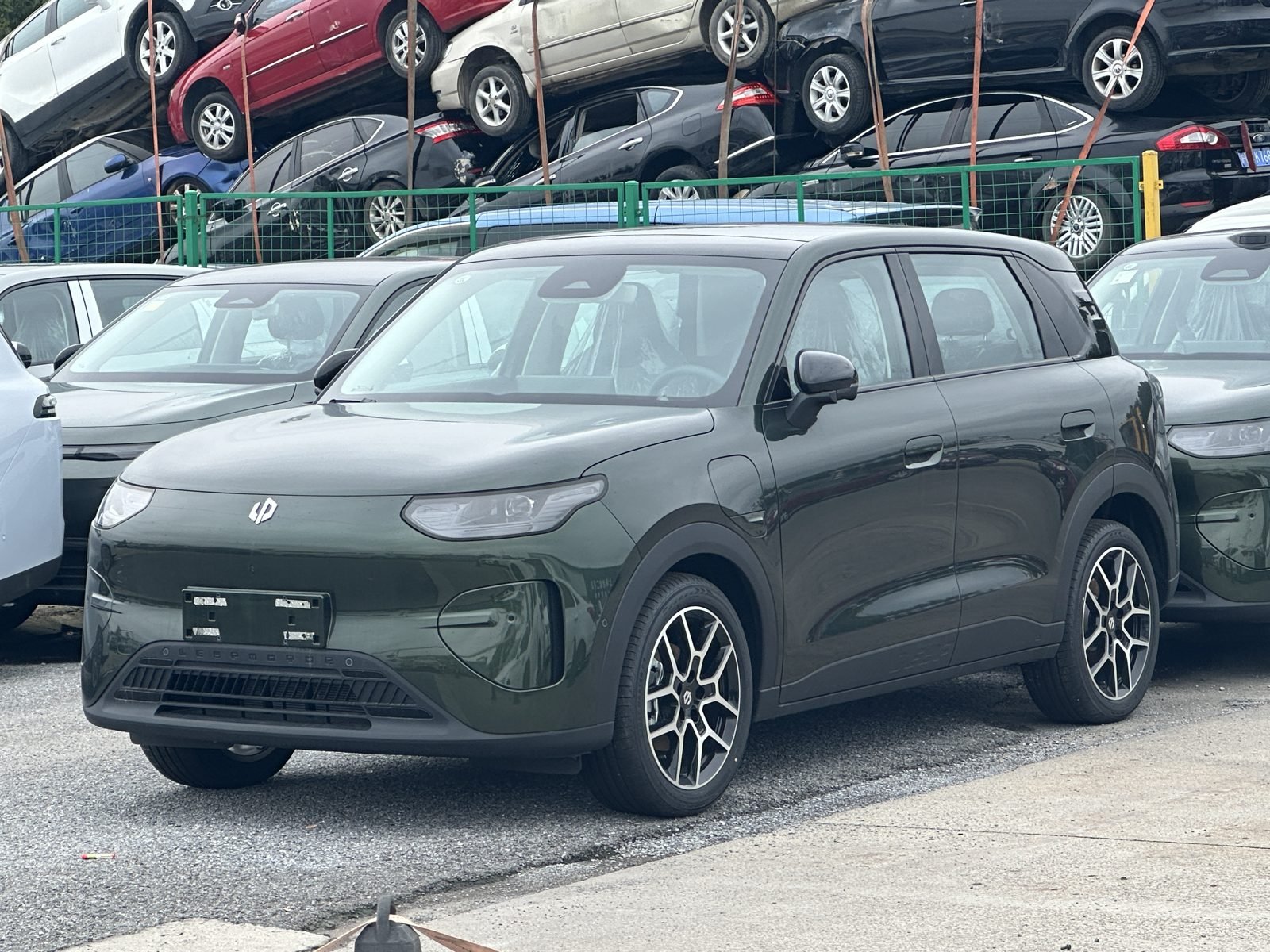
That global rollout is already wider than most Americans realize. The B03X, the A10 by another name, goes on sale in Australia this November from A$29,990 drive-away (about $19,500), with a long-range version at A$33,990. Australian-spec cars get more powerful motors than the Chinese versions, 130 kW and 145 kW, WLTP ranges of 292 and 382 km, and the same 16-minute 30-to-80% charge claim Australian pricing and specifications for the B03X. Leapmotor Australia boss Andy Hoang told CarExpert the Stellantis relationship was decisive in getting the brand off the ground there: "The strengths in Australia is that Stellantis does come with a lot of global processes... So all of those processes helped us kickstart the brand here in Australia without having to try to develop that from scratch."
What it means for US readers
Here is the honest answer: do not expect to see the A10s, or any Leapmotor, at a US dealer anytime soon. Leapmotor has no American sales operation, no US homologation program, and no announced plans for one. The structural barrier is the tariff wall. The United States applies a 100% Section 301 tariff to Chinese-built electric vehicles, in effect since September 27, 2024, stacked on top of ordinary import duties, and there are no active exclusions for EVs. Even the European-manufacturing workaround does not fix the American problem, because the Zaragoza-built cars are earmarked for EU markets, and Leapmotor has said UK buyers will keep getting Chinese-built cars while Spanish output serves the continent current US tariff treatment of Chinese EVs.
That is a shame, because the value proposition is exactly what the US market claims to want and cannot seem to build. The cheapest new EVs on sale in America still start in the high $20,000s to low $30,000s, and the sub-$25,000 electric car remains more press release than product. A 121-horsepower crossover with 800-volt charging, LiDAR, and a big touchscreen for the equivalent of twelve grand would reset expectations overnight. One American commentator has even argued the A10 is the spiritual successor to the Dodge Neon that Stellantis's US dealers desperately need. It is a fun thought experiment and nothing more, at least while the tariff regime stands.
The realistic American angle is second-order. Stellantis is studying Leapmotor's engineering closely, how the Chinese company develops a vehicle in 14 to 16 months, how its centralized electronics and cell-to-chassis battery integration cut parts, weight, and cost, and the first fruit of that study is the Leapmotor-tech Opel SUV due in 2028. If any of that cost discipline migrates into future Chrysler, Dodge, or Jeep EVs, American buyers will feel the A10's influence without ever seeing the badge. Until then, the A10s is a China-market story with a European shadow, and US readers should treat it as a preview of where the industry's cost curve is heading.
Bottom line
The A10s is not a revolution. It is a black suit on an already successful car, launched at the exact moment the base model's sales curve wobbled for the first time. But the details underneath the suit, 800-volt charging, LiDAR, Qualcomm's best chips, at prices that start under ten thousand dollars, are the reason Leapmotor has gone from curiosity to genuine force in under three years. Watch the launch-day price. If it holds the line near the current top trim, the A10s will do its job: keep the A10 desirable, keep the factories busy, and keep the pressure on every rival that still thinks advanced driver assistance is a luxury-car feature.