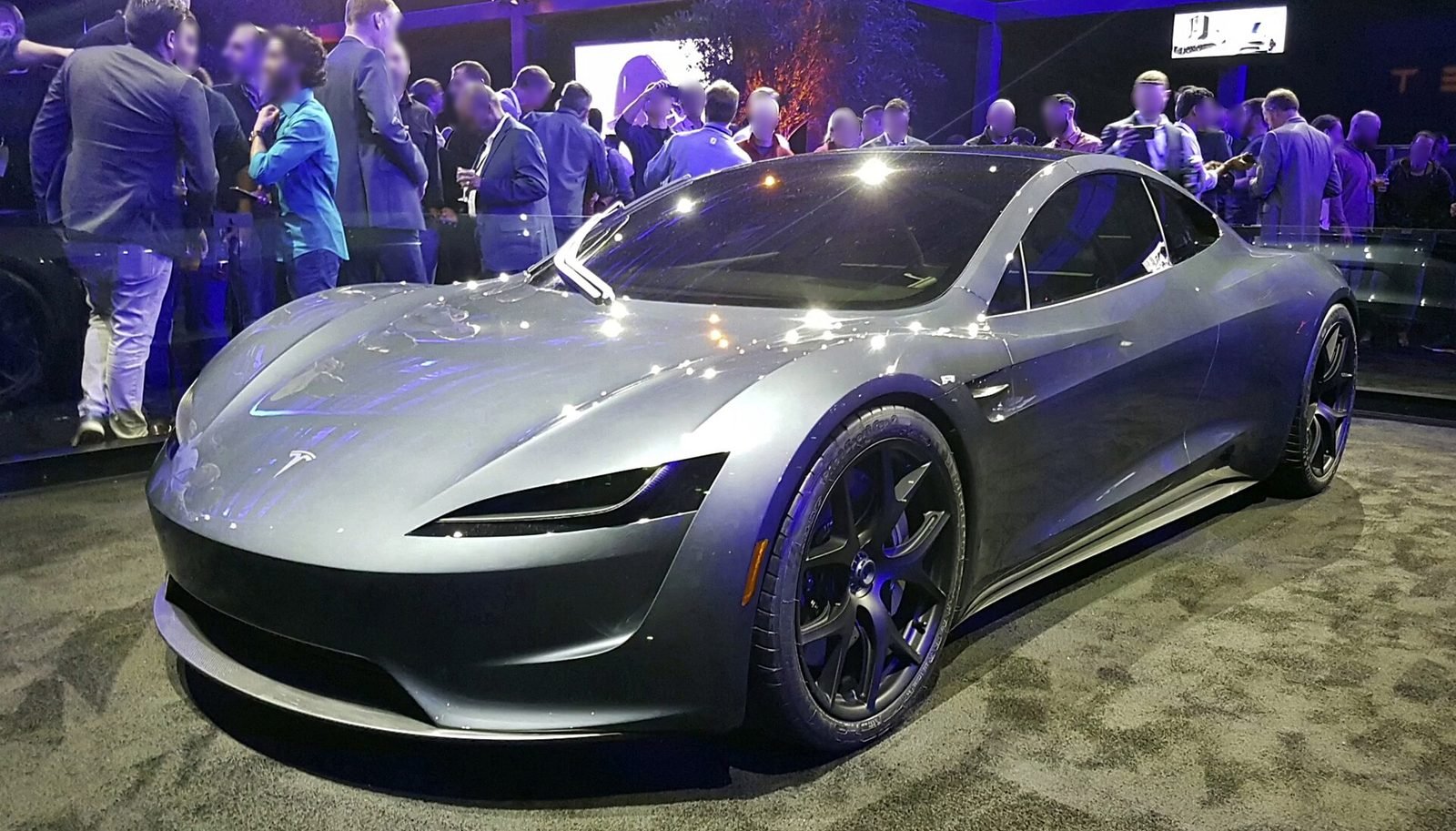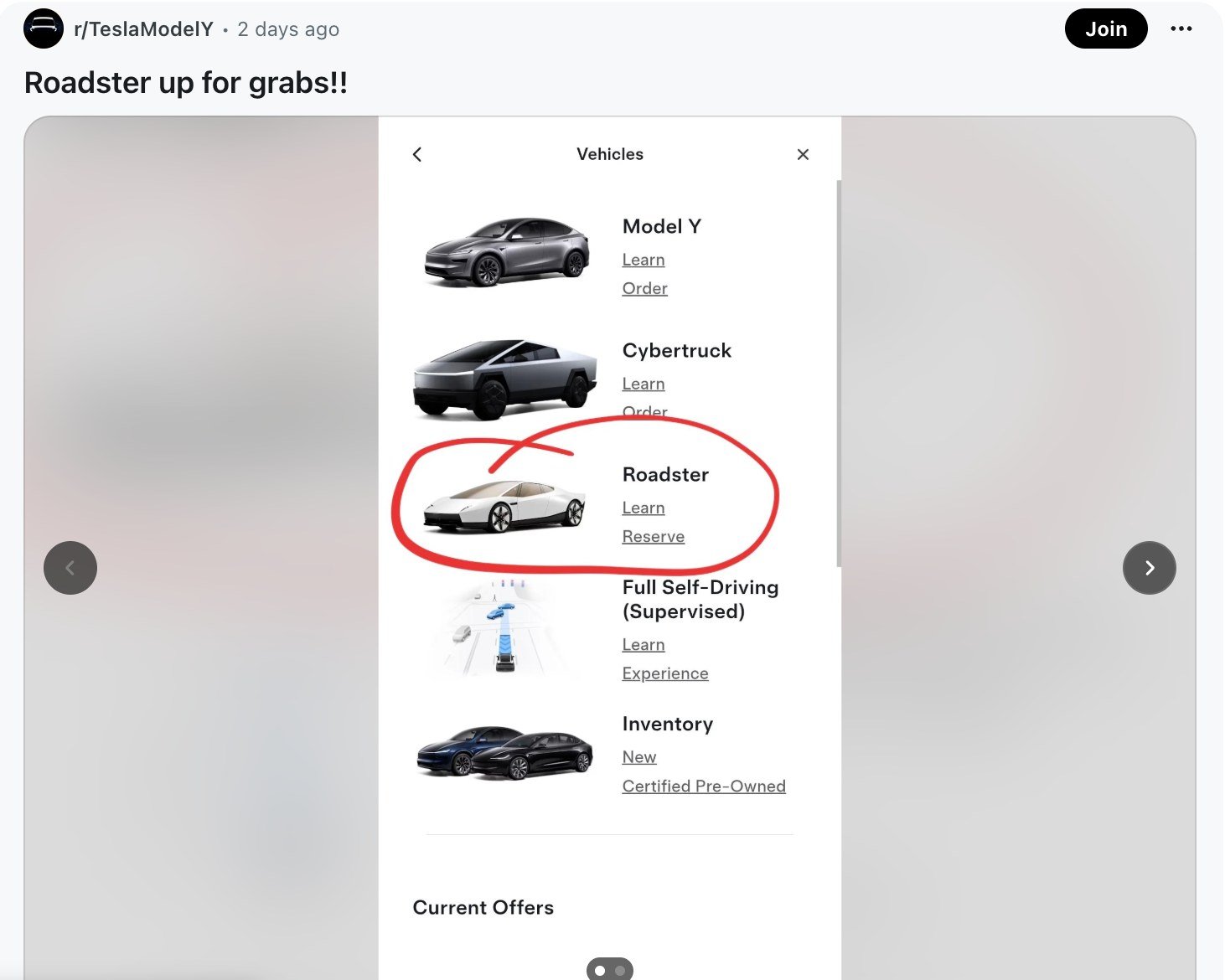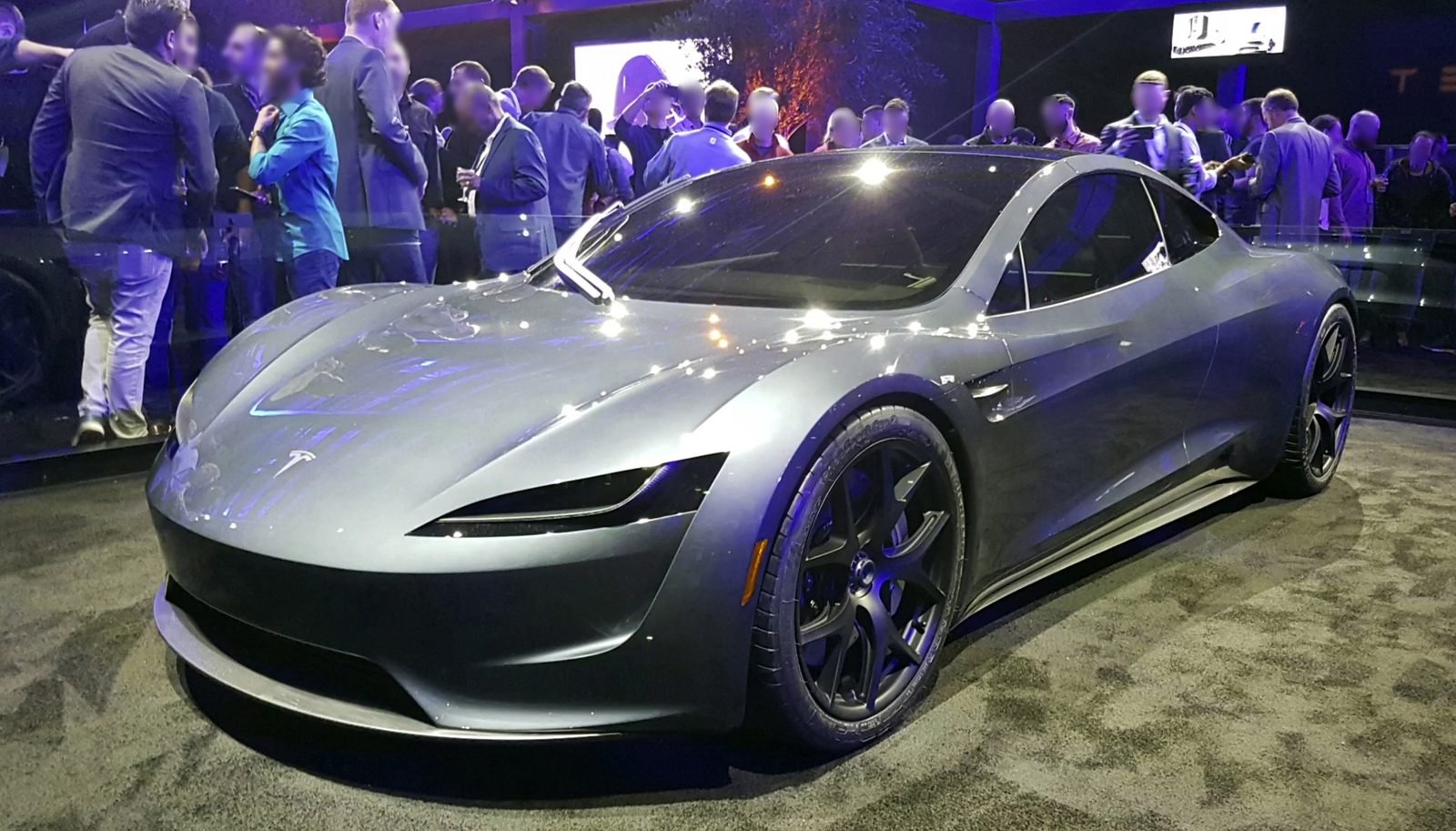
Nine years after Elon Musk first promised it, the Tesla Roadster finally did something in public — it flew. Well, sort of. At a SpaceX test site in McGregor, Texas, on October 15, a driverless Roadster climbed a curved wall on suction fans, hung nearly upside down, flipped over a row of parked Teslas on cold-gas thrusters, and ripped from 0 to 60 mph in 0.81 seconds. Then Tesla did something almost as surprising: it put the car up for sale. Three trims. Deposits from $50,000 to $250,000. Production in 2028. And still no actual price.
Here’s the deal: this is no longer a rendering and a promise. It’s a real car you can reserve today, with real specs, real deposits, and a real question hanging over all of it — is the Roadster a serious product or the most expensive marketing stunt in automotive history? We combined the best US reporting on the reveal to give you the complete picture: every trim, every spec, every dollar, and what the skeptics are saying.
| Question | Answer |
|---|---|
| What are the Tesla Roadster trims? | Performance (2-seat, road-legal), Thrust (limited-run, track-focused), Rocket (single-seat, invite-only, not road-legal) |
| How fast is it? | 0–60 mph in 0.81 seconds (demo, Thrust trim); Performance does it in under 1.6 seconds |
| How much to reserve? | $50,000 (Performance) / $250,000 (Thrust); Rocket is invitation only |
| What’s the price? | Not announced. The 2017-era reporting pointed to $200,000+. |
| When does production start? | 2028, per Musk — eight years after the original target |
| Range and top speed? | 300+ miles and 230+ mph claimed on all three trims |
The three trims, explained
Tesla isn’t selling one Roadster. It’s selling three, and they’re very different propositions. According to The EV Report’s breakdown of the reveal:
Performance is the “normal” one — a two-seat, road-legal sports car targeting 0–60 mph in under 1.6 seconds. It’s the entry point, if you can call a $50,000 deposit an entry point. This is the trim aimed at actual buyers who want to drive the thing on actual roads.
Thrust is the limited-production halo: it adds the rear cold-gas thruster package to dip under 0.9 seconds to 60 mph. The 0.81-second demo run was a Thrust car. The deposit is $250,000 — the same figure Tesla collected from early reservation holders back in 2017, which tells you this trim has been the plan all along.
Rocket is the one that broke everyone’s brain: a single-seat, invitation-only machine with the full thruster package that can genuinely lift off the ground and top 230 mph — but which Tesla openly says is not approved for public roads. It’s less a car and more a statement: the fastest thing Tesla has ever built, available only to people Tesla chooses.
Every trim claims 300+ miles of range and 230+ mph top speed. Tesla released no battery size, no motor details, and no final prices — just the deposits.
Tesla Roadster reveal: how the “flying” actually works
Let’s get precise about what happened in Texas, because “flying car” headlines oversell it and “it’s fake” takes undersell it. The demo car used two systems working together, as detailed by Particle News’ event coverage:
First, the SpaceX-developed A71 cold-gas propulsion system: ten thruster nozzles fed by a 600-liter tank of ultra-high-pressure compressed air — not rocket fuel, just air — which the car can refill on its own. These provide the thrust for the jumps, the mid-air flip, and the violent launches.
Second, a multi-mode underbody fan suction system that Tesla claims generates around 2g of downforce — enough to drive up a curved wall and hang inverted. Think of it as a vacuum cleaner bolted under the car, pinning it to whatever surface it’s on.
Tesla Engineering VP Lars Moravy confirmed the hardware details at the event. And here’s the part that matters: Musk was blunt that no human drove the car. “To make sure we don’t kill anyone,” he told the crowd, per CNN’s reporting. The sequences were preprogrammed and performed on private property. “Success is not guaranteed,” Musk added. “I mean that. It’ll probably work, but if it doesn’t work, we’re at a safe distance.”
Real talk: what was demonstrated is genuinely impressive engineering. What was NOT demonstrated is any of it working on public roads, in traffic, in rain, or with a human at the wheel. Regulators and independent testers have not cleared the thrusters or the suction fan for road use, and Tesla hasn’t said when — or whether — they will be.
Tesla Roadster prices: the deposits are real, the prices aren’t
Here’s what’s fascinating about the business side. Tesla will happily take your $50,000 today for a Performance reservation, or $250,000 for a Thrust — the same deposit structure it used in 2017 — while declining to state the actual purchase price. The New York Times has previously reported a $200,000-plus starting figure, but Tesla itself won’t confirm a number.
That asymmetry should make any buyer pause. A $50,000 deposit on an unpriced car with a 2028 production target, from a CEO famous for missing timelines by years, is an act of faith — not a transaction. And faith is wearing thin in some quarters: Particle News notes that years of delays have driven some longtime reservation holders to seek refunds, and the nine-year wait cost early backers a serious opportunity cost on their locked-up deposits.
On the other hand: the deposits are flowing again, the reservation page is live, and Tesla clearly believes the demand is there. For a halo car, that may be all that matters.
What Wall Street actually thinks
The most clear-eyed take came from Yorkville Ives analyst Dan Ives, via Investopedia’s market coverage. Ives argued the Roadster won’t “move the volume or revenue needle” — production will be limited, and a $200,000+ halo car was never going to fix Tesla’s mass-market problems. But, he said, it could “restore the brand halo at the top of the market and put a spotlight on the engineering stack.”
Translation: the Roadster isn’t a business. It’s advertising you can sit in.
Ives went further, calling the car a “small example of the synergies between Tesla and SpaceX” and putting 80% odds on the two companies merging by the end of next year. That’s the real tell about how seriously Wall Street takes the technology: not as a car program, but as a proof point for a combined Musk industrial empire.
The market’s verdict so far is a shrug. Tesla shares wavered on the reveal news and remain down nearly 20% on the year. A flying demo is fun; investors want robotaxis and robots.
The skeptics’ case — and it’s strong
Not everyone applauded. One analyst dismissed the show as an engineering stunt with little commercial value — and it’s worth steelmanning that view, because the gaps are real:
The timeline. Musk promised this car for 2020. It’s now targeting 2028. Every Tesla program runs late, but eight years late on a halo car while the company pivots to AI and robotics raises the question of how much institutional focus the Roadster actually gets.
The specs are unverified. The 0.81-second run happened on private property with a preprogrammed car. The 300-mile range and 230-mph top speed are Tesla claims, not tested figures. The original 2017 promise of a 200 kWh pack and 620 miles of range has quietly evaporated — nobody at the reveal mentioned it.
The road legality problem. Cold-gas thrusters that can launch a car over other vehicles are, to put it mildly, not obviously street-legal anywhere. The Rocket trim isn’t even pretending — Tesla says it’s not for public roads. For the Thrust, the question is open.
The FAA filed paperwork. FAA filings show Tesla established a temporary flight restriction over the reveal site, and an earlier outdoor demo was postponed due to high winds. When your car demo needs airspace clearance and a weather window, “road car” is doing a lot of work.
None of this means the Roadster is vaporware — the hardware demonstrably exists and works. But “works in a choreographed demo” and “ships to customers” are different planets, and Tesla has a long history of confusing the two.
Should you put down $50,000?
Practical advice, since Tesla will take your money today:
Understand what you’re buying. A reservation is a place in line, not a car. There’s no final price, no delivery date more specific than “2028,” and Tesla’s history suggests adding a year or two to any Musk timeline.
The Performance is the only sane choice. It’s the road-legal one. The Thrust’s party trick — thrusters — may never be fully road-legal, and the Rocket explicitly isn’t. If you want to drive it rather than trailer it, Performance is the trim.
Consider what $50,000 does elsewhere. That deposit alone buys a well-optioned Model Y. The full car will likely cost $200,000-plus — Porsche 911 Turbo S money, for a car from a company with no track record building low-volume supercars at quality.
Watch the refund window. With longtime holders already seeking refunds, make sure you understand Tesla’s current reservation terms before wiring five figures to Austin.
The new Tesla Roadster and what it means for Tesla
Step back from the thrusters and the timeline jokes, and the Roadster reveal tells you exactly where Tesla’s head is. This is a company that no longer needs a halo car to sell Model 3s — it needs a halo to remind the world it can still do impossible engineering while everyone else argues about quarterly deliveries.
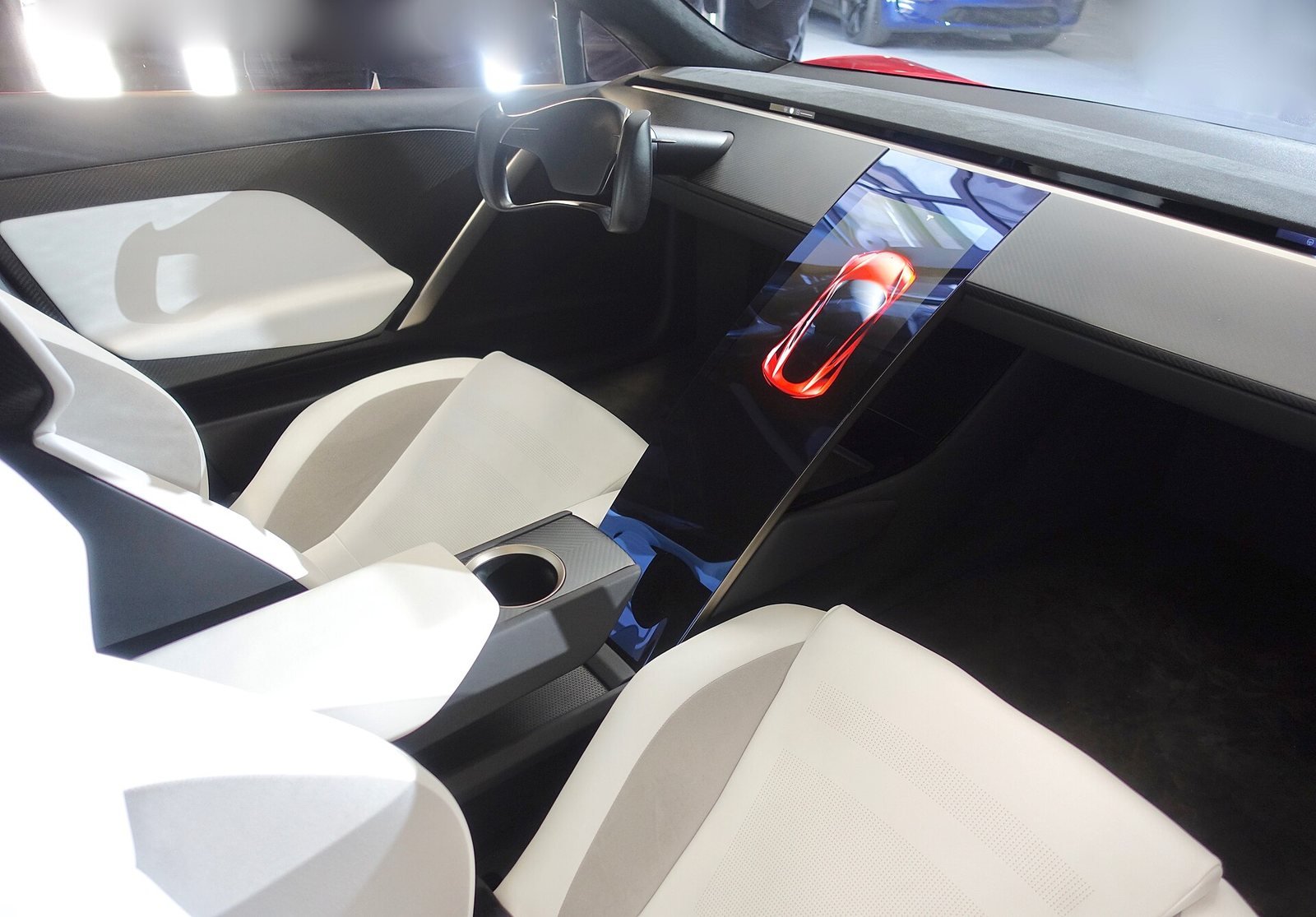
Musk himself framed it as Tesla’s last human-driven car — a send-off for the steering wheel before autonomy takes over. Whether or not you buy that narrative, the symbolism is potent: the company that made EVs mainstream is now building monuments to driving itself.
And as People’s coverage noted, Musk insisted on a live audience for a specific reason: “We need an audience to prove that it’s not AI.” In 2026, the most futuristic thing a car company can do is prove something happened in the physical world at all. The Roadster did that. Everything else — the price, the date, the road legality — is still to be proven.
Quick answers
How much is the Tesla Roadster? Tesla hasn’t announced pricing. Reservations require $50,000 (Performance) or $250,000 (Thrust); reporting has pointed to $200,000-plus.
How fast is the Tesla Roadster 0–60? 0.81 seconds in the Thrust demo (preprogrammed, private track). The Performance targets under 1.6 seconds; the Thrust under 0.9.
Can the Roadster actually fly? It can hop, flip, and briefly lift using compressed-air thrusters — not sustained flight. The Rocket trim can lift off the ground but isn’t road-legal.
When will the Roadster be delivered? Production is targeted for 2028 — eight years after the original 2020 target.
Is the $50,000 deposit refundable? Check Tesla’s current reservation terms carefully; longtime 2017 reservation holders have been seeking refunds after years of delays.
The bottom line
The Tesla Roadster is real, it’s reservable, and it just did things no production car has ever done — on a closed course, with no driver, under FAA airspace restrictions. The three trims give you a clear ladder from “very fast road car” to “invitation-only ground-effect aircraft,” and the deposits tell you Tesla is serious about taking money. What’s missing — a price, a firm date, road legality for the tricks, independent verification of a single spec — is everything that turns a stunt into a product. As a halo, it’s already working. As a car you can buy, the countdown to 2028 starts now. Don’t hold your breath — but don’t look away either.