Yes — you can rent a Tesla that drives itself on Turo. Starting Wednesday, October 28, 2026, renters in the US will be able to search and filter Turo for Teslas with Full Self-Driving (Supervised) turned on, with each car’s FSD status verified through a direct integration with Tesla. Turo says thousands of FSD-enabled Teslas are already listed.
Now the part that matters just as much: the car does not drive you. FSD (Supervised) is a Level 2 driver-assistance system. You watch the road, you keep your hands ready, and you take over the moment anything looks off. Turo will tell you exactly that before you pick up the keys — even while some listings call the same cars “Self-Driving.” Both messages live in the same app, and the gap between them is the whole story.
| Question | Short answer |
|---|---|
| Can I rent a Tesla that drives itself on Turo? | Yes — from October 28, 2026, US renters can filter for verified FSD (Supervised) Teslas. |
| Is it actually driverless? | No. FSD (Supervised) is Level 2 driver assistance. You monitor it and take over at any moment. |
| What does it cost the renter? | Normal Turo rental rates. Turo has not said FSD listings will cost extra. |
| Who gets the free month of FSD? | Eligible US hosts — the car’s owner — not renters. After that it is $99 a month, paid by the host. |
| How many FSD cars are listed? | “Thousands,” in Turo’s word. No exact number has been given. |
| Which models will I find? | Mostly Model 3 and Model Y — the third- and fourth-most-popular vehicles on Turo in 2026. |
| Who pays if a guest crashes with FSD on? | Unresolved. Turo has not said — not the renter, not the host, not its protection plans. |
How it actually works
Turo is a peer-to-peer car-rental marketplace: private owners, called hosts, rent out their own cars to guests. This launch does not change that model, and that is the first thing to get straight. Tesla is not renting out its own fleet here. The cars are hosts’ cars, and the new part is verification.
A host links their Tesla account to Turo, and Turo pulls the car’s FSD status through Tesla’s API. Eligible listings then show FSD as active, and guests can filter for it. That matters more than it sounds: without the API check, an FSD badge would just be whatever the host typed into the listing, and mislabeled cars would be a matter of time. With it, the badge reflects what Tesla’s own systems say the car can do.
Turo calls it “the first verified Tesla FSD (Supervised) rental experience for travelers in the U.S.,” and the launch is US-only. No city rollout list has been disclosed, so do not expect a launch-city map — this is a marketplace feature that switches on across the US at once, wherever hosts’ cars already are. Announced Monday, October 26, 2026, it goes live two days later.
Turo’s CEO, Andre Haddad, framed it as a rethink of rental itself: “This industry-first integration with Tesla is another example of how Turo is redefining what car rental and access can look like.” He added: “Most travelers have had limited opportunity to experience driver’s assistance technology, but the demand is clear. Our own research shows that 55% of Americans are interested in driverless technology for travel, growing to 71% for Gen Z. Turo’s marketplace model is uniquely positioned to close the gap between consumer curiosity and hands-on access.” Note the wording there — even Haddad calls it “driver’s assistance technology” in the same release that leans on “self-driving” language elsewhere. Hold onto that tension; it runs through the whole deal.
What it costs — and who the free month is really for
Let’s clear up the most common misunderstanding first. Renters do not get a free test drive. You pay normal Turo rental rates for a multi-day trip, the same as any other rental. What the launch really sells is a better test drive: as Electrek put it, “A weekend road trip with FSD is a much better test drive than 15 minutes around the block with a Tesla advisor.” A showroom loop cannot show you how the software handles your commute, a highway merge in rain, or a tired Sunday-night drive home. A rental weekend can.
The free month belongs to the host. Eligible US hosts get a free one-month FSD (Supervised) trial; after that it is Tesla’s regular $99-a-month subscription, paid by the host and most likely recovered through daily rates. Turo has not said which hosts qualify or when the offer ends, and it has not said whether FSD listings will carry a renter-facing premium — so do not assume one either way. If a host’s daily rate looks high, FSD may be part of the reason, but Turo has not confirmed a pricing rule.
For a sense of what rentals actually cost, San Francisco listings cited in launch coverage average $48 a day for a 2025 Model 3 on a three-day trip, $51 and $59 a day for two Model Ys, and $78 a day for a 2025 Cybertruck. Those are listing prices, not FSD premiums — they show that Teslas are already cheap to rent on Turo, which is exactly why the FSD filter could move the needle. The Model 3 is the third-most-popular vehicle on Turo in 2026, and the Model Y is fourth. The fleet was already there; now it is searchable by software.
The supervision catch
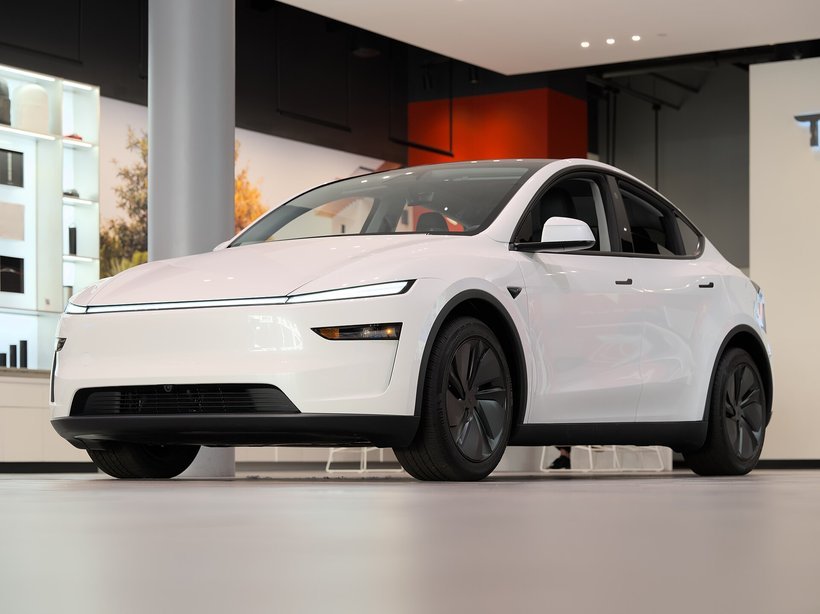
Here is where the story gets sharp. Guests renting an FSD car will see cautionary language requiring them to monitor the software and be ready to take over at any moment, with the option to watch a Tesla-created tutorial. Turo “encourages” guests to review Tesla’s FSD documentation and safety guidelines before pickup. That is the responsible version of the product.
At the same time, listings allow owners to promote cars as “Self-Driving,” and the app’s own screenshot reads: “When enabled, your vehicle will drive you almost anywhere with your active supervision, requiring minimal intervention.” Read that sentence twice. “Almost anywhere” and “minimal intervention” do the selling; “your active supervision” does the legal work. FSD (Supervised) is Level 2: the system can steer, brake, and accelerate, but the driver is responsible at all times. It is not driverless, not unsupervised, and not Robotaxi. Anyone who rents one expecting to nap, work, or watch a movie is misunderstanding the product in a way that could get someone hurt.
This is not a theoretical concern. Two weeks before the announcement, a driver told California Highway Patrol he was asleep with FSD engaged before his Tesla hit a patrol car in a lane closure in Fairfield, California; two officers were seriously injured. That account comes from Electrek’s reporting of the driver’s claim — it is not an adjudicated finding — but it shows exactly why Turo’s warnings exist, and why the “Self-Driving” listing label sits so uneasily next to them.
The liability hole nobody has filled
The hardest question about this launch has no answer yet: when a guest crashes with FSD engaged, who is on the hook — the renter, the host, or Turo’s protection plans? Turo has not said. Do not let anyone assign it for you, in either direction. A renter did not build the software, a host did not write it, and a marketplace did not drive the car. Until Turo publishes a policy, every FSD rental carries an open legal question along with the keys. If you rent one, read the protection plan before you tap “book,” not after.
Why Tesla wants this now
Follow the money and the timing clicks into place. FSD went subscription-only in February 2026, and Tesla has pushed trials hard since — including a free one-year subscription on new Model 3 and Model Y orders. The Turo deal is the same playbook aimed at people who do not own a Tesla yet: put the software in their hands for a weekend and let the product sell itself.
The numbers behind that push came a week before the announcement. Tesla reported 1.74 million active FSD subscriptions in Q3 2026, out of more than 10 million cars built and sold. More than 75% of North American Q3 deliveries included an FSD subscription, roughly 20% up from Q2, even as US sales decline. Tesla’s CFO, Vaibhav Taneja, told the Q3 earnings call on October 21: “Customers are now coming in and saying: ‘Can we get into an FSD drive?’ They’re not asking for [Model] 3, [Model] Y, or Cybertruck.” And Elon Musk, in an X post the same week, put it even more bluntly: “People are buying FSD with a car attached, not the other way around.”
There is a second, quieter reason the subscription count suddenly matters. Tesla only started disclosing active FSD subscriptions because Musk’s 2025 CEO performance award uses it as a metric — one milestone is 10 million. Electrek did the arithmetic and labeled it as its own: at last quarter’s pace, that is roughly eight more years away. Free trials do not count toward the award metric; paid subscriptions do. So every Turo host who keeps paying after month one adds to the count, and every renter who enjoys the weekend is a potential subscriber. That is the business model hiding inside a rental feature.
Turo’s demand evidence deserves a careful read, too. Its 2026 Road Report says 55% of Americans are interested in “driverless technology” for travel, rising to 71% among Gen Z, and that over a fifth of interested Americans would be comfortable spending seven or more hours in a self-driving car. Those are Turo’s own figures, and as Superpower Daily noted, they measure curiosity about driverless travel — not demand for supervised FSD, which still requires you to drive. Curiosity is real, but it is not the same as a customer.
What this is not
Because the launch language invites confusion, here is the plain version:
- Not Tesla renting its own fleet. These are hosts’ cars on a third-party marketplace. Tesla’s own rentals are a separate, pre-existing program (see below).
- Not a free test-drive program. Renters pay normal rental rates. The free month is the host’s trial.
- Not driverless. Level 2, supervised, driver responsible at all times. No sleeping, no working, no looking away.
- Not a Robotaxi product. No driverless rides, no waitlist tie-in disclosed. Robotaxi is a separate pilot (see below).
- Not city-limited. No city list was disclosed. It is a US-wide marketplace feature.
- Not a confirmed price premium. Turo has not said FSD listings cost extra for renters.
Robotaxi is a different thing
Do not mix this up with Robotaxi. Robotaxi is Tesla’s separate unsupervised pilot — driverless cars carrying passengers in Austin, with Dallas targeted next, according to our own October 22 Cybercab coverage. FSD (Supervised) rentals are the opposite arrangement: a human renter, an attentive driver, a car that helps but never takes over the job. The two programs share a brand halo and almost nothing else. If a listing ever implies otherwise, that is marketing, not engineering.
The fine print worth knowing
Two details keep the “industry-first” claim honest. First, Tesla has separately rented its own cars with FSD included in Southern California since last year — a program Electrek first spotted in the works in 2023. Electrek calls Turo’s “industry-first” label “generous” on that basis: what is new is verified FSD on a third-party marketplace with far more cars in far more cities, not the bare idea of renting a Tesla with FSD. Second, Tesla dropped the “Full Self-Driving” name in Europe under German regulator pressure but still uses it in the US — one more reason to read the “(Supervised)” in parentheses every time you see the name.
And the longer view is worth one paragraph. Since 2016, Musk has pitched a “Tesla Network” of owner cars earning income when their owners do not need them. A decade later, Turo plus supervised FSD is the closest approximation available: private cars, rented to strangers, with software doing part of the driving. The driver is still in the seat, the income still flows to the owner, and the network still is not autonomous. It is a step toward the old vision, not the vision itself.
Quick answers
Can I rent a Tesla that drives itself on Turo? Yes — from October 28, 2026, US renters can filter Turo for Teslas with verified FSD (Supervised). Thousands are already listed, led by Model 3 and Model Y.
Is it free? No. Renters pay normal Turo rates. The free one-month FSD trial goes to eligible hosts, not renters, and becomes $99 a month after that.
Can I sleep or work while it drives? Absolutely not. FSD (Supervised) is Level 2. You monitor it and take over at any moment, and Turo tells you so before pickup.
Is this Robotaxi? No. Robotaxi is Tesla’s separate driverless pilot in Austin, with Dallas targeted next. These rentals always have a human driver.
Who pays if I crash with FSD on? Unknown. Turo has not said whether the renter, the host, or its protection plans carry it. Read the plan before you book.
Does every Tesla on Turo have FSD? No — only listings whose FSD status is verified through Tesla’s API. Use the filter; do not trust a badge that is not verified.
The bottom line
Turo just turned the best test drive Tesla never offered into a bookable product: a real car, real roads, a whole weekend, for normal rental money. That is genuinely useful — a showroom loop cannot tell you whether you trust FSD, and a weekend can. But the product only works if renters understand what it is: supervised assistance with a driver in charge, a host-paid subscription behind the badge, and an unanswered liability question riding along. Rent the weekend. Enjoy the software. Keep your hands ready, your eyes up, and the “Self-Driving” label in perspective.