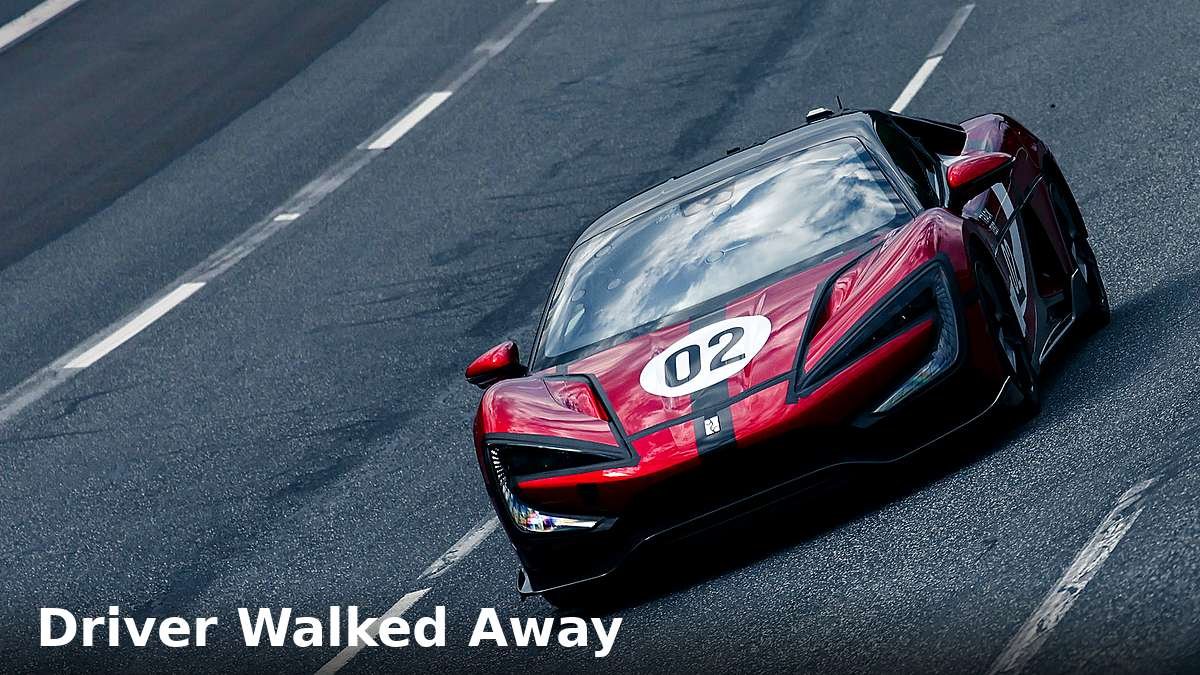
BYD’s Yangwang U9 Xtreme, a nearly 3,000-horsepower electric hypercar, has been severely damaged in a high-speed testing crash in China. The driver reportedly escaped without serious injuries after the car struck barriers, with later reports putting the first impact speed at approximately 360 km/h (224 mph).
The accident happened as BYD prepared for another attempt to exceed 500 km/h (311 mph). Although the car’s front and rear sections were badly damaged, the central passenger compartment remained largely intact.
The crash is particularly significant because the U9 Xtreme previously reached 496.22 km/h (308.4 mph) in Germany in September 2025, setting a major electric-car speed benchmark.
What happened in the BYD Yangwang U9 Xtreme crash?
The crash occurred during a high-speed development test in China. Video footage released through Yangwang’s channels showed the electric hypercar losing its line, striking a track barrier and moving across the circuit before hitting the opposite-side barrier.
The impact caused extensive damage to the vehicle. Its front bodywork was destroyed, exterior components were scattered across the track, and the rear axle and associated drivetrain assembly were reported to have separated from the car.
Despite the damage, the central passenger compartment appeared to retain much of its structure. The driver was able to leave the wrecked vehicle without assistance, according to reports.
The accident footage was shared by Hu Xiaoqing, general manager of Yangwang’s sales division, according to South Korean automotive publication AutoTribune.
Initial international reports did not establish the exact crash location or impact speed. Later reporting identified the test as part of preparations for BYD’s next attempt at a 500 km/h run.
Sources: InsideEVs crash report and Electrek.
How fast was the Yangwang U9 Xtreme going when it crashed?
The crash speed has been reported differently as more information emerged.
Early coverage from InsideEVs and Motor1 did not give a confirmed impact speed. Electrek subsequently reported that the car had been attempting to exceed 450 km/h (280 mph) during the run.
A November 4 report from AutoTribune, citing subsequent Chinese reporting and the test driver’s account, separated the overall test speed from the first barrier impact. It reported that the car was travelling in a 420–450 km/h (261–280 mph) test range, with the first impact occurring at approximately 360 km/h (224 mph).
| Speed figure | Metric | US conversion |
|---|---|---|
| Test speed range | 420–450 km/h | 261–280 mph |
| Reported first impact | About 360 km/h | About 224 mph |
| Previous record | 496.22 km/h | 308.4 mph |
| Next target | 500 km/h | 310.7 mph |
These figures come from different stages of the test and should not be treated as interchangeable. BYD has not published a complete independent crash-telemetry report confirming the exact speed at every impact.
Sources: Electrek’s run-by-run account and VnExpress, citing CarNewsChina and IT Home.
How did the driver survive the high-speed crash?
The most striking part of the incident was the condition of the passenger compartment. While the front and rear portions of the hypercar suffered severe damage, the central cabin remained comparatively intact.
The U9 Xtreme uses a carbon-fiber-intensive passenger cell. BYD’s engineering material describes a reinforced cabin structure intended to provide high torsional rigidity and occupant protection.
However, it would be inaccurate to attribute the driver’s survival to one component alone. The passenger-cell structure, restraint systems, crash direction, impact geometry and other factors can all influence the outcome.
Did the driver suffer serious injuries?
No serious injuries were reported. Electrek reported that the driver underwent a medical examination and was found to be in good health.
AutoTribune identified the test driver as Jiang Wen and reported that he had worked at BYD for 23 years. According to that report, he was able to leave the vehicle on his own.
The driver’s survival is notable, but this single accident should not be interpreted as a general safety guarantee for the vehicle or other high-speed crashes.
What happened to the car after the crash?
The U9 Xtreme was left with extensive structural and exterior damage. Reports and photographs show major damage at both ends, with the rear axle assembly separated from the vehicle.
There were no reported battery fires in the released footage and initial reporting. That observation should not be confused with an independently verified battery-safety test.
Electrek also reported that another subsequent test run reached 457.89 km/h (284.5 mph). This suggests the high-speed development programme continued, although the exact relationship between that run and the damaged vehicle has not been independently documented in a full technical report.
The crash has not resulted in a publicly confirmed explanation of the mechanical or aerodynamic failure that caused the vehicle to leave its intended line.
BYD Yangwang U9 Xtreme specifications
The U9 Xtreme is the track-focused version of BYD’s Yangwang U9 electric supercar. It combines four high-speed electric motors, a 1,200-volt electrical architecture and a specialized battery and cooling system.
| Specification | U9 Xtreme |
|---|---|
| Powertrain | Four electric motors |
| Peak output | 2,220 kW |
| Horsepower | Approximately 2,977 hp |
| Electrical platform | 1,200 volts |
| Motor speed rating | Up to 30,000 rpm |
| Battery capacity | 80 kWh |
| Battery chemistry | Lithium iron phosphate (LFP) |
| Discharge rate | 30C |
| Drive system | BYD e4 platform |
| Production plan | 30 units worldwide |
BYD’s September 2025 press release confirms the 1,200-volt platform, four 30,000-rpm motors, more than 3,000 PS of system output and the planned global production limit of 30 vehicles.
CarNewsChina reports the 80 kWh battery capacity and 2,220 kW output. Horsepower conversion and the rounded figures in the table are approximate.
For the sales backdrop to BYD’s performance push, see our BYD vs Tesla October 2026 China sales showdown.
How fast is the Yangwang U9 Xtreme?
Before the crash, the U9 Xtreme had already achieved an extraordinary top-speed result at Automotive Testing Papenburg in Germany.
In September 2025, the car reached 496.22 km/h (308.4 mph), according to BYD’s official announcement. That is one of the highest published top-speed figures for a production electric vehicle.
That run was measured in one direction, so it does not meet the two-way standard Guinness uses for an official production-car record. The achievement still stands as BYD’s published top-speed figure.
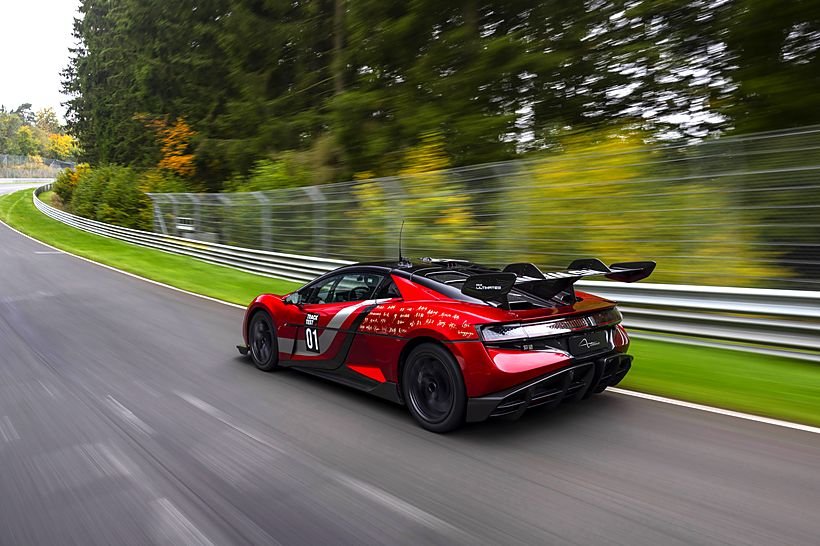
The vehicle also recorded a Nürburgring Nordschleife lap time of 6 minutes and 59.157 seconds, demonstrating that the model was developed for more than just straight-line acceleration.
| Achievement | Result |
|---|---|
| Top speed | 496.22 km/h (308.4 mph) |
| Nürburgring lap | 6:59.157 |
| Speed target | 500 km/h (310.7 mph) |
BYD says the U9 Xtreme uses a specialized cooling system, a high-discharge battery, track-oriented suspension tuning and dedicated semi-slick tires to support extreme performance.
The previous speed result was a recorded top-speed run, not a claim that the car can sustain that speed in ordinary road conditions.
Will BYD still attempt to break 500 km/h?
BYD had been preparing another high-speed attempt in the United Arab Emirates during November 2026. The stated objective was to exceed the 500 km/h threshold and improve on the existing 496.22 km/h result.
Before the crash, BYD executives had discussed the planned attempt. Later reports identified Abu Dhabi as the intended location, although some earlier coverage mentioned Dubai.
Yangwang has been building its presence in the region — see our Yangwang flagship sedan UAE launch coverage.
The crash raises questions about the timing and preparation for another attempt. However, the available reporting does not establish that BYD has cancelled the project.
There is also no confirmed public announcement establishing a new record attempt date following the accident. Any revised schedule should be treated as unconfirmed until Yangwang or BYD announces it.
Why a 500 km/h electric hypercar is difficult to engineer
Reaching 500 km/h is not simply a matter of adding more motor power. At these speeds, aerodynamic drag, tire integrity, heat management, stability and braking become increasingly demanding.
The U9 Xtreme’s four-motor layout can control torque at individual wheels, while its specialized tires and aerodynamic package are designed for extreme-speed operation.
Even small changes in vehicle balance or tire behavior can become important at such high speeds. The crash demonstrates why record attempts require carefully controlled test conditions and detailed engineering validation.
The accident does not, by itself, establish whether a tire, suspension component, aerodynamic issue or driver input caused the loss of control. A confirmed technical explanation has not been published in the sources reviewed.
Frequently asked questions
What happened to the BYD Yangwang U9 Xtreme?
The electric hypercar crashed into barriers during high-speed testing in China, suffering extensive damage to its front and rear sections.
How fast was the BYD U9 Xtreme travelling during the crash?
Later reporting put the first barrier impact at approximately 360 km/h (224 mph), although a complete official crash-telemetry report has not been published.
Did the BYD test driver survive?
Yes. The driver reportedly escaped without serious injuries and was medically examined after the accident.
How much horsepower does the Yangwang U9 Xtreme have?
It produces approximately 2,977 horsepower from four electric motors, with a combined peak output of 2,220 kW.
Conclusion: BYD’s 500 km/h ambition faces a serious test
The Yangwang U9 Xtreme crash is a major moment in the development of extreme-performance electric vehicles. The hypercar suffered substantial damage, but the driver survived without serious injuries and the passenger compartment remained largely intact.
Its previous 496.22 km/h run shows how close BYD came to the 500 km/h target. Whether the company can safely complete another attempt will depend on what engineers learn from the crash and how the vehicle performs in further testing.
For the wider market picture, see our US EV sales in Q3 2026.
Next step: Follow Yangwang’s official announcements for confirmation of the next U9 Xtreme speed attempt and any published findings from the crash investigation.
Reporting note: This article reflects reporting available through November 5, 2026. Crash-speed figures are attributed to subsequent media reporting, while vehicle specifications and the 2025 speed achievement are attributed to BYD’s published material and other identified sources.