Here's the deal: Cathie Wood's ARK Invest thinks Tesla stock could be worth about $4,400 a share in 2031. Tesla closed at $368.06 on October 19, the day ARK published its updated valuation model, so we're talking about a stock multiplying roughly twelve times in five years — nearly 1,100% of upside, in ARK's base case. Not its fantasy case. Its base case.
Before we go any further, one thing needs saying plainly: this is ARK's projection, not a recommendation, and we're breaking down the model so you can judge it yourself. Because once you see what's inside it, the $4,400 number stops looking like a car valuation at all. In ARK's math, about 80% of Tesla's 2031 enterprise value comes from robotaxis — a business that, today, operates in seven US cities. Cars? They're almost a side hustle in this forecast. Here's how the model works, where the numbers come from, and why Wall Street thinks ARK is dreaming.
Cathie Wood's Tesla valuation for 2031: the quick answers
| ARK's 2031 Tesla model | The numbers |
|---|---|
| Expected value (base case) | ~$4,400 per share in 2031 |
| Bull case (75th percentile) | ~$5,000 per share |
| Bear case (25th percentile) | ~$3,300 per share |
| Share price at publication (Oct 19 close) | $368.06 |
| Implied upside, base case | ~1,096% (nearly 1,100%) |
| Implied 2031 market cap | ~$17.5 trillion (ARK's model table) |
| Robotaxi share of enterprise value | ~80% |
| Robotaxi revenue, 2031 base case | $753 billion (8.1 million robotaxis) |
| Optimus revenue, 2031 base case | ~$212 billion (1 million external robots) |
| Total revenue, 2031 base case | ~$1.45 trillion |
| Wall Street average price target | ~$398 (analyst consensus) |
The headline: an open-source model, published two days before earnings
ARK didn't slip this out in a client note. On Monday, October 19, analysts Tasha Keeney and Daniel Maguire published a full, open-source valuation model — the spreadsheet is free on GitHub — built on Monte Carlo simulations across 32 inputs. The bull and bear cases aren't vibes; ARK defines them as the 75th and 25th percentile outcomes of those simulations. Tesla stock rose 3.8% that day to close at $368.06, as TipRanks reported, and the timing was impossible to miss: the model landed two days before Tesla's third-quarter earnings.
This is also a big raise from ARK's last published model. The 2024 version targeted $2,600 a share in 2029. The new one pushes the horizon to 2031 and lifts the expected value to $4,400 — and, notably, it spreads the value around a little more. Robotaxi's share of enterprise value actually fell, from about 90% in the old model to about 80%, because ARK now gives the Optimus humanoid robot real weight. More on that below.
Robotaxis do almost all of the work
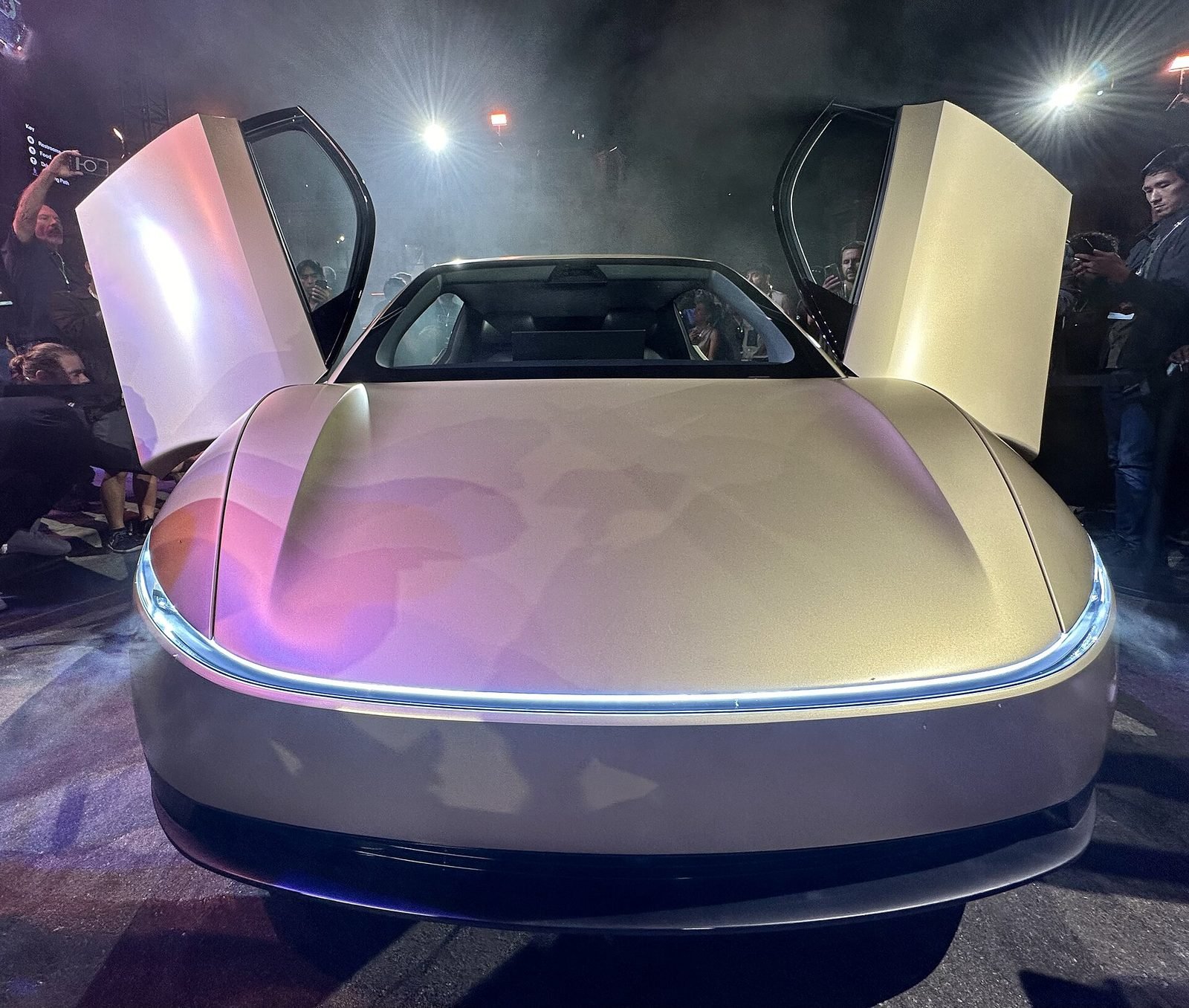
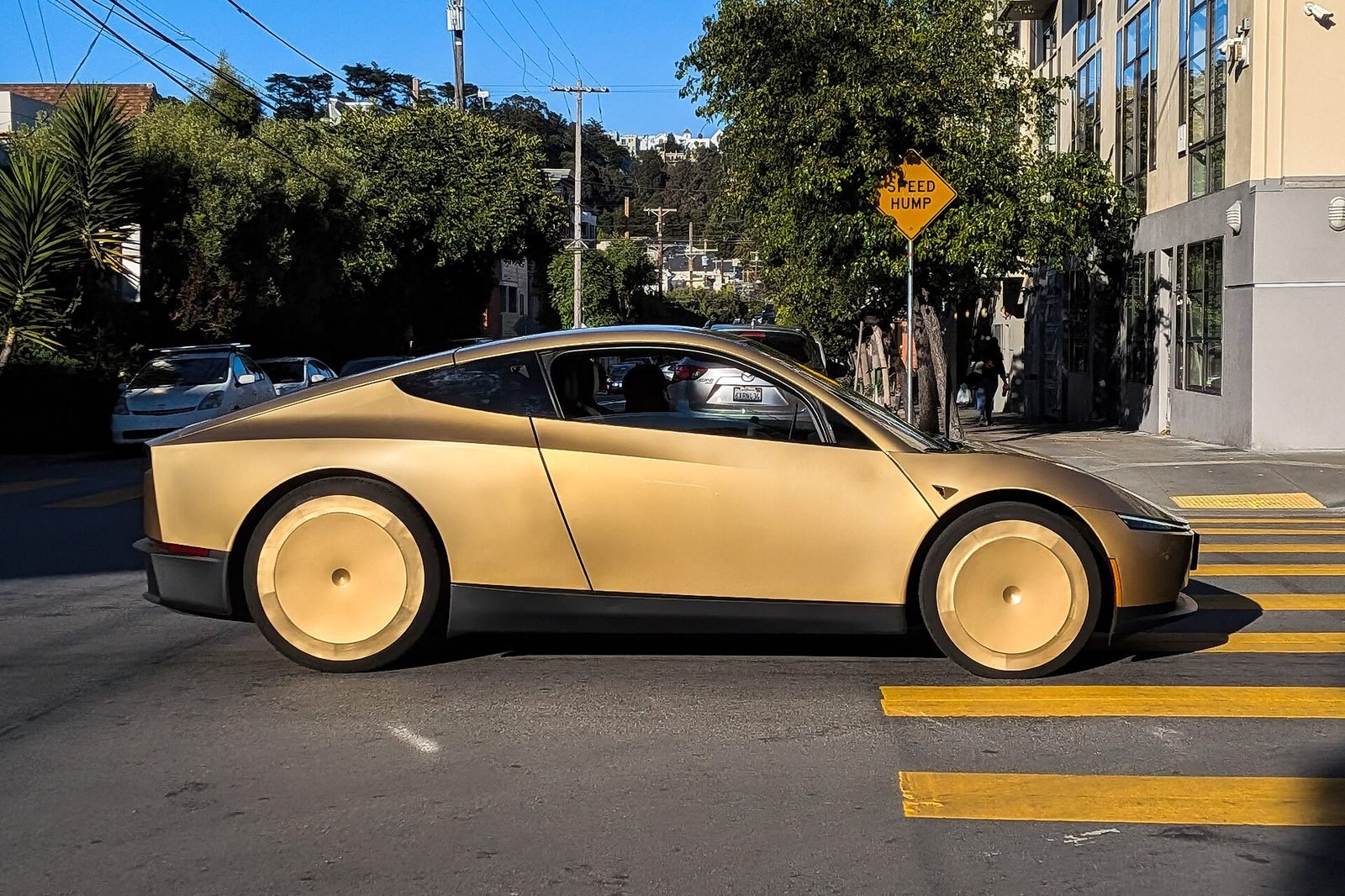
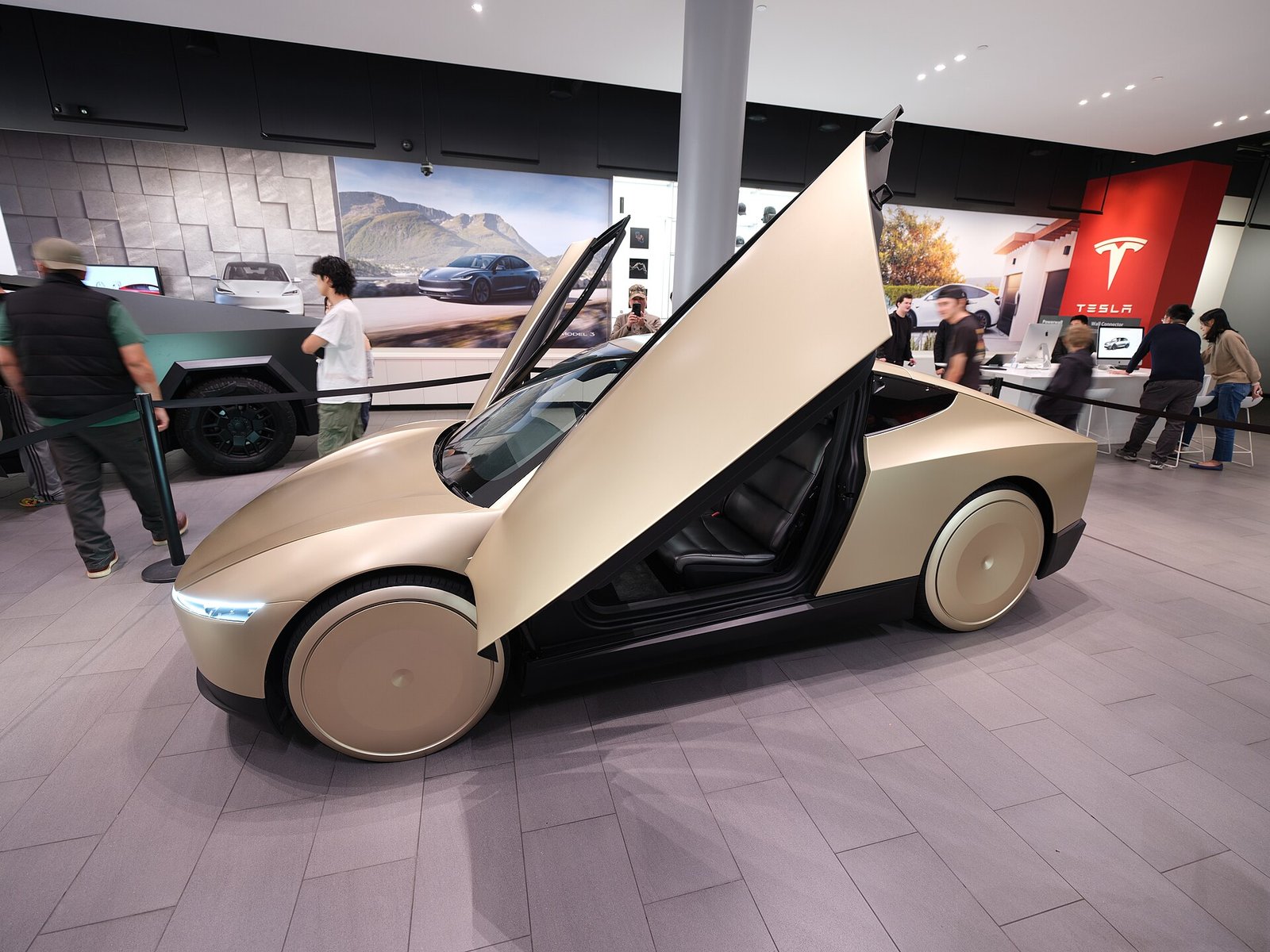
Cut to the chase: this forecast lives or dies on driverless ride-hailing. In ARK's base case, Tesla runs about 8.1 million robotaxis in 2031, generating $753 billion in net ride-hail revenue. "ARK estimates that Robotaxi will account for ~80% of Tesla's enterprise value in 2031, down from ~90% in 2029 as presented in our previous model published in 2024," Keeney and Maguire wrote, in a passage quoted by Tesla News Wire's breakdown of the published table.
Why does ARK think Tesla wins this market? Cost. ARK estimates the Cybercab's operating cost per mile could run about 40% below Waymo's at equal utilization rates, which would let Tesla undercut fares and still make money. And ARK points to early speed: Tesla logged its first million unsupervised miles in about seven months, roughly four times faster than Waymo reached the same mark, with the service already live in seven cities. As Keeney put it on X: "Tesla is early in scaling robotaxi, but its vertical integration and cost advantages could make it first to widespread service." ARK also argues Tesla can expand supply using customer-owned cars, pushing utilization higher and costs lower.
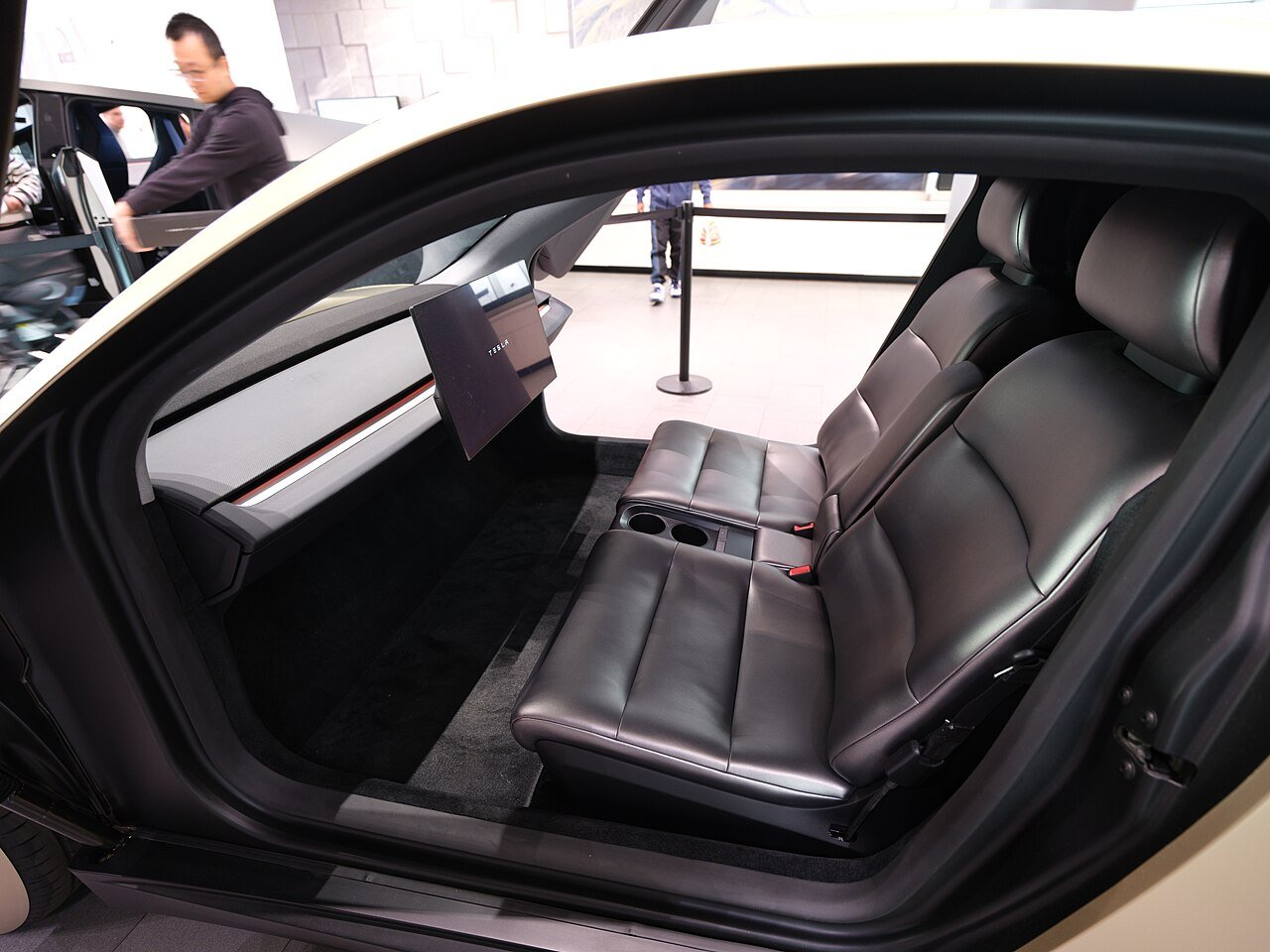
Honestly, the scale here is the whole argument. Seven cities and a million driverless miles is a real start — but 8.1 million robotaxis and $753 billion of annual ride-hail revenue in five years means Tesla has to out-scale every ride-hailing company on Earth, combined, in a business it entered last year. ARK names "a slower-than-expected ramp in robotaxi operations" as the model's main risk. That's putting it gently.
Optimus: the second engine, and the $225 billion bet behind it
The biggest change from ARK's 2024 model is that Optimus now matters. ARK models about 1 million Optimus robots sold to outside buyers by 2031 in the base case, plus an "Optimus Robot-as-a-Service" business — Benzinga's coverage puts the RaaS revenue line at $215 billion, while ARK's published table shows about $212 billion in Optimus revenue. Maguire wrote on X that Optimus contributes roughly 15% of Tesla's 2031 enterprise value "as it reaches human-level proficiency." For context, ARK calls this conservative: Elon Musk has guided to anywhere from 100 million to a billion Optimus units in 2031.
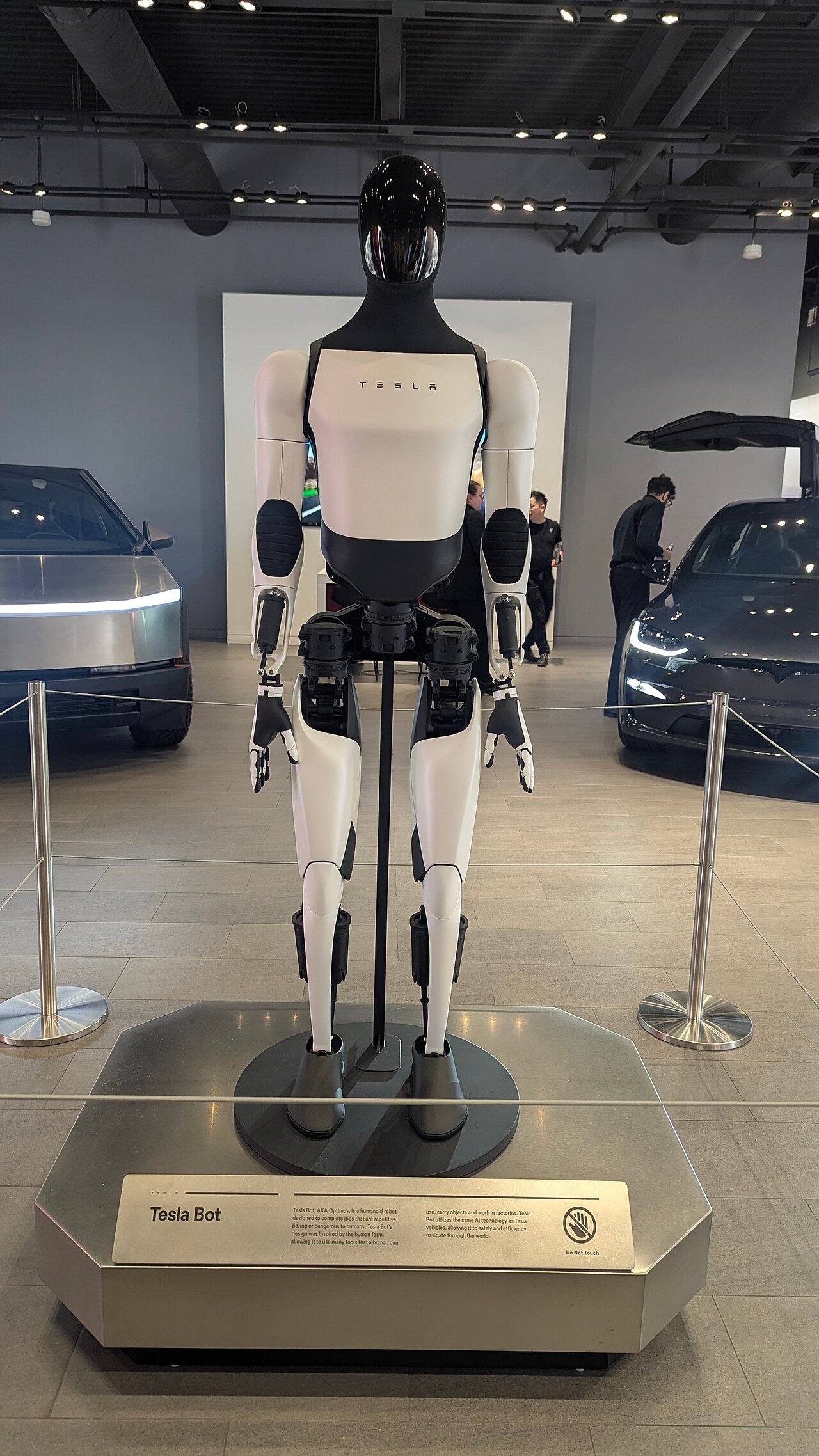
Underneath both robot businesses sits a new line in the model: AI infrastructure. ARK assumes Tesla's cumulative AI spending grows from about $7 billion at the end of 2025 to about $225 billion by the end of 2031 — including the Terafab chip project with SpaceX, whose first phase carries a $16.8 billion construction commitment in Texas. In the model, that spending is what makes Optimus smarter and more productive. It's also a staggering amount of money: roughly $225 billion of capex has to be funded largely by the car business ARK says won't matter much. Hold that thought for the skeptics section.
The cases: $3,300 bear, $4,400 base, $5,000 bull
Here's the part that separates ARK's work from a talk-show price target: it shows its spread. And here's a wrinkle worth flagging honestly — outlets reading the same model report the total valuation differently. Benzinga's write-up puts Tesla's 2031 valuation at roughly $16.4 trillion, with robotaxis comprising $13.31 trillion of it. ARK's published summary table, as broken down by Tesla News Wire, shows a $17.5 trillion market cap on $1.449 trillion of revenue at a 61% EBITDA margin. Both trace back to ARK's model; they appear to reflect different cuts of the simulation output. We present both rather than pick one quietly.
| Scenario / source | 2031 (or current) target | Vs. $368.06 close |
|---|---|---|
| ARK bear case (25th percentile) | ~$3,300 | ~+800% |
| ARK expected value (base case) | ~$4,400 | ~+1,096% |
| ARK bull case (75th percentile) | ~$5,000 | ~+1,261% |
| ARK's previous model (2024, for 2029) | $2,600 | — |
| Wall Street consensus average | ~$398 | ~+8% |
| Cantor Fitzgerald (bullish broker) | $485 | ~+32% |
Even ARK's bear case — the outcome it assigns to the bottom quartile of its simulations — sits about nine times above today's price and more than eight times above the Wall Street average target of roughly $397.83, as Quantli noted. That's not a disagreement about timing. That's two completely different companies being valued: the Street is pricing a carmaker with options; ARK is pricing a robotics platform that also sells cars. The Motley Fool's read of the model's upside inputs shows how much room ARK leaves above even the base case: 10 million robotaxis and $900 billion in ride-hail revenue, 1.2 million external Optimus units worth $254 billion, and $193 billion in energy storage revenue (the base case has energy at $163 billion on 2,278 GWh deployed).
The SpaceX wildcard ARK folded into the story
ARK's model values Tesla as a standalone company. But ARK also said out loud that a Tesla–SpaceX merger "could take place within the next five years," and sketched what the combined companies might generate by 2031: $3.8 trillion in revenue and $2.7 trillion in EBIT, with SpaceX contributing the majority of both. The logic, per ARK: Tesla's robotaxi cash flow could help finance SpaceX's orbital data centers, while SpaceX's frontier AI models could make Optimus better.
The merger talk didn't stay theoretical. During earnings week, Musk confirmed both companies' boards have formed special committees to explore a combination, though he declined to discuss it on Tesla's call — "I feel like I'm tap dancing through a minefield," he said, per ExecReview's earnings coverage. Any deal would need approval from 50% of Tesla shareholders. For the valuation question, the takeaway is simple: ARK's $4,400 doesn't need the merger. The merger is upside ARK deliberately left on the table.
What the model leaves out — and what ARK admits about itself
Give ARK this much: it's unusually transparent about its own work. The Motley Fool's analysis notes the model excludes the Semi truck, excludes FSD licensing revenue, and excludes the SpaceX merger entirely. It assumes robotaxi operations don't happen in China. It includes dilution from Musk's stock-based compensation vesting inside the window. And ARK's own disclaimers state the forecasts reflect its "biases and long-term positive view of the company" — a remarkable sentence to find in a valuation model, and one every reader should sit with.
There's a structural point here too, and Quantli made it well: ARK is one of Tesla's larger institutional shareholders. The model is the published reasoning of an investor who already owns the stock and benefits when the market agrees with her. That doesn't make the math wrong. It does mean the math was built by the bull case's biggest professional advocate, with the assumptions chosen accordingly. Cathie Wood's track record has famous wins and famous misses, and this model will be one or the other at a scale that dwarfs both.
The skeptics: "Tesla is just a car company"
Now the other side. Two days after ARK's model dropped, Tesla reported third-quarter earnings — and 24/7 Wall St. published a piece titled "Tesla Is Just A Car Company" that captured the bear mood perfectly. Its observation, as summarized on Biztoc: Musk's headline announcements were robotaxis, AI, robotics, and robots — while what was "almost missing" was the fact that Tesla is a car company, and one with modest momentum at that.
The quarter's numbers give the skeptics real ammunition. Yes, Tesla beat on the headline lines — $28.05 billion in revenue and 48 cents of adjusted EPS against 43 cents expected, per LSEG figures reported by MoneyCheck. But automotive revenue fell 3% year over year to $20.56 billion, net income dropped 29% to $787 million, and operating margin compressed to 2.6% from 5.8% a year earlier. The stock fell about 3.5% in after-hours trading, as the Wall Street Journal reported. This is the business that has to fund $225 billion of AI spending while it waits for robotaxis to inflect. Musk did say on the call that Optimus could start shipping to outside companies by the end of next year — which, if it happens, would be the first hard proof point for roughly $212 billion of ARK's 2031 revenue.
Fair's fair, though: the skeptics got surprised too. Morningstar had expected another quarter of negative free cash flow; Tesla instead posted positive free cash flow of $1.53 billion, well ahead of the roughly $4.9 billion burn analysts had penciled in. And the services segment — which includes FSD subscriptions, now 1.74 million strong and up 67% year over year — grew 33%. The bears' strongest argument isn't that Tesla is failing. It's that even a successful version of today's Tesla looks nothing like a $17 trillion company, and the gap has to be filled by businesses with, today, seven cities of robotaxis and zero external robot customers.
Quick answers
What is Cathie Wood's Tesla price target for 2031? About $4,400 per share as ARK's expected value, published October 19, 2026 — with a bull case of about $5,000 and a bear case of about $3,300. Those are the 75th and 25th percentiles of ARK's Monte Carlo model, not single guesses.
How much upside is $4,400 from here? Roughly 1,096% — nearly 1,100% — from Tesla's $368.06 close on the day the model published. Even the bear case implies about 800% upside.
What drives ARK's Tesla valuation? Robotaxis, overwhelmingly: about 80% of 2031 enterprise value, on 8.1 million robotaxis and $753 billion of net ride-hail revenue. Optimus robots add about 15% of enterprise value, and everything else — cars, energy, services — shares the rest.
What does Wall Street think Tesla is worth? The average analyst price target is about $398 a share — roughly 8% above the current price, and less than a tenth of ARK's number. Even a bullish broker like Cantor Fitzgerald, at $485, is nowhere near ARK.
What could break ARK's model? A slower robotaxi ramp (ARK's own named top risk), Optimus never finding external customers at scale, or the car business weakening before the robot businesses can fund themselves. The model's $225 billion AI spending assumption has to be paid for by somebody.
The bottom line
ARK's $4,400 target isn't really a prediction about Tesla the car company — it's a prediction that by 2031, Tesla is the world's largest ride-hailing operator and a top-tier robotics company, and that cars were just the funding round. The model is transparent, open-source, and honest about its author's bias, which makes it more credible than most moonshot targets. It's also asking you to believe that two businesses producing almost no revenue today will produce about $965 billion of it in five years.
So here's the decision framework we'd actually use. Don't argue about 2031 — watch the milestones that have to happen on the way: robotaxi city count and driverless miles through 2027, whether Optimus really ships to outside customers next year as Musk says, and whether automotive margins hold up while the AI bills come due. If those three trend ARK's way, the gap between the Street's $398 and Wood's $4,400 starts closing from both ends. If they don't, this model joins the long list of beautiful spreadsheets that met reality. Either way, it's now the benchmark every Tesla bull has to defend — and every Tesla bear has to beat.