News
Tesla Robotaxi Crashes: NHTSA Data Reveals 36 Incidents, the First Cybercab Accident, and the Remote Drivers Crashing at Walking Speed
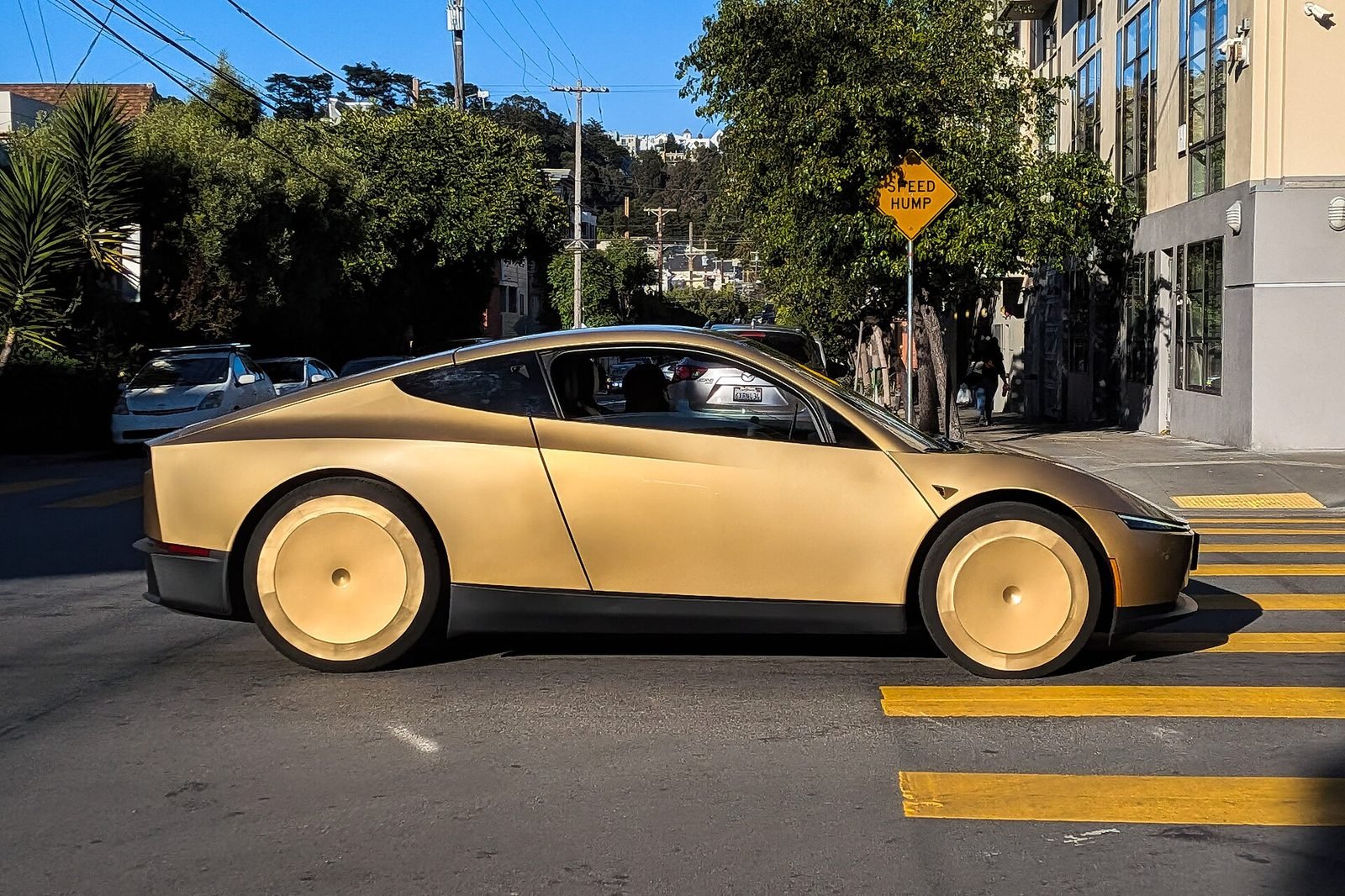
Every few months, NHTSA quietly refreshes its crash-reporting database, and every few months it gives us the clearest public window into how Tesla's robotaxis are actually behaving on American streets. The October 15 update is the most revealing one yet: nine new Tesla Robotaxi incidents from August, the first crash report involving a Cybercab, and — the detail that's getting the most attention — five crashes in which a remote human driver, not the car, was at the controls. Here's what the filings say, in plain English, and what they carefully don't.
Nine new incidents, all from August
The new batch comes from NHTSA's Standing General Order crash-reporting program, which requires automated-driving developers to disclose certain crashes. According to an analysis of the raw data, the nine new reports all carry August 2026 incident dates: five in Dallas, three in Austin, and one in Tampa. Every one of them lists property damage as the worst outcome. None alleges an injury.
That brings Tesla's total to 36 unique Robotaxi incidents in the file, stretching back to July 2025 and spanning Austin (26), Dallas (7), Houston (2), and Tampa (1). Electrek counts the same 36. The file itself holds 57 rows because Tesla files updates to older reports — worth knowing before anyone screenshots a bigger number.
The incident narratives read like a blooper reel from a parking lot. A Dallas Model Y clipped a parked SUV at about 0.40 mph while wedged between a concrete mixer and the SUV. An Austin Model Y tapped a dumpster in an alley at roughly 1 mph. Another Dallas car kissed a utility meter at 0.45 mph, a fourth brushed a guardrail at 0.25 mph, and there were encounters with a low-hanging chain in Dallas (3 mph) and Tampa (4 mph). The one genuinely scary-sounding entry: a Dallas intersection where a pickup blew through a stop-controlled cross street and hit the Robotaxi's left side — though Tesla's narrative says its car had slowed from 27 mph to 3 mph and steered right before impact. One Austin Model Y was simply rear-ended at a yield sign with three belted passengers aboard.
The Cybercab's first crash was a pothole
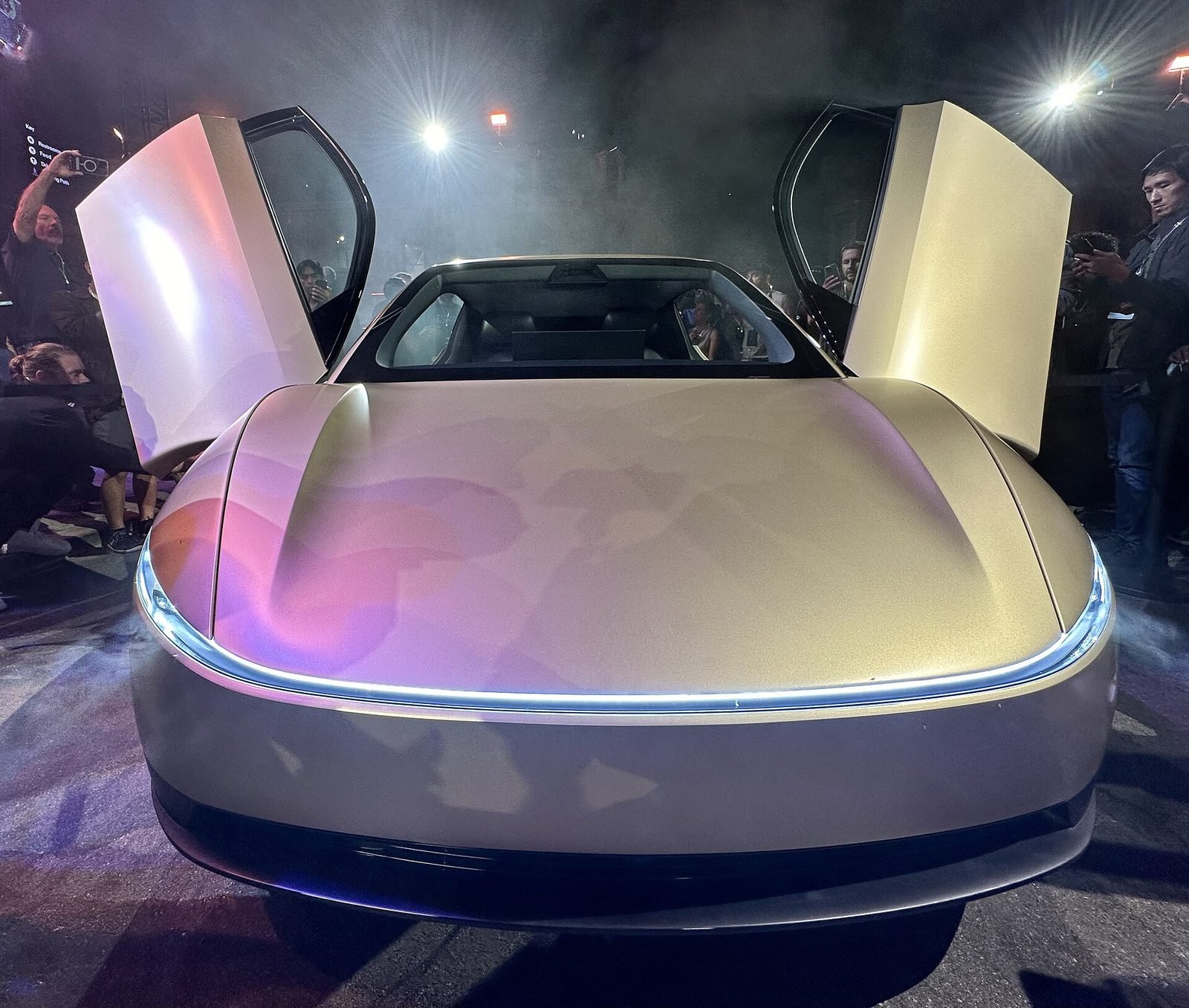
Buried in the new data is a first: the Cybercab's debut in NHTSA's crash files. Per Tesla's filing, the purpose-built robotaxi was rolling straight through an Austin parking lot in August when it drove into a large water-filled pothole at up to 5 mph. A safety monitor was in the vehicle. No passengers were aboard. The whole thing happened before Tesla started public paid Cybercab rides in Austin in early September, so this was a supervised test run, not a fare-paying trip gone wrong.
Drive Tesla Canada notes that no further Cybercab incidents appear in the data through September 15 — which covers the first 11 days of public service. For a vehicle with no steering wheel and no pedals that's now operating in the hundreds, a single pothole at parking-lot speed is about as gentle a debut as crash data gets.
The remote drivers keep crashing into things
Here's the part that's harder for Tesla to spin. Electrek's review of the new filings found two more crashes where a remote operator — a human driving the car from somewhere else — was in control when it hit something. That brings the running total to five remote-operator crashes in the dataset. And as Electrek puts it, every remote takeover that has shown up in a Tesla crash report has ended in a collision.
The two new ones: in Dallas, a Model Y was stopped on a residential street, wedged between a concrete mixer on the right and a parked SUV on the left. Tesla's own narrative says the remote support operator "remotely took control and while moving forward, the vehicle made contact with the SUV at approximately 0.40MPH." In Austin, a remote operator drove a Model Y straight through an alley — utility pole on one side, dumpster on the other — and hit the dumpster at about 1 mph. No passengers in either car.
Three of the five are formally coded "Remote (Commercial / Test)" in NHTSA's structured fields; two more show up only in the written narratives, including a Houston tree-stump crash from May. To be fair, these are the hardest situations — remote operators typically grab control precisely when the car is already stuck. But 0.4 mph into a parked SUV is going to live in headlines regardless of context, and it hands critics a simple question: if the backup drivers are crashing at walking speed, what exactly is the backup for?
What this data can — and can't — tell you

Zoom out and the numbers are reassuringly boring. Thirty-one of the 36 incidents happened at 6 mph or less. Only two alleged injuries exist in the entire file, both minor and both from July 2025. No fatalities. No Tesla airbag has deployed. Three vehicles were towed. For a fleet that's scaling as fast as Tesla's — 300-plus Cybercabs in Austin a month after launch, with Dallas reportedly next — that's a mild record.
But here's the asterisk that matters more than any of those numbers: the file contains no mileage, no fleet size, no count of how often remote operators intervene, and no assignment of fault. You cannot compute a crash rate from it. NHTSA says as much itself, warning that the data shouldn't be treated as statistically representative and that companies with better telemetry will simply report more incidents because they see more of them. And remember who writes these narratives — Tesla, about Tesla. The reports are self-reported, and NHTSA publishes them as submitted.
So the honest read: this is a transparency win with sharp limits. It tells you what happened in 36 specific cases, in Tesla's own words. It tells you nothing about the thousands of rides where nothing happened — which, to be fair, is the vast majority of them.
Meanwhile, NHTSA is weighing a school-zone probe
The crash data isn't the only federal file with Tesla's name in it this month. CBT News reports that NHTSA opened defect petition DP26010 on October 9 to evaluate a petition — received September 23 — alleging that roughly 1,000 model-year 2026 Robotaxis, including Model Ys and Cybercabs, exceed posted speed limits in active school zones. The petition cites four incidents, three from social media videos and one from NHTSA's own complaint channel. No crashes, no injuries — but school zones are the kind of allegation regulators can't ignore. NHTSA has until January 21, 2027 to grant or deny the petition; a grant opens a formal investigation.
Separately, NHTSA's audit query into how Tesla certified the Cybercab — a car with no steering wheel or pedals — as meeting federal safety standards is still outstanding. The agency issued 21 requests on September 3, Tesla's sworn response was due September 30, and the answers haven't been made public. With the fleet scaling eightfold in a month and new cities on the horizon, those answers are only getting more consequential.
The bottom line
NHTSA's October data dump is good news wrapped in a warning label. The good news: 36 incidents, nearly all at parking-lot speeds, no serious injuries, and a Cybercab fleet whose worst reported moment is a pothole. The warning label: the data is self-reported, unnormalized, and silent on the metrics that would actually let you judge safety — miles driven, intervention rates, fault. And the remote-operator crashes, all five of them, are the detail that will follow this story around. Tesla's pitch is that the car drives itself; the filings show that when humans take the wheel remotely, things still get dented. As the fleet pushes toward Dallas and beyond, the gap between "no serious crashes yet" and "provably safe at scale" is where the whole robotaxi bet will be won or lost.
Sources & further reading
- Official: Standing General Order on Crash Reporting — NHTSA
- Press: Tesla remote operators keep crashing its 'Robotaxis,' data shows (Oct 15, 2026) — Electrek
- Press: NHTSA ADS Data: 9 Tesla Robotaxi August Crashes, First Cybercab (Oct 15, 2026) — TeslaRobotaxi.com
- Press: Tesla Cybercab records no major crashes in NHTSA data (Oct 15, 2026) — Drive Tesla Canada
- Press: Tesla robotaxis accused of speeding in school zones, NHTSA weighs probe (Oct 14, 2026) — CBT News
Incident counts and narratives are Tesla's self-reported filings to NHTSA under the Standing General Order; NHTSA publishes them as submitted and warns the data cannot be used to compute crash rates. Always confirm current figures with NHTSA.