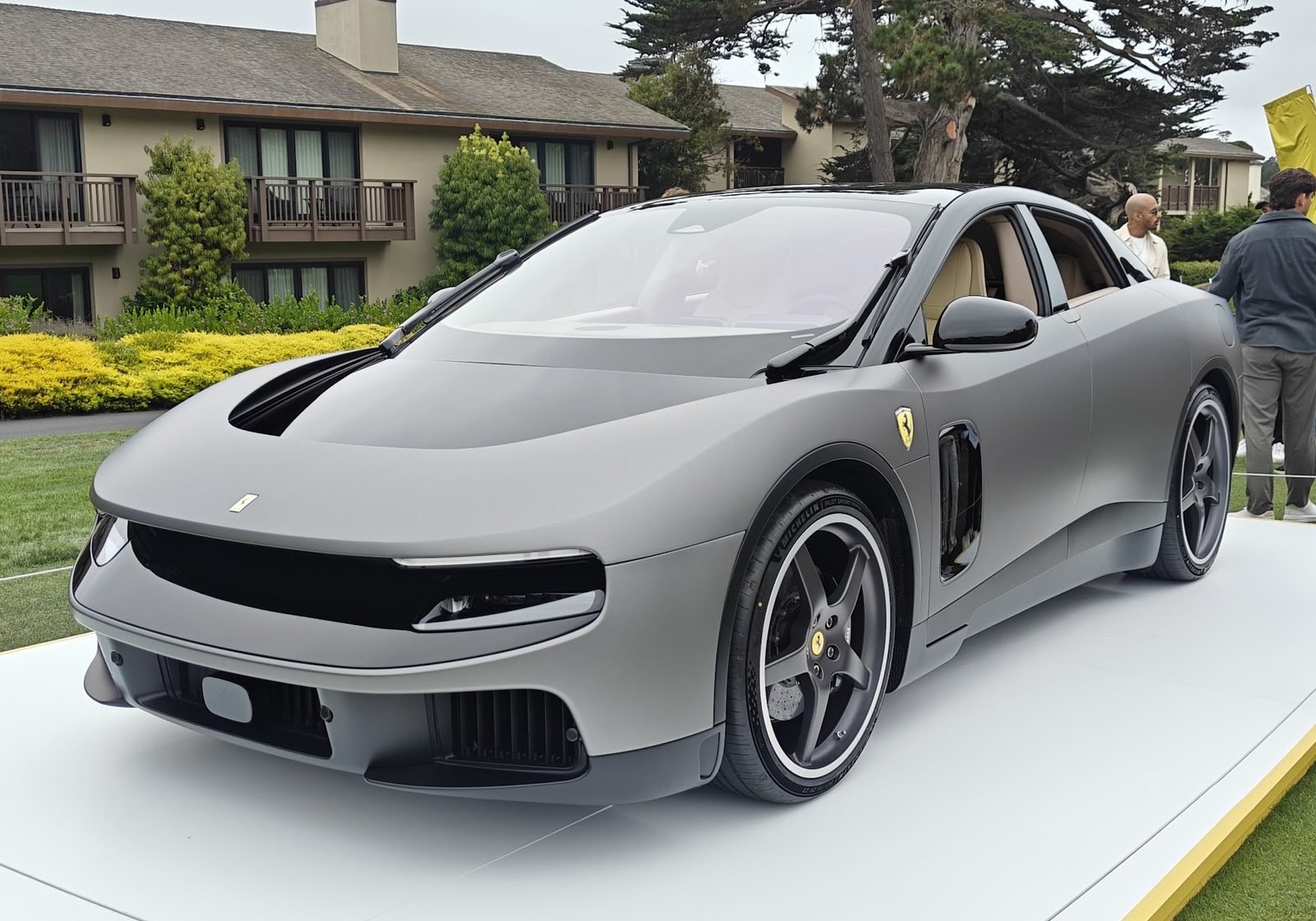
On October 22, 2026, Ferrari finally told America what its first electric car will cost: $560,800. That’s the official US starting price for the Ferrari Luce — the four-door, five-seat, Jony Ive-designed electric grand tourer Maranello revealed in Rome back in May — and it’s roughly $80,000 less than the $640,000 figure that has clung to the car for five months. Car and Driver got the number first, and Ferrari confirmed it. Deliveries to US buyers begin in the second quarter of 2027.
Now, before anybody starts talking about a bargain — don’t. $560,800 still buys the most expensive five-seat production car on the planet, a number that makes a Rolls-Royce Cullinan look like the sensible choice. But the gap between $640,000 and $560,800 matters, because it tells you something about how this car was priced, how Ferrari is thinking about America, and why the luxury EV game is weirder than it looks right now. Here’s the full picture.
| Question | Answer |
|---|---|
| What’s the US price? | $560,800 before options — first reported by Car and Driver, confirmed by Ferrari on October 22, 2026 |
| Where did $640,000 come from? | Europe’s €550,000 launch price included 22% Italian VAT; outlets converted it at the exchange rate of the day (~$1.16/€) and landed at ~$640,000. That conversion was wrong. |
| When do US deliveries start? | Second quarter of 2027; European customer deliveries begin Q4 2026 |
| What’s under the skin? | Four permanent-magnet motors (one per wheel), 1,035 hp combined, 122 kWh NMC battery, 800-volt architecture, 350 kW DC fast charging |
| How fast / how far? | 0–100 km/h in 2.5 seconds, 310 km/h top speed, 530 km WLTP (~329 miles); Ferrari estimates around 280 miles on the EPA cycle |
| Who’s the competition? | Lucid Air Sapphire (~$249,000, 1,234 hp), Porsche Taycan Turbo GT (~$233,000, 1,019 hp), Tesla Roadster (~$200,000), Rolls-Royce Spectre (~$400,000) |
| Can you even order one? | Ferrari’s 2026 allocation of just under 500 cars sold out in under two months; talk to a dealer and bring patience |
| Who designed it? | LoveFrom — Jony Ive and Marc Newson — alongside Ferrari Design under Flavio Manzoni |
Where the $640,000 number came from — and why it was never real
Let’s start with the math error heard around the world, because it’s genuinely funny how it happened. When Ferrari launched the Luce in Rome on May 25, it didn’t give a US price at all. It gave a European one: €550,000. So most outlets — us included — did the obvious thing: we ran that number through the exchange rate of the day, roughly $1.16 per euro, and got to about $640,000. Done, right? Wrong.
Here’s the catch: European car prices are normally quoted with VAT included, and Italy’s rate is 22%. That means the €550,000 was never the price of the car — it was the price of the car plus a quarter’s worth of Italian sales tax. Strip the tax out and the Luce costs about €450,800 in Italy. Convert that at today’s rate of roughly $1.12 per euro and you land around $506,000. Which means the actual US price of $560,800 is about $55,000 higher than what an Italian buyer pays before taxes — and American buyers still owe state sales tax on top of the sticker.
Some of that $55,000 gap is trade policy. European-built cars now face a 15% US tariff, and Ferrari already raised prices on part of its US lineup last year to cover it. The rest is Ferrari being Ferrari — the brand prices for each market’s tolerance, and America’s tolerance is famously high. And one more thing the $560,800 doesn’t include: options. Ferrari hasn’t published what those cost. Nobody buys a base Ferrari.
So no, Americans aren’t getting a deal. But the $80,000 “discount” was never a discount at all — it was a currency conversion done wrong, repeated everywhere, until it felt like fact. Five months of headlines built on bad math. Wild.
What $560,800 actually buys: the Luce by the numbers
Alright, the hardware. The Luce is Ferrari’s first production electric vehicle and its first five-seat car, period. It sits on a dedicated EV architecture Ferrari built at Maranello — virtually everything except the exterior and interior styling and the battery cell chemistry was engineered in-house, per Ferrari chairman John Elkann’s comments at the Rome launch. It’s a five-door liftback with conventional front doors and rear coach doors, a big glasshouse, and a rear liftgate.
The powertrain is the showpiece: four radial-flux permanent-magnet motors, one at each wheel, combining for 1,035 horsepower (Ferrari quotes 1,050 cv, same ballpark). The setup is rear-biased — the front motors make a combined 282 hp while the rears make 831 hp — and it can decouple the front axle entirely in Range mode, running as a rear-driver to save energy. Ferrari’s engineering page says the front axle alone delivers 210 kW at 93% efficiency with a power density of 3.23 kW/kg, and the system can push through Launch Control to its full output for the headline numbers: 0–100 km/h (62 mph) in 2.5 seconds, 0–200 km/h in 6.8 seconds, and a top speed of 310 km/h (193 mph).
Feeding it is a 122 kWh NMC battery from SK On, on an 800-volt architecture, good for up to 350 kW DC fast charging — Ferrari says it can add about 70 kWh in 20 minutes. Range is the part Ferrari clearly deprioritized: 529–530 km on the WLTP cycle, which works out to about 329 miles, and roughly 280 miles once the EPA gets its hands on it. That’s not much for a pack this size, and Ferrari has been upfront about the trade — performance and driving dynamics won the argument over range. Ferrari quotes combined torque at 990 Nm (about 730 lb-ft), with 11,500 Nm available at the wheels once the axle reduction gears are factored in.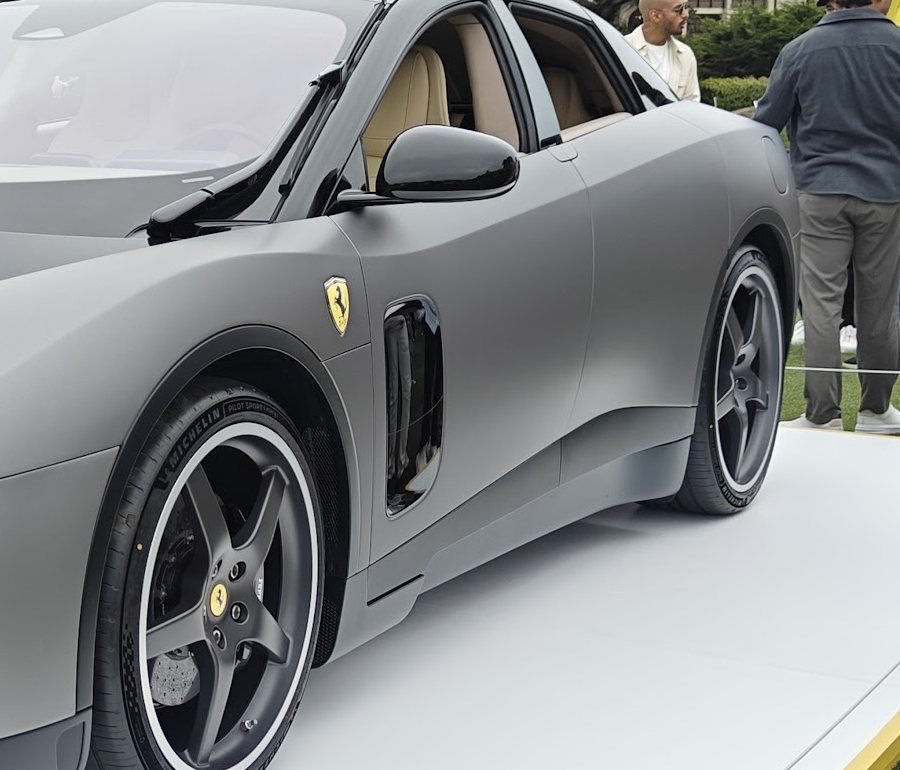
The rest of the spec sheet reads like Ferrari throwing everything at the wall: active suspension that adjusts up to 200 times per second, four-wheel steering, torque vectoring across all four corners, and three power modes on a new e-Manettino dial — Range (320 kW), Tour (460 kW), and Performance (725 kW). The body is a 0.254-drag teardrop — the most aerodynamic road car Ferrari has ever built — riding on those staggered 23/24-inch wheels. It’s 5,026 mm long, 1,999 mm wide, 1,544 mm tall, and it weighs 2,260 kg (4,982 lb), making it the heaviest Ferrari ever built. Ferrari says the battery sits low enough in the floorpan that it changes direction like a car 400 kg lighter. Sure. We’ll take their word for it — for now.
And then there’s the design, which is the whole argument. The exterior and interior were shaped with LoveFrom — Jony Ive and Marc Newson’s studio — and the look has been, to put it mildly, divisive. Launch colors included a new pale blue, Azzurro la Plata, and a new yellow, Giallo Luce. Inside, Ive’s fingerprints are everywhere: physical switches, analog-style dials, an OLED instrument cluster, and two manettino dials — one for vehicle dynamics, one for the electric powertrain. The steering-wheel paddles don’t fake gear changes; they manage torque delivery and regenerative braking. “Touch, as the primary interface, shouldn’t be in a car,” Ive said. It’s the most un-Ferrari Ferrari ever made, which is kind of the point.
Here’s the thing — the people who drove it say it’s legit
The design broke the internet. The driving, by all accounts, is a different story. When the embargo lifted on prototype test drives over the summer, the reviews were — as InsideEVs put it — “pretty spectacular.” MotorTrend’s Angus MacKenzie, after driving a late-stage prototype, said the Luce “dances down the road,” calling its responses “fluid and concise” and its steering “light and linear.” Top Gear’s Jason Barlow kept it shorter: “It slides like a Ferrari.”
Ferrari’s own people have been talking about it the same way. One of the Luce’s engineers summed up the pitch to CarExpert: “In this car there is a lot of supercar DNA. The people who worked on the Luce are the same people who developed the F80.” And the sound question — the one every Ferrari fan asks first — got a genuinely clever answer instead of a fake one. Rather than synthesizing a V12 soundtrack, Ferrari bolted an accelerometer to the rear axle to capture the real mechanical vibrations of the drivetrain, then equalized and amplified them through the cabin according to the driving mode. It’s a guitar pickup for the car’s actual noise. Ferrari’s two F1 drivers got to try it: Charles Leclerc said, “I liked that electric sound… it helps you stay connected with the car,” while Lewis Hamilton added, “The power delivery is amazing. You just feel centred the whole time even when you’re going through corners.”
That’s the context for the best quote of the whole launch. Piero Ferrari — Enzo’s son, the company’s vice chairman — watched the backlash roll in and said simply: “Once you have driven it, you’ll probably change idea.” Even Ferrari’s head of product marketing, Emanuele Carando, admitted before the reveal that customer reaction “is going to be very much mixed.” He wasn’t wrong. But the people who’ve actually driven the thing keep landing in the same place: it feels like a Ferrari.
The awkward question: what else does $560,800 buy?
Let’s do the uncomfortable math, because the Luce’s price only makes sense relative to things that don’t really compete with it. Start inside the family: the Luce starts $122,190 above the V12 Purosangue, which begins at $438,610, per Car and Driver’s reporting. That puts the electric five-seater in the same price neighborhood as the limited-run 849 Testarossa — Ferrari’s halo hybrid.
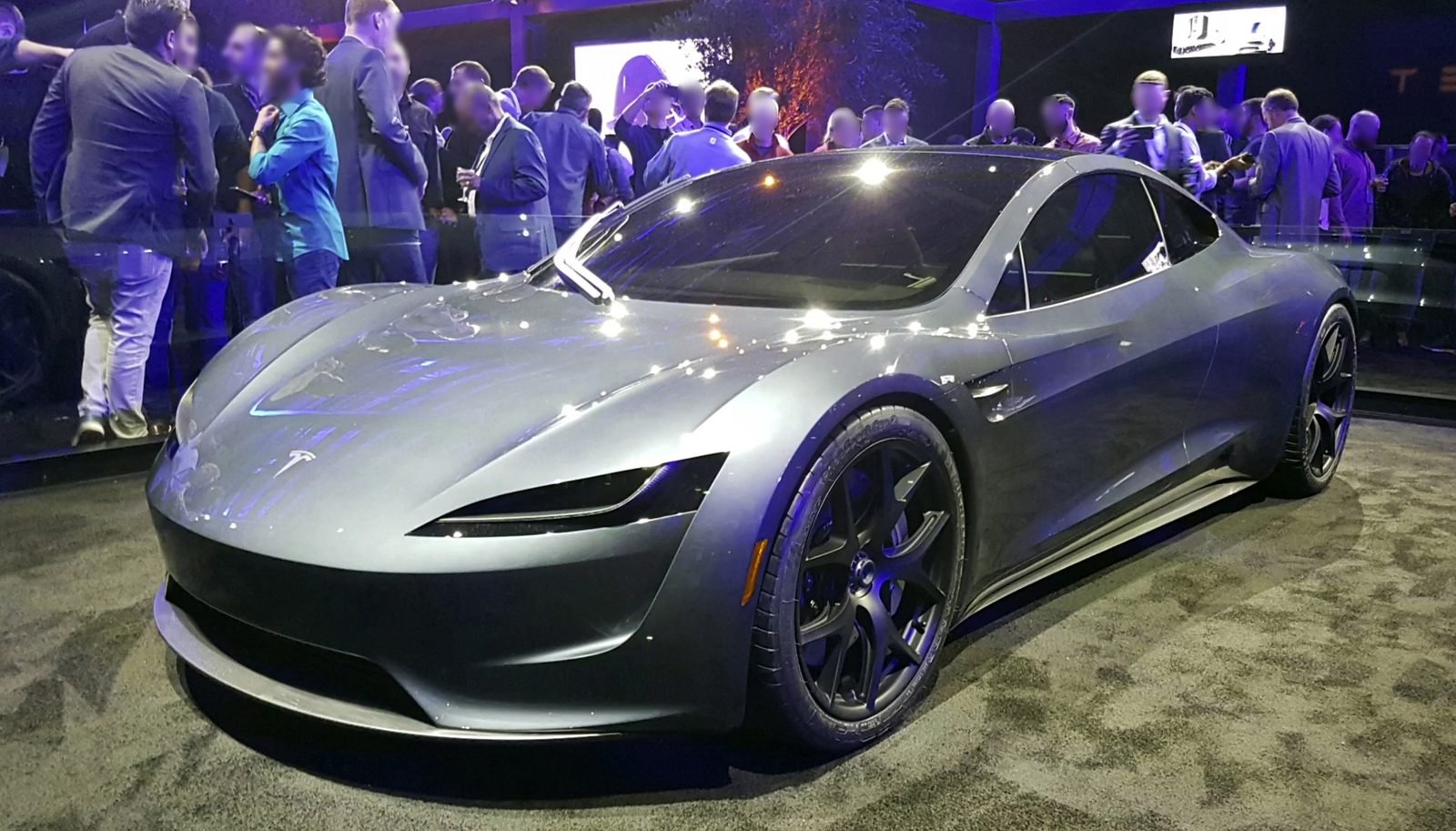
Now step outside Maranello, and it gets awkward fast. A Porsche Taycan Turbo GT — 1,019 hp, 0–60 in 1.9 seconds — starts from about $233,350 in the US. A Lucid Air Sapphire — 1,234 hp, 427 miles of EPA range, the fastest production sedan on sale — starts at $249,000. As Electrek’s Fred Lambert noted, you could buy two Sapphires and still have change left over from one Luce. The Tesla Roadster we’ve been covering sits around $200,000, and Elon Musk says it’ll start production in 2028 with SpaceX-derived thrusters. The Rolls-Royce Spectre, the Luce’s closest spiritual rival, starts from around $400,000 before options. And the highest-trim Rolls-Royce Cullinan costs roughly $50,000 less than the Luce — which is why the Luce can credibly claim the title of most expensive five-seat production car in the world.
None of that is the point, of course. InsideEVs’ Nico DeMattia nailed it: “Sure, you can get a Lucid Air Sapphire that’s more powerful and faster, for half the price, but it isn’t a Ferrari, is it? Pull up to a Michelin star restaurant in the Lucid, no one notices. Pull up in a Ferrari and you get all the eyeballs, for better and worse.” The badge is the product. At $560,800, the product had better be the badge.
Why the “discount” is the most interesting number here
Zoom out for a second, because the pricing story is really a strategy story. Ferrari’s CEO, Benedetto Vigna, has been making the case for the Luce as a deliberate act of bravery. At the unveiling, he said: “We are convinced that a company demonstrates its leadership when it has the courage to dare and to take on the challenge of new technologies. The Ferrari Luce is the result of more than 60 of our new patents and lies at the heart of an ecosystem of collaborations with outstanding technology partners. We have created a car that combines unique driving emotions with extraordinary performance, driving pleasure, and comfort for the Ferraristi of today and tomorrow.”
He’s still making that case. Just this week, Vigna told Reuters that Tesla’s wild Roadster reveal deserved “10 out of 10 for technology and 10 out of 10 for presentation,” adding: “It certainly shows that also in the automotive world there’s still a lot to be done. We have to keep dreaming.” And on the decision to bring in outsiders — Ive, Newson, the whole LoveFrom apparatus — he was blunt: “If we had worked on our own, we wouldn’t have done what we did. In other words, we tackled a whole series of questions and came up with some answers prompted by people who were observing us from the outside.”
The Ive partnership itself started in an unlikely place. Ferrari chairman John Elkann has said the idea of an electric Ferrari began taking shape about a decade ago, after a walk with Amazon founder Jeff Bezos. At a tech conference in Turin earlier this month, Ive described a project that began not with sketches but with research — LoveFrom spent the better part of a year studying Ferrari’s history and culture before drawing a line — and then five years of joint development with Maranello. “This is something that we believe is important for the future of Ferrari… not to just recycle history, but to create the future,” Ive said. At the Rome reveal, Elkann put it more poetically: “The future is not something we wait for. The future is something we create. A direction we choose… The Ferrari Luce is us choosing to shape what comes next.”
The market didn’t applaud at first — Ferrari’s shares dropped sharply in the days after the May reveal before recovering. But the order book told a different story: Ferrari sold out its entire 2026 Luce allocation of just under 500 units in less than two months, with China doing a lot of the heavy lifting. And in August, the first production chassis — Chassis 0 — went for $40 million at an RM Sotheby’s charity auction at Monterey Car Week, with the proceeds going to the Ferrari Foundation.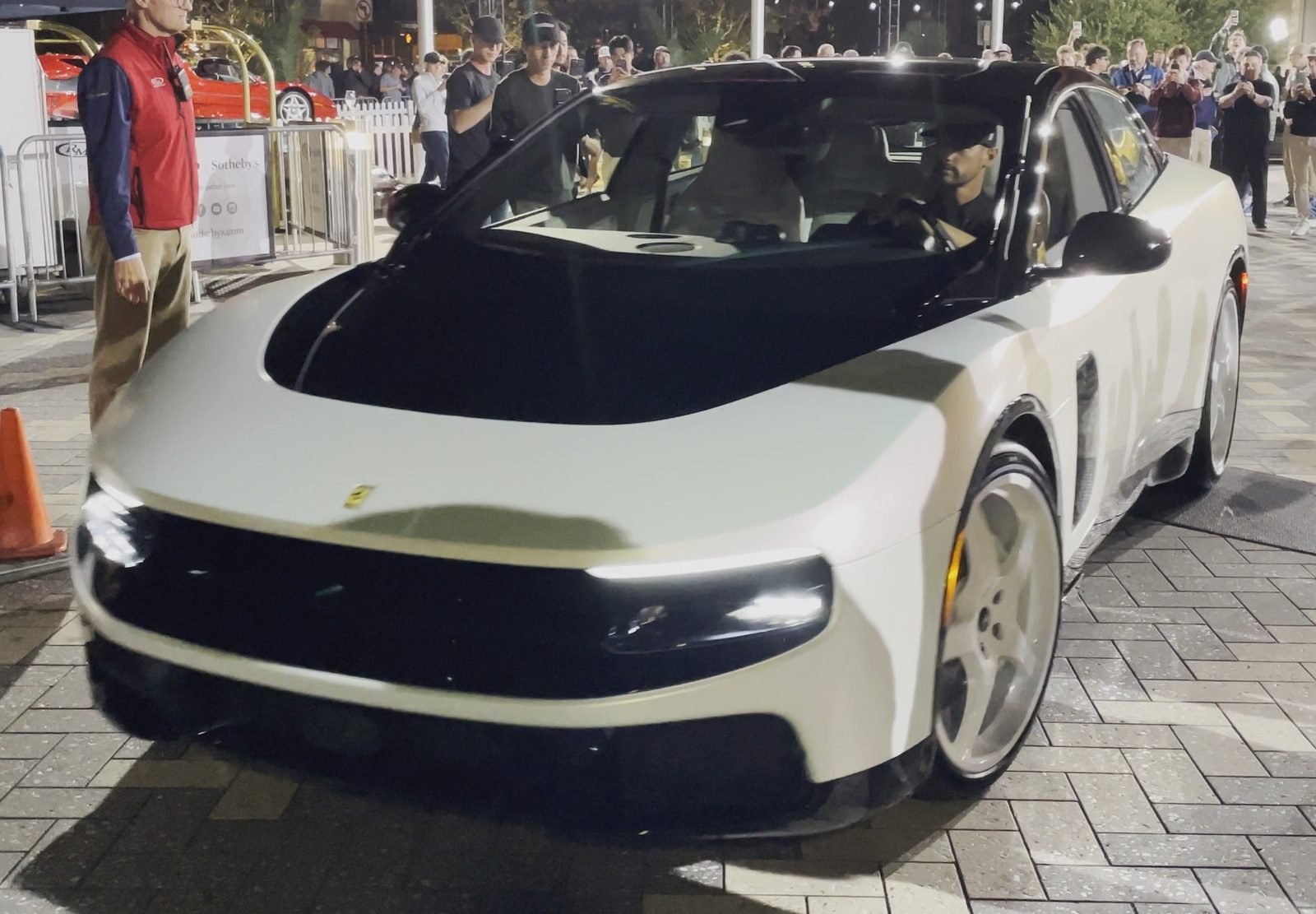
That’s why the $560,800 figure matters more than it looks. Ferrari could have priced the Luce at the bad-math number — $640,000, a nice round headline — and its sold-out 2026 allocation suggests buyers would have paid it. Pricing it where they did, right on top of the math that strips the VAT error out, reads like confidence: Ferrari doesn’t need to pad the price, because the scarcity is doing the work. When your first year is gone before your first US customer gets a key, the sticker is just paperwork.
The practical stuff: deliveries, ordering, and what you’ll really pay
Here’s what actually matters if you’re one of the small number of people for whom this is a shopping question rather than a spectator sport. European deliveries start in Q4 2026. US deliveries begin in Q2 2027. Ferrari hasn’t said how US allocation works — expect the usual Maranello choreography of dealer relationships, loyalty history, and quiet waitlists.
And about that $560,800: it’s the starting price the way a hotel’s rack rate is the starting price. Ferrari hasn’t published option pricing, state sales tax gets added on top, and the 15% tariff on European-built cars is baked into the sticker rather than itemized. Nobody buys a base Ferrari, and at this level “a few options” is a rounding error that costs more than a Corvette. Budget accordingly.
The flip side: if you’re in at the allocation game, history says the math works. The 2026 run sold out in weeks, the Chassis 0 car did $40 million at auction, and Ferrari has spent decades running the tightest supply-demand balance in the industry. A first-year, first-ever-electric Ferrari with a sub-500-unit run is the kind of thing collectors fight over. The people buying Luces aren’t comparing EPA range figures.
The verdict
So: $560,800, not $640,000. The number everyone quoted for five months was a tax-inclusive conversion done wrong, and the real price is $80,000 lower — while still being $55,000 higher than what the car costs before taxes in Italy, before options, before your state takes its cut. It’s the most expensive five-seat production car in the world, it’s already sold out for 2026, and the people who’ve driven it say it’s genuinely great.
Here’s our decision framework, such as it is. If you’re cross-shopping on specs — range, charging speed, horsepower per dollar — stop reading and go buy the Lucid Air Sapphire; it wins on paper for half the money, and everyone involved knows it. If you’re cross-shopping on the thing you actually buy at this price — scarcity, presence, the story you tell at dinner — the Luce is in a category of one. There is no other first-ever electric Ferrari, and there will never be another one.
As InsideEVs’ Nico DeMattia wrote, the Luce might be “probably the most justifiably expensive car in Maranello’s lineup” — the most do-it-all Ferrari of all time, with hypercar power in a five-seat grand tourer. Piero Ferrari’s line stands as the last word: once you’ve driven it, you’ll probably change your mind. At $560,800, Ferrari is betting there are at least 500 people a year who don’t need convincing. So far, it’s right.