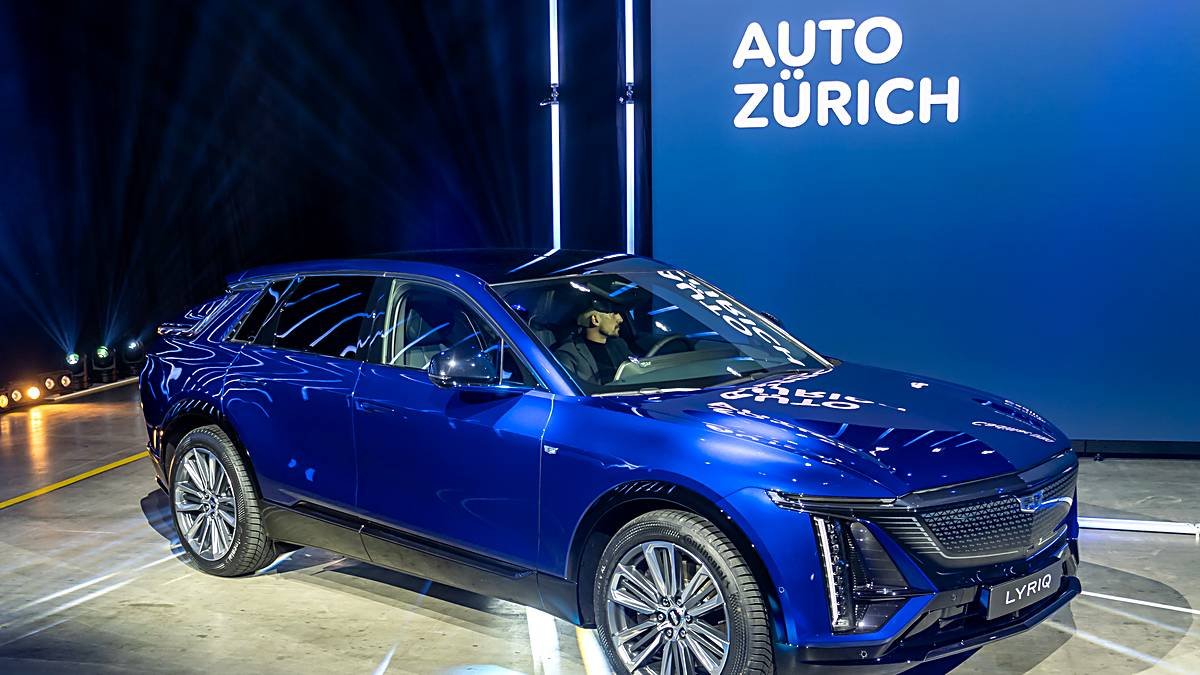
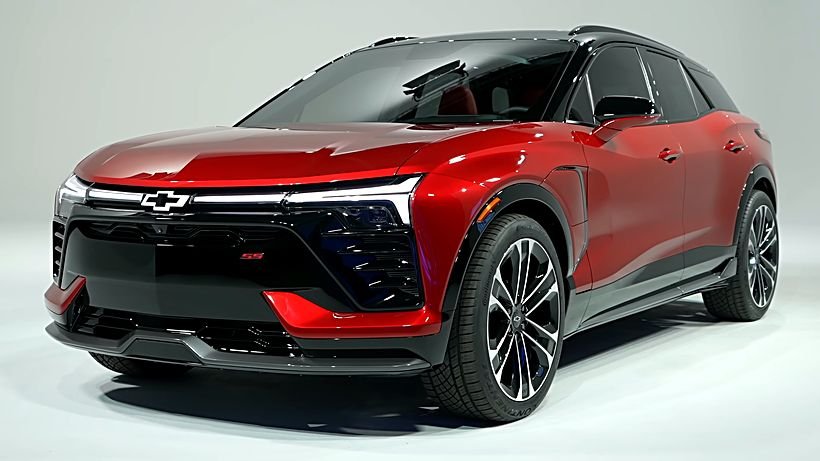
General Motors is recalling 67,380 electric cars because a software fault can briefly cut the brakes at low speed. The recall covers certain Cadillac Lyriq, Chevrolet Blazer EV, Vistiq and Celestiq models with performance all-wheel drive, and the fix is a free software update that GM has already started sending out.
The fault only shows up in a narrow set of conditions: light braking, a slow sharp turn, and a bump or dip, like the lip at the end of a driveway. When those three line up, the brake software can misread what the wheels are doing and let go of the brakes for a moment. Press the pedal again and normal braking comes back. That is the short version. Here is what is covered, how GM found the fault, and what owners should do now.
Is your car on the list?
Four models are covered, and the Lyriq is most of the recall. GM filed the recall with the National Highway Traffic Safety Administration on October 29, 2026, as campaign 26V717. Its own recall number is N262570900. Here is the full list, from GM’s filing:
| Model | Model years | Vehicles |
|---|---|---|
| Cadillac Lyriq | 2023–2027 | 44,585 |
| Chevrolet Blazer EV | 2024–2027 | 3,911 |
| Cadillac Celestiq | 2025–2026 | 82 |
| Cadillac Vistiq | 2026–2027 | 18,802 |
| Total | 67,380 |
Vehicles covered by GM recall N262570900 (NHTSA campaign 26V717). Source: GM Part 573 safety recall report, October 29, 2026.
The headline number is narrower than it looks. Only cars with performance all-wheel drive, known inside GM as pAWD (option code X0E), are included. Rear-wheel-drive Lyriqs are not in the recall at all. On the Blazer EV side, the dual-motor setup only exists on two trims, the SS and the Police Pursuit Vehicle, so only those two are covered. If your Blazer EV is an LT or RS, it is not on the list.
GM says it estimates 100 percent of the recalled cars have the defect. That sounds alarming, but it means something narrower: every car in the group runs the same brake software, so every one of them can hit the fault in the right conditions. It does not mean every car will lose its brakes. The fault needs a specific set of conditions to show up, and most owners will never meet them.
The fastest way to know for sure is your VIN. GM’s filing says VINs have been searchable through NHTSA’s recall system since October 29. You can check yours at nhtsa.gov/recalls. Owner letters are not going out until December 14, 2026, so do not wait for the mail.
What actually happens to the brakes
The problem lives in the brake system control module, the computer that runs the brakes. GM’s filing to NHTSA puts it plainly: the module “contains a software defect that may cause a temporary loss of braking at low speeds.” The defect is in the slip calculation, the math the software uses to work out whether a wheel is slipping. GM’s filing says “the software slip calculation may not always correctly interpret wheel movement.”
Here is how the fault plays out, as described in the filing and in Autoblog’s report on it. You are creeping along at low speed, turning sharply, and braking lightly, the way you do pulling into a driveway or a parking spot. Then you hit a bump or a dip, like the lip at the end of a driveway. The brakes release for a moment and then reapply. In that moment, the software can misread the wheel movement and decide a wheel is slipping when it is not. It lets go of the brakes, and for a brief moment the car does not slow down the way you expect.
The reason it happens is easy to follow once you know what the software is doing. Anti-lock and stability systems compare the speed of each wheel to work out whether a tire is slipping. In a tight, slow turn the inside and outside wheels already turn at different speeds. Add a bump that briefly unloads one tire, and the numbers can look like a wheel locking up. The software then does what it was built to do and releases brake pressure. The trouble is that no wheel was actually locking up. With a light foot on the pedal and a garage wall a few feet away, that brief release is enough to cause a crash.
GM is clear about the stakes. The filing says the fault increases the risk of a crash. GM counted 24 field complaints that may be tied to the condition, received between February 2024 and June 11, 2026. Of those, 20 involved minor accidents, and two carried allegations of minor injuries. The complaints are what GM calls “potentially related,” which means GM has not confirmed every one of them was caused by this fault, only that they fit the pattern.
One thing the fault is not: a total brake failure. The loss of braking is brief and it happens at low speed, and normal braking comes back when you press the pedal again. That does not make it safe. A car that keeps rolling for a moment in a driveway can hit a garage door, another car, or a person. But it is not the same as losing your brakes on the highway, and it helps to know the difference when you read the headlines.
How GM found the fault
The recall started with a garage wall. On April 10, 2026, a GM technical expert filed a report through the company’s Speak Up for Safety program after reviewing a low-speed incident in which a 2024 Cadillac Lyriq struck a garage. Speak Up for Safety is GM’s internal channel for employees to flag possible safety defects, and the report set off the chain that led to this recall.
Two things about that incident matter. First, the Lyriq in question already had the software improvements from GM’s earlier brake recall in 2024. The car was supposed to be fixed. Second, GM’s own testing was able to reproduce the fault. The engineers could make the brakes let go under the same conditions, which told them the problem was real and not a one-off driver error.
The timeline from there is in GM’s filing, and it is worth reading in full because it shows how long a recall takes even when the company moves on its own:
- April 10, 2026: GM technical expert reports the garage incident through Speak Up for Safety.
- August 18, 2026: GM opens a formal product investigation after preliminary testing reproduces the fault.
- October 22, 2026: GM’s safety committee decides to recall the cars.
- October 29, 2026: GM files the recall with NHTSA and tells dealers. VINs become searchable the same day.
- December 14, 2026: Owner notification letters are scheduled to start going out.
That last date is the one owners should note. There are about six weeks between the filing and the letters. GM says the software fix is already being delivered over the air, so owners do not have to wait for a letter to get it. But owners who do not follow car news, and who do not check their VIN, will not hear about the recall until mid-December. That gap is the weakest part of the whole process, and it is the reason to check your VIN now rather than later.
It is also worth noting how the fault came to light. It was caught by GM’s own internal reporting program, not by a regulator or a crash investigation. That is a point in the program’s favor. The same program, though, took more than four months from the April report to the August investigation, and another two months to a recall decision. A garage bump in April became a recall in late October.
The 2024 fix that did not cover it
This is not the first time GM has recalled the Lyriq for its brakes. In 2024, GM recalled 21,469 all-wheel-drive Lyriqs from model years 2023 and 2024 because the anti-lock brake system could activate without warning and release brake pressure. The fix then was also a software update. The new filing says the latest software corrects the same slip calculation that the 2024 fix was supposed to correct.
So what went wrong? According to GM’s chronology, the 2024 fix covered the conditions GM’s engineers had reproduced at the time. It did not cover every variation of the problem. The garage incident in April 2026 involved, in GM’s words, conditions “associated with certain pAWD implementations that were not addressed by the remedy” from 2024. In plain terms, the engineers fixed the scenario they had found, but not every version of it. That is the hard part of fixing software problems: you can only test for the conditions you think of.
That history is why the scope of this recall matters. Cars that were built with the 2024 software fix, and cars that already received the 2024 update, are included in the new recall. If you own a Lyriq that was fixed in 2024 and you assume you are in the clear, you are not. The new software update addresses both conditions, and GM says cars covered by the 2024 recall will be closed under that recall once they get the new update.
GM’s spokesperson at the time of the 2024 recall, Bill Grotz, told the Detroit Free Press that “the condition occurs in very rare circumstances at low speeds,” and that “safety and satisfaction of our customers are our highest priorities.” The same framing applies now: rare conditions, low speeds, and a fix that arrives as a download. The difference is that this time GM knows the last fix missed a case, which is why the new update is the one that counts.
The fix, and what owners should do now
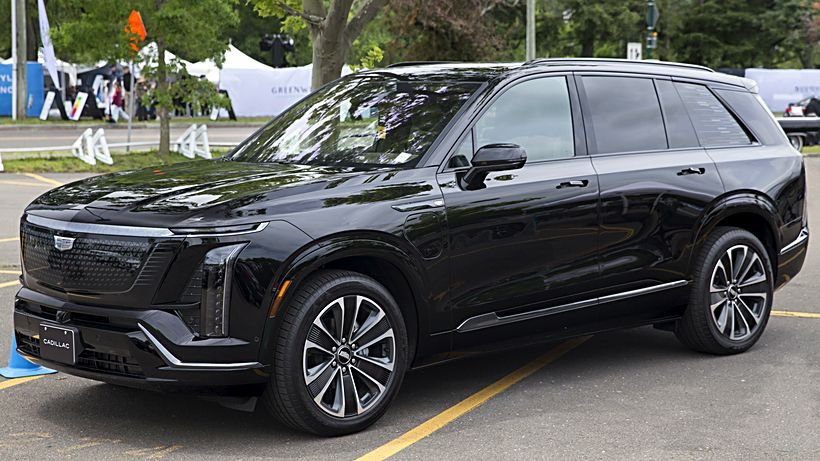
The fix is simple, and that is the good news in this recall. No parts are needed. GM will update the brake system control module software, free of charge, and the update “corrects the slip calculation.” Owners whose cars can receive wireless updates, and who have accepted GM’s connected-services terms, can take the update over the air without visiting a dealer. Everyone else can have a dealer install it. GM spokesperson Bill Grotz told The Detroit News that the company has already started delivering the over-the-air update, and dealers already have the software.
GM has also fixed the software in production. The corrected code went into 2027 model year Blazer EV production on August 8, 2026, into 2026 model year Lyriq production on September 7, 2026, and into 2027 model year Vistiq production on October 21, 2026. The 2027 Celestiq has the fix too. If you are buying a new one of these cars, the car on the lot should already be past the problem, but it is still worth checking the VIN before you sign.
One note from GM Authority’s coverage: the outlet reports that 2023 and 2024 Lyriq models are under a stop-delivery order while the software fix is not yet ready for those cars. That means dealers should not hand over an affected 2023 or 2024 Lyriq until the update is available for it. If you have a deposit down on one, ask the dealer to confirm the update is installed before you take the keys.
GM did not issue a Do Not Drive or Park Outside order with this recall. That is the strongest signal the company can give that it does not see the cars as unsafe to drive in normal use. Even so, there are a few sensible steps to take until the update is in your car:
- Check your VIN now at nhtsa.gov/recalls. Do not wait for the December 14 letter.
- Accept the update when it arrives. If your car can take over-the-air updates, look for it in the vehicle’s software menu instead of waiting for a prompt.
- Brake firmly on slow, sharp turns. Until your car is updated, take steep or curved driveway entries slowly and press the brake firmly rather than lightly. If the car ever feels like it is rolling on, press the pedal again firmly. Normal braking comes back on the next press.
- Keep a note if it happens to you. If you have had an unexplained low-speed bump while pulling into a garage or driveway, write down the date and the conditions, and report it to NHTSA. A documented defect matters if you later need to make a claim.
- Buying used? Get proof. A Lyriq that was updated under the 2024 recall still needs this new software. Ask the seller for proof the latest update is installed before you buy. Our guide to buying a used Tesla covers the same checks that apply to any used EV, including how to verify open recalls on the VIN.
If you want to talk to someone, Cadillac customer service is at 1-800-333-4223 and Chevrolet customer service is at 1-800-222-1020. The NHTSA vehicle safety hotline is 1-888-327-4236. GM’s recall number is N262570900 and the NHTSA campaign number is 26V717. Have your VIN ready when you call.
What this says about software in cars
There is a bigger story behind this recall, and it is one that will keep coming back. Recalls used to mean parts. A bad switch, a weak spring, a cracked hose. Now a brake recall can be fixed by a file. GM’s own filing makes the point without meaning to: the defect is a calculation, the remedy is a download, and the cars never have to visit a shop. For owners, that is mostly good news. A software fix is faster and cheaper than a hardware fix, and it can reach cars that are already on the road.
But a download only works if it reaches the car. An over-the-air fix depends on the owner accepting the update, the car being connected, and the owner knowing the update exists. GM’s letters do not go out until December 14, six weeks after the filing. Owners who never read car news will drive for weeks without knowing their car is on the list. The recall system was built for a world where a letter in the mail was the fastest way to reach an owner. That world is gone, and the gap between the filing and the letter is the part of this recall that deserves a hard look.
The other lesson is about how software gets tested. GM fixed this same brake calculation once before, in 2024, and the fix missed a set of conditions that only showed up two years later in a garage. Software in cars is now safety-critical in the same way brakes and steering are, but it is tested the way software always is: against the cases engineers think to try. The garage incident is a reminder that the cases nobody thought of are the ones that matter.
Regulators are paying closer attention to that gap. NHTSA is already pressing Tesla over whether the Cybercab was properly certified before it went into service, a story we covered when the agency’s October 30 deadline for Tesla’s safety documents arrived. The GM recall is a different kind of case, a company reporting its own fault and fixing it, but it lands in the same moment: software is now the car, and the rules for proving software is safe are still being written.
For GM owners, the practical takeaway is simpler. The fix is free, it is already going out, and it takes no visit to a dealer for most cars. Check your VIN, take the update, and the car is past it. What owners should also expect, and should hold GM to, is the same clarity Ford gave Lightning owners when that truck was wound down: a plain statement of what support looks like and for how long. Our look at what a high-mileage Lightning paid for a battery out of warranty shows why that promise matters. A recall is a moment when a carmaker tells you what it thinks of its own cars. The update is the answer. The speed and the honesty around it are the rest of the story.
GM brake recall questions, answered
Is my Lyriq recalled?
Only Lyriqs with performance all-wheel drive are covered, from model years 2023 through 2027. Rear-wheel-drive Lyriqs are not included. Check your VIN at nhtsa.gov/recalls to know for sure.
What happens if the fault triggers?
The brakes can briefly let go at low speed when you brake lightly in a sharp turn and hit a bump or dip. Normal braking comes back when you press the pedal again. GM says the fault raises the risk of a crash, so do not ignore it.
How do I get the fix?
GM will update the brake system control module software free of charge, over the air or at a dealer. Owner letters go out on December 14, 2026, but the update is already being delivered, so check your car’s software menu now.
Is it safe to drive my car until the update?
GM has not told owners to stop driving these cars, and it issued no Do Not Drive or Park Outside order. Until the update is installed, brake firmly rather than lightly on slow, sharp turns over bumps, and press the pedal again firmly if the car ever feels like it is rolling on.
I already got the 2024 Lyriq brake update. Am I covered?
No. Cars that were built with the 2024 fix, and cars that received the 2024 update, are included in this recall and need the new software. The new update covers both the old fault and the new one.
Which models are covered?
Certain 2023 to 2027 Cadillac Lyriq, 2024 to 2027 Chevrolet Blazer EV, 2025 to 2026 Cadillac Celestiq, and 2026 to 2027 Cadillac Vistiq models, all with performance all-wheel drive. That is 67,380 cars in total, and the Blazer EV is limited to SS and Police Pursuit trims.
GM caught this fault itself, reported it, and has a fix ready. That is how the system is supposed to work. The weak link is the six weeks between the filing and the letters, and the owners who will not hear about the recall until December. If you drive one of these cars, do not wait for the letter. Check the VIN, take the update, and the car is past it. The brakes are the one system that has to work every time. This time, the fix is a download. Take it.