The quick answers
| Question | Answer |
|---|---|
| What is due October 30? | Tesla's sworn answers to NHTSA's Special Order on how it self-certified the Cybercab under federal safety standards — not a recall, not a grounding, not an approval |
| What is NHTSA actually reviewing? | Audit Query AQ26002, opened September 3, examining the process and technical data behind Tesla's certification of a car with no steering wheel, pedals or mirrors |
| Why did the deadline move? | Tesla asked September 18 for eight more weeks (to November 20); NHTSA granted 30 days instead, moving the date from September 30 to October 30 |
| What's at stake? | Civil penalties up to $27,874 a day, capped at about $139.4 million, plus possible DOJ referral — if answers are false or incomplete |
| Does the audit stop Cybercab service? | No. Paid rides in Austin continue while the review runs, and NHTSA has made no finding of noncompliance |
| What's Tesla's plan? | Limited Cybercab customer deliveries by year-end 2026; unsupervised FSD targeted around Q2 2027 with FSD v15 |
What today is — and what it isn't
October 30 is the day Tesla's lawyers have had circled for weeks: the deadline for the company's sworn response to the National Highway Traffic Safety Administration's Special Order on the Cybercab. Let's be precise about what that means, because the headlines tend to blur it.
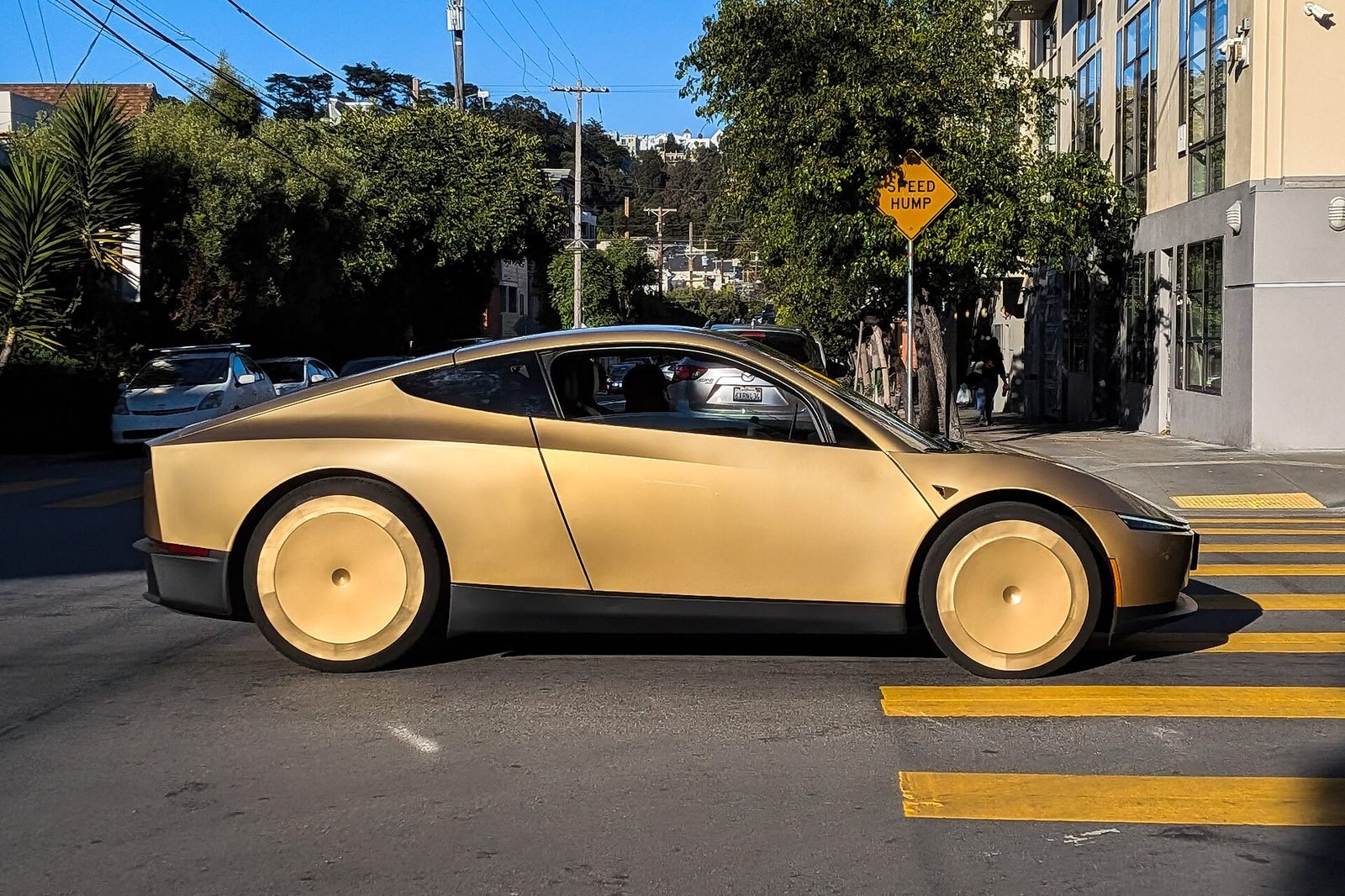
Today is not the day NHTSA approves or rejects the Cybercab. It is not a recall. It is not a stop-sale or a grounding order. It is the day Tesla must hand over its evidence — under oath, signed by a responsible company officer — explaining how it certified a vehicle with no steering wheel, no pedals and no mirrors as compliant with every applicable Federal Motor Vehicle Safety Standard. As Insight Times put it, "Oct. 30 is not a regulatory approval date. It is the deadline for Tesla to submit its evidence that the vehicle meets those standards."
That distinction matters because the American system works differently from what most people assume. Automakers don't get federal permission before selling a car. They certify themselves — they sign a statement saying the vehicle meets the standards — and NHTSA can later audit the basis for that certification. That's exactly what this audit is: a check of Tesla's homework, not a permission slip.
How we got here
The timeline is tight, and it tells you how seriously NHTSA is taking this. On September 3 — the day Tesla began commercial Cybercab service in Austin — the agency opened Audit Query AQ26002 "to evaluate Tesla's basis for certifying that its Cybercab vehicle complies with all applicable FMVSS," per TeslaHubs' account of the filings. The opening document estimates the population under review at about 1,000 vehicles.
A week later, NHTSA escalated with a Special Order: roughly 21 questions, sworn answers, original due date September 30. The questions go straight at the weirdest parts of the Cybercab. How does a car without pedals satisfy FMVSS 135, the standard for foot-operated service brakes? Did temporarily installed manual controls play any role in the certification? Can a human drive a Cybercab at all? Do the touchscreens contain controls that let occupants move the vehicle? What speed, geographic and time-of-day limits apply?
On September 18, Tesla asked for more time — eight weeks, pushing the deadline to November 20 — citing the "voluminous nature of the request" and the need to search records, review material for responsiveness and privilege, and write thorough narrative answers. NHTSA's answer came in a September 29 memo to the file: "On September 22, 2026, NHTSA granted Tesla a 30-day extension." Thirty days, not eight weeks. New deadline: October 30. The memo doesn't explain why the agency gave less than Tesla asked for, and it sets no other conditions.
The question at the center of it all
Strip away the procedure and the audit comes down to one plain-English question: how do you apply safety rules written for human drivers to a car a human cannot drive?
Federal motor vehicle safety standards assume a person behind the wheel. They reference steering systems, brake pedals, accelerator controls, mirrors — hardware the Cybercab simply doesn't have. Tesla told the agency it had "certified those Cybercab vehicles as compliant with all applicable Federal Motor Vehicle Safety Standards," according to the NHTSA documents — and the audit is examining "the process and technical data" behind that call, including whether it rested on findings that certain standards just don't apply to this vehicle.
That's the legally delicate part. NHTSA said it will consider how much Tesla's certification depended on declaring standards inapplicable. There's nothing inherently wrong with that — plenty of standards genuinely don't map onto a driverless pod — but the agency wants to see the work, not just the conclusion. And it wants it under oath, because false or incomplete answers carry civil penalties of up to $27,874 a day, capped at about $139.4 million for a related series of violations, plus possible referral to the Department of Justice.
The Zoox contrast
Here's what makes Tesla's position unusual: there was an established path for exactly this situation, and Tesla didn't take it. Automakers building vehicles without manual controls can petition NHTSA for a Part 555 exemption — a formal carve-out that allows up to 2,500 such vehicles a year. Amazon's Zoox did exactly that, winning a two-year exemption from parts of eight standards, including Standard 135, and putting its purpose-built robotaxi into paid service.
Tesla skipped the exemption line entirely and self-certified instead. The company registered the Cybercabs under a Texas self-certification law and, as of early September, had not filed for a federal exemption. NHTSA's proposed rule changes from June would drop some manual-control requirements, but current rules stay binding until any amendments are final. So the agency's question is fair: why no exemption, and how does the math work without one?
Tesla's defenders would say self-certification is the company's right under the law — and it is. The audit doesn't allege otherwise. But choosing the harder path means proving the harder case, and that's what today's filing has to do.
What Tesla has promised
While the lawyers write, the business keeps moving. On Tesla's third-quarter earnings call on October 21, vehicle engineering chief Lars Moravy said the company aims to begin delivering the Cybercab to outside customers by the end of 2026 — actual customer cars, not just fleet vehicles. Unsupervised full self-driving is targeted around Q2 2027 with FSD v15, though outside analysts put the odds of v15 landing before year-end at only about 30%.
The federal scrutiny comes as Washington's posture toward vehicle tech keeps hardening on a second front: the Air Force just banned BYD vehicles from Kadena Air Base in Japan over connected-car security fears, as we reported here. Different agency, different issue — but the same direction of travel. Regulators are done giving new vehicle technology the benefit of the doubt.
The safety record so far
It's worth separating the certification audit from the crash data, because they're different proceedings and the numbers get mixed up. Under NHTSA's Standing General Order, Tesla files every robotaxi collision that meets federal thresholds. The data released October 15 showed nine Tesla Robotaxi crashes in August 2026 — five in Dallas, three in Austin, one in Tampa, per the Rocks on Galaxy guide.
But here's the nuance: the only Cybercab-specific entry in the entire dataset is a 5-mph test drive into a parking-lot pothole in August — property damage only, no injuries. The nine August crashes involved the broader robotaxi operation, and NHTSA's data isn't adjusted for miles driven, while Tesla doesn't publish robotaxi mileage, so you can't compute a crash rate from it yet. Cybercab News notes the audit is "not a recall, not a grounding order and not an exemption" — it's a paperwork fight about certification theory, running alongside the normal crash-reporting machinery.
We dug into the August numbers in detail in our earlier crash-data piece, if you want the full breakdown.
What happens next
Tesla files its sworn answers today. Then — nothing public, for a while. The October 30 response isn't public until NHTSA decides to release it, and the agency hasn't said when it will make a determination on the certification. Follow-up reviews and requests for more information are entirely possible; audits like this one rarely end with a single filing.
The scenarios branch from there. If NHTSA accepts Tesla's certification basis, the Cybercab rollout continues and the industry gets a template for certifying driverless vehicles without exemptions. If the agency finds the certification flawed, Tesla faces penalties up to that $139 million cap — and, more importantly, a potential requirement to seek exemptions or modify the vehicle, which would slow the year-end delivery push and the 2027 expansion plans.
Either way, today's deadline is a beginning, not an ending. The paperwork lands today. The judgment comes later. And the Cybercabs keep running in Austin while everyone waits.
Why the oath matters
There's a detail in the Special Order that deserves more attention than it gets: Tesla's response "must be signed under oath," with an affidavit from a responsible company officer. This isn't a comment letter or a white paper. It's sworn testimony, which means the person who signs it is personally on the hook if the answers turn out to be false.
That's why the penalty structure is built the way it is. Civil penalties of up to $27,874 per day, capped at about $139.4 million for a related series of violations, sound dramatic — but for a company of Tesla's size, the money is almost beside the point. The real exposure is a DOJ referral and the precedent it would set. An adverse finding wouldn't just cost Tesla money; it would become the case study every future autonomous-vehicle certification gets measured against.
It also explains why Tesla asked for eight weeks and got thirty days. The company cited the "voluminous nature of the request" and the need to search records and review material for privilege — the kind of careful, lawyer-intensive work you do when the signature at the bottom carries personal liability. NHTSA's decision to grant less than half the requested time reads as the agency saying: we know this is a big lift, and we're not waiting until Thanksgiving.
The Texas registration subplot
Running underneath the federal audit is a state-level numbers game worth watching. Fleet trackers monitoring the Texas registry put the Cybercab count at 351 registered for commercial autonomous operation, alongside 507 Model Y robotaxis, per fleet trackers cited by Cybercab News — well below the 544 Cybercabs in the broader statewide tally, because the trackers filter for commercial-operation registrations specifically.
Why does that matter? Because NHTSA's audit population is estimated at 1,000 vehicles, and the gap between "registered in Texas" and "registered for commercial autonomous operation" is exactly the kind of definitional question the Special Order's 21 questions are designed to pin down. When the sworn answers land, watch for how Tesla defines its own fleet — the definitions will matter as much as the engineering.
The bottom line
October 30 won't decide the Cybercab's fate — but it will show Tesla's cards. The company's sworn answers have to explain, in detail, how a car with no steering wheel, no pedals and no mirrors meets safety standards written for human drivers, and why it never sought the exemption Zoox used. The penalties for getting it wrong are real but capped; the reputational stakes, with year-end customer deliveries on the line, are bigger. Watch for NHTSA's next move — and for whether Tesla's filing ever sees daylight.
"""