Buy a Tesla Model 3 in 2027 and you pay full sticker price — the $7,500 federal credit died September 30, 2025, and the $15,000 replacement bill has no cosponsors and no path to law. What you get instead is a better car: a bigger screen on every trim, and a quicker Performance.
That is the 2027 EV market in one sentence — Washington took the incentives away, and the cars got better anyway. Here is the picture: the dead-on-arrival credit bill, the BYD SUV America cannot buy, the $5,500 choice in the Model 3 lineup, and a year of ownership.
| Question | Answer |
|---|---|
| Cheapest 2027 Model 3? | Standard RWD, $36,990, 321 miles |
| The $15,000 credit bill? | H.R. 10881: no cosponsors, no path to law |
| BYD Atto 8 in America? | No US price, no US sale; 100% tariff plus a tech rule |
| What changed for 2027? | 16-inch screen on every trim; Performance 528 hp, 316 miles |
| Best 7-seat EV you can buy? | Kia EV9, $54,900–$71,900, up to 305 miles |
| Used Model 3? | $28,931 average, up 15.4% year over year |
The 2027 EV landscape: a $15,000 credit bill with no road to law
Start with the money. The federal new-EV credit ended for vehicles acquired after September 30, 2025, when President Trump signed the One Big Beautiful Bill Act. The used-EV credit went with it, and the home-charger credit follows after June 30, 2026.
Rep. Greg Landsman (D-OH) wants to bring the credits back and double them. His 21st Century Vehicle Choice Act — H.R. 10881, introduced October 22 — would pay up to $15,000 on a new EV, $8,000 on a used one, and lift the home-charger credit from 30% to 50%, all permanent. Income caps would drop to $225,000 joint, $169,000 head of household, and $112,500 single, and anyone who claimed the old credit once could never claim this one again.
It will not pass. The bill has zero cosponsors and sits in three committees; Republicans control both chambers, and a restoration bill would still face a veto even if Democrats win the November 3 midterms. Landsman filed the same bill before the 2024 election; it died the same way. Nothing like this becomes law before 2029, and waiting gains you nothing — the credit would only cover cars placed in service after enactment.
BYD Atto 8: the 7-seat SUV America cannot buy
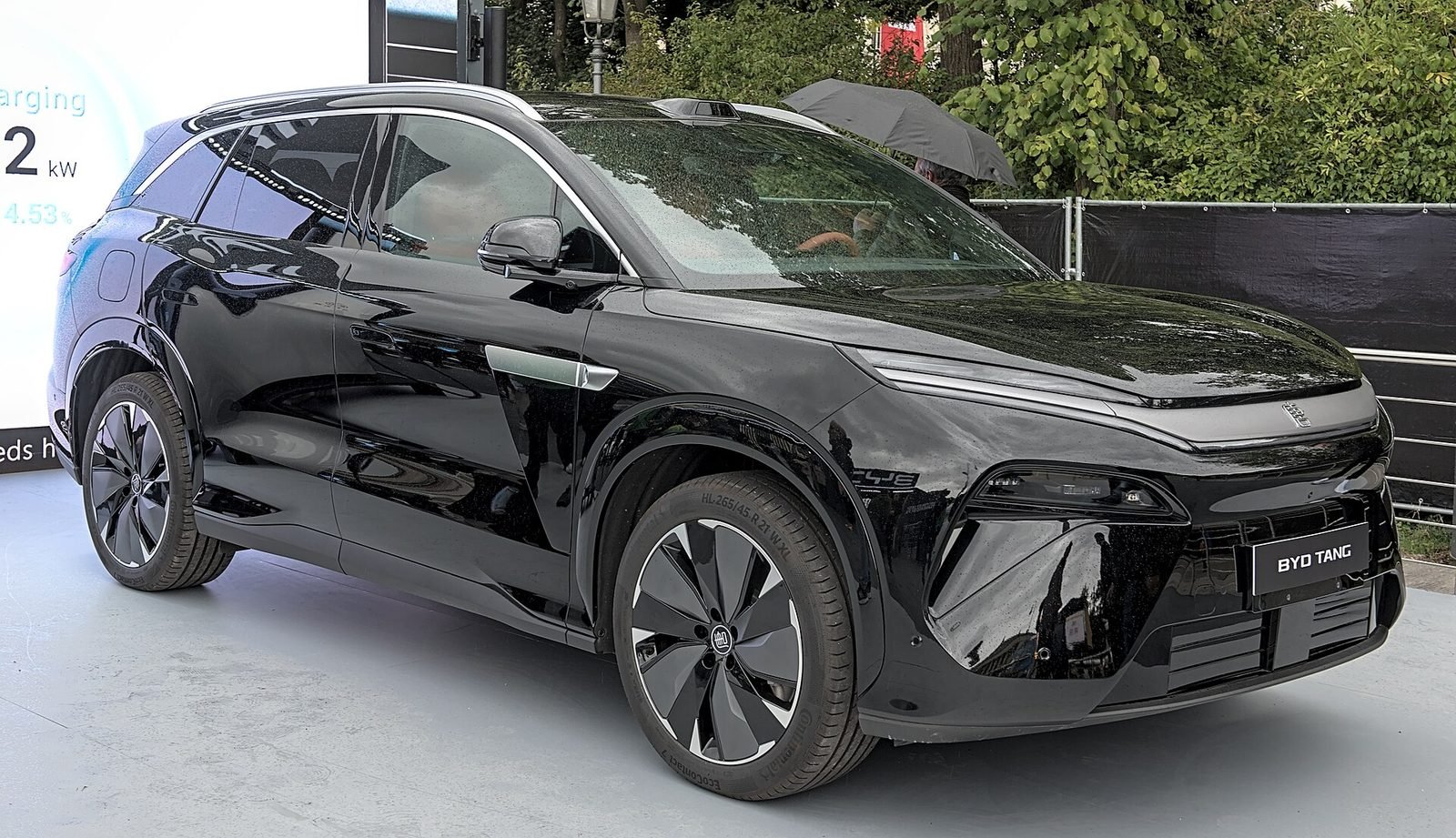
Search “BYD Atto 8 price in USA” and you will find plenty of guesses. The honest answer: there is no US price, because there is no US sale.
Two walls keep it out: a 100% tariff on Chinese EVs since September 27, 2024, and a connected-vehicle rule banning Chinese vehicle software from model year 2027 and hardware from 2030. The same walls keep the BYD Shark pickup out.
The car is serious. BYD revealed the Atto 8 on October 12 at the Paris Auto Show: a 7-seat SUV with a 115 kWh Blade 2.0 battery, up to 405 miles of WLTP range, and flash charging from 10% to 97% in 9 minutes. Europe gets it in the first quarter of 2027.
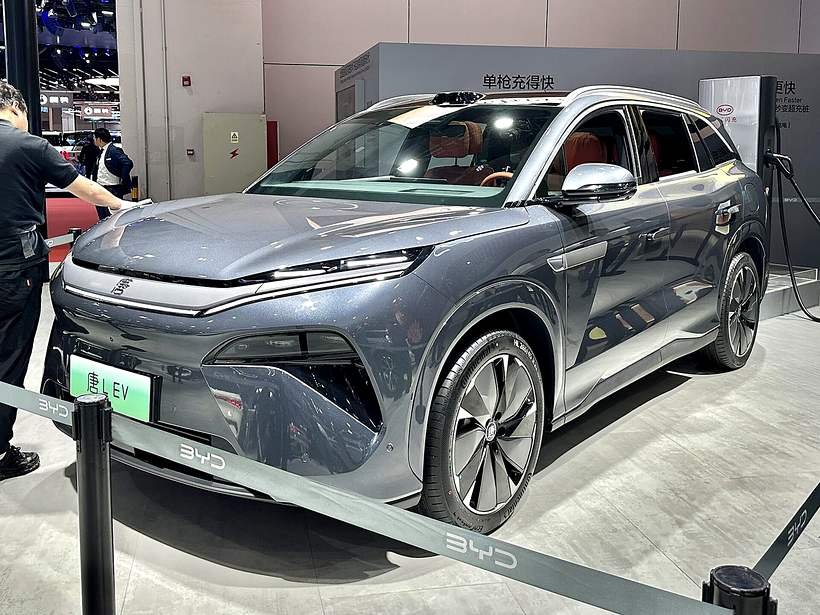
The 9-minute charging needs a flash-charging station, and there is no public map yet — BYD has 10,000-plus in China and plans up to 6,000 outside China by end of 2027. The real 7-seat rival on US roads is the Kia EV9: $54,900 to $71,900, seven seats, up to 305 miles.
Tesla Model 3 2027: Standard vs Premium — what $5,500 buys
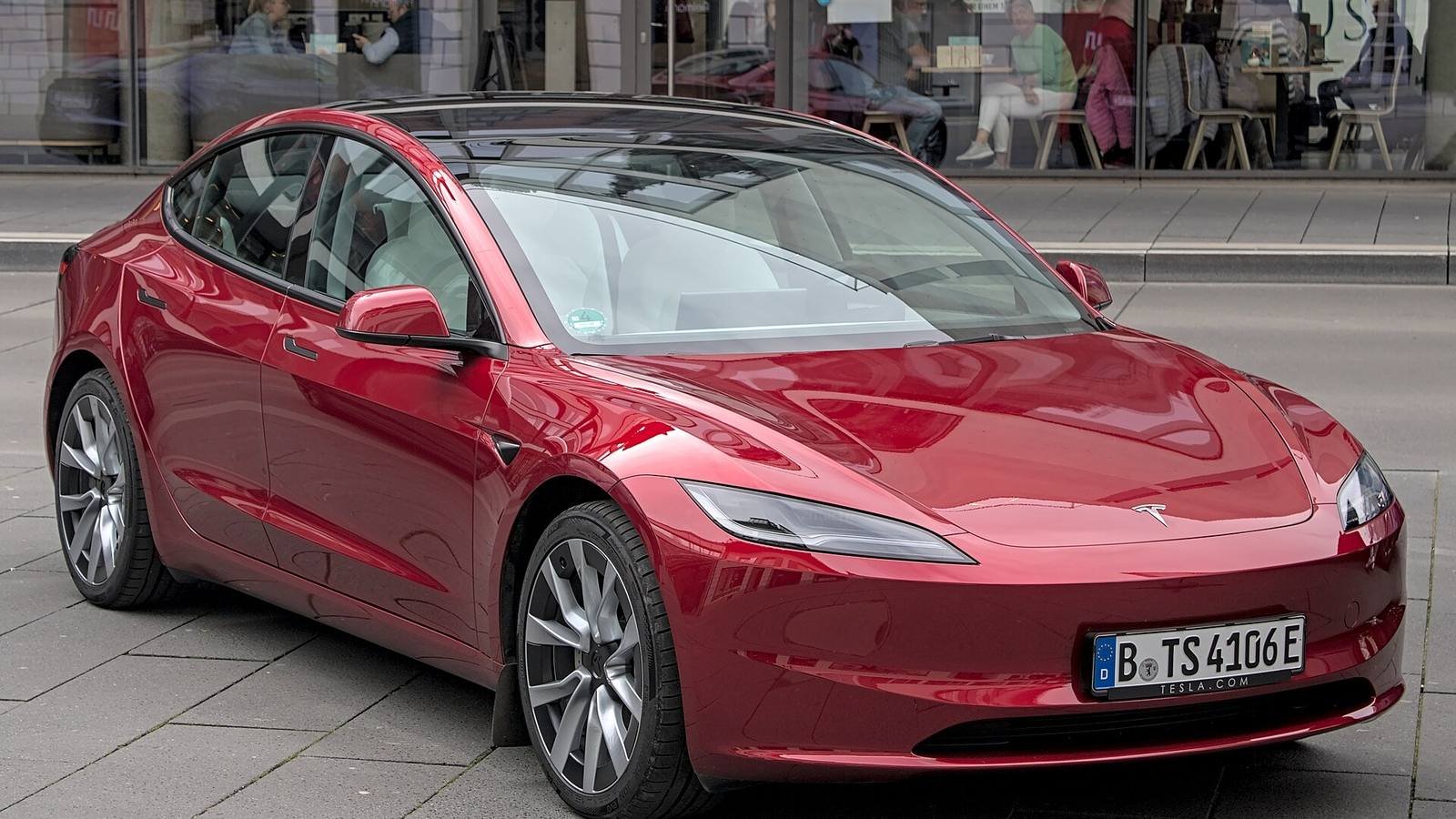
The lineup starts at $36,990 for the Standard rear-wheel drive, before $1,640 in fees: 321 miles, 0–60 in 5.8 seconds. Premium rear-wheel drive is $42,490 with 363 miles and 4.9 seconds. Premium all-wheel drive is $47,490, 346 miles, 3.8 seconds. Performance tops out at $54,990, about 316 miles, 2.9 seconds.
The $5,500 buys a lot: 7 speakers instead of 9 (15 on AWD and Performance), no subwoofer, no AM/FM radio, no rear screen, heated front seats only, a fabric mix, manual wheel and mirrors, no ambient lighting, and passive shocks. It charges slower too — 225 kW versus 250 kW, about 170 miles in 15 minutes instead of 195 — and its battery warranty is 8 years/100,000 miles instead of 120,000.
Two caveats: the Standard kept some sound deadening — one comparison says “less acoustic glass,” not deleted glass. The 7.7 kW home-charging figure is a guide claim, not a Tesla spec. Charge at home and drive alone, buy the Standard; road-trip or carry passengers, the Premium is worth it.
The 2027 refresh is real — and it is already here
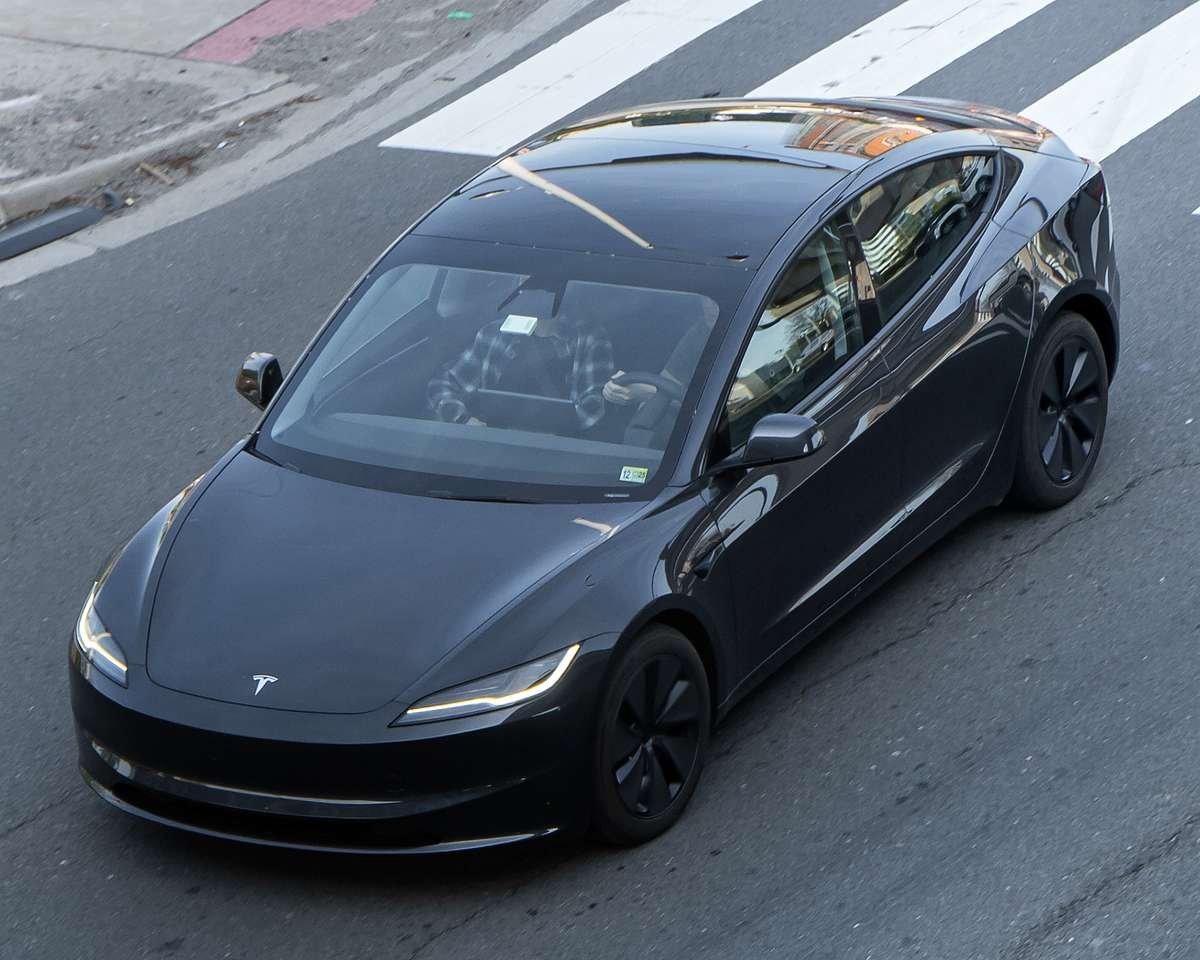
The rumored 2027 tweaks are not rumors anymore. Tesla updated the US Model 3 on October 1 and 2: every trim gets a 16-inch QHD screen at 2560×1440, up from 15.4 inches. The Performance adds a black headliner, 528 hp (up from 510), and 316 miles (up from 309). Premium all-wheel drive is now 3.8 seconds to 60, down from 4.2.
There is no “wait for the 2027 car” anymore — any new order today is a 2027 car. The only way to get the old screen is a leftover 2026. Check the build date before you sign.
The other change is the one most coverage gets wrong. Tesla’s own Powershare page says every new Model 3 ordered in the US after October 1, 2026 is Powershare-capable through a PCS2 Lite bidirectional inverter, the Cybertruck’s inverter family. With a Powerwall 3 it backs up your home; an Outlet Adapter runs appliances at up to 2.4 kW. It cannot be retrofitted, and the “Cybercab Inverter” idea is wrong — the Cybercab has no bidirectional inverter. The US also misses the Shanghai cars’ 2.2 kW vehicle-to-load, Zen Grey interior, and range-wide headliner.
Buy a 2026 now or wait? The depreciation question
The Reddit anxiety is real: buy a 2026 in November and it is a year old on paper within weeks. iSeeCars puts five-year depreciation near 54%; CarEdge figures about 30% gone in year one, roughly $15,435. Leasing starts from $419 a month; Tesla’s loan rate is 6.79%.
But used prices are not falling: the average used Model 3 cost $28,931 in September 2026, up 15.4% year over year, with asking prices clustered around $26,500 to $29,000. The expensive mistake is a “deal” on a leftover 2026 that does not beat a year of depreciation plus the missing screen.
Living with it: batteries, FSD, and thin paint
The battery panic needs a correction: a claim online puts the Model 3’s lifetime battery failure rate at 1% to 2.5%, and we could not verify that number, so we are not repeating it. Real data from a Swedish study of 9,954 battery tests: the base car’s CATL pack kept 93.3% of its capacity past 62,000 miles, ahead of LG at 91.5% and Panasonic at 89.8% and 88.2%. Geotab puts average degradation near 1.8% a year.
Full Self-Driving is the other daily frustration. Owners on FSD version 14 report swings between 5 under and 20 over the limit, a speed-limit display that reads wrong and gets stuck, and the loss of manual max-speed control. One owner crossing the country watched FSD report 15 mph on a 65 mph highway and stay down for two days. These are owner reports, not Tesla-confirmed defects — test FSD on your own roads before paying $99 a month.
The “poor visibility” message is real: APP_w304 means a camera is blocked or blinded, APP_w207 means Autosteer is off in rain, snow, or fog. Wipe the cameras with a soft, damp cloth and pre-condition the cabin. And the paint: Tesla’s water-based finish runs 80 to 110 microns thick against 120 to 150 for German luxury cars, so it swirls and chips early. A ceramic coating ($899–$1,699) will not stop rock chips — only paint film does, from about $2,000 for the front end.
The bottom line, in one table
| Trim choice | Price & incentive reality | Key competitive threat |
|---|---|---|
| Model 3 Standard RWD | $36,990, no federal credit | Used Model 3s; Kia EV9 for families |
| Model 3 Premium RWD / AWD | $42,490–$47,490, no federal credit | Kia EV9’s 7 seats |
| Model 3 Performance | $54,990, no federal credit | Its own 2026 leftovers |
| BYD Atto 8 | No US price or sale | Blocked by tariff + tech rule |
| Kia EV9 | $54,900–$71,900, 7 seats | The Atto 8, if Washington lets it in |
Tesla Model 3 2027: quick answers
Is there a BYD Atto 8 price in the USA? No. BYD does not sell the Atto 8 in the US and has announced no US price — a 100% tariff has applied since September 27, 2024, and a federal rule bans Chinese vehicle software from model year 2027.
Will the $15,000 EV tax credit happen in 2027? Almost certainly not. H.R. 10881 has no cosponsors, sits in three House committees, and Republicans control both chambers. Even a Democratic midterm win would face a veto, so nothing like it happens before 2029.
What is the difference between the Tesla Model 3 Standard and Premium? The $5,500 gap buys range, speed, and equipment. The Standard RWD costs $36,990 with 321 miles; the Premium RWD costs $42,490 with 363 miles. The Standard loses the subwoofer, AM/FM radio, rear screen, heated and ventilated seats, ambient lighting, and power-folding mirrors, and charges slower at Superchargers.
Does the 2027 Tesla Model 3 have a 16-inch screen? Yes. Every Model 3 ordered in the US after October 1, 2026 gets a 16-inch QHD touchscreen, up from 15.4 inches. The Performance also gains a black headliner, 528 horsepower, and 316 miles of EPA range.
How much is a used Tesla Model 3? The average used Model 3 cost $28,931 in September 2026, up 15.4% from a year earlier, according to iSeeCars. Asking prices cluster around $26,500 to $29,000 depending on year and trim.
The bottom line
The 2027 Model 3 is a better car at the same prices, with no federal help. The $15,000 credit is a bill with no votes behind it. The real choice is $36,990, $42,490, or $54,990 — order now and you get the 2027 hardware.