The short answer
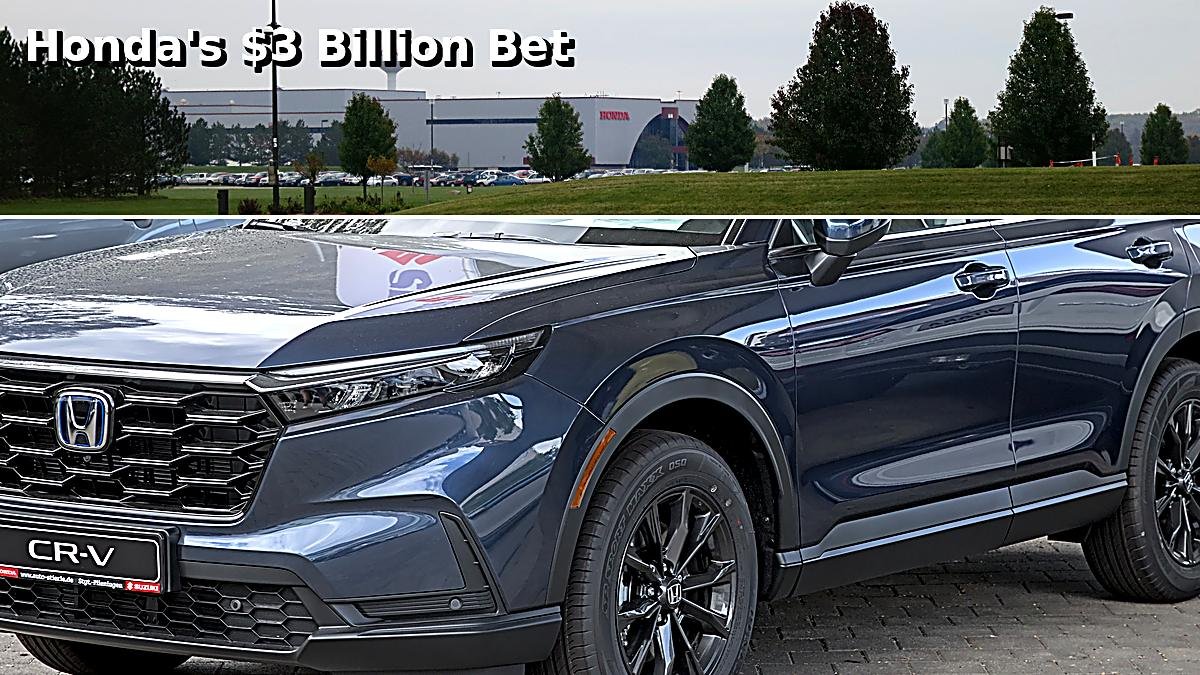
Honda is spending $3 billion on a brand-new auto plant in central Ohio. The plant will create more than 2,000 jobs, build up to 240,000 vehicles a year, and start production in 2029, if final government approvals come through. It will be built to make hybrids first, but the lines can also build gasoline cars and battery-electric cars, so Honda can shift output as buyers change their minds.
The headline is the money and the jobs. The real story is the turn. Four years ago, Honda stood in Ohio and promised the state would be its EV hub, with three new electric models and a big battery plant. In March of this year, Honda canceled all three of those EVs. Now the same state gets a $3 billion plant built around hybrids. That is not a small tweak. It is Honda saying, out loud, that hybrids are where the buyers are, and EVs can wait.
What Honda announced
Honda made the announcement on Monday, November 9, from Marysville, Ohio, where it has built cars since 1982. The new plant will sit on land between Honda's existing Marysville and East Liberty auto plants, in central Ohio. It will be Honda's fourth auto plant in Ohio and its ninth auto-related production facility in the United States.
The numbers Honda put on the plan are straightforward. The plant costs about $3 billion. It will create more than 2,000 new jobs. Its planned capacity is 240,000 vehicles a year. Production is expected to start in 2029, pending final government approvals. With the new plant and the other projects in the package, Honda's total US auto production capacity would rise to about 1.3 million vehicles a year, and North American capacity to about 1.9 million.
Bob Nelson, executive vice president of American Honda Motor Co., called it "one of the most significant commitments in our history." He said: "As Honda approaches 50 years of building products close to our customers in America, we are making one of the most significant commitments in our history to position Honda for the next 50 years. These investments strengthen America's role as a cornerstone of Honda's global future and reflect our confidence in our more than 30,000 Honda associates and the strength of American manufacturing."
Ohio Governor Mike DeWine welcomed the news in the same terms. "Honda's leadership could have chosen to build this plant anywhere in the world, but they chose Ohio because there are so many advantages to being here," DeWine said. "For almost half a century, Honda and Ohio have grown together, and generations of families have built their careers on Honda's manufacturing lines. Today's announcement isn't just an investment in a new facility — it's an investment in Ohio's people and Ohio's future." DeWine noted that he is the ninth Ohio governor to work with Honda.
Where the plant goes, and why Ohio won it
The plant goes on land Honda already owns, between two factories it already runs. That matters more than it sounds. The new building plugs straight into a network Honda has spent 44 years building in Ohio: the Marysville and East Liberty assembly plants, the Anna Engine Plant, the transmission plant in Russells Point, a big research and development center, and a battery joint venture down the road in Jeffersonville.
Honda said it picked Ohio for a skilled workforce, a dense supplier base close by, nearby vehicle development work, and the L-H Battery Company joint venture, which can make battery cells for hybrids and for all-electric cars. The company also pointed to its long academic ties in the state, including $132 million invested in research facilities and endowed chairs at The Ohio State University.
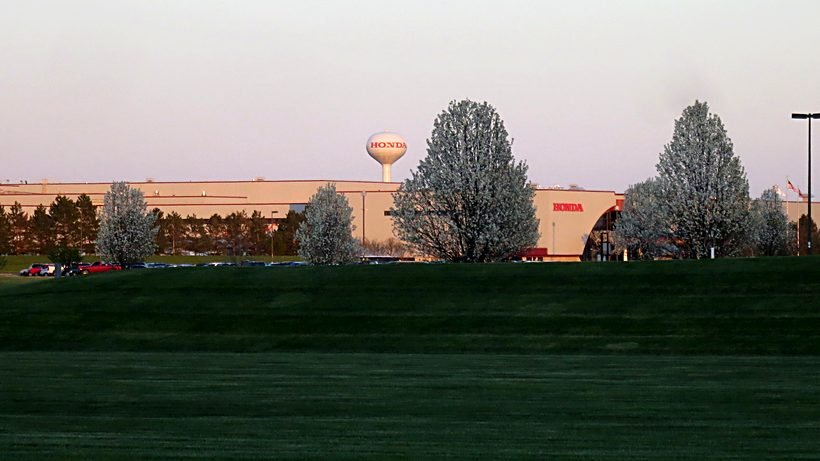
The state is putting money behind the deal, too. The Ohio Tax Credit Authority approved a tax credit for the project on Monday morning, though the value has not been made public. JobsOhio, the state's private economic development nonprofit, put the whole Ohio commitment at $3.38 billion and 2,390 jobs once the retooled engine and transmission plants are counted, against $3 billion and 2,000-plus jobs for the new plant alone. Honda also plans to seek JobsOhio assistance, which will be disclosed once a final agreement is signed. Construction itself is still pending the government approvals.
One more number puts the plant in context. Honda said that in 2025, nearly 99% of the Honda and Acura cars it sold in the United States were made in North America. This plant is about keeping that number high while adding room the company says it does not have today. CNBC reported that Honda cannot fully meet customer demand right now because it is short on capacity, and Zacks noted that tariffs are squeezing the business even as Honda says demand is the main reason for the build.
The reversal: Ohio was supposed to be Honda's EV hub
To see how big a turn this is, go back to October 2022. That month, Bob Nelson stood in Ohio and said Honda was investing in full electric vehicle production in the state: $700 million to retool existing plants and a $3.5 billion battery joint venture with LG Energy Solution. The stated goal was for EVs and fuel-cell vehicles to reach 40% of Honda's sales by 2030 and 100% by 2040. Ohio was the EV hub.
That plan is now mostly gone. On March 12, 2026, Honda canceled three EV models that were all planned for the Ohio EV hub: the 0 Series SUV, the 0 Series Saloon, and the Acura RSX. The company said it expected up to $15.7 billion in expenses and losses tied to the change, and it blamed slower growth in the US EV market, looser fossil-fuel rules, revised EV incentives, and tariff pressure on its gasoline and hybrid profits. Honda also shelved an $11 billion EV investment plan in Canada, and Sony and Honda later canceled the Afeela 1, which was also due to be built at the Ohio EV hub.
The new plant is the replacement, and the swap is the story. The same state, the same workforce, the same battery joint venture — but the product is hybrids, not EVs. The plant can still build battery-electric cars, and Honda was careful to say so. But nothing in the announcement sets a date for a single EV to roll off the new lines. The flexibility cuts both ways: it lets Honda build EVs later if buyers want them, and it lets Honda build none at all if they do not.
Even the price tag moved. In September, Japan's Nikkei newspaper reported Honda was weighing a US plant of up to $2.5 billion with production starting in 2030. A Honda spokesperson said at the time that no decisions had been made. The final plan is bigger and sooner: $3 billion, production in 2029.
What the plant will actually build
The short version: hybrids, in large numbers, on a new system Honda has been working toward for years. The plant's lines will be flexible enough to build hybrid, gasoline-powered, and battery-electric vehicles, and Honda says it will use automation, data-driven technology, and flexible production systems so output can shift as demand and market conditions change.
The hybrids will run on Honda's next-generation two-motor hybrid system. Today's version works mostly as a series hybrid, with the gasoline engine acting mainly as a generator and connecting to the drive wheels during light highway cruising. The next version widens the engine's high-efficiency range and shrinks the drive unit. Honda is targeting more than 10% better fuel economy than its current hybrids and a system cost more than 30% lower than the hybrid system it introduced in 2023. Those are engineering targets, not promises about the price of any car.
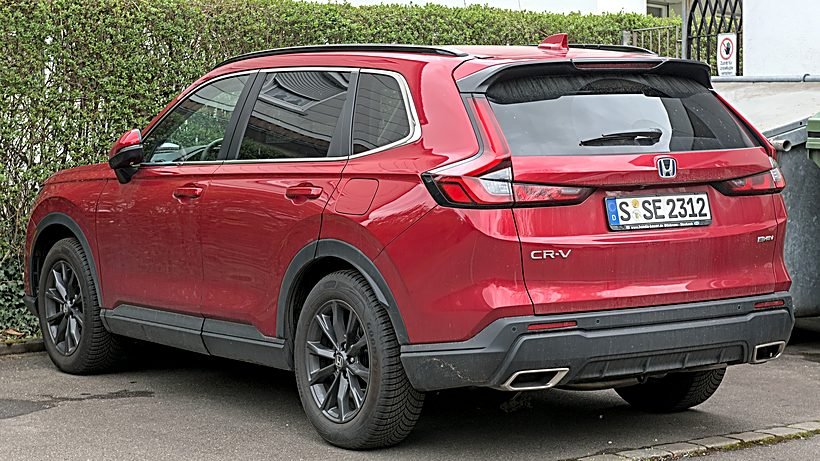
The model plan behind the plant is wide. Honda said in May that it plans to introduce 15 new Honda and Acura hybrid models globally by 2030, with North America as the primary market for many of them. The first models on the new hybrid system are due from 2027, Acura versions are to follow within two years, and large hybrids in the D-segment are set to launch in North America in 2029 — the same year the new plant opens. Hybrids already make up almost 30% of Honda's product lineup, according to Nelson, so the plant is feeding a business that exists today, not one Honda hopes to create.
That is the practical difference from the canceled EV plan. The EV hub needed buyers to show up for cars that did not exist yet. The hybrid plant builds more of the cars Honda already sells: the CR-V, Accord, and Civic hybrids that run on the two-motor system today. If demand for hybrids keeps growing, the plant pays. If it cools, the flexible lines can switch to gasoline cars. An EV-only plant offers no such fallback, and Honda just spent $15.7 billion learning that lesson.
The wider bet: Alabama, Georgia, and Canada, too
The Ohio plant is the headline, but it is one piece of a North American package that touches three US states and Canada. Every piece points the same way: more hybrid engines, more hybrid systems, more room to build them.
In Alabama, Honda is investing in its auto plant, which marks 25 years of vehicle production this fall, to add capacity and expand engine production for a new V6 hybrid engine. The work includes one of the biggest renovations of the plant's Line 1 since it opened in 2001, so the line can build the Passport, which today is built only on Line 2.
In Ohio, the Anna Engine Plant — the largest Honda engine plant in the world — is retooling a line to build a next-generation four-cylinder Atkinson-cycle engine for future compact and midsize vehicles built in North America. The Transmission Plant-Ohio is turning an existing transmission line into a second hybrid-system line while it keeps supporting current production. Honda says that will raise Ohio's hybrid-system production capacity by 250% in the coming years. The Ohio plant will also serve as the lead plant for the larger hybrid system, the one built for bigger vehicles.
In Georgia, the Transmission Plant-Georgia, which today makes the 10-speed automatic transmission for Honda and Acura models built in Alabama and Ohio, will install a new assembly line for hybrid systems for larger vehicles. In Canada, Honda will update and retool its Alliston, Ontario, plant to support next-generation hybrid and gasoline models, including bringing engine manufacturing back to the site after 40 years of vehicle production in Canada.
The scale of Honda's North American base helps explain why the company can move this fast. It has been manufacturing in North America for nearly 50 years, employs about 33,000 people across 18 plants, and says it has invested more than $28 billion in its North American manufacturing, including more than $3.1 billion over the past five years alone. It works with more than 750 suppliers in North America, with parts purchases of more than $631 billion since 1982.
Why hybrids, and why now
Honda is not the only carmaker rethinking its lineup this year. Tesla is winding down Cybertruck production to make room for its Cybercab robotaxi, and the whole US market is still adjusting to life after the $7,500 federal EV tax credit ended. US EV sales are growing again a year after the credit ended, but the growth is uneven, and hybrids have been the steady sellers while pure electrics find their footing.
Honda's numbers tell the same story. Hybrids are nearly a third of its lineup, the two-motor system already powers its best-known US models, and the company says it cannot build enough cars to meet demand today. A flexible plant that starts with hybrids answers all three facts at once. It adds capacity where Honda is short, it builds the powertrain buyers are already choosing, and it keeps the EV door open without betting $3 billion on it.
There is also a cost story. Honda's next hybrid system is supposed to cost more than 30% less to make than the one it introduced in 2023, and cheaper hybrid systems mean Honda can put hybrid power in more models at more prices. The company has not said what any future hybrid will cost, and no one should read a manufacturing target as a price cut. But the direction is clear: Honda wants hybrids to be the default, not the upgrade.
Investors seem to like the direction. Honda's shares have gained 20.7% over the past year, against a 15.7% fall for the wider auto industry, according to Zacks. The company's filing on the announcement said it is not expected to materially affect results for the fiscal year ending March 31, 2027, which is a dry way of saying the payoff is years away, not quarters.
What it means if you are buying a Honda
Almost nothing right now, and that is the honest answer. The plant does not open until 2029, and no car from it exists yet. If you are shopping for a Honda hybrid this year — a CR-V, Accord, or Civic — buy on today's cars, prices, and wait times, not on a factory that is still waiting for approvals.
What could change, over time, is availability. Honda says it cannot meet demand today, and a plant built for 240,000 vehicles a year is aimed squarely at that gap. More capacity should mean shorter waits and more choice, especially for hybrids, which are the models dealers struggle to keep in stock. It could also mean more hybrid versions of models that do not offer one yet, once the 15 new hybrids start arriving from 2027.
What it will not do is cut prices on its own. Honda has promised no price cuts, and the 30% lower system cost is a manufacturing target, not a sticker-price pledge. And if you are holding out for a Honda EV, this announcement is not good news in the short term. The three Ohio EVs are canceled, the Canada EV plan is shelved, and the new plant's EV capability is a maybe, not a plan. Buyers who want an EV today are already looking elsewhere, and Honda just gave them more reason to.
What is still not settled
Three things are still open, and each one matters. First, the approvals. Both construction and the 2029 production start are pending final government approvals, and Honda has not said when those will arrive or when construction will begin. Until they do, the plant is an announcement with a site, not a building.
Second, the money around the deal. The Ohio Tax Credit Authority approved a tax credit on Monday, but its value has not been disclosed, and the JobsOhio assistance Honda plans to seek will only be made public once a final agreement is signed. The $3.38 billion and 2,390 jobs that JobsOhio cited cover the whole Ohio package, not just the new plant.
Third, the batteries. The L-H Battery Company joint venture in Jeffersonville, Ohio, is supposed to supply cells for hybrids and EVs, but its first output went to stationary energy storage, not cars, and Honda has given no date for hybrid battery cell production there. Honda said in May that it would convert part of the battery lines to hybrid production, but neither that briefing nor the November filing sets a start date. A hybrid plant still needs hybrid batteries, and that piece of the supply chain is not in place yet.
What happens next
Watch three things. First, the government approvals, and whether construction starts soon after them. Second, the JobsOhio agreement, which will show what the state is actually paying for the 2,390 jobs. Third, the first models on the new hybrid system, due from 2027 — two years before the plant opens. Those cars will show whether the 10% fuel-economy gain and the 30% cost cut are real, and they will arrive before a single wall of the new plant is up.
The longer view is simple. Honda bet Ohio on EVs in 2022, canceled that bet in March, and has now bet the same state on hybrids instead. The plant opens in 2029, the large hybrids land the same year, and the 15-model hybrid plan runs to 2030. If buyers keep choosing hybrids, Honda will have the capacity it lacks today. If they swing back to EVs, the flexible lines give Honda a way to follow. Either way, the company has stopped waiting for the EV market to come to it.
Keep an eye on our news page and our homepage for the day’s top stories.
Honda Ohio plant questions, answered
What is Honda building in Ohio?
A new $3 billion auto plant in central Ohio, on land between Honda's existing Marysville and East Liberty plants. It will create more than 2,000 jobs, build up to 240,000 vehicles a year, and start production in 2029, pending final government approvals.
Will the new Honda plant build electric vehicles?
It can, but that is not the plan today. Honda says the plant will have the flexibility to build hybrid, gasoline-powered, and battery-electric vehicles, but the announcement is framed around hybrids. Honda canceled the three EVs planned for Ohio in March 2026, and no EV has been assigned to the new plant.
When will Honda's new Ohio plant open?
Honda expects production to begin in 2029, pending final government approvals. Construction is also pending those approvals, and Honda has not given a construction start date.
How many jobs will the Ohio plant create?
More than 2,000 new jobs at the plant itself. JobsOhio, the state's economic development nonprofit, puts the whole Ohio package — the new plant plus retooled engine and transmission plants — at $3.38 billion and 2,390 jobs.
Why is Honda building a hybrid plant instead of an EV plant?
Hybrids are nearly 30% of Honda's lineup already, and Honda says it cannot meet customer demand with its current capacity. In March 2026, Honda canceled three Ohio-bound EVs, citing slow US EV market growth, revised incentives, and tariff pressure, and it expects up to $15.7 billion in expenses and losses from that change.
What else is Honda investing in alongside the Ohio plant?
A new V6 hybrid engine in Alabama, a next-generation four-cylinder engine at the Anna Engine Plant in Ohio, a 250% increase in Ohio hybrid-system production capacity, new hybrid-system lines in Georgia, and retooling at the Alliston plant in Canada. Honda plans 15 new Honda and Acura hybrid models globally by 2030.