Lucid stock closed Wednesday at $3.37 a share, up 12% in a single session. By Thursday morning it had already given back about 7%, trading near $3.13. That whiplash is the whole story in miniature: investors are betting on what a new Congress might do for electric cars, while Lucid’s actual business still has to prove it can sell the cars it builds. The next proof point lands Monday, November 9, when Lucid reports third-quarter earnings after the market closes.
Here is the short version. Lucid built 2,954 cars and delivered 3,806 in the third quarter — selling more than it made, for once, by working through cars it had already built. Deliveries still missed Wall Street’s forecast by almost 19%. On Wednesday, none of that mattered. Democrats swept both chambers of Congress in the midterm elections, EV stocks rallied across the board, and Lucid — the smallest and most beaten-down of the bunch — jumped the most. The question now is whether Monday’s earnings give that rally something solid to stand on, or take it away.
What happened to Lucid stock on Wednesday
Start with the numbers, because they are the only part of this story that is not a guess. Lucid closed Tuesday at $3.02. It opened Wednesday at $3.08, ran as high as $3.52 during the session, and closed at $3.37 — up 11.6% on the day, which most coverage rounded to 12%. Volume told the same story: 18 million shares changed hands, more than double the 7.6 million from the day before. It was not a quiet drift upward. People were buying.
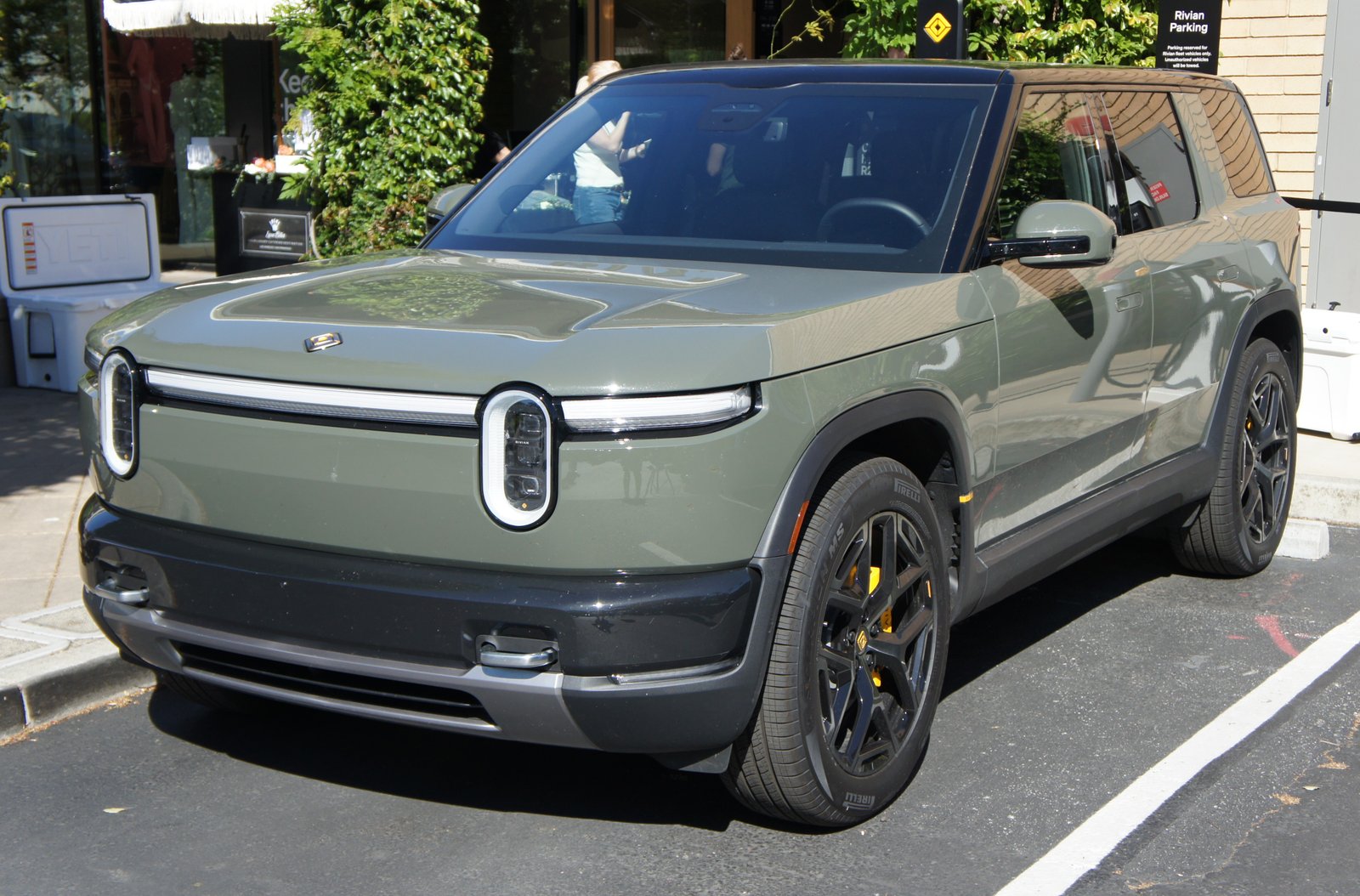
Lucid was not alone. Rivian rose 5.8% to $14.06, and General Motors climbed 4.6% to $92.43 on the same day. The whole EV trade moved together, which is the first clue that Wednesday was about Washington, not about anything Lucid did. No company news landed that day. One market-data note was blunt about it: no company statement explaining the November 4 advance has been found, so the reason stays unverified, and the climb may simply reflect positioning before the earnings report.
Thursday morning gave the rally a reality check. In early trading, the stock slipped about 7% to near $3.13. And for scale: even after Wednesday’s jump, Lucid is still down roughly 70% this year and more than 80% from its 52-week high of $18.10. The company is worth about $1.18 billion — a rounding error next to Tesla, and smaller than some single-model startups were a few years ago. A 12% jump sounds big until you remember what the stock has lost to get here.
Why the midterms moved EV stocks
The election itself was not close. Democrats won control of both the House and the Senate on Tuesday, November 3, flipping seven Senate seats — in Iowa, Kansas, Ohio, Maine, North Carolina, South Carolina, and Texas — and taking roughly 258 House seats, well past the 218 needed for a majority. Kansas elected its first Democratic senator since 1932. Texas elected its first in decades. The new majorities take office in January 2027.
The market read it as good news for EVs. The reported logic is simple: a Democratic Congress is expected to be friendlier to electric-vehicle policy than the one it replaces. That hope lifted the whole sector, and it lifted Lucid the most because Lucid had the furthest to climb.
But hope is not policy, and the gap between the two is wide. Democrats did not win a supermajority — they hold nowhere near the 67 Senate votes needed to remove a president, and they are short of the 60 needed to break a filibuster. Donald Trump remains president, with a veto pen. And the federal $7,500 EV tax credit is already gone by law — it ended for cars bought after September 30, 2025 — so bringing back any purchase incentive would take a new bill through both chambers and a presidential signature. Nothing about that gets easier before January, when the new Congress is seated. Wednesday’s rally was a bet on direction, not a change in the law.
The Q3 numbers Monday has to explain
Strip away the politics and Lucid’s quarter was rough in the ways that count. The company said on October 5 that it built 2,954 vehicles and delivered 3,806 in the three months to September 30. Deliveries beat production because Lucid sold cars it had already built — part of a deliberate plan to turn inventory into cash. But deliveries still fell 6.7% from a year ago and 3.7% from the second quarter, and they missed the average analyst forecast of 4,687 by almost 19%.
Production fell harder: down 38% from the 4,774 cars Lucid built in the second quarter. That drop was deliberate — the company cut the second shift at its AMP-1 plant in Casa Grande, Arizona, in June — but it still means Lucid is now building at a pace well below what it sells. Add up the first nine months and the gap is stark: 13,228 cars built, 10,852 delivered. About 2,376 cars built this year are still waiting for buyers.
The guidance is gone, too. Lucid told investors in February it would build 25,000 to 27,000 cars in 2026. It suspended that target in May, and it has since been withdrawn. At the current pace, the company would need a very strong fourth quarter just to hit the lowered delivery estimates of about 17,000 cars for the year — roughly 6,200 in the final three months, against 3,806 in the third.
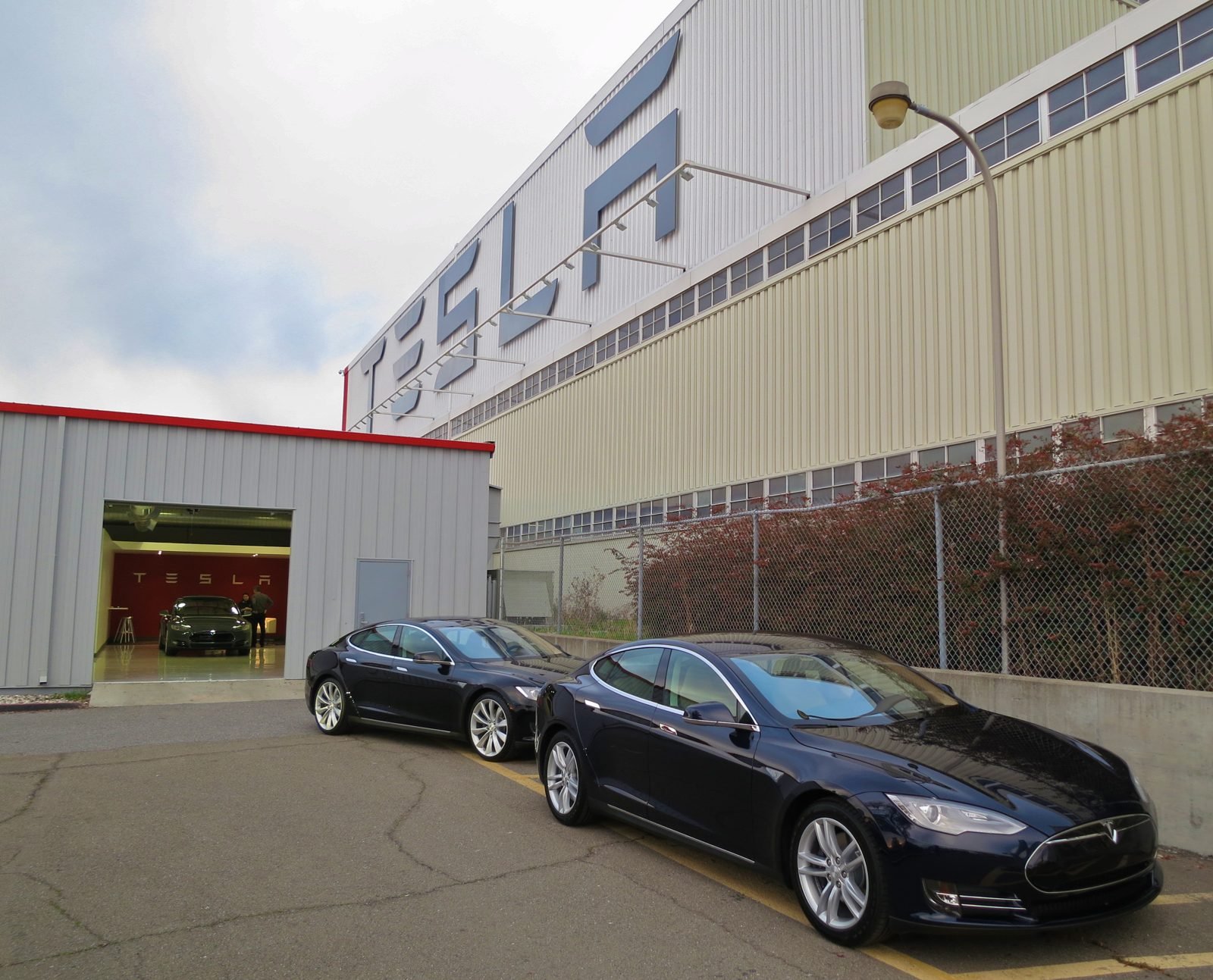
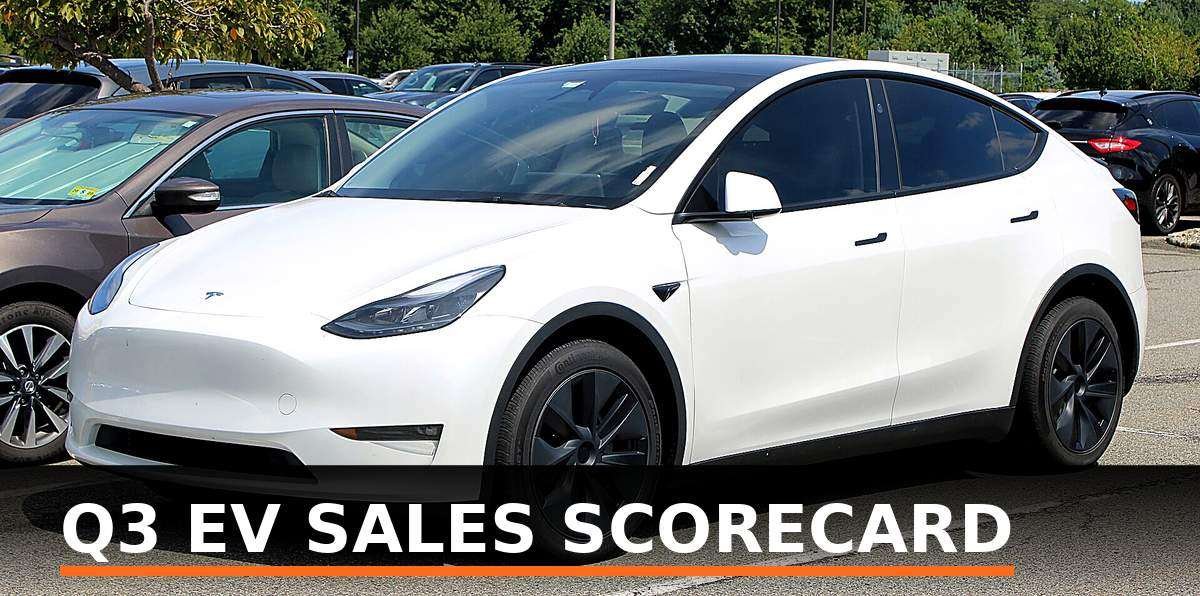
The money side is what Monday is really about. Revenue was about $405 million in the second quarter, up 56% from a year ago — but gross margin was negative 105%, the company took a $300 million inventory write-down, and free cash outflow hit $1.47 billion in the quarter. Tesla’s Q3 report showed the same split-screen pattern — deliveries beating, profit missing — but Tesla is profitable at a scale Lucid has not reached. Lucid ended June with about $3 billion in total liquidity and drew another $800 million on a loan facility after the quarter ended. For the third quarter, analysts expect revenue of about $396 million and a loss of $2.27 a share, according to the consensus tracked by MarketBeat — though one data provider puts the revenue figure higher, at $415 million, so treat any single estimate with care. What matters is the direction of the cash burn, and whether the reset is slowing it.
Napoli’s reset, in plain English
Silvio Napoli took over as chief executive on June 1, and he has spent five months doing the unglamorous work. He cut about 18% of Lucid’s US workforce — roughly 1,500 jobs — scrapped the second shift at the Arizona plant, abolished the chief operating officer role, and halved the number of executives reporting directly to him. The plan, which Lucid calls an operating reset, targets $1.4 billion in cash-flow improvements this year: $600 million to $800 million from inventory, about $500 million from capital spending, and about $200 million from operating costs. The company reckons the shift cut and the layoffs alone save about $158 million a year.
“Lucid has leading technology, compelling products and deeply committed people, but potential is not performance,” Napoli said when the plan was announced in August. “We are going back to basics, with a clear focus on cash, customers, and culture.”
He has been blunt about why. On the same earnings call, he said the company had disappointed on several fronts for too long — missed commitments, cars launched before they were ready, too little spent on service, quality problems answered too slowly. “The way we operate has to change,” he said. “While there is no question that Lucid brought leading innovations and outstanding products to the market, we have disappointed on several fronts, and for far too long. We have not executed consistently, we miss commitments, launched products before they were ready, underinvested in service, responded too slowly to quality issues, and allowed complexity to slow decisions down.”
The production cut was the clearest expression of that. “We deliberately reduced production by eliminating a second shift because building vehicles faster than we could deliver them was consuming cash and increasing inventory,” Napoli said. “We will not buy volume at the expense of cash or vehicle economics.”
Wall Street is not convinced yet. Morgan Stanley’s Andrew Percoco called near-term demand “relatively de minimis” while the Arizona plant runs at low utilization. Morgan Stanley cut its price target to $3 from $5 in October; RBC moved to $4 from $7. Analysts overall rate the stock a hold. The reset has to show up in Monday’s numbers — cash, inventory, and the pace of deliveries — before that changes.
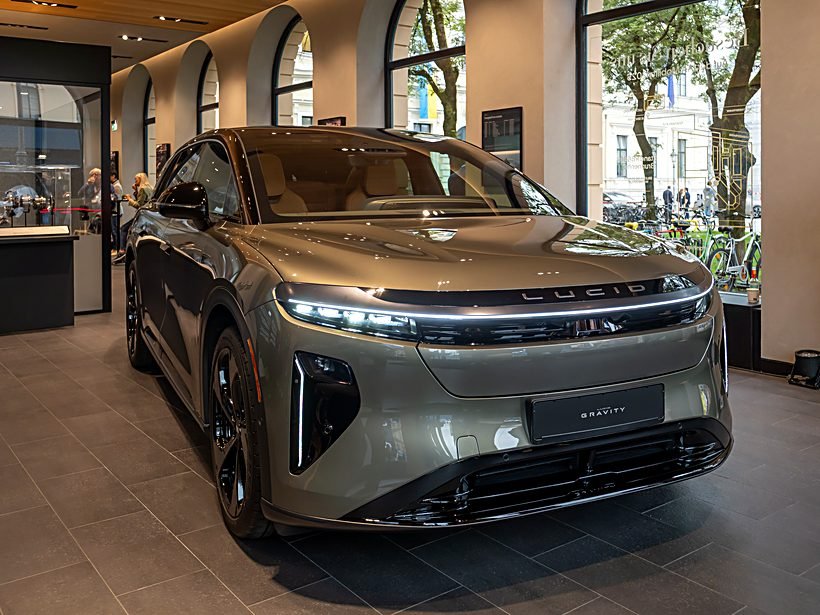
Gravity is carrying the brand. The Air is fading.
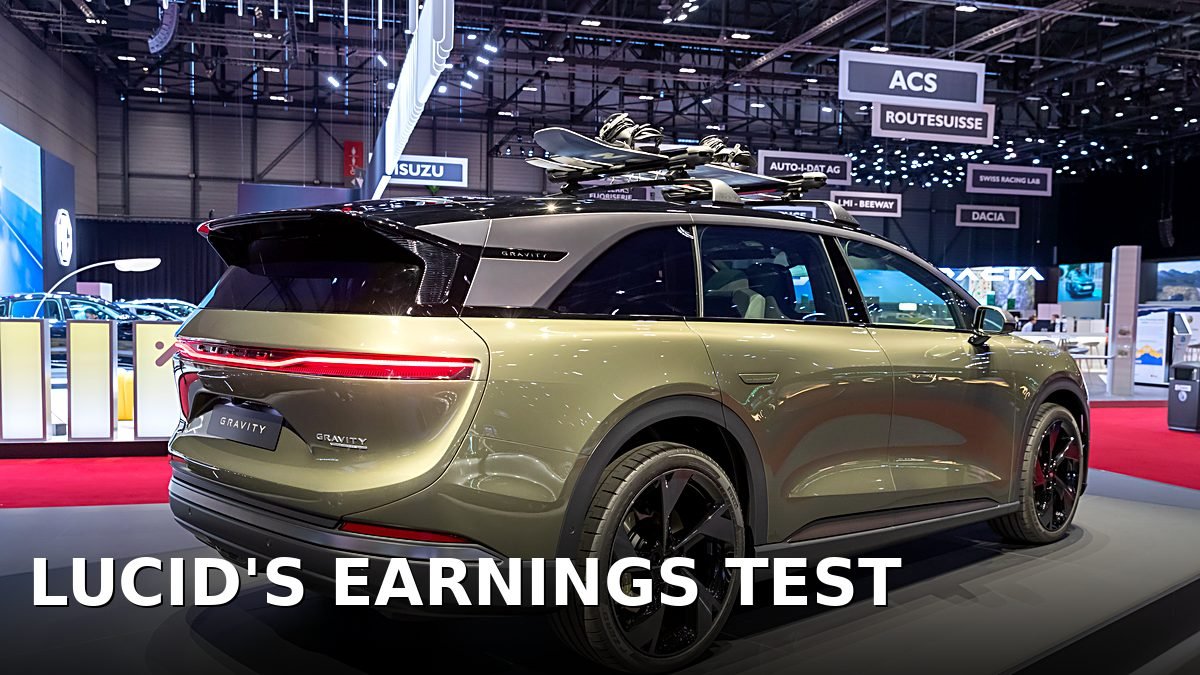
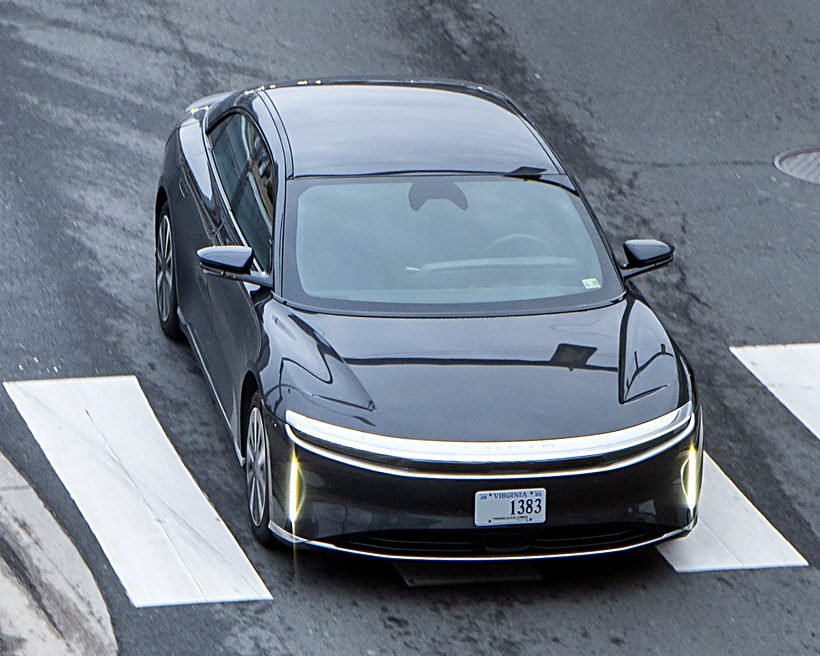
Lucid’s own release does not split deliveries between its two models, so the closest read on which car is actually selling comes from California, Lucid’s home state. Our look at Q3 US EV sales found the overall market stabilizing at a 6.4% share — but Lucid is not sharing in the stability. The California Energy Commission’s registration data shows Lucid sold 1,011 cars in the state in the third quarter — down 11.6% from a year ago. The Gravity SUV accounted for 692 of those, or 68.4% of the total. The Air sedan managed 319, down almost 64% from a year earlier.
The Gravity’s number needs context. It is up 165% from the same quarter last year, and the SUV was named the 2026 World Luxury Car of the Year. But it has now slipped for two straight quarters — down 11.2% from the second quarter, after peaking at 989 California sales in the first. The early story explains some of it: a supplier defect with the second-row seats halted Gravity deliveries for 29 days in the first quarter, and 4,500 Gravity SUVs were recalled in April. Lucid says demand for the Gravity “continued to regain momentum” in the third quarter. It gave no figures to back that up.
Step back and the picture is plain. The Gravity is now more than two-thirds of what Lucid sells in its biggest state, and even it is sliding. The Air, the sedan that built the brand’s name, is fading fast. That is why the next section matters more than the delivery count.
The two bets that could change the story
Lucid’s future does not rest on selling more Airs. It rests on two projects that barely show up in today’s sales numbers.
The first is robotaxis. Lucid is building the cars for Uber and Nuro’s self-driving service — 35,000 vehicles in total, with about 100 Gravity SUVs already testing in the San Francisco Bay Area and Houston. The company has started delivering production-validation vehicles and holds a California permit to run them. Regular production starts in the fourth quarter, with a launch targeted for late 2026. Napoli has said the margins on robotaxis should “vastly exceed” the retail business. It is the clearest path Lucid has to making money from its technology instead of just selling cars at a loss.
The second is the Cosmos, the midsize SUV meant to cost under $50,000 — the car that would finally give Lucid something to sell to normal buyers. It was supposed to start shipping by the end of this year. Napoli delayed it to 2027. “Our objective is clear: Mid-size will launch only when every process and quality requirement have been met,” he said. “We will not repeat the mistakes of the past by bringing a product to market before it is ready.” The Cosmos will be the first car built at Lucid’s AMP-2 factory in Saudi Arabia, which is due to be ready for production in early 2027. Until it arrives, Lucid is a two-car company selling only premium vehicles — and Saudi Arabia, which has committed to buy more than 4,000 Lucid cars this year, is its most reliable customer.
What to watch on November 9
Monday’s call starts at 2:30 p.m. Pacific, 5:30 p.m. Eastern, and the press release lands just before it. Here is what actually matters in it.
- Cash and burn: Did the $1.4 billion plan cut the outflow? The second quarter burned $1.47 billion in free cash. Any number near that again is bad news; a real step down is the first sign the reset is working.
- Liquidity: Lucid ended June with about $3 billion and drew $800 million more after the quarter. How much is left, and what is the new runway?
- Q4 production: Napoli has said output in the second half will run below the second quarter’s level, on a single shift. The question is by how much — and whether deliveries can keep up.
- Gravity demand: any model split, any number behind “regained momentum,” and any read on whether the California slide has leveled off.
- Robotaxi and Cosmos dates: is the late-2026 robotaxi launch still on, and is the Cosmos still on track for 2027?
- Guidance: do not expect formal 2027 guidance on Monday — Napoli has said that comes with year-end results. Do expect a progress update on the $1.4 billion plan and a new liquidity outlook.
Shareholders can submit questions through the Say Technologies platform until Friday, November 6, at 5:30 p.m. Eastern. Management answers a selection on the call.
Lucid’s stock did what beaten-down stocks do after a big election: it jumped on hope. The hope is not crazy — a new Congress could be friendlier to EVs, and Lucid’s technology is real. But hope does not pay for factories. Monday’s numbers will show whether the company that builds the cars is catching up with the stock that jumped 12% on a rumor of better politics. If the cash burn is still running near $1.5 billion a quarter, the rally will not last the week. If the reset is biting, $3.37 might look cheap a year from now. Either way, we will know on Monday.
Lucid stock and Q3 earnings questions, answered
When does Lucid report Q3 earnings?
Monday, November 9, 2026, after the market closes. The earnings call starts at 2:30 p.m. Pacific / 5:30 p.m. Eastern, with a webcast on Lucid’s investor relations site.
Why did Lucid stock jump 12%?
The reported explanation is the midterm elections: Democrats won both chambers of Congress on November 3, which lifted hopes of friendlier EV policy and sent EV stocks higher. No company news drove the move, and the stock gave back about 7% in early Thursday trading.
How many cars did Lucid deliver in Q3 2026?
Lucid delivered 3,806 vehicles and built 2,954 in the third quarter of 2026. Deliveries fell 6.7% from a year ago and missed the average analyst forecast of 4,687 by almost 19%.
Is Lucid running out of money?
Lucid ended the second quarter with about $3 billion in total liquidity and drew another $800 million on a loan facility after the quarter ended. Free cash outflow was $1.47 billion in the second quarter. Monday’s earnings report updates the cash picture.
Is the Lucid Gravity selling?
In California, Lucid’s biggest state, the Gravity accounted for 692 of 1,011 Lucid sales in the third quarter — 68.4% of the total — but that was down 11.2% from the second quarter. Lucid does not break out deliveries by model nationally.
What was Lucid’s stock price after the rally?
Lucid closed Wednesday, November 4, at $3.37, up 11.6% on the day. It traded near $3.13 in early Thursday trading. Its 52-week range is $2.37 to $18.10.