Rivian's CEO, RJ Scaringe, has a word for 2027. He calls it an inflection year. He said it in an interview with CNBC, on the day Rivian marked five years since its Nasdaq debut, and he said it twice: "2027 is really an inflection year for us," and "I'm excited to start to really show what we believe so fully, the potential of the business."
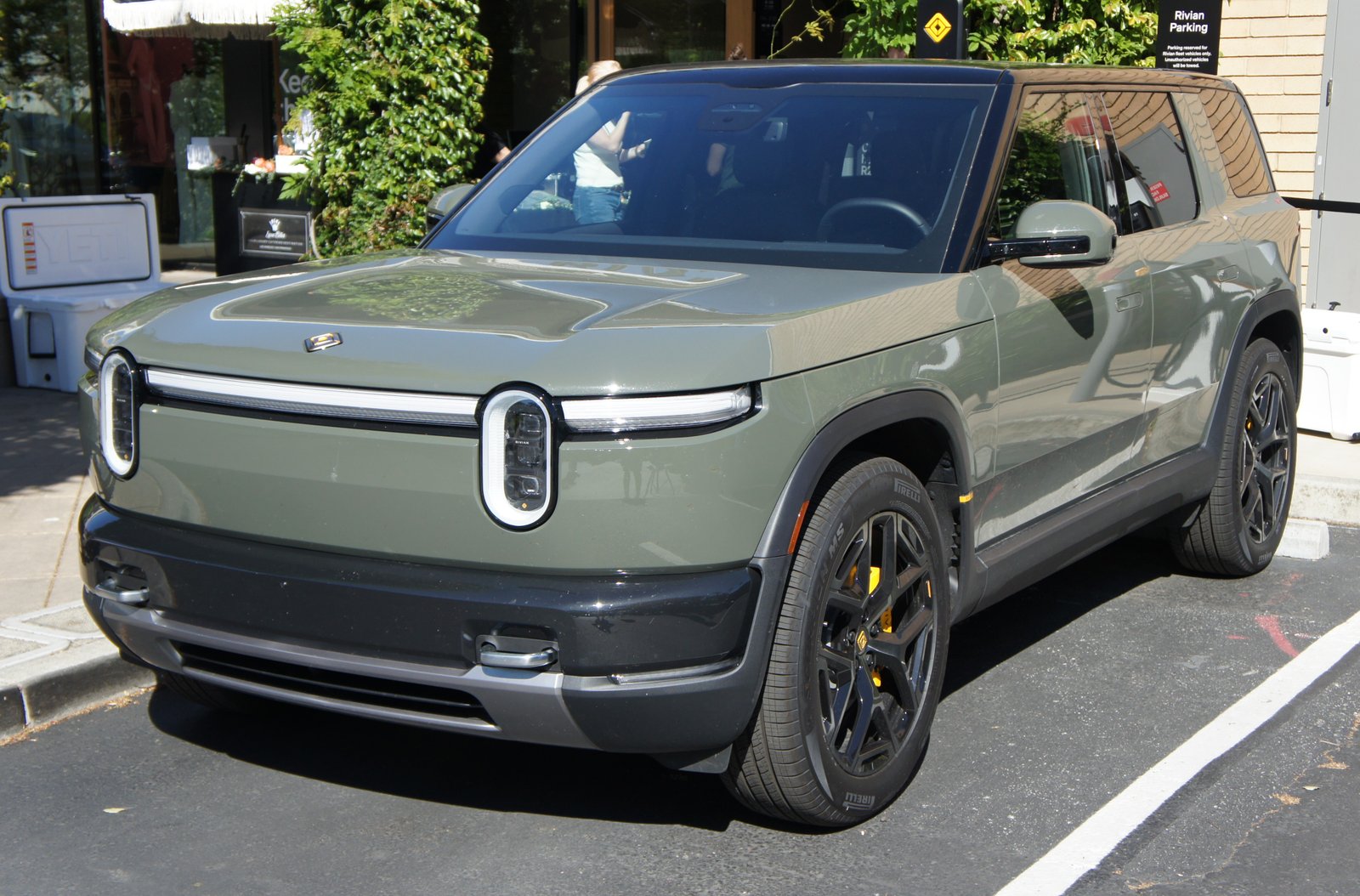
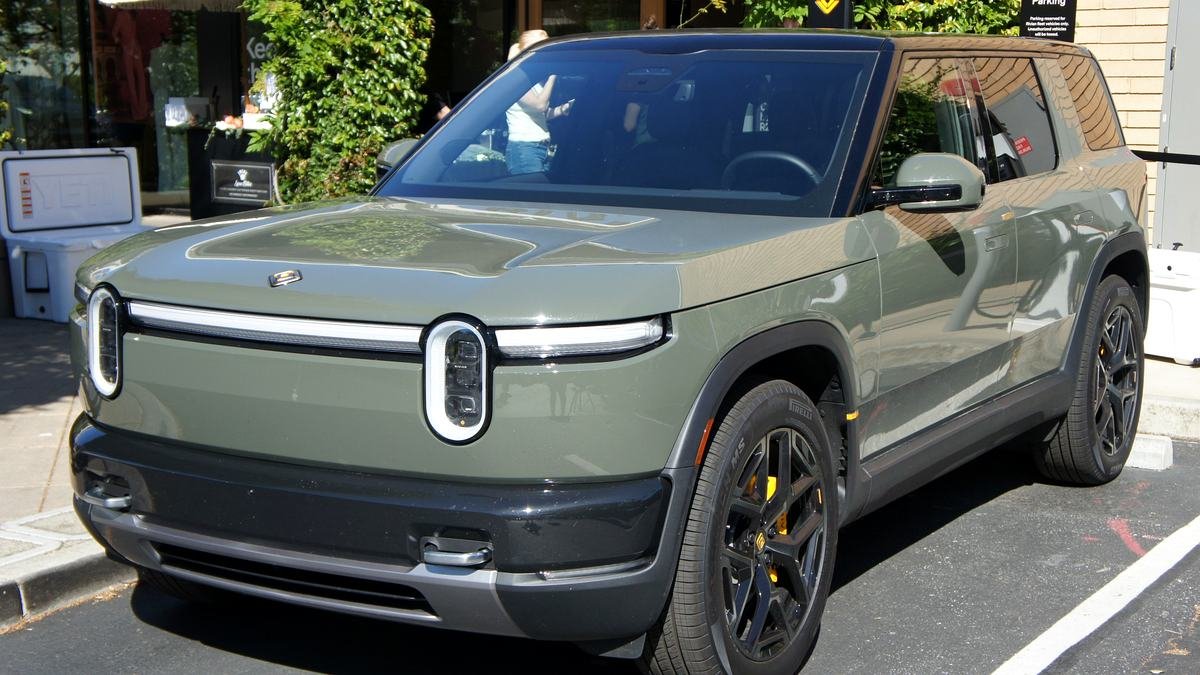
The numbers behind the word are the most interesting Rivian has ever reported. In the third quarter of 2026, Rivian delivered a record 19,248 vehicles, up 46 percent from a year earlier and up 58 percent from the second quarter. The R2, the smaller SUV Rivian launched this year, is already the company's best-selling vehicle, outselling the R1 models and the commercial vans. The factory in Normal, Illinois, can build 215,000 vehicles a year, including up to 155,000 R2s.
Here is the catch. The car business lost $80 million in that same quarter. The software and services business made $256 million in gross profit, at a 42 percent margin. Put them together and the company made $176 million in gross profit, but the factory is still losing money on every car it builds, and the software business is carrying it. That is the 2027 test: volume is here, profit is not, and 2027 is the year the factory has to catch up with the software business.
The 2027 test: volume without profit yet
Start with the quarter. Rivian delivered 19,248 vehicles in Q3 2026, a record, and the R2 became the best seller in its first full quarter. Deliveries rose 46 percent year over year and 58 percent from the second quarter. That is real demand for a new vehicle, not a rounding error.
Now the money. The company made $176 million in consolidated gross profit in the quarter. But that number hides two businesses moving in opposite directions. The automotive business, the part that builds and sells cars, lost $80 million. The software and services business made $256 million in gross profit at a 42 percent margin. The software business is paying for the car business, and it has been doing that for a while.
| Rivian Q3 2026 | Figure |
|---|---|
| Deliveries | 19,248 (record; +46% year over year, +58% vs Q2) |
| Consolidated gross profit | $176 million |
| Automotive gross profit | -$80 million (loss) |
| Software & services gross profit | $256 million (42% margin) |
| Automotive revenue | $1.55 billion (+36% year over year) |
| Cost per vehicle, vs Q2 | Improved by more than $12,000 |
| Cash and short-term investments | $5.5 billion |
| Total available future liquidity | About $13 billion |
Rivian's Q3 2026 results. Sources: Demokratis (Nov 10, 2026), Motley Fool (Nov 10, 2026), Trefis (Nov 10, 2026).
The cost side is moving the right way. The cost of goods sold per vehicle improved by more than $12,000 from the second quarter to the third, because a higher share of the more efficient R2 was in production and the factory was spreading its fixed costs over more vehicles. That is the factory starting to work the way it is supposed to. But the ramp itself is expensive. Rivian spent about $120 million in the quarter on R2 ramp costs, up from about $100 million in the second quarter, including expedited freight and factory overhead spread across fewer vehicles than the planned two-shift operation could produce.
Regulatory credits, the money Rivian earns from selling emissions credits to other carmakers, are shrinking. Credit revenue fell from $106 million in the second quarter to $81 million in the third, down about 24 percent. Management had already warned that credit support would be "substantially" lower in the second half of 2026. Strip the credits out and the automotive loss was $161 million in the third quarter, against $142 million in the second. The Motley Fool put it plainly: "Selling more vehicles is the beginning of the payoff, not the finish line. Rivian still needs to show it can consistently make money building them over the next year."
The R2 is the whole plan
Scaringe was blunt about where the profit comes from. "That's going to define the business. The path to profitability, the path to very significant growth in revenue is all built around R2, and then some of the variants that come following R2." The R2 is not one product in a lineup. It is the lineup, and the variants that follow it are the growth after that.
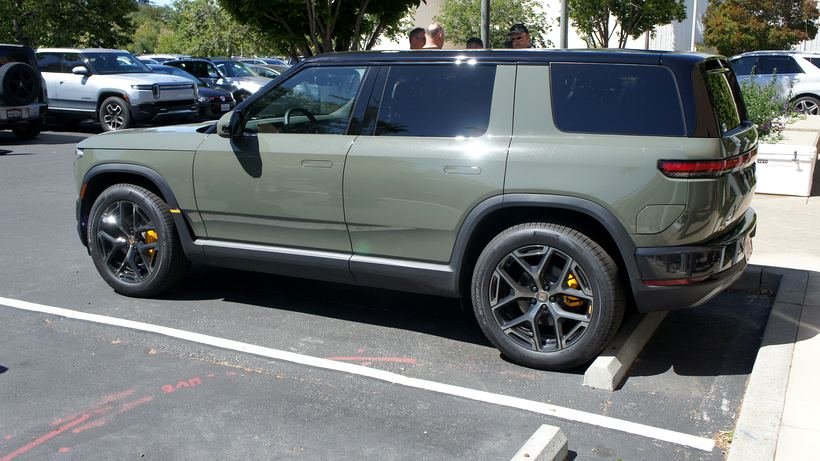
The R2 is a smaller, cheaper SUV than the R1S, and it is the car Rivian needs to reach buyers the R1 never could. The entry-level version is expected to cost about $45,000. MotorTrend, which named the R2 its SUV of the Year, puts the cheapest rear-drive model at "just over $46,000 to start" and says it arrives next year, in 2027. The trim range runs from $45,000 at the base to about $57,000 at the top, and Rivian has said it would rather absorb higher parts costs than raise those announced prices. That is a promise that gets harder to keep every quarter parts get more expensive.
MotorTrend's verdict on the car itself was the strongest Rivian has had. "This is the big moment when we find out if Rivian survives for the long haul," the review said. "The success of the new R2 is its do-or-die moment." The R1T was MotorTrend's 2022 Truck of the Year, and no startup has won more than one Of The Year title in about 80 years. The R2 looks like a shrunken R1S, which the review called a weakness, and its real-world range "isn't mind-blowing." But overall the car is "annoyingly good": how it drives, handles and goes off-road, its power and braking, its interior, its user interface, and its passenger and cargo space.
The autonomy hardware is part of the story. MotorTrend says the R2's Autonomy+ system is "as close as any other automaker in America has come to replicating Tesla's Full Self-Driving (Supervised)" in that it works on any road. It does not yet do automated lane changes or point-to-point self-navigation, but Rivian promises both soon, and the sensor suite will soon include a factory-installed lidar, something Tesla refuses to use. The R2 also fixes small things the R1 got wrong: it has two glove boxes (the R1s have none), it fixed the R1S rear suspension issue, and it puts the NACS charging port on the rear corner instead of the front.
The money: $13 billion of runway, and a funding question
Rivian has about $13 billion in total available future liquidity, counting available credit, partnership funding from Volkswagen and Uber, and a $4.5 billion loan from the US Department of Energy for the Georgia factory. Cash, cash equivalents and short-term investments stood at $5.5 billion at the end of the third quarter. That is a lot of runway, and it is the reason Rivian can keep investing while the car business loses money.
But the funding question will not go away. Deutsche Bank analyst Edison Yu put it this way: funding has long been a key debate for Rivian investors, and "the notion of a multi-year (even if credible) path to cash flow breakeven will be less attractive to investors." Scaringe's answer is that Rivian will be "opportunistic as it pertains to capital" while staying "very focused on getting the profitability." He also said Rivian has "made the decision to simultaneously work towards profitability … and deeply invest in our technology, and in particular in autonomy." That is the tension in one sentence: spend on the future and make money at the same time.
The partnerships are part of the answer. Rivian lifted its 2026 delivery guidance to 67,000 to 70,000 vehicles, and it has new funding commitments from Volkswagen and Uber. The Uber deal is the bigger one: up to $1.25 billion in equity funding tied to technical and deployment milestones, plus an initial commitment for 10,000 autonomous-capable R2 vehicles and an option for 40,000 more. That is not just a sale of cars. It is future vehicle sales plus per-mile software licensing income, which is the kind of revenue that carries a 42 percent margin.
The stock has not rewarded any of this yet. Rivian's shares are down more than 80 percent from the $78 IPO price, and down nearly 30 percent this year. The stock lost 8 percent over the past year while the S&P 500 gained 13.7 percent, and it closed 37.6 percent below its highest close of the past year. On November 10 it closed at $13.70, down 2.21 percent on the day. The market is waiting for the factory to prove it can make money, and it has not done that yet.
Autonomy and the robots
The second half of Scaringe's plan is autonomy, and 2027 is when it has to start paying. Rivian has begun a limited rollout of point-to-point driving, where the car travels between destinations while the driver monitors and stays ready to intervene. The company plans to expand that driver-assistance technology in 2027, and then to move to eyes-off driving, where the driver does not have to watch the road at all. That is the Gen 3 autonomy system, built on Rivian's own chip, and it is the software the Uber deal is buying into.
The robots are the stranger part of the plan, and the one that could change the factory's economics. Mind Robotics, the robotics company Scaringe chairs, plans to put its first robots into a Rivian plant in mid-2027. At first they will handle about a fifth of the tasks in the plant, growing to 80 percent over time on the same hardware as the AI model improves. The first jobs are the simplest pick-and-place work, which can make up half the labour in some parts of a plant and has the highest staff turnover. Scaringe has said Rivian would be "happy to spend tens of thousands of dollars per year per robot to do the types of tasks that today only a human can do," and has floated $50,000 a year for a robot working three shifts.
The chip is the link between the two. Rivian's in-house chip, called RAP1, is the silicon behind the R2's Gen 3 hardware, and it is now being deployed in Mind's robots too. The chip was "a half a billion dollar decision," made about four years ago, and it now has a second customer from the start. Rivian's own hardware chief has said the lower-performance Gen 3 hardware "will be cheaper than the Gen 2 hardware," which is the direction the costs need to go.
The timeline has already slipped once. This summer Scaringe said the first robots would land in a Rivian plant in "the early part of 2027." Now it is "the middle of next year." Rivian's stake in Mind has fallen as outside investors have come in: 53.5 percent when Mind launched last November, 37.6 percent in March (when Rivian stopped consolidating it and booked a $506 million gain), 32.1 percent in June, and 31.2 percent at the end of September. Mind has raised more than $1 billion, including a $500 million Series A in March and a $400 million round led by Kleiner Perkins in May.
What could go wrong
The biggest risk is the one Rivian named itself on its October 29 earnings call: parts are getting more expensive. Management said commodity prices were "much higher than expected," with memory playing a really important part. Rivian would rather absorb those costs than raise the R2's announced prices, but that choice eats the margin on every car. Trefis notes the company still expects the vehicle business to be making a gross profit by the end of 2026, though not for the fourth quarter as a whole, and it expects rising component costs to keep hurting profitability.
The credits are the second risk. Regulatory-credit revenue is falling, and it was worth $81 million in the third quarter, down from $106 million in the second. That money used to cover part of the automotive loss. As it shrinks, the factory has to make up the difference on its own, and it has not done that yet.
The third risk is the one the stock is already pricing in: time. Rivian has lost $2.97 billion over the trailing twelve months. The R2 ramp is costing about $120 million a quarter. The base R2, the cheapest version at about $45,000, does not arrive until 2027, and no publisher has confirmed which season. The Georgia factory, which is supposed to add 300,000 vehicles a year of capacity after its initial phase, is not finished until late 2028. Every one of those dates is a quarter further away than the last one was.
Rivian also recalled about 15,000 SUVs and trucks in November over a tailgate hinge part, CNBC reported. It is a small recall next to the R2 ramp, but it is a reminder that the factory is still learning to build at volume.
What happens next
The 2027 test has a calendar. The base R2 arrives in 2027 at about $45,000, and the R2 ramp has to fill the Normal factory's 215,000 units of annual capacity, including up to 155,000 R2s. The Uber deal puts 10,000 autonomous-capable R2s on the road, with an option for 40,000 more, and the per-mile software licensing that comes with them. The Mind robots go into the plant in mid-2027, starting at a fifth of the tasks. The Gen 3 autonomy system expands from its limited point-to-point rollout to more drivers, and then to eyes-off driving.
The first number to watch is not a 2027 number at all. It is the fourth-quarter 2026 automotive gross profit, which Rivian reports in about February 2027. Management expects the vehicle business to be making a gross profit by the end of 2026, though not for the fourth quarter as a whole. If that number is positive, the factory has started to catch up with the software business. If it is not, the 2027 test gets harder, and the funding question gets louder.
Scaringe's line is that 2027 is "really an inflection year for us." The R2 is the best seller, the deliveries are at a record, and the software business is making real money. The factory is the part that has to prove itself next. You can follow the R2 ramp and the autonomy push on our EV news page, and the EVThrottle homepage has the rest of the week's EV news.