On the morning of August 22, 2026, a 2021 Tesla Model Y ran off the left side of Route 55 in Vineland, New Jersey, crossed the grass median, struck a tree, and collided head-on with a northbound Chevrolet SUV. Phillip Eastman, 68 — a Springfield school board member and longtime youth hockey coach — was killed. The Tesla’s driver and the Chevrolet’s passenger were moderately hurt. It was first reported as a driver losing control. This week, Tesla told the federal government a fact it hadn’t told the public: its driver-assist system was on.
Under a standing order from NHTSA, automakers must report crashes where a Level 2 driver-assist system was engaged within 30 seconds of impact and someone died. Tesla filed its report on the Vineland crash. In it, the company identifies the car as a 2021 Model Y and marks the automation’s engagement status as “Verified Engaged” — Tesla’s own term for confirmed through its telematics. It lists the New Jersey State Police as the investigating agency and notes, dryly, that it learned of the crash from the media.
What “engaged” doesn’t prove
Precision matters here, because this is where these stories usually go off the rails. “Engaged within 30 seconds of impact” is the tripwire for reporting — it is not proof the system was steering the car when it crossed the median. The driver may have been overriding it. And Tesla redacted the software version, so there is no public way to know whether this was basic Autopilot or Full Self-Driving.
Then there is what Tesla blacked out. The crash narrative, the software version, whether the road was inside the system’s approved operating area — all redacted as “confidential business information.” That is Tesla’s standard practice; Electrek, which first reported the filing, notes the company applies the same redactions to 99.9 percent of its reports. The result is a document that confirms the one fact the public never had — a driver-assist system was on in a car that crossed a highway median and killed a man — while sealing everything that would explain how.
Two details in the filing deserve a raised eyebrow. Tesla logged a pre-crash speed of just 37 mph — oddly slow for a highway departure, and more likely a single telematics snapshot from the pre-crash window than the speed the car was actually traveling. And Tesla checked only the box saying it holds the car’s telematics — not the event-data recorder or video — so there may be less onboard evidence in this case than in others.
A name changes in Europe
The Vineland filing landed in the same week Tesla quietly conceded a different fight: what to call its driver-assist systems. On October 14, the company’s German, British, Dutch, Spanish, Italian, and Swiss websites began selling Full Self-Driving (Supervised) under a new name — Tesla Assisted Driving. The old web addresses now redirect to the new pages.
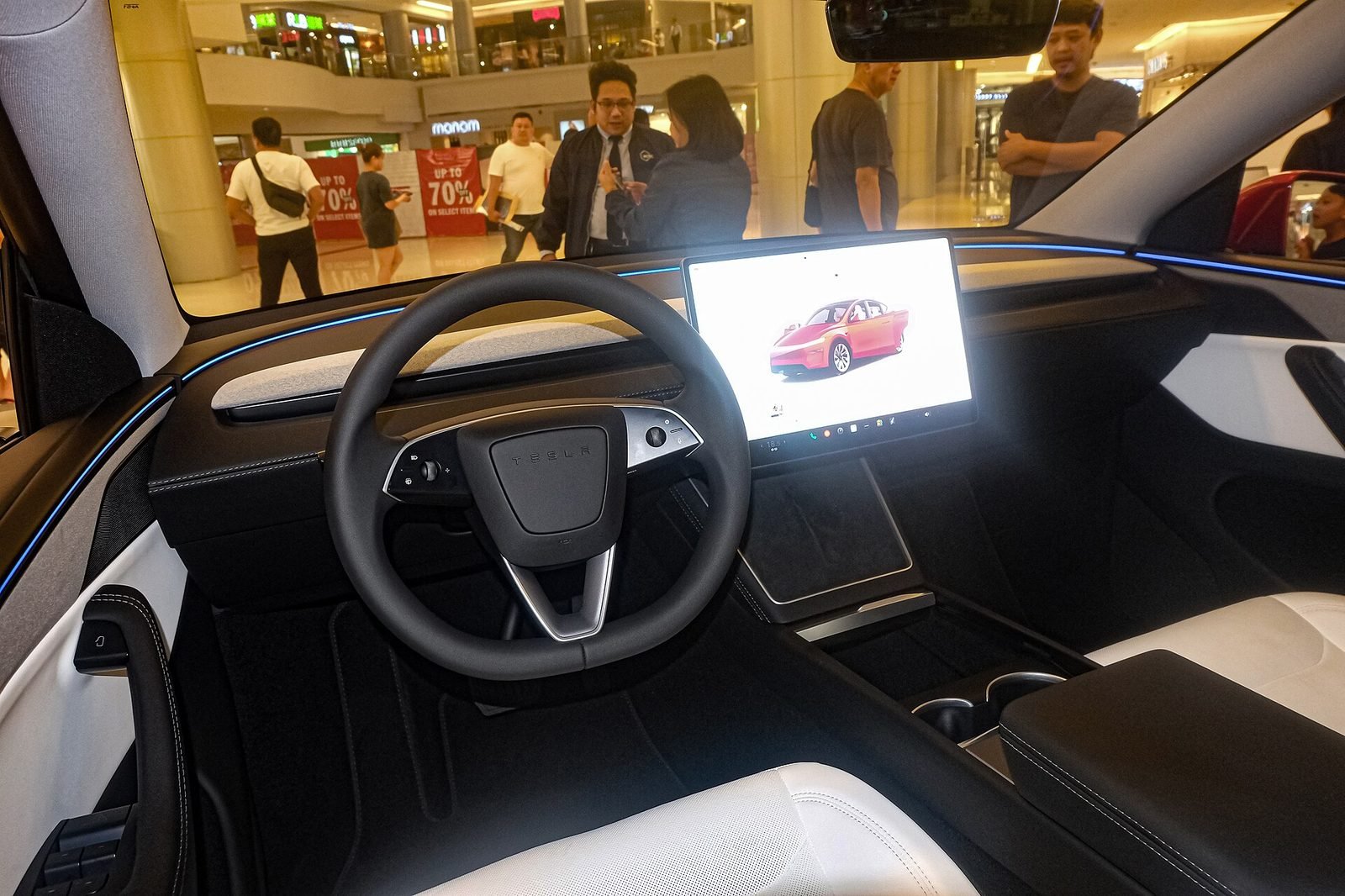
The rename wasn’t exactly voluntary. Germany’s transport ministry wrote on October 6 that the “FSD” name was “somewhat misleading” — because, as the ministry put it, it is not a system that takes over the entire driving task. Tesla offered the new name; the two sides also agreed the system may exceed posted speed limits by at most 10 percent, with the driver remaining 100 percent responsible. An EU-wide approval vote, postponed to December, needs 15 of 27 member states representing 65 percent of the EU’s population.
Not everyone thinks the rename goes far enough. Missy Cummings, an engineering professor at George Mason University, told CNBC the new name “ignores both past and ongoing NHTSA investigations” — the branding changes, the scrutiny doesn’t. It’s a fair point: “Assisted Driving” is more honest than “Full Self-Driving,” but the gap between what the system can do and what a tired driver assumes it can do remains exactly where it was.
In the United States, nothing changed. Tesla.com still lists Full Self-Driving (Supervised) at $99 a month, and the Canadian, Australian, and South Korean sites kept the FSD name too. California’s DMV ruled back in December 2025 that “Autopilot” and “Full Self-Driving Capability” were misleading — Tesla kept selling. NHTSA has two open investigations into the systems covering an estimated 2.9 million and 3.2 million vehicles.
The $243 million backdrop
All of this unfolds in the shadow of a Miami courtroom. On August 1, 2025, a federal jury found Tesla partially liable in a 2019 Autopilot crash in Key Largo, Florida, ordering the company to pay $243 million — $200 million of it punitive — to the family of a 22-year-old woman who was killed. The driver admitted fault; the jury concluded Tesla’s software shared the blame, finding the system had recognized the danger ahead and failed to act. It remains one of the largest awards ever leveled against an automaker over driver-assist technology.
The reckoning is about language
Step back and the pattern is clear. The technology underneath keeps getting more capable — nobody disputes that Tesla’s systems can do most of the driving most of the time. The fight is about the words on the window sticker. “Autopilot.” “Full Self-Driving.” Names that suggest the car has the wheel, attached to systems that legally and practically don’t. Germany decided the gap between the name and the reality was misleading enough to force a change. American regulators, so far, have not.
The Vineland crash report won’t settle any of that. What it does is put a human cost back into an argument that spends too much time on branding and stock prices. Phillip Eastman was 68, a school board member, a hockey coach — the kind of person whose death gets a moment of silence at a rink. Whether a driver-assist system contributed to it is a question Tesla’s redactions keep unanswered. That’s worth sitting with, whatever you think of the technology.
For drivers, the takeaway hasn’t changed even if the names have: these are assistance systems, not chauffeurs. Hands on the wheel, eyes on the road — the technology is impressive, and it is not finished. The Vineland report is a reminder of what the stakes are when that distinction blurs.