Tesla’s driverless ambitions just got their most specific timeline yet. On the company’s third-quarter earnings call Wednesday night, AI chief Ashok Elluswamy said the Cybercab — Tesla’s purpose-built robotaxi with no steering wheel and no pedals — will launch in Dallas next month, making the Texas metro the second city to get the two-seater. And that’s just the start: Tesla is targeting round-the-clock driverless operation, higher-speed roads, and service in worse weather before the end of 2026.
Here’s the deal: this wasn’t a Musk tweet or a vague promise on a slide deck. It was the company’s top AI executive, on a recorded earnings call, laying out a month-by-month expansion plan for the most closely watched robotaxi program in the world. Elluswamy’s exact words: “There’s no fundamental reason that we are limited to Austin. In fact, next month we’ll be launching in Dallas.” He added that the same software will then scale “to lots of other cities, along with the Model Y Robotaxis,” according to TeslaNorth’s rundown of the call.
| Question | Answer |
|---|---|
| What did Tesla announce? | Cybercab launches in Dallas in November 2026; 24/7 driverless Robotaxi targeted by year-end (Q3 2026 earnings call, October 21) |
| How big is the fleet now? | Austin’s Cybercab fleet grew “by a factor of 10” in about a month, per Elon Musk; Texas DMV records list 449 Cybercabs and 362 Model Y Robotaxis authorized for driverless operation in the state |
| How far has the service come? | Hours expanded from 6 a.m.–9 p.m. to late evenings, heading to 2 a.m. “pretty soon”; cumulative unsupervised miles rose eightfold in Q3 |
| What does it cost Tesla to run? | The target is $0.30 per paid mile — Tesla isn’t there yet, but CFO Vaibhav Taneja says there’s “a path to get to that” |
| Can I buy a Cybercab? | Tesla is “trying” to get Cybercabs to customers by the end of 2026 — but Musk says the “vast majority” will stay Tesla-owned |
| What about my Tesla? | Unsupervised FSD for customer cars is targeted around Q2 2027, as part of the V15 software update |
What Tesla actually said on the call
Cut to the chase: the Q3 call turned the Robotaxi program from an Austin science project into a national rollout plan. The numbers Tesla shared show a service scaling fast. Cumulative unsupervised miles grew eightfold during the quarter, and weekly miles kept climbing at double-digit rates all through Q3, per a transcript summary of the call.
Elluswamy said Tesla now runs Robotaxi service in six cities. The Cybercab itself is available only in Austin today, but CFO Vaibhav Taneja said the company plans to bring it to “some other cities before the end of this year.” That’s a striking acceleration from where the program stood a few months ago — when, as we reported earlier this month, the Austin fleet had just crossed 300 vehicles after an 8x surge in 30 days.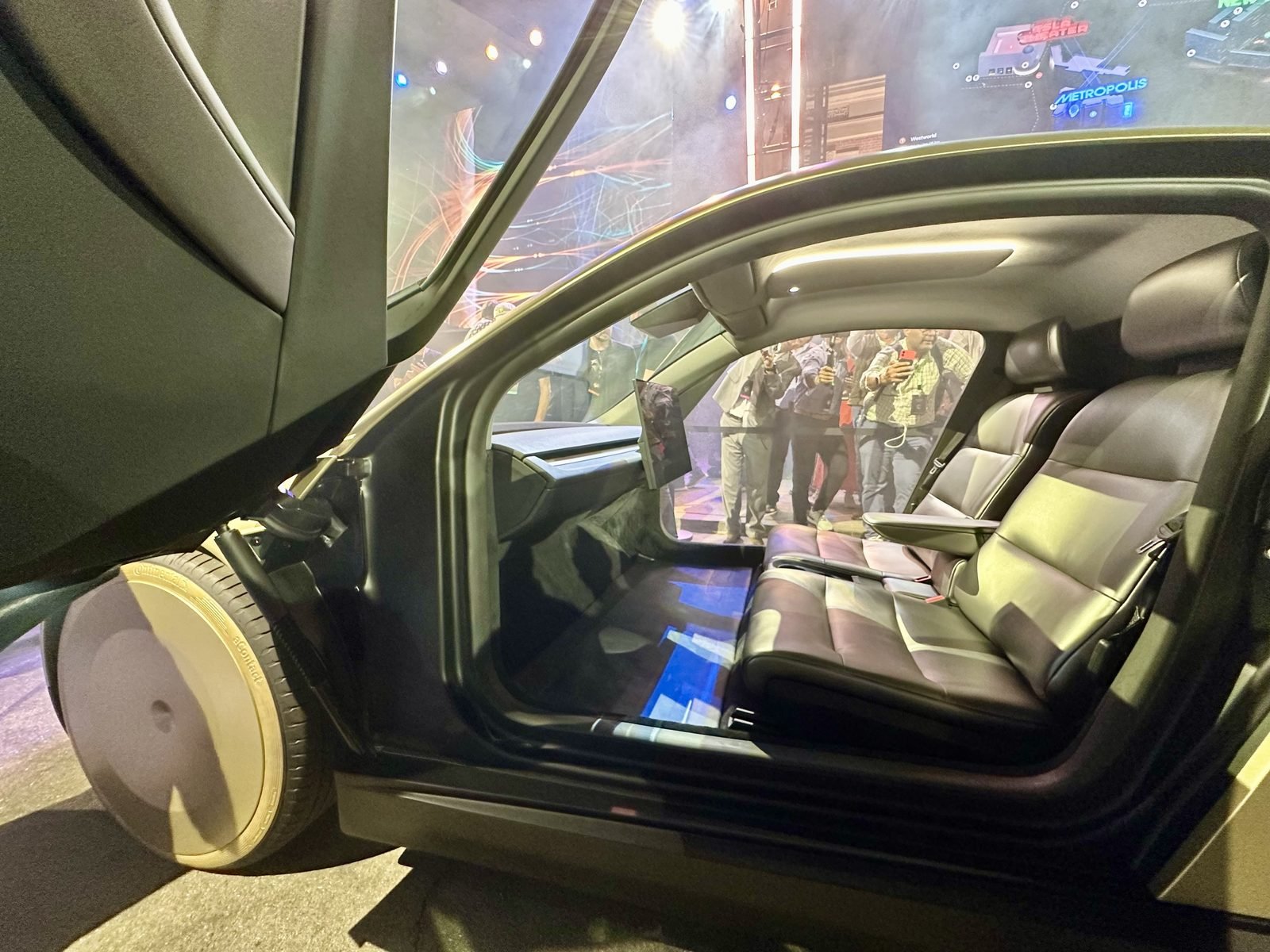
Musk, never one to undersell, said Austin’s Cybercab fleet has grown “by a factor of 10 since launch about a month ago.” Independent checks back that up: CNBC reported that Texas DMV records now list 449 Cybercabs and 362 Model Y Robotaxis authorized for driverless operation in the state, as summarized by Tesla News Wire. That’s more than 800 driverless-capable vehicles in Texas alone, barely two months after paid Cybercab rides began.
Austin went from zero to 800+ authorized cars in two months
Honestly, the pace is the story here. Commercial Cybercab service launched in Austin on September 3, with paid public rides starting the next day. About seven weeks later, Tesla is talking about Dallas, 24/7 service, and selling the cars to customers before Christmas. For a company that spent years promising robotaxis “next year,” the shift from talk to metal is hard to miss.
Dallas, meanwhile, isn’t starting from scratch. Tesla’s driverless Robotaxi service — using Model Y vehicles rather than Cybercabs — has been running there since April. According to Tesla’s own Robotaxi Safety Report, Dallas riders had logged 608,130 miles with no safety monitor on board as of October 18, second only to Austin. That existing footprint is exactly why Dallas is the logical second Cybercab city: the maps, the geofences, and the rider demand are already there.
Real talk: this is also a competitive land grab. Every city where Tesla’s driverless cars are already operating is a city where a rival has to start from zero — permits, mapping, and public trust included. Tesla is clearly trying to convert its head start into a national network before anyone else can catch up.
The Cybercab, by the numbers
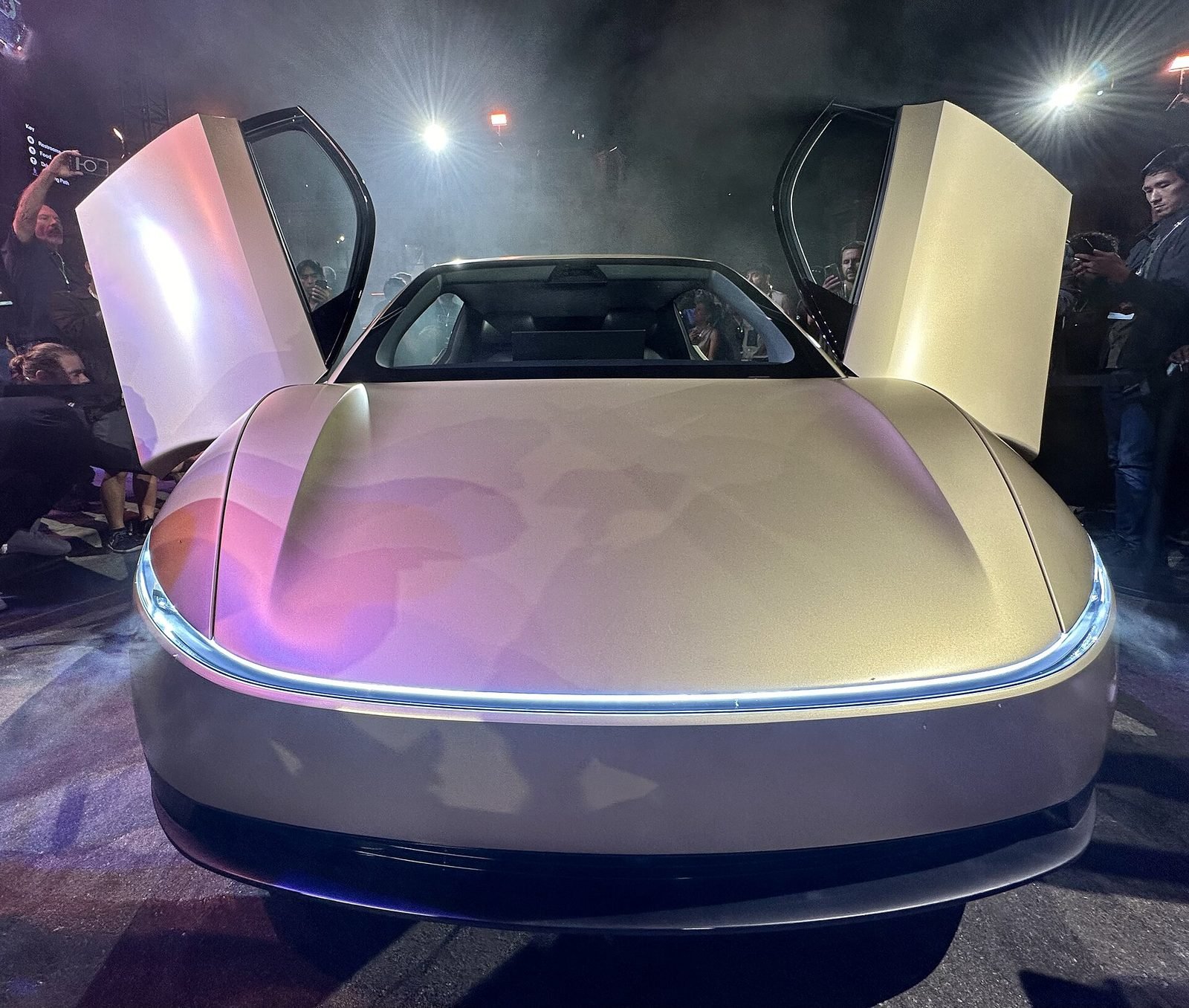
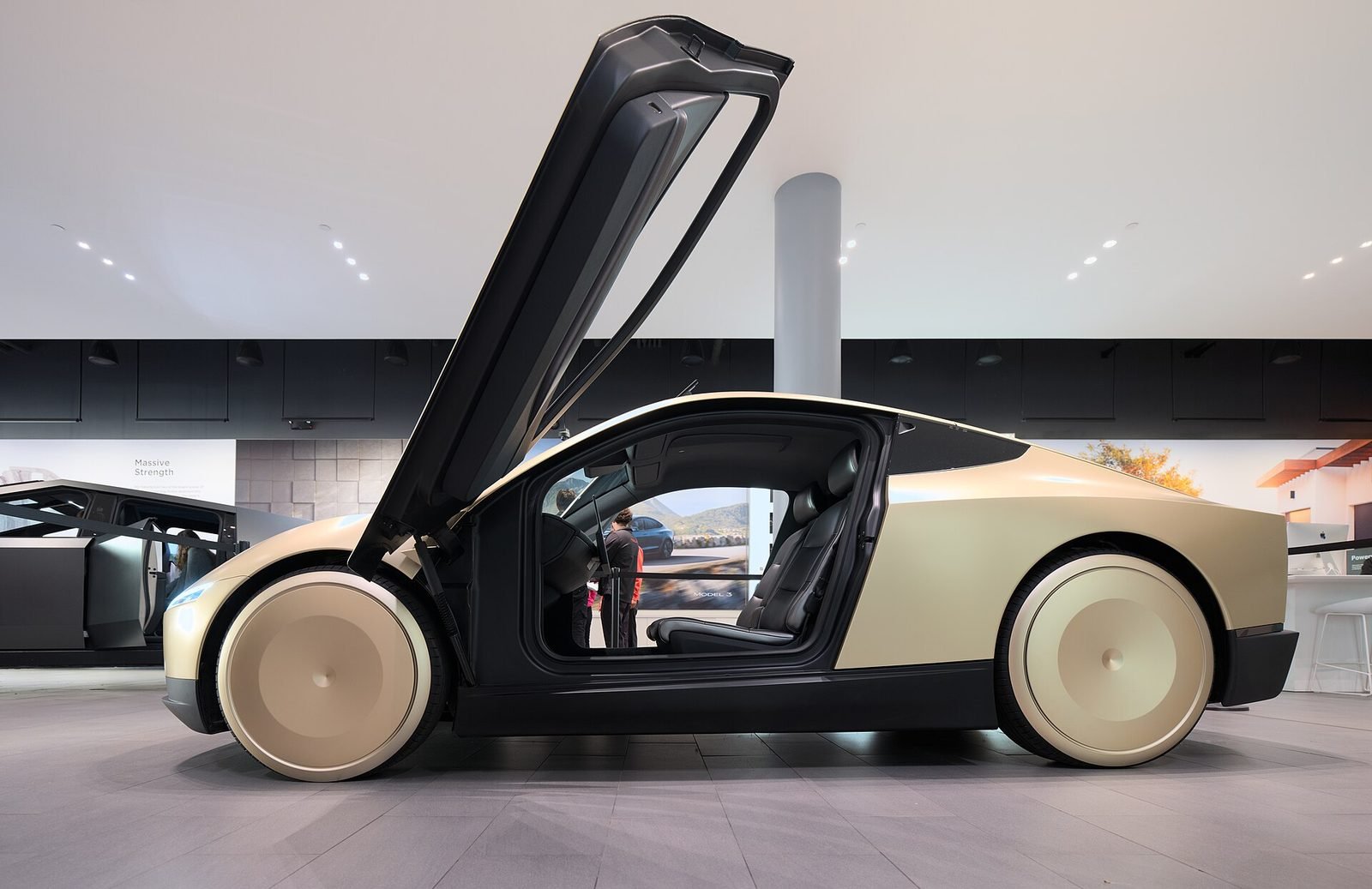
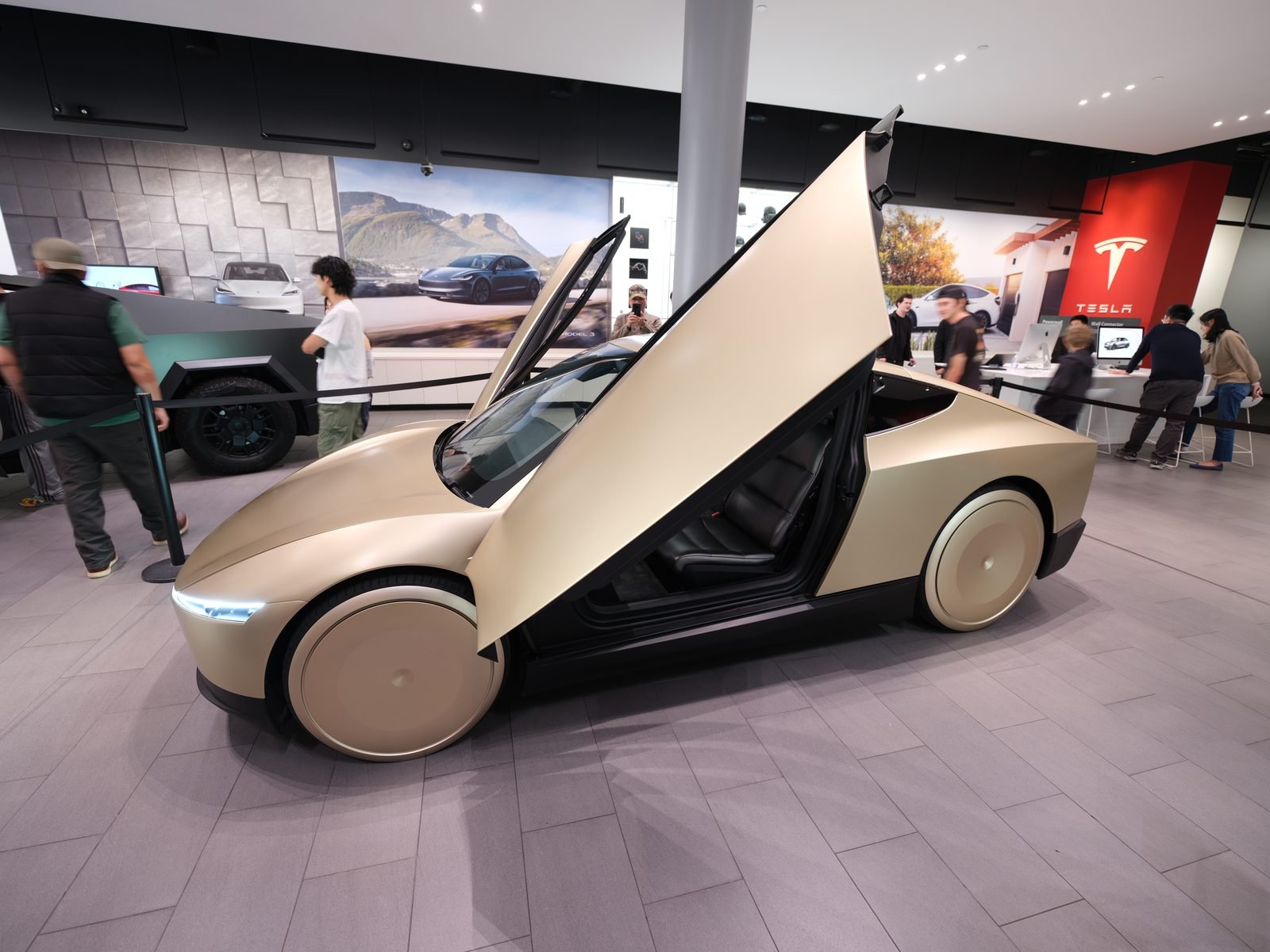
If you’re just meeting the Cybercab: it’s a two-seat coupe with butterfly doors, no steering wheel, no pedals, and no side mirrors — a car designed from a blank sheet for one job, hauling up to two passengers around a city with nobody driving. Tesla hasn’t published a consumer spec sheet, but its EPA certification filing from May 2026 fills in most of the picture, as detailed in tslna.com’s Cybercab guide:
| Spec | Cybercab (EPA filing) |
|---|---|
| Layout | 2 seats, 2 butterfly doors |
| Motor | Single permanent-magnet motor, 163 kW (219 hp), front-wheel drive — Tesla’s first front-drive car |
| Battery | About 47.6 kWh (326 V) — smaller than any current Model 3 or Y pack |
| Curb weight | 3,113 lb — roughly 800 lb lighter than a Model 3 RWD |
| Range | 418 miles combined, unadjusted; roughly 290 miles on the usual EPA-adjusted basis |
| Charging | Wireless inductive charging only, around 19 kW — no NACS port, no Supercharger use |
| Controls | None — no steering wheel, pedals, or mirrors |
| Price target | Under $30,000 (Tesla’s stated target since the 2024 unveiling) |
Two things jump out. First, this is an efficiency machine, not a range machine: a small pack, low weight, and front-wheel drive add up to one of the most efficient EVs ever certified, and efficiency is the entire business case for a robotaxi. Every watt-hour saved is margin on every paid mile. Second, the wireless-only charging is a bigger deal than it sounds. A Cybercab parks itself over an inductive pad — no human plugs anything in — which means Tesla has to build dedicated charging depots city by city as it scales. That’s infrastructure, and infrastructure is why rollouts start small.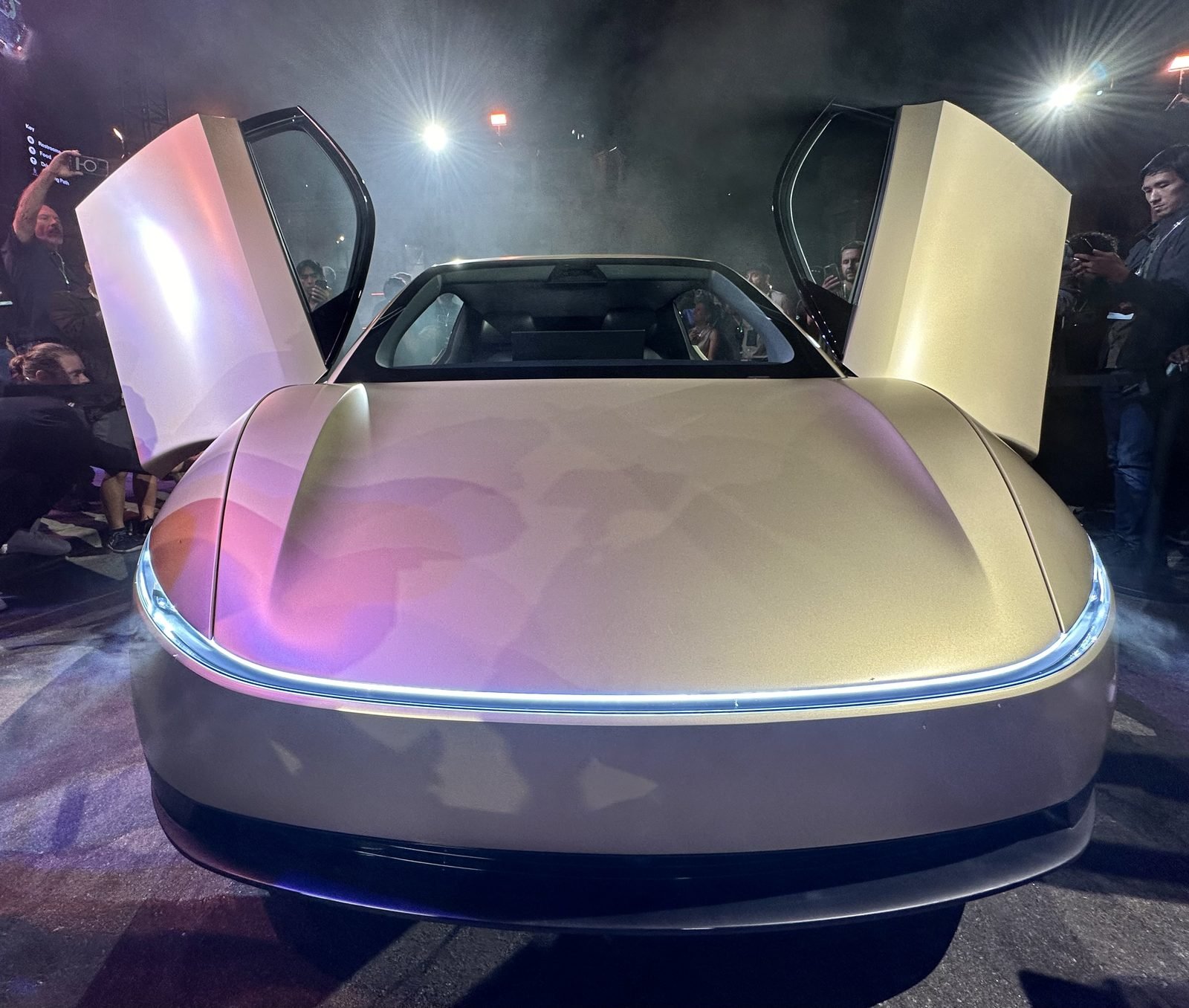
Production is already underway at Gigafactory Texas, ramping since April 2026. The production line’s listed capacity is above 125,000 units a year, and Tesla says the Cybercab uses 50% fewer parts than any previous Tesla vehicle, per the earnings call summary — which is exactly what you’d expect from a car designed around Tesla’s “unboxed” manufacturing process. For now, though, production is being matched to what the robotaxi network actually needs, not run at full tilt.
The 30-cent-per-mile moonshot
Here’s the number that matters most for Tesla’s business: $0.30 per paid mile. That’s the cost target CFO Vaibhav Taneja reiterated on the call. Tesla isn’t there yet, but he said the company sees “a path to get to that” as operations scale, according to the call summary.
Want the honest answer on why that number is such a big deal? Because a human-driven Uber or Lyft ride typically costs the rider several dollars a mile, with most of that going to the driver. Strip out the driver, build a car with half the parts and a tiny battery, and charge it on your own inductive pads — and the math starts to look like the cheapest per-mile transportation ever offered commercially. Musk’s original pitch was even more aggressive: about 20 cents a mile all-in. The 30-cent figure is the nearer-term milestone.
The catch is scale. Per-mile cost only collapses when the fleet is utilized around the clock — which is exactly why the 24/7 target matters. A robotaxi sitting in a depot at 2 a.m. is a depreciating asset; a robotaxi earning fares at 2 a.m. is a money printer. Every piece of this announcement — more cities, more hours, more weather — feeds the same utilization equation.
So… can you buy a car with no steering wheel?
This was the call’s most surprising moment. Asked when customers might get their hands on unsupervised self-driving, VP of Vehicle Engineering Lars Moravy answered with something nobody expected: “In short, we’re trying to get Cybercabs to customers by the end of this year, 2026.” He clarified that every Cybercab coming off the Texas line right now goes to Tesla’s own Robotaxi fleet, and that customer sales would start small while Tesla learns about “delivery and ownership and fleet management and autonomous vehicles in customer hands,” Electrek reported.
Musk immediately added a caveat: the “vast majority” of Cybercabs will be Tesla-owned, operating as transport-as-a-service. So the 2026 customer program looks more like a limited fleet-buyer pilot than a trip to the Tesla showroom — consistent with TechCrunch’s reporting, which notes Tesla floated the fleet-buyer idea last month and even posted an interest form for potential robotaxi buyers.
Here’s the weird part: a car with no steering wheel has never been sold to a US consumer before, and federal regulators are watching. TechCrunch notes the sales push comes even as federal regulators investigate whether the vehicle meets safety standards. That’s the regulatory shadow hanging over the whole program — and Elluswamy acknowledged it on the call, saying the limits are still mainly technological but could “pretty quickly become regulatory, perhaps in Q1, Q2 timeframes.”
For existing Tesla owners, the more relevant timeline is the software one. Elluswamy said the Cybercab and the Model Y run the same software stack, and Tesla plans to release unsupervised driving to customer cars as part of its V15 update. The remaining step is getting owners’ cars into the geofences and fleet management Tesla uses for its own driverless vehicles — and Tesla’s working target is “somewhere around Q2 next year” for the first customer vehicles to join the robotaxi fleet, per TeslaNorth.
What “24/7 by year-end” really means
Let’s unpack the 24/7 target, because it’s doing a lot of work. Right now the Austin service runs roughly 6 a.m. to 9 p.m. Elluswamy said hours have already stretched into later evenings and will “pretty soon” reach 2 a.m. The year-end targets go further: 24/7 operation, higher-speed roads, and more weather conditions, unlocked “over the rest of this year” as software validation progresses.
Each of those is a real technical hurdle. Higher-speed roads mean highway driving without a supervisor — a different risk profile from 35-mph city streets. More weather means rain, and eventually the kind of conditions that still humble every autonomy stack. And 24/7 means the cars have to handle the 2 a.m. bar crowd, empty dark roads, and everything in between. Tesla’s framing is that these are validation problems, not science problems — the software works, and the company is now proving it across conditions.
Musk closed with his characteristically maximalist prediction: barring government intervention, Tesla “will end up doing a majority of all passenger miles on Earth in any country where it is allowed to operate freely.” That’s not a forecast you can put in a spreadsheet. But it tells you how Tesla sees this business — not as a side project, but as the company’s future core.
What Dallas riders should expect
If you’re in the Dallas-Fort Worth area, here’s the practical picture. Tesla’s driverless Model Y Robotaxi service has been operating in parts of the metro since April, so the app, the pickup flow, and the geofenced service areas already exist — the Cybercab will slot into that same system with a cheaper, purpose-built vehicle. Expect the initial Cybercab footprint to be limited: Tesla expands geofences gradually, and the inductive-charging depots the Cybercab depends on have to be built out in each new city.
A few honest caveats. First, Tesla’s autonomy timelines have slipped before — often — so treat “next month” and “by year-end” as targets, not guarantees. Second, the regulatory picture is genuinely unresolved: federal scrutiny of a steering-wheel-free car sold to customers is uncharted territory. Third, expansion speed will depend on things Tesla can’t fully control, including local rules in each new city.
Still, the direction is unmistakable. Two months ago the Cybercab was a curiosity doing paid rides in one city. Now it’s a product line with a production ramp, a second city, a 24/7 target, and a path — however narrow — to customer sales this year. The robotaxi race isn’t coming. It’s here, it’s driverless, and next month it’s in Dallas.
The verdict
Tesla’s Q3 call was the clearest signal yet that the Robotaxi program has moved from experiment to rollout. Dallas next month, 24/7 service by year-end, a tenfold fleet expansion in Austin, and the first customer Cybercabs possibly before Christmas — that’s a company pushing the accelerator, not testing the brakes.
The risks are real: regulation could slow everything down in early 2027, the $0.30-a-mile target is still aspirational, and most Cybercabs will stay in Tesla’s hands for the foreseeable future. But if you’re scoring the robotaxi race on momentum, nobody else is moving at this speed. For Dallas riders, the future arrives next month. For everyone else, the map is about to get a lot bigger.