The short answer
Yes, something real is happening, but it is not a done deal yet. On November 9, aerial footage showed earthworks and land being leveled at the site Tesla picked for Project Crystal Sun, a solar cell and panel factory near Richmond in Fort Bend County, southwest of Houston. Elon Musk shared the footage on X and wrote two words: "Project Crystal Sun." It is the first time Musk has named the project in public, and it is the clearest sign yet that Tesla plans to build it.
But the footage is not a groundbreaking notice, and Tesla has not said in a company statement that the site is final. The project still needs a final sign-off from the Texas governor on the school-tax piece, and Tesla's own filing says it is still weighing a site in another state. What is firm: Tesla has applied for about $10.1 billion of investment, the county has approved a tax package that could run 35 years, and the filing projects 9,712 permanent jobs by 2033. The target is commercial production in the first quarter of 2029.
What happened on November 9
The news started with a drone video. S.E. Robinson Jr. said he visited the property the day before and shared aerial footage of large clearings, staged equipment, and land being leveled. Sawyer Merritt, a Tesla watcher with a large following on X, shared the footage and called it the official start of construction on the solar factory near Houston. Musk then quoted Merritt's post and added only the project name.
That is a big deal for one reason: until now, Project Crystal Sun has lived mostly in paperwork. Tesla filed its application with the Texas Comptroller in July, the county voted on tax breaks in October, and local outlets covered each step. Musk's post is the first public nod from Tesla's chief executive, and it came the same day the dirt started moving.
Still, keep the two claims apart. The footage shows real site work on the proposed land. It does not prove every approval is complete, and it does not replace a formal statement from Tesla. No company press release, no filing, and no Tesla statement has called this a groundbreaking. Treat the start of work as reported and the project as proposed, not finished.
What Project Crystal Sun actually is
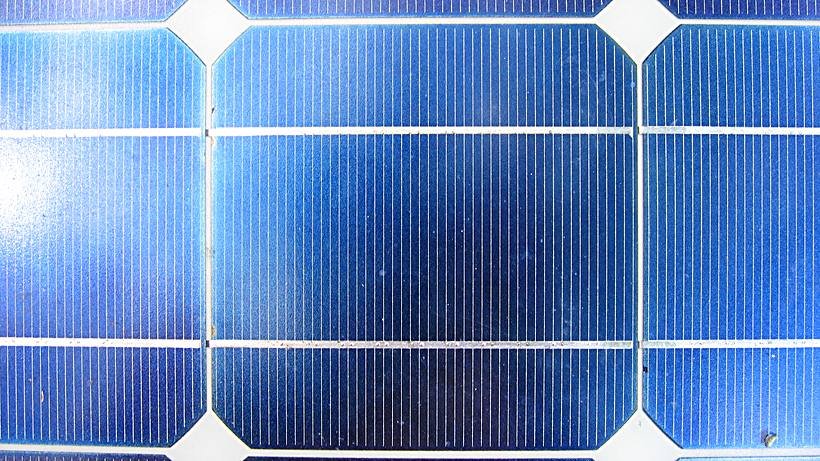
Project Crystal Sun is a plan for a vertically integrated solar factory: a plant that would turn silicon ingots into wafers, then into solar cells, then into finished panels, all under one roof. Most US solar plants today assemble modules from cells made overseas. This one would do the whole chain in Texas, which is rare in America and the point of the project.
The site covers parts of five parcels near FM 762 and FM 1994, about 3,050 acres in Fort Bend County, inside the Lamar Consolidated Independent School District. It sits near Richmond, about 45 minutes southwest of downtown Houston. Tesla's filing splits the $10.1 billion into about $1.52 billion for land, buildings, and site work, and about $8.6 billion for production equipment.
One number is missing: capacity. The filing does not say how many gigawatts of panels the plant would make each year. For scale, Qcells is spending $2.5 billion on an ingot-to-module campus in Cartersville, Georgia, where a 3.5-gigawatt cell line started production this year. Crystal Sun's budget is about four times that. Tesla has also talked much bigger. At Davos in January, Musk said, "The SpaceX and Tesla team, both separately, are working to build to 100 GW a year of solar power in the U.S., of manufactured solar power." That quote is in the company's own filing. It is a goal, not a promise for this one plant.
The $10.1 billion, and the tax breaks behind it
The money story is almost as big as the factory. Tesla applied for a 10-year limit on school property taxes under the Texas Jobs, Energy, Technology and Innovation Act, known as JETI. Lamar CISD approved its piece in September. Then, on October 22, Fort Bend County commissioners voted 4-0 to approve four more agreements: a Chapter 312 tax abatement, a Chapter 381 incentive deal, a foreign-trade-zone agreement, and a "true up" payment deal. Interim County Judge Daniel Wong abstained because his engineering firm has worked with Tesla.
Here is how the package works. The Chapter 312 deal wipes out 100% of county property tax on Tesla's equipment and other personal property for 10 tax years, starting in tax year 2029 by default. Land and buildings stay fully taxable the whole time. The inventory goes through Port Freeport's Foreign-Trade Zone No. 149, which exempts it from local property tax. In exchange, Tesla agreed to payments in lieu of taxes set at zero dollars for as long as the abatement runs.
When the abatement ends, the Chapter 381 deal takes over. Tesla starts paying county tax on its equipment, and the county hands 90% of it back as a yearly grant for 20 years. If Tesla averages at least 12,000 workers for any two straight years in the first decade, the first five years of that rebate become a 100% grant and the rebate period stretches from 20 to 25 years. That pushes the whole package out to project year 35. It is also 2,288 jobs above the 9,712 Tesla says it will create.
The county's guaranteed floor is small. The true-up agreement only promises Fort Bend at least $2 million a year. For scale, Tesla's own consultant, Kroll, estimated the project would pay $276.5 million in county general taxes over 38 years without incentives, peaking at $16.2 million in 2030. The Texas Comptroller estimated the school-tax piece alone would save Tesla about $115.2 million. Kroll also put the project's total Texas GDP impact at about $107 billion over 38 years, with roughly $6.4 billion in combined state and local taxes. Those are consultant projections in an incentive filing, not measured results.
Fort Bend's economic development director, Carlos Guzman, told ABC13 the county "would've been eliminated from consideration" without these agreements. That is the honest frame for the whole package: Texas is bidding against another state, and the bid is the deal.
The jobs: 9,712 by 2033, if it all happens
The filing projects 9,712 permanent full-time jobs at full capacity in 2033, with an average pay of $55 an hour and a payroll near $1.3 billion a year. That is the headline number. The ramp is slower than the headline suggests: about 1,942 workers in 2029, the first year of operations, rising in stages to 2,500, then 5,000, then 7,500, then 9,712 by the fourth year. Peak construction work is listed at about 1,147 temporary jobs in 2028.
The county built in a cushion. Tesla keeps the full abatement as long as it hits 90% of the headcount target, about 8,741 people. The penalties for missing are mild. One bad year costs Tesla only that year's break, and two misses in a row let the county end the deal. Full clawback of abated taxes, plus a possible 15% penalty, is reserved for big defaults such as missing the $10 billion investment, blowing the construction deadlines, or leaving the plant empty for 12 months. Grants from earlier years cannot be clawed back for a headcount shortfall.
The catch: Tesla has not committed yet
Every number in this story comes with the same footnote: Tesla has not said it will build in Texas. The JETI filing says the Fort Bend site's economics are "not competitive" with a site in another state unless it gets the incentives, and the rival state's name is blacked out in a confidential supplement. The governor's office still has to sign off on the school-tax piece. Until that happens and Tesla makes a final site choice, the $10.1 billion and the 9,712 jobs are a bargaining position, not a build.
The deadlines in the county agreements tell the same story. Tesla must start construction by June 30, 2027, begin regular commercial production of solar cells by December 31, 2030, and invest $10 billion by the later of December 31, 2031 or two years after production starts. Force majeure and power-grid delay clauses can push those dates out.
Tesla has been here before. New York spent $950 million on the Buffalo factory for Tesla's solar business, and when the solar plans fell apart, Tesla filled the building with other work, including data labeling for Autopilot, to meet its job promises. Tesla did announce a new solar panel made in Buffalo last year. The lesson for Crystal Sun is simple: a filing and a tax deal are not a factory. The dirt moving on November 9 is the best sign yet, but the proof will be walls, machines, and hires.
There is also a supply-chain wrinkle. Reuters reported in March that Tesla was in talks to buy $2.9 billion of Chinese solar equipment, and its supply chain is already caught in a patent fight between Chinese suppliers. A plant meant to cut reliance on China may still start with Chinese machines.
Why Tesla wants a solar factory at all
Tesla is a car company that keeps acting like an energy company. Its energy business has been growing alongside the car side, and the filing ties the plant to two federal incentives, the Section 45X advanced manufacturing production credit and Section 48D. The pitch is simple: make cells in America, sell power and panels in America, and stop leaning on imports.
The timing fits Tesla's bigger shift. Musk has spent 2026 steering Tesla toward AI and robots: the Cybercab, the Optimus humanoid, and a Texas robotaxi network that now covers eight US cities, including San Antonio, which launched this week. Those bets need power, lots of it, and Musk's Davos line about 100 gigawatts a year of US-made solar reads as the energy side of the same plan. The company's own filing frames the factory as part of that push. Tesla is also winding down Cybertruck production to build more Cybercabs, a sign of how far the pivot has gone.
For EV drivers, the link is practical, not abstract. Cheaper US-made solar means cheaper power for charging at home and for the Supercharger network, and a US cell supply chain means fewer shocks like the tariff fights that have hit imported panels. None of that changes what a Model Y costs tomorrow. It is a bet on the cost of the miles, not the cost of the car. And the market around it is moving: US EV sales are climbing again a year after the tax credit ended, so the cars that would use that power are selling.
What happens next
Watch three things. First, the governor's sign-off on the JETI school-tax limit, the last big approval in the incentive chain. Second, a formal word from Tesla: a groundbreaking notice, an equipment order, or a hiring post tied to Richmond or Fort Bend County. Third, the June 30, 2027 construction deadline in the county deal. If Tesla is serious, shovels and steel have to follow the dirt work well before that date.
The schedule in the filing has construction starting in 2026 and finishing in 2028, with commercial operations in the first quarter of 2029. The November 9 site work lines up with the early end of that window. If the pace holds, the next public milestone should be visible from the road: foundations, then walls, then the first hiring wave for 2029.
What it means if you are buying an EV or going solar
Almost nothing right now, and that is the honest answer. No Crystal Sun panel exists yet, and none will before 2029 at the earliest. If you are shopping for home solar this year, buy on today's panels and prices, not on a factory that is still a filing and a leveled field. If you are buying an EV, this plant does not change the price, the range, or the charging network.
What it could change, years from now, is the cost of the power that fills the car. A US cell plant at this scale would put downward pressure on solar prices and give Tesla a home-grown supply for its energy products. Texas would get close to 10,000 jobs and a new anchor employer in Fort Bend County. Those are real stakes, and they are the reason the county voted 4-0. But they are still stakes, not results. Check back when the walls go up.
Keep an eye on our Tesla news and our homepage for the day’s top stories.
Project Crystal Sun questions, answered
What is Tesla Project Crystal Sun?
Tesla's proposed $10.1 billion solar cell and panel factory near Richmond, Texas, in Fort Bend County. It would make photovoltaic cells and finished modules, starting from silicon ingots, with commercial production targeted for the first quarter of 2029.
Where is Project Crystal Sun being built?
On about 3,050 acres near FM 762 and FM 1994, near Richmond in Fort Bend County, about 45 minutes southwest of downtown Houston, inside the Lamar Consolidated Independent School District.
Has Tesla confirmed it will build the factory?
Not formally. Site work appeared on November 9, 2026, and Elon Musk named the project on X the same day, but Tesla has issued no formal groundbreaking notice, and its filing says it is still weighing a site in another state. The Texas governor must still sign off on the school-tax limit.
How many jobs will Project Crystal Sun create?
The filing projects 9,712 permanent full-time jobs by 2033 at full capacity, starting with about 1,942 in 2029, at an average of $55 an hour. Peak construction work is about 1,147 temporary jobs in 2028.
What tax breaks did Tesla get for the factory?
A 10-year school property tax limit under the Texas JETI program, worth about $115.2 million by the Comptroller's estimate, plus Fort Bend County deals approved 4-0 on October 22, 2026: a 100% county tax abatement on equipment for 10 years, then a 90% rebate for 20 years, stretching to 35 years if Tesla averages 12,000 workers.
When will the factory start making solar panels?
The filing targets commercial production in the first quarter of 2029. To keep the tax breaks, Tesla must start construction by June 30, 2027, and begin regular commercial solar cell production by December 31, 2030.