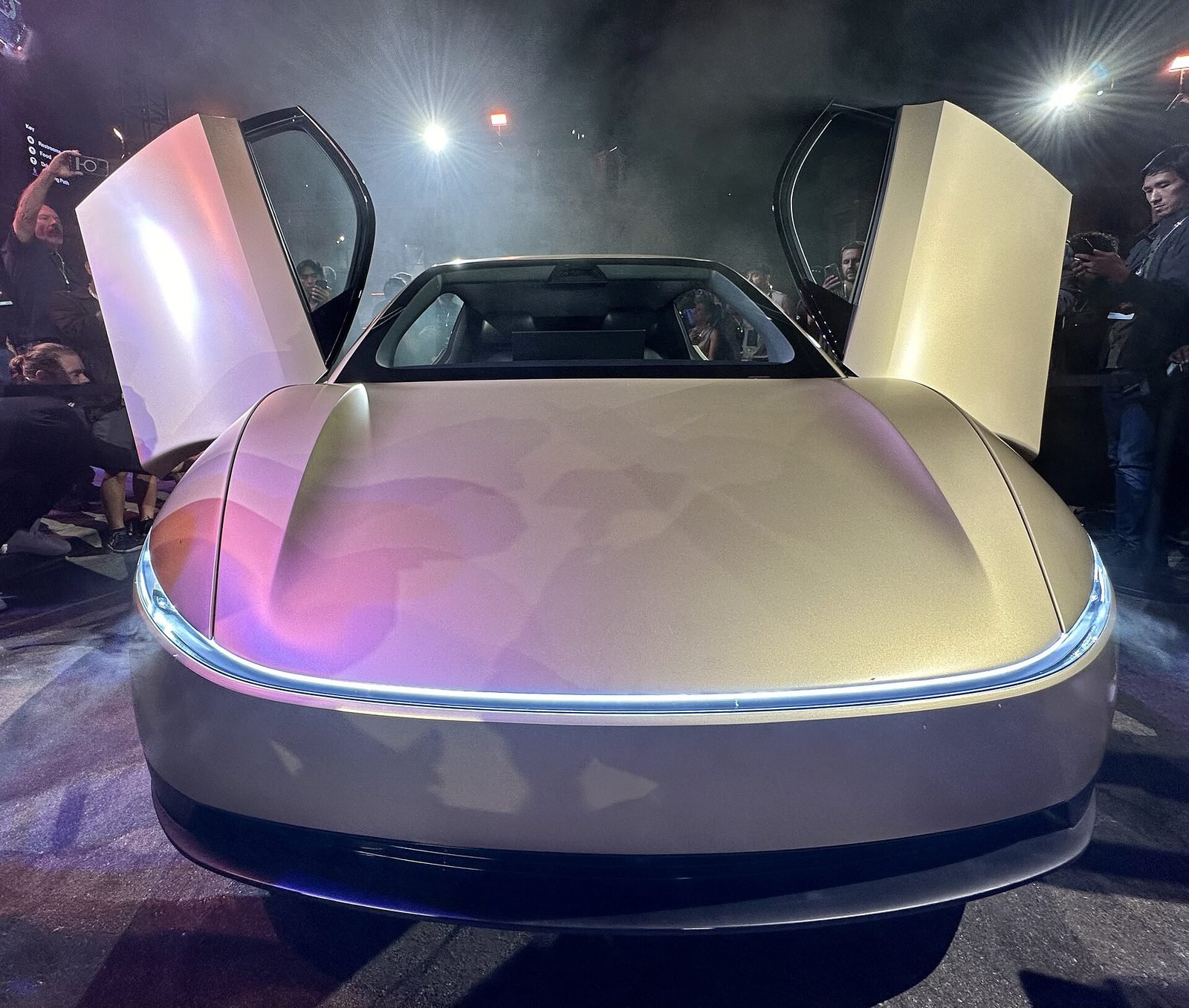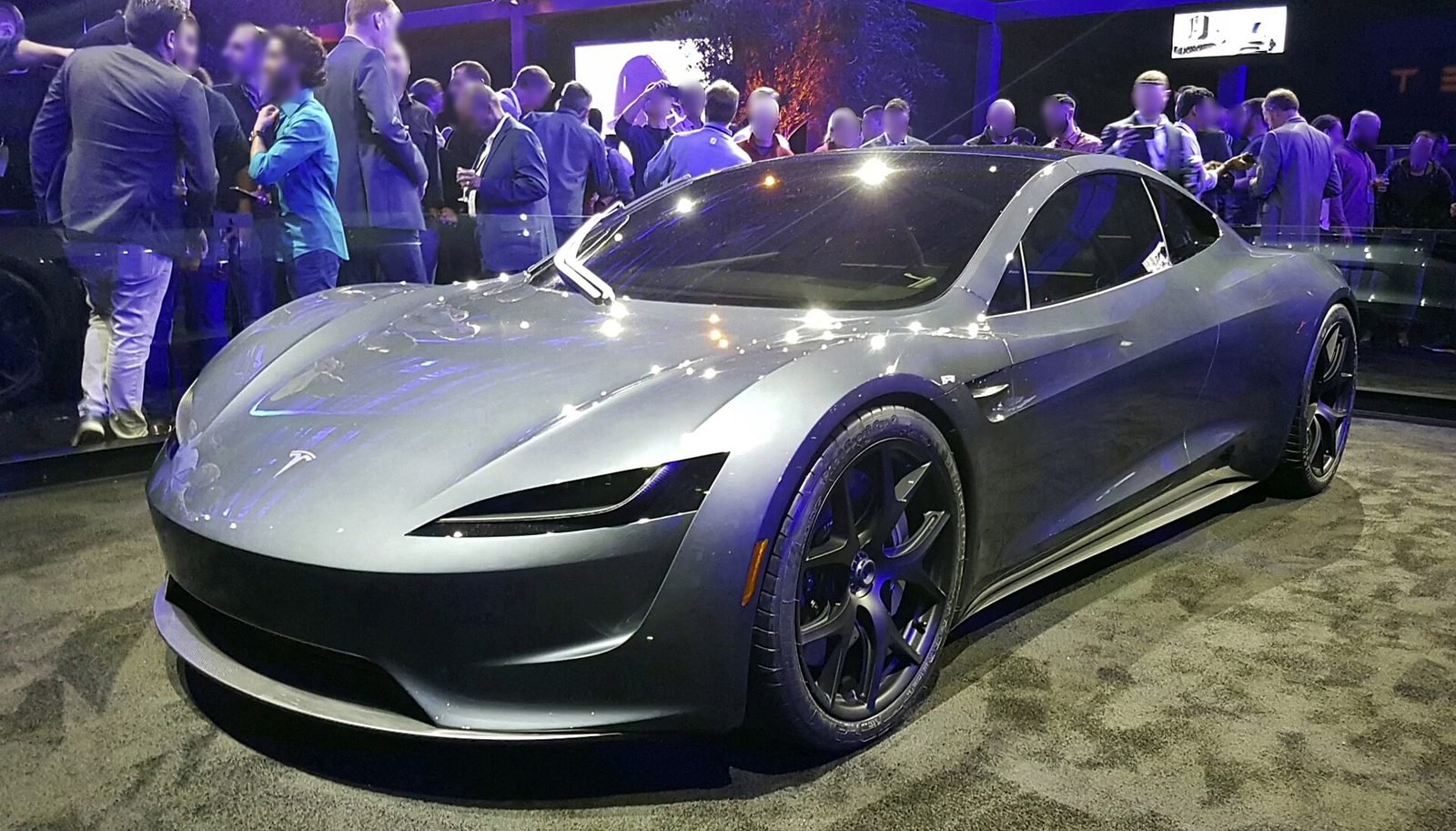
Tonight, at 7:55 PM Central, Tesla will do something it has been promising for nine years: show the world a new car — the Roadster. The demo happens at SpaceX’s rocket testing facility in McGregor, Texas. It may involve the car hovering on cold-gas thrusters. And the start time is a wink at 1955 — the year Marty McFly traveled to in Back to the Future. It will be quite a show. The question hanging over it is whether a show is what Tesla needs right now.
Because behind the spectacle, the business is wobbling. Last year, China’s BYD overtook Tesla as the world’s top seller of electric vehicles, finishing roughly 620,000 vehicles ahead, according to Bloomberg figures cited by First for Autos. Tesla’s own car sales are down 16 percent. Elon Musk, meanwhile, has spent much of his public energy on AI and Optimus, the company’s humanoid robot. EVs still account for the largest share of Tesla’s revenue — but the momentum that once made Tesla synonymous with the electric car has slipped.
A halo for hard times
That’s the context for tonight. The Roadster is a halo car — the kind of machine that exists less to make money than to make everything else the company sells look exciting. And right now, Tesla could use the excitement. A flying-car demo is the loudest possible way to remind the world that Tesla still does things nobody else dares.
Not everyone is convinced it will work. Andrew Rocco, a stock strategist at Zacks Investment Research, told Bloomberg that Musk “loves to build hype around the brand.” Rocco expects the Roadster to generate plenty of buzz — but doesn’t see it as a “needle mover” for sales. He’s probably right about the arithmetic: a $200,000-plus supercar was never going to fix a volume problem.
But arithmetic isn’t the whole story. Halo cars work on psychology. The original Roadster — the little Lotus-based convertible from 2008 — sold in tiny numbers and lost money, yet it put Tesla on the map and made the Model S possible. Nine years ago, the second-generation prototype did it again, forcing the entire industry to take electric performance seriously. Tonight’s car is trying to pull off the trick a third time.
What tonight actually has to prove
For the halo to work, though, the demo has to land — and “land” might be literal. Per MotorTrend, via First for Autos, the demonstration will use the same type of cold-gas thrusters flown on SpaceX rockets, potentially letting the car hover off the ground. Tesla’s invitations warned guests the event “must be held outdoors,” which is why September’s Texas weather forced the two-week delay from October 1. A conventional stage reveal doesn’t need a weather contingency. Whatever’s planned, it’s ambitious.
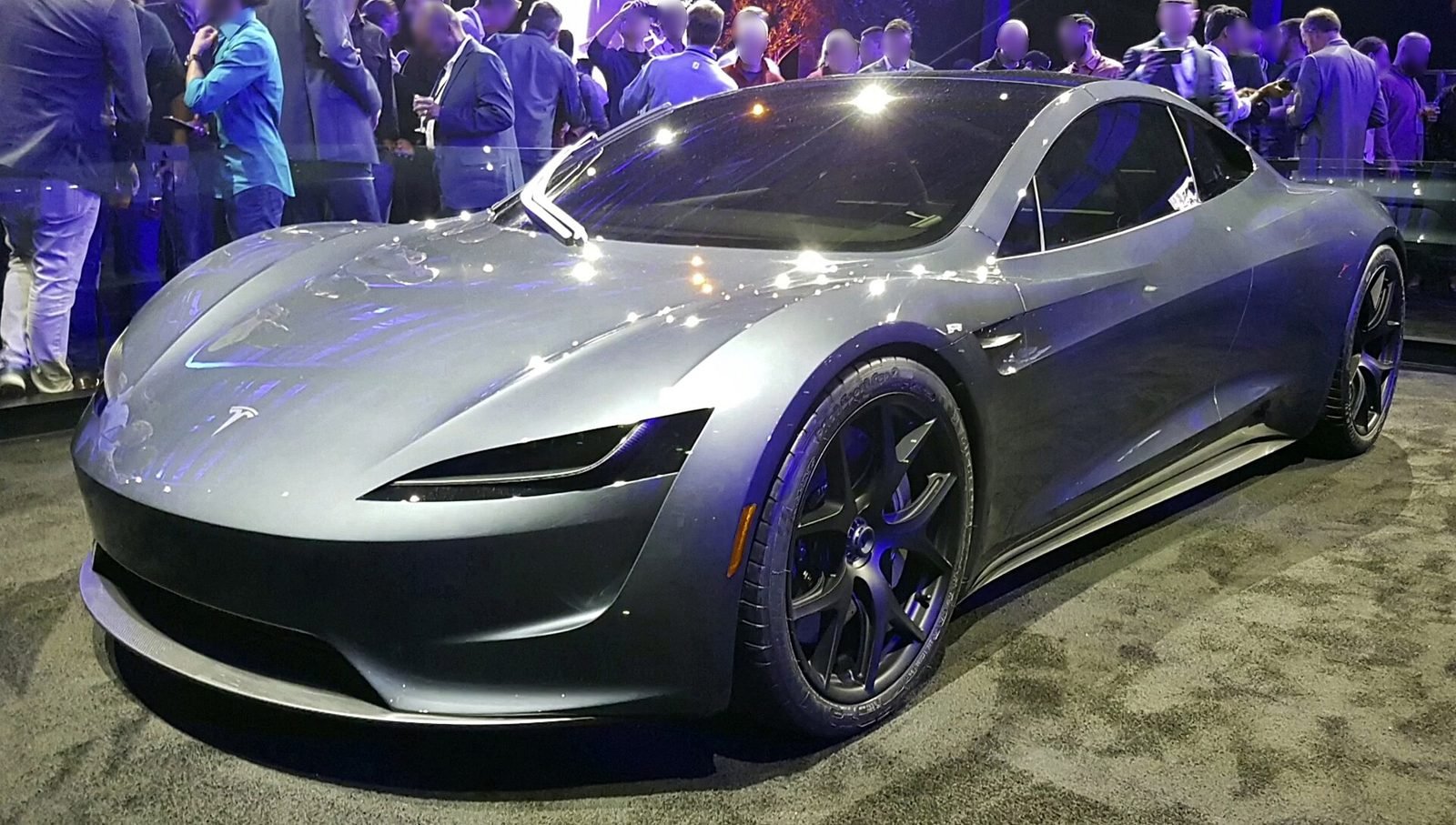
Ambitious is also risky. Tesla has a long highlight reel of demos that dazzled on the night and dissolved afterwards — and the Roadster program itself is the prime exhibit, nine years late and counting. If tonight produces a genuine hover, a real price, and a credible production timeline, the story writes itself. If it produces another round of “coming soon,” the snickering will be audible from Austin to Shanghai.
The guest list tells you who Tesla is performing for. Invitations went to Roadster reservation holders — people who put down deposits years ago, some reportedly asked for $5,000 down plus a $45,000 wire transfer within ten days — and the event is 21-and-over, invite-only. These are the believers. The harder audience is everyone else: the shoppers who drifted to BYD, Hyundai, and Kia while Tesla was busy with robots.
The problem a Roadster can’t solve
Here’s the uncomfortable part. The things eating Tesla’s sales aren’t things a supercar fixes. BYD wins on price and breadth — it sells affordable EVs at volumes Tesla can’t touch. In the US, Tesla’s lineup is aging: the Model 3 and Model Y are excellent but familiar, the Cybertruck polarizes, and the affordable model Tesla keeps teasing hasn’t materialized. A $200,000 Roadster doesn’t answer any of that.
What would move the needle? The usual answers: a genuinely affordable Tesla, Full Self-Driving that actually delivers on the name, the Cybercab network scaling beyond Austin. All of those are harder and less fun than a flying sports car. Which is exactly why tonight matters as theater — it’s the one thing Tesla can do this quarter that nobody else can.
The robotaxi-shaped elephant
There’s an irony in tonight’s spectacle that’s worth naming. The most important thing Tesla is doing right now isn’t a supercar at all — it’s the Cybercab network, which just passed 300 vehicles in Austin a month after public rides began. Robotaxis, not Roadsters, are the business Musk is actually betting the company’s future on. Full Self-Driving underpins all of it: the same software stack, the same AI training, the same promise that the car can handle the boring miles while you do something else.
That’s why the week’s other Tesla headlines sting. Every fatal crash report and every forced rename in Europe makes the robotaxi pitch harder — and no amount of thruster-powered hovering changes it. Tonight’s Roadster can dazzle, but Tesla’s future will be decided by ordinary cars doing ordinary drives without anyone touching the wheel. The halo gets the cameras. The fleet pays the bills.
Watch the demo, read the business
So watch tonight’s stream — it’ll be unforgettable either way, as Musk promised. But watch it with the sound up and the sales charts open. If the car hovers, cheer. Then ask the boring questions: when can you buy one, what does it cost, and what’s coming for the other 99 percent of buyers? The answers will tell you more about Tesla’s future than any thruster ever could. For the full rundown on the event itself — timing, the nine-year backstory, and what to look for — see our reveal preview.