Tesla just lived through the wildest 48 hours of its corporate life — and the numbers explain why Elon Musk is suddenly swinging for the fences. On October 21, the company reported third-quarter results that looked brutal on the bottom line: $28.05 billion in revenue, essentially flat from a year ago, and GAAP net income of just $787 million — down 43 percent. A day earlier, on SpaceX's earnings call, Musk had dropped a bombshell of his own: both companies have formed special committees of independent directors to study a merger.
So you've got a car company whose profits are shrinking, cutting its spending forecast, while its CEO openly explores combining it with a rocket company. Here's the short version of what's happening, why it's happening now, and what it means whether you drive a Tesla, own the stock, or just watch the EV market.
The headline numbers: revenue flat at $28.05 billion (right on Wall Street's $28.06 billion estimate). Automotive revenue down 3% to $20.56 billion. Operating income down 56% to $718 million, for an operating margin of just 2.6%. Non-GAAP earnings of $0.48 a share — which actually beat the $0.45 consensus. Deliveries of 486,532 vehicles, production of 464,391, and the company's 10 millionth vehicle built and delivered. Free cash flow of $1.53 billion, a big swing from negative $1.09 billion in Q2, with $45.4 billion in cash on hand.
The Q3 numbers, in plain English
The weird part of this quarter is that Tesla's factory economics actually got better while its profits got worse. Total gross margin rose to 19.6%, up 160 basis points from a year ago, and auto gross margin excluding credits climbed back above 18%. The cars are being built more profitably than they were in Q2. Then operating expenses showed up and ate the gains: $4.78 billion, up 39% year over year, with research and development alone jumping 69% to $2.76 billion. Tesla now calls what it's spending on "Super Intelligence" — the AI, Optimus robot, and Cybercab programs.
Stock-based compensation hit $1.17 billion, up from $663 million a year ago, including the 2025 CEO pay package. That's a real number hitting real earnings, and it's one reason the GAAP profit looks so thin next to the $1.70 billion non-GAAP figure.
The revenue mix keeps shifting away from cars. Energy generation and storage revenue fell 16% to $2.88 billion even though Tesla deployed a record 13.7 GWh of storage — the company blamed tariff-related customer refunds for the disconnect. Services and other revenue jumped 33% to $4.61 billion, a record. The car business is now 73% of revenue instead of nearly all of it, and that trend isn't reversing.
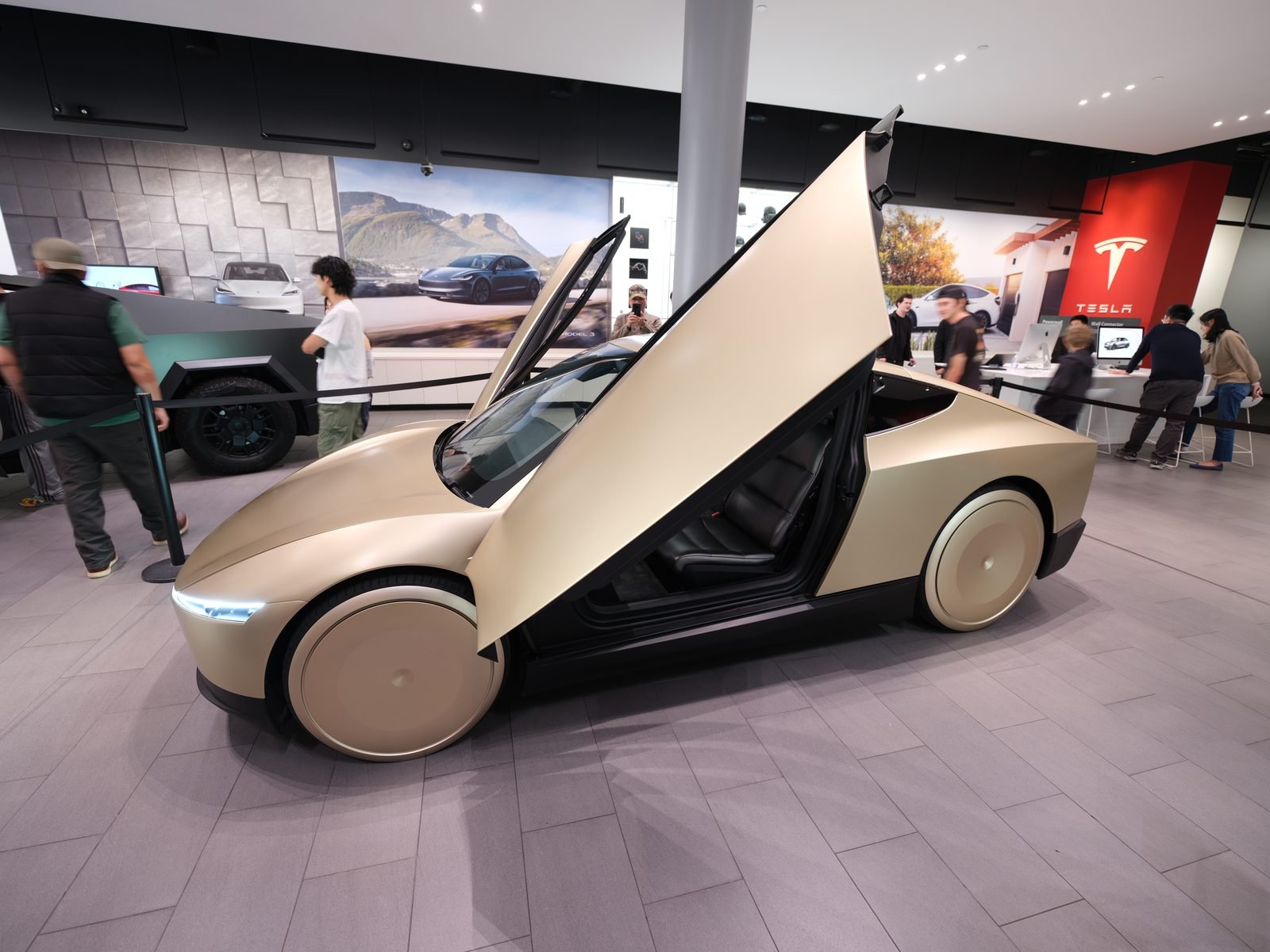
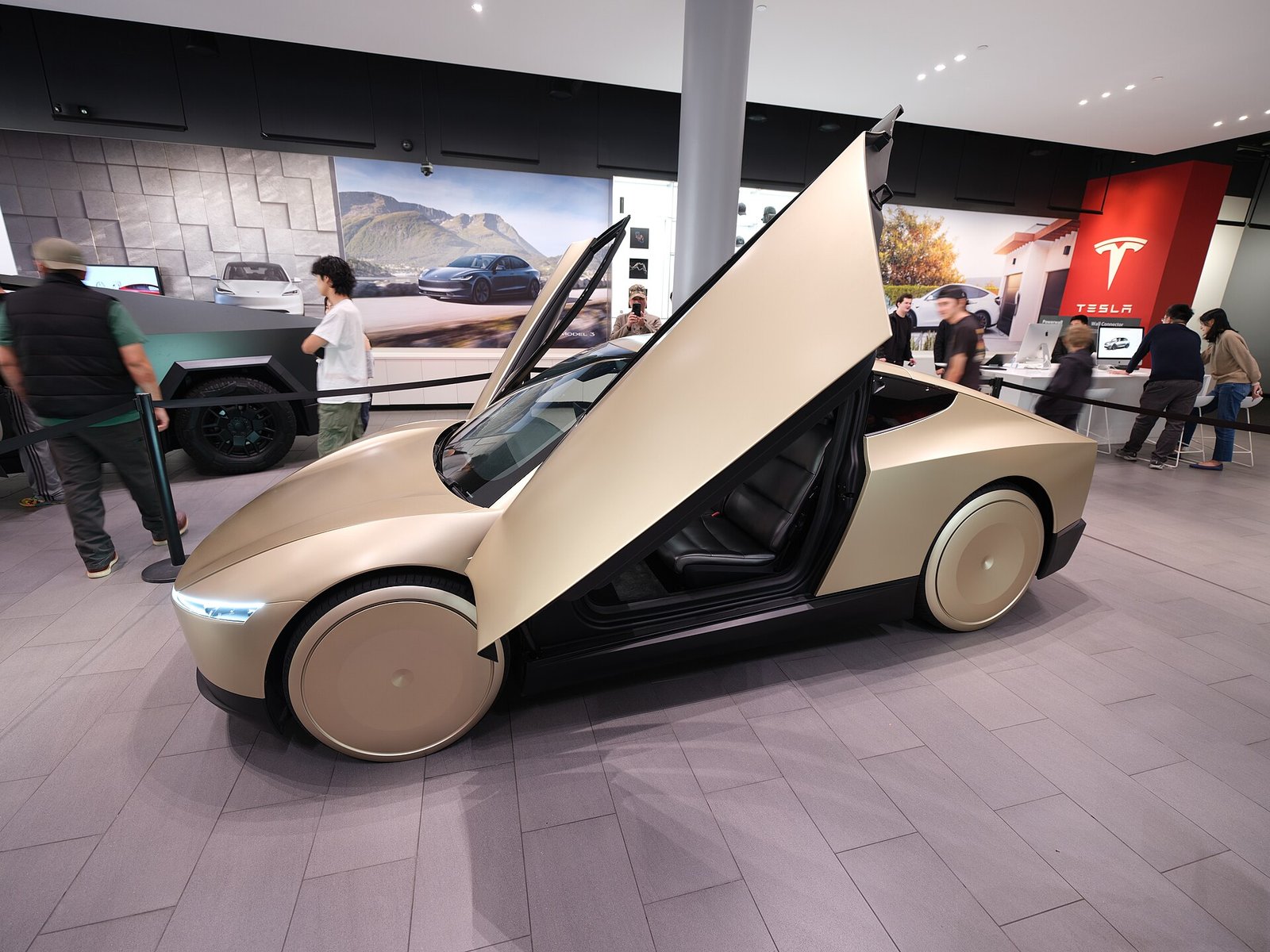
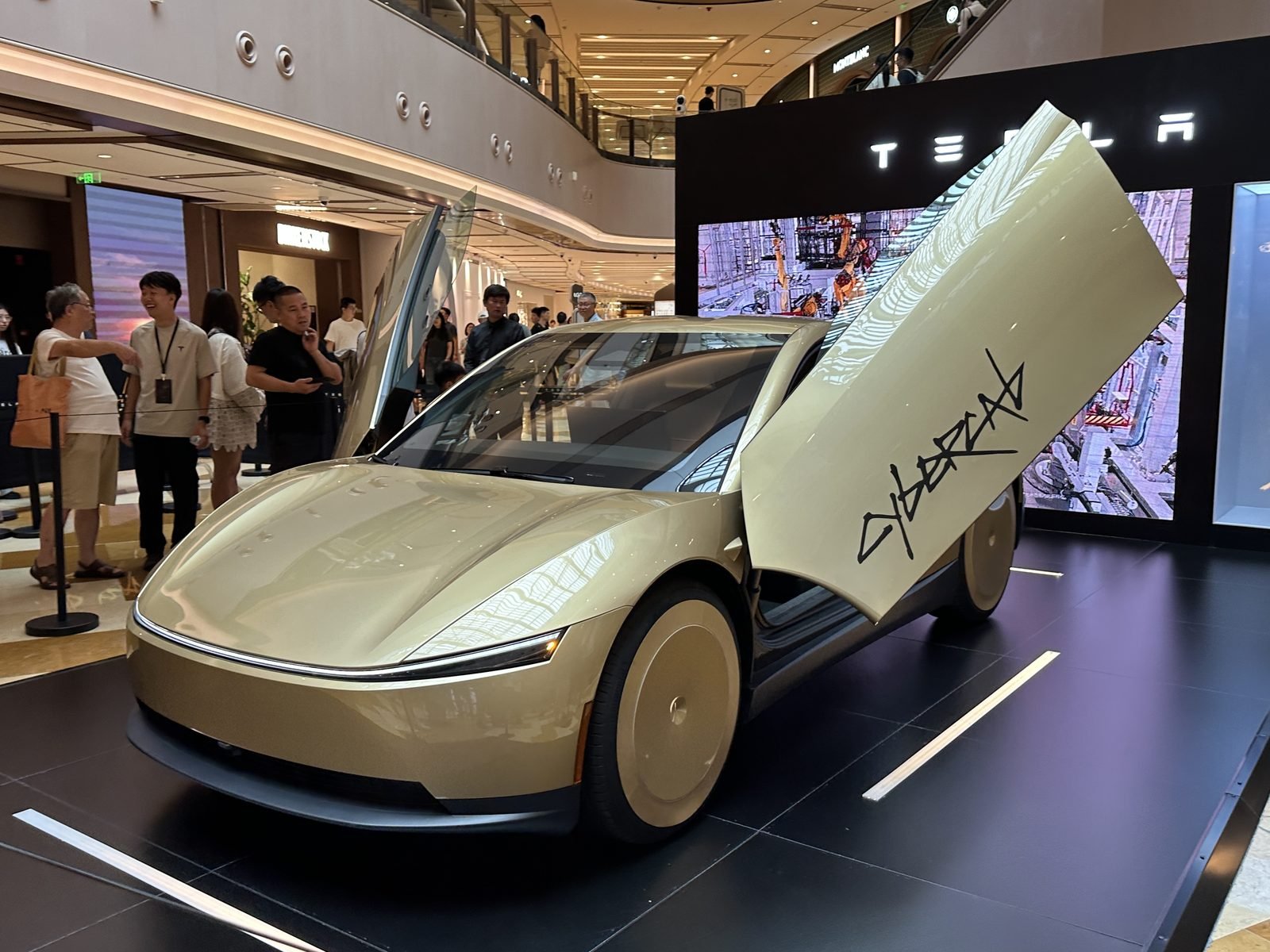
There were genuine bright spots. Over 75% of new vehicle deliveries in North America included Full Self-Driving, a jump of nearly 20 percentage points from last quarter, and active FSD subscriptions grew 67% year over year to 1.74 million. Tesla ended the quarter with what it called its largest passenger-vehicle backlog in four years. And the Cybercab is now running in Austin's Robotaxi fleet, with cumulative unsupervised miles growing eightfold quarter over quarter to nearly two million.
The $5 billion spending cut Wall Street hated
The number that moved the stock wasn't profit — it was the forecast. Tesla lowered its 2026 capital spending forecast to about $20 billion from more than $25 billion, after spending far less than expected on AI and robotics in Q3. The underspend produced a surprise: positive free cash flow. But shares still slid 5% in premarket trading the next morning.
The logic is simple. Tesla's entire investment story right now is "we're spending billions to become an AI and robotics company." Cutting the spending forecast — even if it's just timing — reads like hesitation on the thing investors are paying for. J.P. Morgan analysts, led by Rajat Gupta, summed up the mood: investors would come away with "mixed feelings," because the delay helps near-term cash burn but "also suggests delays in investments that matter for fruition of long-term opportunities." Management says spending ramps back up in 2027 and 2028 across robotaxi, Optimus, AI compute, and the Terafab chip project.
Context matters here. Tesla's shares are down about 14% this year while the Nasdaq is up roughly 15%, and the stock sits about 23% below its record intraday high of $498.83 from December 2025. It still trades at 188 times forward earnings, versus 6.6 for Ford and 5.2 for GM. That's a valuation that assumes the AI story plays out on schedule — which is exactly why a spending slowdown spooked people. As AJ Bell's Russ Mould put it, the risk is that Tesla "enters a period of limbo" while investors wait for news on a potential SpaceX combination, which could face "significant regulatory hurdles."
The merger bombshell
Now the big one. On October 20, during SpaceX's third-quarter earnings call, Musk confirmed that both companies' boards have formed special committees of independent directors to evaluate a possible merger — and that the committees were created at the request of shareholders. Because Musk runs both companies and is the largest individual shareholder of each, he's recused himself. His description was pure Musk: "Because I'm a conflicted party, I can't actually be in the discussions of the special committees. So it's an odd kabuki dance where two groups of people are talking and I can't be in the conversation."
He also tried to cool the hype. "Some people out there assume that a SpaceX and Tesla merger is a certainty, and I think that would be overstating it," he said. "Do I think it would be a good idea? Yes. But at the end of the day the shareholders have to be supportive of this." The committees, he said, "have not reached agreement on the terms of any transaction" — a line SpaceX repeated in its Form 10-Q filed October 22, adding that "no determination by our special committee has been made."
Here's who's actually in the room. Tesla's committee is drawn from its seven independent directors: chair Robyn Denholm, Ira Ehrenpreis, former CTO JB Straubel, Joe Gebbia, Jack Hartung, James Murdoch, and Kathleen Wilson-Thompson. SpaceX's side has six independents: Ehrenpreis again, plus Randy Glein, Donald Harrison, Steve Jurvetson, Luke Nosek, and Roelof Botha. Musk's case for combining rests on overlapping work in what he calls superintelligence software, chip design, the joint Terafab semiconductor project, robotics, and getting mass to orbit for the Starlink constellation.
And yes, there's a crypto footnote: a merger would combine the companies' bitcoin holdings into a 30,221 BTC treasury — SpaceX's 18,712 plus Tesla's 11,509.
The vote math is the real story
Here's what most coverage glosses over: the two sides of this deal face completely different approval odds. On the SpaceX side, Musk controls over 50% of the voting power, so approval there is essentially his call. On the Tesla side, a deal would need a majority of all outstanding shares — not just a majority of votes cast — which Musk himself called "quite a high hurdle." He owns about 19.8% of Tesla including restricted compensation shares, against roughly 36% of SpaceX outright (48.4% including restricted shares and unexercised options).
That asymmetry is the whole game. Tesla shareholders — the public-market ones who've watched the stock lag the Nasdaq by nearly 30 points this year — have to be convinced that folding in a capital-hungry rocket company is worth it. The committees exist precisely because Musk can't make that case himself without it looking self-dealing. Hence the kabuki dance.
Why this is happening now
Step back and the timing makes sense. Tesla's car business is flat: revenue stuck at $28 billion, deliveries down 2% year over year, the federal EV tax credit dead since September 2025, and North American EV sales down 24% in the first nine months of 2026. The growth story — the thing justifying 188 times earnings — is entirely AI, robots, and robotaxis. All of those are capital-hungry, long-dated bets.
SpaceX, meanwhile, is the half of Musk's empire that's actually firing on all cylinders. Its Q3 revenue of $14.58 billion beat the $12.7 billion consensus, earnings of 35 cents a share crushed the 15-cent forecast, and it sits on $63 billion in contracted backlog. Yes, it's capital-intensive too — $19.59 billion in quarterly capex, including $16.44 billion for AI — but it's growing, profitable on the metrics Wall Street watches, and its shares jumped on the results.
A combination would let Tesla wrap SpaceX's AI momentum and private-market firepower inside its public currency, funding the robotaxi and Optimus buildout without leaning entirely on a shrinking car-profit base. The spending cut this quarter bought Tesla time and cash; the merger would buy it a growth story.
What it means if you drive a Tesla
Honestly? In the near term, not much changes in your driveway. The car business is still the business: 10 million vehicles built and delivered, the biggest order backlog in four years, record production in Berlin, and FSD adoption exploding — three out of four new North American buyers are now taking it, and 1.74 million people subscribe. That's the installed base everything else is built on.
The robotaxi push is where the action is. The Cybercab has joined the Austin fleet, unsupervised miles are compounding fast, Dallas is next on the roadmap, and executives said the company is aiming to start delivering Cybercabs to external fleet customers before the end of 2026. The Semi has started volume production in Nevada, Megafactory Texas has begun production with 50 GWh of planned capacity, and Optimus production has started in Fremont — though Musk spent the call managing expectations on the robot's timeline, citing supply-chain and design challenges.
The risk for owners is the distraction one: a merger process consumes management attention, invites regulatory scrutiny, and could redirect capital from the vehicle lineup to rockets and robots. The bull case is that it accelerates exactly the autonomy features Tesla buyers are already paying for.
The bear case, stated fairly
Skeptics have plenty of ammunition. The valuation assumes flawless execution of businesses that barely exist yet. A merger with SpaceX would fold an enormously capital-intensive private company into a public one whose free cash flow just turned positive — and any deal would face serious regulatory review. There's also the simpler critique: Tesla's operating margin is 2.6%, its car revenue is shrinking, and the answer to "our profits fell 43%" is "let's merge with a rocket company" is, charitably, an unusual turnaround plan.
Our take: our earnings preview called the shape of this quarter exactly — deliveries beat, profits didn't. The merger talk doesn't change the underlying question, which is whether Tesla can convert its AI spending into AI revenue before the market loses patience. The committees buy Musk time to make that case. They don't make it for him.
What to watch next
Three things. First, any signal from the special committees — a term sheet, a timeline, or silence. Second, Q4 delivery numbers and whether the Cybercab fleet rollout hits its year-end target; that's the proof the robotaxi story is real. Third, the 2027 capex ramp Musk promised: if spending doesn't reaccelerate on schedule, the "timing, not hesitation" defense falls apart. We'll be tracking all three.