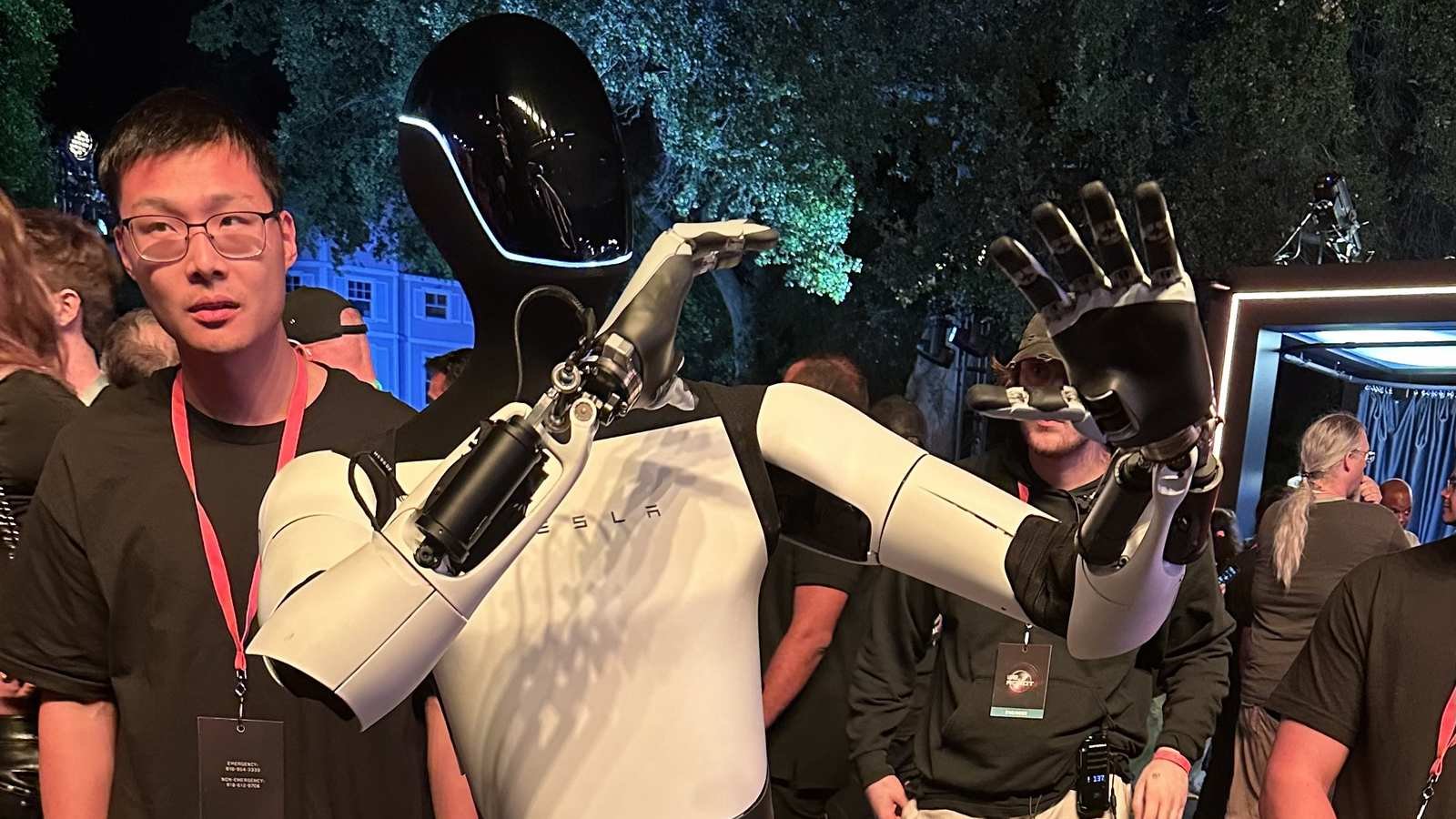
Here’s the deal: Tesla is finally building its humanoid robot for real. On October 21, 2026, Tesla’s Q3 shareholder letter said Optimus production had begun in Fremont, California, on a high-volume line — and that the bots coming off that line are, in Tesla’s words, “the first production-quality bots that we have manufactured.” That one sentence matters more than any demo video Tesla has ever shown, because it moves Optimus from prototype to product.
But hold on before you picture 20,000 robots a week rolling out of Fremont. That number is a target for the end of 2027, and CEO Elon Musk said on the same earnings call that getting there will take “at least a year, maybe a little longer,” with a ramp that starts slow and stays, in his word, “bumpy.” Today’s output is far smaller, Tesla hasn’t disclosed a weekly rate at all, and nobody outside Tesla can buy an Optimus yet. This article separates what Tesla confirmed, what outside reporting claims, and what’s still just a goal — because in robotics, the gap between those three things is where investors lose money.
| Quick answer | The short version |
|---|---|
| What started | Early production of Optimus on a high-volume line at Tesla’s Fremont factory, announced October 21, 2026 |
| Today’s output | Not disclosed by Tesla; outside reporting puts it at several hundred robots a week |
| The big target | 20,000 robots a week by the end of 2027 — a Musk target, not a schedule |
| Line size | Fremont line designed for about 1 million robots a year; a second-generation Texas line is planned for 10 million a year, long term |
| First outside sales | Around the end of 2027, industrial jobs first; no price, order page, or named customer yet |
| The catch | Hands, durability, and open-ended AI tasks still need work, by Musk’s own admission |
| What it costs | No official price exists; $20,000–$30,000 is a long-term target, not a price list |
| The stock snapshot | TSLA closed at $372.22 on October 23, 2026, down 17.23% for the year — snapshot only, not investment advice |
What Tesla actually announced on October 21
Tesla buried the Optimus news inside a rough quarter. Revenue came in at $28.05 billion, essentially flat from a year earlier, while GAAP net income fell 43% to $787 million from $1.37 billion. Operating margin shrank to 2.6% from 5.8%, research and development spending jumped 69% to $2.76 billion, and the car business itself was flat at about $20 billion in revenue on 486,532 deliveries. That’s the backdrop: the car company is treading water while spending heavily on AI, robotaxis, and robots.
Against that backdrop, the Optimus paragraph in Tesla’s Q3 update landed like a starting gun. Tesla wrote that “Optimus production began in Fremont on our high-volume lines” and that the bots coming off the line are the first production-quality units it has made. It added a claim engineers will be graded on: while Tesla will keep iterating on the hardware and the manufacturing process, it has proven that the current process is suitable for a commercial product. In plain English, Tesla is saying the factory process works well enough to build something it could sell — even if the robot itself still needs work.
On the earnings call the same day, Musk put it more cautiously. He said Tesla has “started like what I’d call early production on our high volume line in Fremont.” Tesla’s own status label for Fremont is “Early Ramp.” Anyone calling this mass production is getting ahead of Tesla’s own words. Early production is the phase where you prove the line, find the defects, and fix the design — not the phase where you flood the market.
Inside the Fremont Optimus line
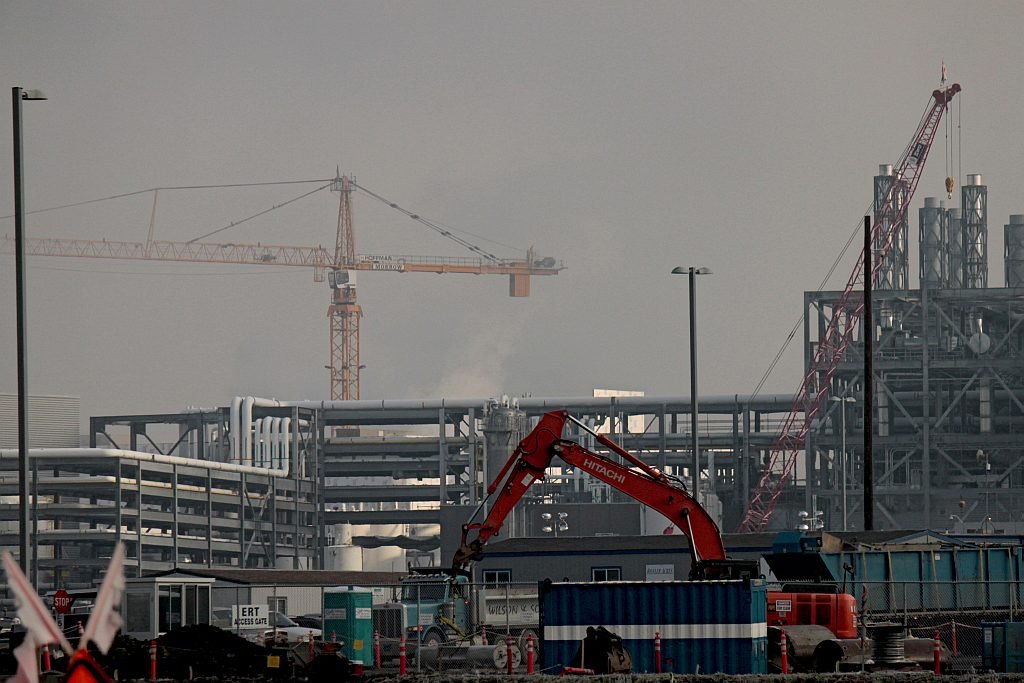
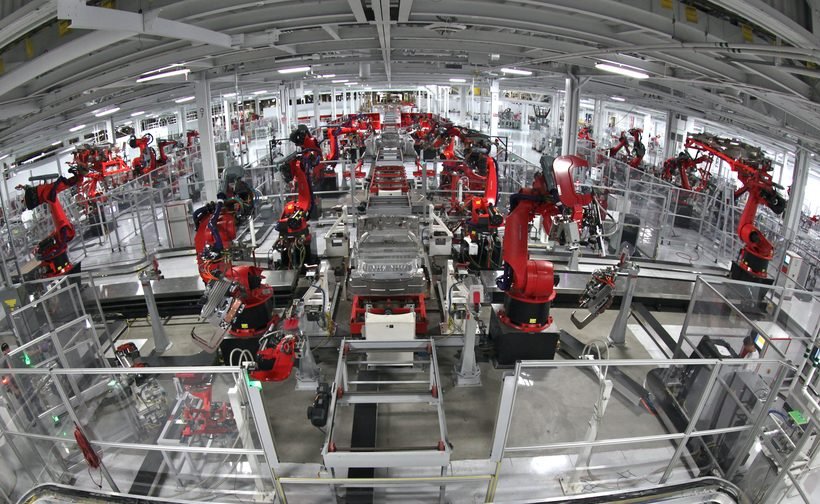
The line sits in space Tesla freed up by ending Model S and Model X production in May 2026. Tesla tore the old S/X line down in just 46 days to make room, which tells you how seriously the company is treating this pivot: it gave up its flagship sedans’ factory floor to build robots instead. Musk said on the call that “the vast majority” of the equipment for a line designed for about a million robots a year is already in place.
That million-a-year figure deserves a careful read. It describes the size of the installed line, not what the line is producing today. A car plant built for 500,000 vehicles a year doesn’t make 500,000 cars in its first month, and the same logic applies here. The line’s design capacity is a ceiling to grow into, and the distance between today’s early production and that ceiling is the whole story of the next year.
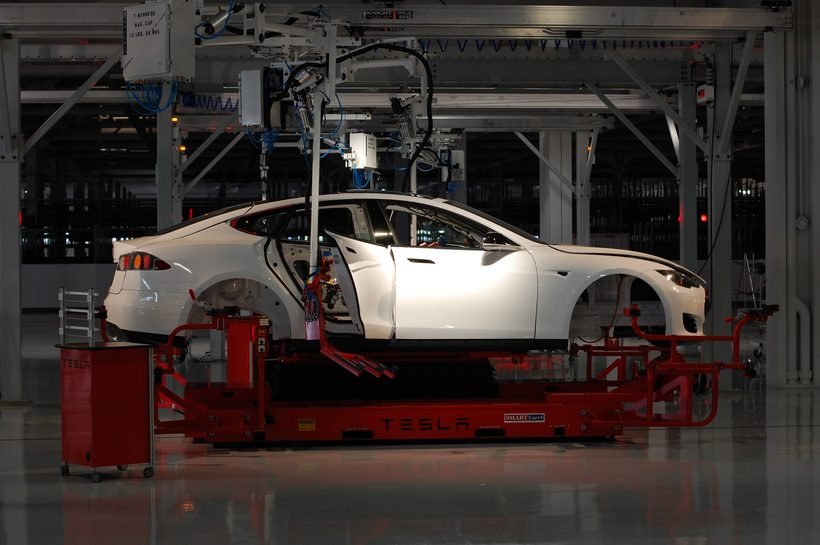
Tesla has also been lining up suppliers: in September 2026, Chinese suppliers Tuopu, Joyson, and Sanhua were certified as mass-production partners for Optimus parts, according to secondary reporting. A humanoid’s supply chain looks nothing like a car’s — tiny precision gears, custom actuators, and fingertip sensors don’t come from the usual auto parts shelf.
How many robots is Tesla building right now?
Here’s the honest answer: Tesla hasn’t said. No weekly rate appears in the Q3 letter or the call. What exists is outside reporting, and it should be labeled as such. Reporting from Electrek and The Information, summarized in September 2026 coverage, put Fremont output at several hundred robots a week in August, up from a few dozen a week during small-batch testing in the second quarter.
Where are the robots going? Mostly, they stay home. According to the same reporting, most units are used inside Tesla to test hardware, train software, and collect data, with the few in Tesla factories working in fenced-off, supervised areas on pre-trained tasks. That’s what early production looks like: the factory is the laboratory. It also means no independent customer yet can tell you whether Optimus earns its keep on a real shift.
The comparison that helps is Tesla’s own Model 3 ramp in 2017–2018, famously painful — and that was a product built from parts and processes the auto industry had refined for a century. Optimus is, in Musk’s words, “such a radically new product” that its early ramp has “a shallow slope and is somewhat bumpy.” The number to watch isn’t any single week’s output — it’s whether the weekly rate climbs steadily through 2027.
The 20,000-a-week target, broken down
So what does 20,000 robots per week actually mean? Do the math first: 20,000 times 52 weeks is about 1.04 million robots a year, which lines up with the Fremont line’s roughly 1-million-a-year design size.
Now the timeline. Musk said on the Q3 call that “it takes us probably at least a year maybe a little longer to get to that annualized rate” of 20,000 a week, and that “around 10,000 things have to go right” along the way. Read that as: the end of 2027 is the earliest the target could land, and Musk himself left room for it to slip. The ramp follows an S-curve — slow and shallow at first, then steep if everything clicks.
Want the honest answer on what could break the target? Three things, all flagged by Musk himself: the design is still changing, reliability and durability aren’t proven, and the AI can’t yet handle open-ended tasks. Any one of those can stretch a ramp by quarters. Add a supply-chain wrinkle Musk also acknowledged — restrictions on Chinese rare-earth magnets, which feed the motors and actuators a humanoid needs in large numbers.
Why this timeline matters
Step back and the strategy is clear. Tesla’s car business delivered 486,532 vehicles in Q3 and grew revenue not at all. The federal EV tax credit is gone, price competition is brutal, and even a delivery beat didn’t move the profit line the right way. If Tesla stays a car company, its growth story is a fight for share in a flat market. Optimus is Musk’s answer to that problem: a second business that, if it works, is bigger than cars.
That’s not just rhetoric. Tesla gave up Model S/X factory floor for Optimus, it’s spending billions on AI and robotics R&D, and it’s telling investors the robot line is the future of the company. Tesla wants the market to price Optimus as a real business in development, not a science project.
Gigafactory Texas: the 10-million-a-year line
Here’s a number that gets misreported constantly, so let’s pin it down: the 10-million-a-year figure is the long-term planned capacity of a second-generation Optimus line at Gigafactory Texas, which is still under construction. It is not current capacity, it is not 2027 capacity, and it is not a second Fremont. The first-generation line in Fremont is designed for about 1 million a year. Texas is the next step, built for a later, more mature robot design and for manufacturing automation at a scale Fremont can’t reach.
Why does the distinction matter? Because adding a zero to a capacity number is the easiest way to make a robotics story sound ten times better than it is. A 10-million-a-year line needs a frozen robot design, a supply chain that can feed it, and customers lined up to take the output. Tesla has none of those three yet for a second-generation design. Texas is ambition with a construction project attached — real, but years from mattering.
Musk’s “80% of Tesla’s value” prediction — what it is and isn’t
You’ve probably seen the claim that Optimus will be 80% of Tesla’s value. Here’s the part most coverage skips: that line did not come from the Q3 2026 earnings call. It came from an X post on September 1, 2025, in which Musk wrote: “~80% of Tesla’s value will be Optimus.” It was a forecast about where Tesla’s value could eventually come from, posted in connection with Tesla’s Master Plan IV roadmap — not a statement of current financials, and not something Tesla’s Q3 results revealed.
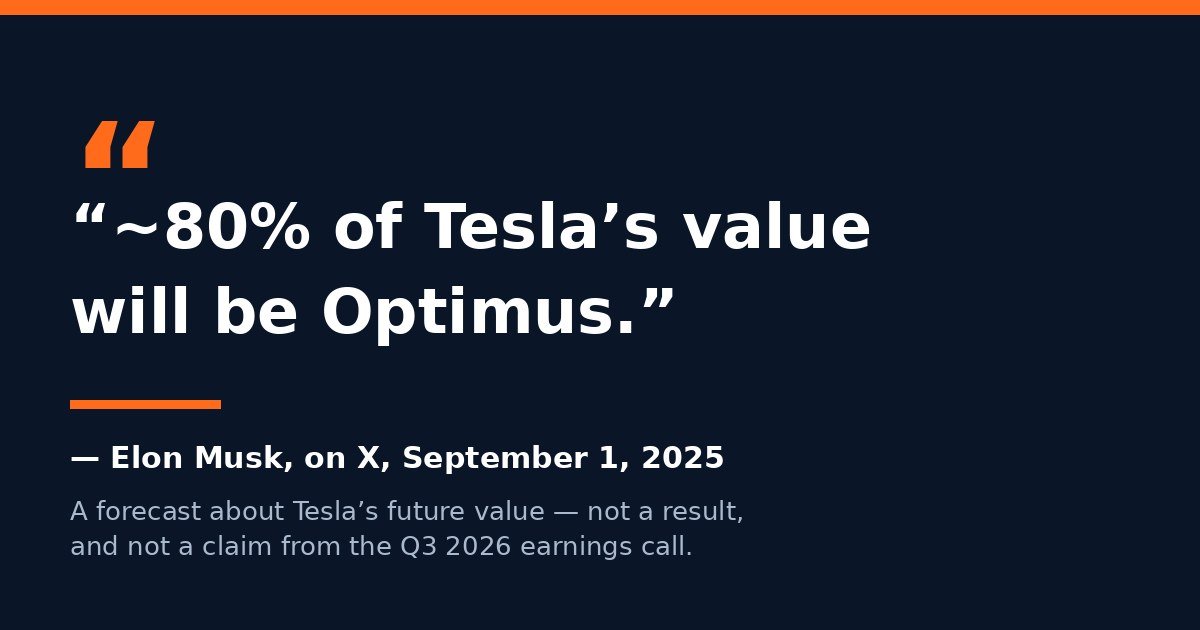
That distinction changes everything about how to read the number. Tesla has disclosed no Optimus revenue, profit, or valuation, and the 80% figure has no timeframe attached. Taken literally, it would mean cars, energy, and self-driving combined are worth the remaining 20% of the company — even though those businesses produce 100% of Tesla’s revenue today. That’s possible as a long-term prediction. It’s not a description of Tesla in October 2026, and any article tying the 80% figure to the Q3 earnings call has the attribution wrong.
So why does Musk keep saying it? Because it frames the bet. If humanoids become a mass-market product — tens of millions of units doing factory, warehouse, and eventually household work — the company that builds them at scale owns a market potentially larger than cars. Those are aspirations, not guidance: a statement of where Musk is steering the company, not a price target. The Fremont line is the first physical step toward that destination, and it’s a small one.
What this means for Tesla stock
Let’s talk money, with dates attached and no hype. Tesla stock closed at $372.22 on Friday, October 23, 2026, down $2.36 (0.63%) on the day from $374.58. The day before, October 22, the stock fell 3.08% to over $374 after the Q3 call, according to USA Today.
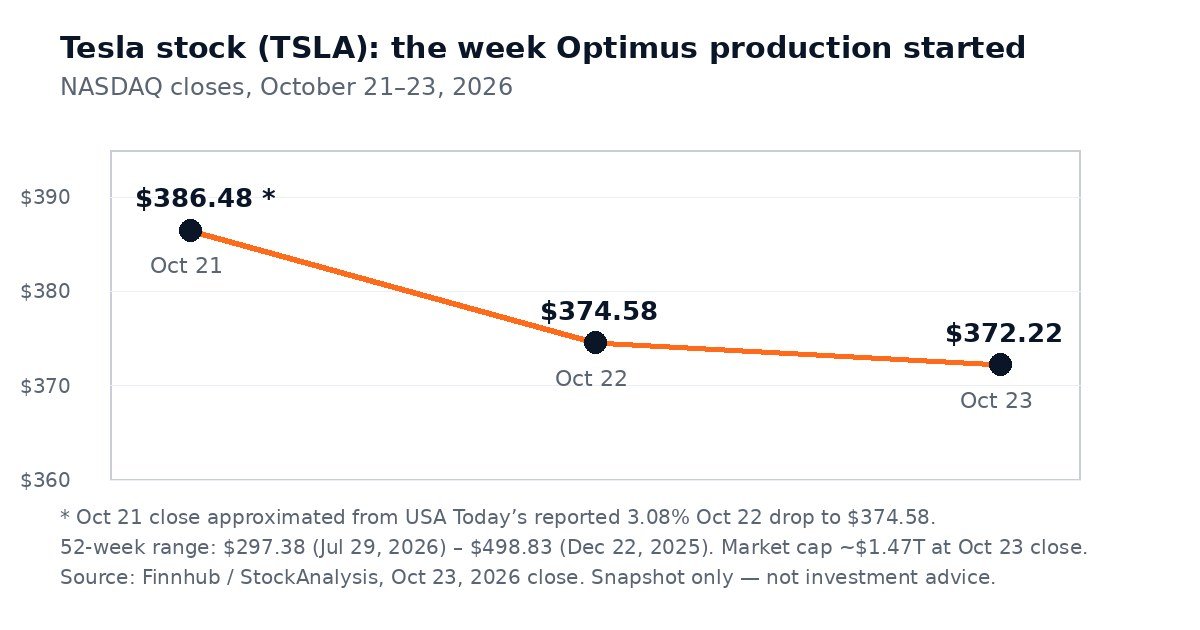
Here’s the honest framing for investors: right now, Optimus is a valuation narrative, not an earnings driver. Tesla discloses no Optimus revenue, so nothing in the Q3 income statement reflects robot sales. What Optimus does today is support the long-duration future technology story behind a stock trading far above what the car business alone would support. If the Fremont ramp stalls, that story weakens; if weekly output climbs through 2027 and outside customers sign on, it strengthens. The stock’s dip after the Q3 call suggests the market heard both parts of Musk’s message — production started, but the 20,000-a-week rate is at least a year away.
One more reality check: there’s no separate Optimus stock, no Optimus IPO, and no way to buy the robot business without buying all of Tesla — cars, energy, robotaxis, and all. Anybody offering “Optimus shares” is selling something that doesn’t exist. And this article isn’t investment advice: prices move on far more than one product line, and a robot target is not a revenue forecast. For deeper context, see our Q3 2026 earnings breakdown and our pre-earnings preview.
The reliability problems Musk himself flagged
Give Musk credit for candor on the Q3 call: he didn’t pretend Optimus is finished. On durability, he said the design still needs tweaks because “you need to deliver a robot that is safe and reliable and has long duration, so it can’t, like, wear out after a month.” That’s a blunt admission that today’s robot hasn’t proven it can survive real factory life.
On the brain side, Musk said “there’s still quite a lot of work to do with regard to the AI and the robot for it to be truly useful for open-ended tasks.” That’s the difference between a demo and a worker: a demo repeats a rehearsed task in a controlled room, while a factory worker handles the unexpected — a part slightly out of place, a dented box, a coworker stepping into its path. Outside reporting says learning even a basic new task can still take Optimus days. Tesla’s answer is scale: more than 500,000 hours of training data collected, a goal to double that by the end of 2026, and a planned “Optimus Academy” where 10,000 to 20,000 robots train through self-play. That’s a real plan, but also an admission the AI isn’t there yet.
Then there’s the hand, which Musk called one of the most challenging hardware areas on the robot. On the call, a Tesla engineer pointed to the hand and to bespoke gears still in development as the moving parts of the design. Outside reporting fills in the detail: each hand and forearm carries more than 100 small screws and components, much of it still assembled by hand, and some fingertip touch sensors have proven unreliable. Tesla’s reported fix is a replaceable “sensing glove” so a sensor failure doesn’t mean replacing the whole hand. Until the hand can be built fast, survive months of use, and feel reliably, the robot can’t do the dexterous work that justifies it. That’s why Musk expects the remaining problems to take until roughly the end of 2027 to solve — the same window as the first outside deliveries.
The AI5 chip upgrade, targeted for about April 2027
Optimus’s next brain is already on the calendar, with a caveat attached. Musk said on the Q3 call that Tesla plans to “integrate the Tesla AI5 chip into Optimus which if things go according to plan will be in approximately April of next year.” That’s a target, conditional on Tesla’s broader chip plans holding together, and roughly an order of magnitude more compute than the current AI4 chip. More compute matters because a humanoid doing open-ended tasks needs AI technology that runs vision, planning, and control models simultaneously, in real time, on battery power.
The chip story connects to a bigger Tesla bet: designing its own AI silicon instead of depending entirely on outside suppliers. Tesla has also signed on as an Intel foundry customer on the 14A process for a mystery chip — see our Intel-Tesla chip breakdown for why the timing points at AI6. For Optimus, AI5 is the bridge: enough compute to make the current robot meaningfully more capable, arriving — if the plan holds — months before the first outside deliveries. If AI5 slips, the end-of-2027 window gets harder, because the robot shipping to customers needs the smarter brain.
Musk also teased a video of Optimus doing unscripted tasks, in “maybe a month or 2.” That’s worth watching for: an unscripted demo is a much stronger signal than a rehearsed one, because a robot handling tasks it wasn’t specifically programmed for would answer the biggest open question about Optimus — whether the AI generalizes.
The competition: who else is actually shipping robots
Tesla isn’t racing an empty field, and the honest scoreboard is more mixed than either fans or skeptics admit. Nobody in humanoids is shipping at real industrial scale yet. Everyone is somewhere between pilot and promise. Here is where the serious names in the robotics industry stand as of October 2026.
Boston Dynamics Atlas is the most credible industrial rival, and the most disciplined about what it claims. The electric Atlas product version was unveiled in January 2026, but it is not commercially available to general customers. All 2026 units are earmarked for Hyundai’s Georgia Robotics Metaplant Application Center (RMAC), which opened September 21, 2026, and for Google DeepMind, with more customers expected from early 2027. At RMAC, Atlas robots are learning parts sequencing — staging auto parts in the right order for the assembly line — with component assembly targeted for 2030. Hyundai’s ambition is 25,000-plus Atlas robots across its plants, but no detailed timeline came with that figure, so treat it as an ambition, not a schedule. There’s no official Atlas price; third-party estimates of $140,000 to $420,000-plus are not Boston Dynamics prices.
1X NEO is the only mainstream home humanoid with a published price: $20,000 to buy or $499 a month on subscription. Pre-orders opened in October 2025 and the first 10,000 sold out in five days, and 1X claims US deliveries in 2026 from a factory targeting 10,000 units a year. But here’s the disclosure that matters: no verified customer delivery had been documented as of October 2026, and NEO’s “Expert Mode” lets 1X staff remotely guide the robot through chores it can’t do alone — through its cameras and microphones. That’s a real privacy and autonomy trade-off for a machine that lives in your home, and buyers should weigh it before ordering.
China’s Agibot and Unitree dominate the shipment charts, and the charts need context. Together with one other Chinese firm, they accounted for 86% of the 22,000-plus humanoid units shipped in the first half of 2026, according to Counterpoint data reported in industry coverage. But more than 60% of those units went to entertainment, performances, research, and data production — not factory work. These are shipping developer platforms with store-listed prices, not proof of industrial deployment at scale: Agibot’s X2 lists at $24,240 and A2 Lite at $44,560, while Unitree’s G1 starts from $13,500 (about $17,990 at retail) and the smaller R1 from $4,900. The full price ladder shows the same pattern across the industry: cheap robots are research toys, and the ones that could do real work don’t have public prices yet.
The rest of the field fills out the picture. Figure AI’s Figure 03 has more than 350 units built as of April 2026 and a pilot at BMW’s Spartanburg plant, but it’s enterprise-only with no public price. Apptronik’s Apollo 2, unveiled June 30, 2026, is in partner testing. Agility’s Digit 5 is expected in early access in the first half of 2027, with general availability at the end of 2027. The pattern is consistent: pilots in 2026, real availability — maybe — in 2027. Tesla’s end-of-2027 target sits right in the middle of that pack, not ahead of it.
| Robot | Status as of October 2026 | Price |
|---|---|---|
| Tesla Optimus | Early production at Fremont; outside sales targeted end of 2027, industrial first | None published; $20,000–$30,000 is a long-term target only |
| Boston Dynamics Atlas | Product version unveiled Jan 2026; 2026 units earmarked for Hyundai RMAC + Google DeepMind | None official; third-party estimates are not Boston Dynamics prices |
| 1X NEO | Pre-orders open; US deliveries claimed for 2026, none verified as of Oct 2026 | $20,000 or $499/month |
| Agibot / Unitree | Shipping developer platforms; 86% of H1 2026 units, mostly non-factory use | X2 $24,240; G1 from $13,500; R1 from $4,900 |
| Figure 03 / Apollo 2 / Digit 5 | Pilots and partner testing; Digit 5 general availability targeted end of 2027 | None public |
When can anyone else buy one?
Around the end of 2027, if Tesla’s plan holds — and industrial buyers first. Musk said on the Q3 call that Tesla expects to start supplying Optimus to outside companies around the end of 2027, once the remaining design, reliability, and AI problems are solved. The first jobs will be dangerous, repetitive industrial automation work that needs doing around the clock: the kind of factory and warehouse tasks where a robot that doesn’t get tired, bored, or hurt has an obvious case. Home robots come later, once volume is up and the price is down.
Two cautions on that date. First, a window reported from a non-public JPMorgan presentation pointed at the second half of 2027 as the earliest window — that’s not the confirmed date, and it shouldn’t be quoted as one. The confirmed timing is Musk’s “around the end of 2027” on the Q3 call. Second, outside reporting has suggested Tesla may lease Optimus rather than sell it at first, starting with companies whose factories look like Tesla’s own. Leasing would let Tesla pull robots back for upgrades and keep real-world data flowing to its AI team.
As of October 2026, there is no Optimus price, no order page, no waitlist, and no named external customer. If you’re a factory manager, the actionable step isn’t to budget for an Optimus — it’s to watch the 2027 milestones: the unscripted-task video, the AI5 integration, the weekly production rate, and the first named pilot customer. Those four data points will tell you whether end-of-2027 deliveries are real or another slipped date. And if you’re shopping for a used Tesla while you wait, our used Tesla buying guide covers what to pay and what to check right now.
Price expectations: targets, not a price list
Let’s kill the most-shared wrong number in Optimus coverage: there is no $20,000 Optimus price. The $20,000–$30,000 band is a long-term Musk target dating back to the “We, Robot” event in October 2024 and reiterated at Davos in January 2026, for an eventual mature product built at enormous volumes. A newer “under $20,000 at scale” figure for a future generation is the same kind of target, not a price list. Nobody can buy an Optimus at any price today.
The reality at low volume points the other way. Reuters has reported current low-volume materials costs of $50,000–$60,000 for the prior generation — and materials are only part of the cost of a finished, tested, supported robot. That gap between $50,000-plus in parts and a $20,000 target price is the entire manufacturing challenge in one number: Tesla has to automate the hand assembly, scale the supply chain, and drive component costs down by more than half before the target price is even plausible. It’s doable in principle — cars went through the same curve — but it takes years, not quarters.
For comparison, the only real consumer price in the field is 1X’s $20,000 NEO — a smaller, softer, home-focused robot with remote human help behind it. An industrial Optimus doing unsupervised factory work is a different product with different costs. Expect the first outside deals, if they happen at the end of 2027, to be priced as enterprise equipment — negotiated, serviced, and likely leased — not as a sticker price on a website.
Production timeline: sourced milestones only
| When | What happened (or is targeted) | Status |
|---|---|---|
| May 2026 | Model S/X production ends at Fremont; old line dismantled in 46 days | Done |
| Summer 2026 | First-generation Optimus line installed at Fremont | Done |
| September 2026 | Tuopu, Joyson, and Sanhua certified as mass-production partners | Reported |
| October 21, 2026 | Q3 letter + earnings call: production started, “Early Ramp,” 20,000/week target, AI5 ~April 2027 target | Confirmed by Tesla |
| About April 2027 | AI5 chip integration into Optimus, “if things go according to plan” | Target |
| End of 2027 | Design, reliability, and AI issues solved; outside deliveries begin, industrial first; 20,000/week targeted | Target |
| Long term | Second-generation line at Gigafactory Texas planned for 10 million robots a year | Planned, under construction |
Quick answers
Has Tesla started mass-producing Optimus? No — not by Tesla’s own words. Tesla calls Fremont’s status “Early Ramp” and Musk called it “early production.” The robots coming off the line are the first production-quality units, but mass production at 20,000 a week is a target for the end of 2027, not today’s reality.
How many Optimus robots is Tesla making per week? Tesla hasn’t disclosed a rate. Outside reporting put output at several hundred a week in August 2026, with an internal aim of more than 1,000 a week by the end of 2026. Both figures are reported, not confirmed by Tesla.
When can I buy a Tesla Optimus? You can’t, and there’s no order page or waitlist as of October 2026. Tesla targets outside deliveries around the end of 2027, starting with industrial customers. Home robots come later.
How much will Optimus cost? There’s no official price. $20,000–$30,000 is a long-term target for a mature, high-volume product, not a launch price. Current low-volume materials alone have been reported at $50,000–$60,000 for the prior generation.
Is Optimus really going to be 80% of Tesla’s value? That’s a prediction Musk posted on X on September 1, 2025, with no timeframe attached — not a Q3 2026 earnings revelation. Tesla discloses no Optimus revenue today, so the 80% figure describes a possible future, not the company’s current finances.
The bottom line
Here’s where it stands. Tesla has crossed the line from showing robots to building them: the Fremont line is real, the first production-quality bots exist, and the company has staked factory floor, suppliers, and billions in R&D on the bet. The 20,000-a-week target for the end of 2027 is ambitious but sized to the line Tesla built, and the path there runs through problems Musk himself named — hands, durability, and AI that can handle the unexpected.
What would change our mind? Three things to watch: the unscripted-task video Musk promised within a month or two of the call, the AI5 integration around April 2027, and a steadily climbing weekly production rate through 2027 with a named outside customer at the end of it. If those land, Optimus stops being a story and starts being a business — and the 80% prediction starts looking like foresight instead of hype. If they slip, Tesla still has a car company to fall back on, just not a growing one. At the end of the day, that’s the real test: not whether Tesla can build a robot that waves at a crowd, but whether it can build 20,000 a week that work a full shift without wearing out.